
Note: This is a version of a piece I wrote this with my brilliant friend Chris Hartline for our student newspaper, and am reprinting it here. Any goodness in it may be credited to him.
Most of the public is aware of Rush Limbaugh’s stupid and unfunny bit in which he referred to a Georgetown student as a “prostitute” and a “slut” for saying that Georgetown health insurance should cover contraception.
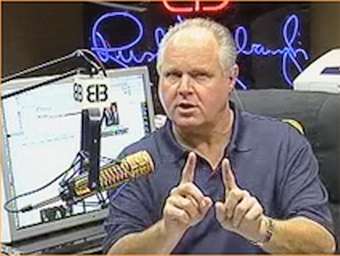
Do not pay attention to this man. He will make you sad.
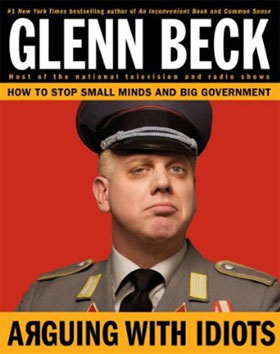
Looks like public discourse to me.
Another clear manifestation of the deficit of trust of the media was a 2009 poll done by Time magazine. Walter Cronkite held the title (since 1974) of “Most Trusted Man in America”. Cronkite was the most visible figure in the media, which at the time provided objective discourse and information to the public, and he died in 2009. In the subsequent Time poll, voters said that the most trusted news anchor in America was Comedy Central host and political satirist Jon Stewart.
The fact is that the media is supposed to provide a momentary stay against political hostility, an unbiased source of objective information for the public, and that it is not doing this. Consequently, the public is losing their faith in the news media, and by extension the American political system itself.
The media has become tool used by political parties to influence the opinions of the public. A blatant example of this is the “Plan for Putting the GOP in the News” memo from the Nixon administration. The 15-page memo was anonymous, and has written comments on it by Nixon’s then-advisor and current Fox News President Roger Ailes.
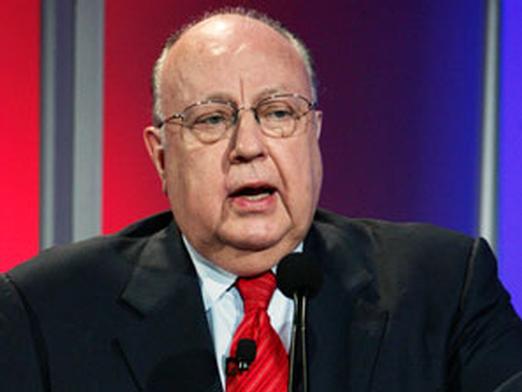
Roger Ailes: founding CEO of Fox News and adviser to Nixon, Reagan, and Bush. Also credited for possessing the world's least attractive set of jowls.
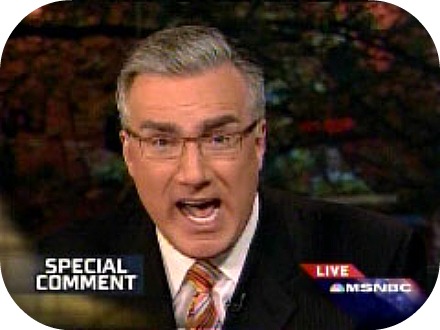
All you need to know about Keith Olbermann is that he's not a pleasant person.
So it can be concluded that the media has become unabashedly partisan. Even the very fact that it is standard for each major newspaper to endorse a presidential candidate reflects a problem in the nature of journalism. It results in an overtly ideological news organization – the New York Times is liberal, the Wall Street Journal is conservative; the Washington Post is liberal, the Washington Times is conservative, etc.
A news staff tending to lean one way on the opinions page is typical and expected; however, the fear is that the ideological slant of the editorial pages will seep into the news coverage. The potential and underlying ‘spin’ of news stories becomes more important than the objectivity of the events being reported.
And maybe the Nixon administration’s prediction about the easy audience of television was prescient: political commentary television programs can be especially caustic and, at times, juvenile. They seem to appeal to the lowest common denominator of the public and of individuals. Keith Olbermann, Glenn Beck, Rachel Maddow, and Bill O’Reilly are all political commentators who base their rhetoric on the petty mockery of whoever disagrees with them – their arguments are negative, not positive, and clever insults take precedent over constructive criticism.
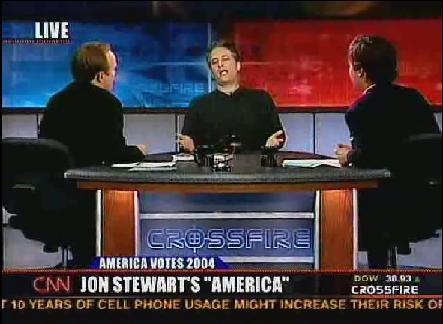
Jon Stewart pleads with the hosts of Crossfire to "stop hurting America." Crossfire was cancelled shortly after Stewart's interview.
David Brooks said: “There’s a collapse in the public’s faith in American institutions. The media has done a poor job. We’ve become as insular and self-regarding as any [other institution].” It is no wonder, then, that there is a deficit of trust among the younger generations – the apparent disintegration of the integrity of our news sources is nothing less than repelling.


 Culture War Reporters