
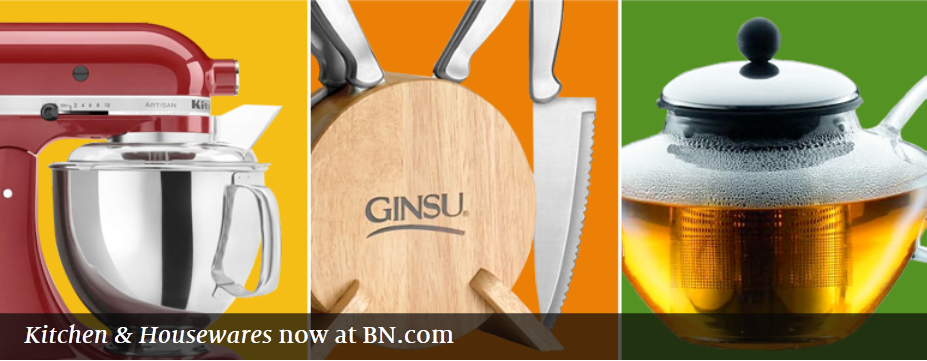
Barnes and Noble: now your source for superfluously shiny things
Barnes and Noble will now be selling, among other things, popcorn makers, vacuum cleaners, and dehumidifiers via their website. The former sanctuary of all things book-related has prostituted itself out, it seems, to Wayfair, an online retailer. I may represent a non-objective opinion while relaying this information.
Wayfair is one of those frightening oh-my-gosh-we-sell-fricking-everything (like seven different types of bread boxes everything) websites where everything is in Helvetica (I watched that movie and am now a temporary font snob1) but all of the products elicit the same creepy feeling one gets from the idea of ordering cookies from magazines or packages of prepared meals from dieting programs. The kind of website that offers an ice bucket shaped like a crown for $517.49 and a Wonderbread plastic sandwich box for $3.99. That has 101 search results for the words “tissue box covers”.
So I weep for you, Barnes and Noble. I know that you were doing that thing where you tout overpriced polka-dotted notebooks under “Designed Exclusively for Barnes and Noble by [vaguely exotic name],” and I know that you were doing that thing where you partnered with Godiva, but at least the stationary was book-related and the chocolate was delicious. But furniture? Infomercial cookware? Who is going to buy their thermostat from Barnes and Noble, I ask you?2
I’m sure that there’s a grand marketing scheme going on here, and that by all calculations this will probably be a profitable move for Barnes and Noble, or the deal they struck with Wayfair was a steal enough for them to cut their losses if it doesn’t work. But the idea of like the internet-aged Wells Fargo catalogue just doesn’t make sense. Amazon and Walmart did not spend the majority of their retailing lifespans dedicated to a single item like you have, Barnes and Noble. Do not think that you can become them. You can’t. Borders is even gone, and you were doing way better than them anyways, on the internet front – you started earlier than they did and handled it a lot more classily (til now, that is). You kind of have the Nook thing going on, and if you get your act together on that front instead of diversifying your attention away, you could actually continue to matter in that market. Don’t let Amazon get you down!
Remember when you used to at least pretend like you were a friendly bookstore instead of a gigantic, impersonal corporation? You’re definitely failing at that with this move. I will just be interested to see what making yourself an unspecified and abstract retailer does to your customer loyalty.
1 I’m not even sure if the website’s font actually IS Helvetica, but it’s something trying to look Swedish, I can tell you that much
2 Weird upper-middle class people with too much mascara and blonde hair, that’s who, I’m pretty sure.


 Culture War Reporters