Category Archives: news

Kim Jong-il is Dead; Nobody Knows What is Going on in North Korea (Still)

source: christanpost.com
So Kim Jung Il has died, purportedly, and I have no other choice but to write about it. Not really as a political analyst (okay not at all as a political analyst), but just as someone who kind of watches world events like sports, in a nihilistic sort of way.

Right around 10:20pm EST the Associated Press announced that North Korea said that Kim Jong-il was dead. ABC and the NYT quickly reported the story, saying that Korean Central TV reported: “Our great leader Comrade Kim Jong-il passed away at 8:30 a.m. on Dec. 17.” 8:30am in North Korea translates to 6:30 pm EST on Friday.

source: nyt.com

Kim Jong-un, the cheerful new dictator of North Korea

So what on Earth is going to happen to North Korea? Will the dictator’s death grip on the media continue? Kim Jong-il did some crazy things – Kijong-dong, for one, which was an entire empty city built in view of South Korea in the 50s to encourage defection. There was the claim that he was born under a double rainbow, that he scored 38 below par on his first golf game (and then promptly retired), and that he was a “worldwide fashion icon”. The idea of truth coming out of North Korea is roughly equivalent to tactful and thoughtful speech coming out of Rush Limbaugh. The whole event of Kim’s death and the transfer of power to Kim Jong-un is steeped in uncertainty. Heck, even the New York Times doesn’t know exactly how old Kim Jong-un is.

So the world is just kind of freaking out this morning. China’s pretty nervous. Everyone’s wondering what the long-oppressed people of North Korea are going to do – is the regime’s cult so ingrained in people’s heads that they will complacently move right on to Kim Jong-un as the most handsome and benevolent evil dictator ever? This event passing with no unrest in North Korea would be the most depressing thing ever.

Of course, this event causing violence between the North and South Koreas which ended up in someone (North Korea, the US…) using an atomic bomb would also be pretty depressing. The US, China, Japan, and Europe are all kind of staring at North Korea the way one would stare at a baby that just picked up a carving knife. North Korea test-fired missiles right before they announced Kim Jong-il’s death, so that’s not exciting at all. Stocks in China fell significantly. South Korea placed all of its military units on alert.

I have no parting comments. We’ll see what happens. While we wait, go to this hilarious Tumblr of Kim Jong-il looking at things for some comic relief.

Social Service and the 2012 Election

I was sitting at a meeting reviewing cases of indicted abusers – I intern at a social services office near my college, in the second poorest county in New York – and one case involved a man who had served a few months’ probation for abuse and then, upon release, committed a horridly violent act against the same victim. “We failed this kid,” an officer at the meeting said of the victim.

I like working in social services because it simultaneously disenchants and inspires me in regards to the mechanisms of helping people. I work in an office that gives legal and practical assistance to domestic violence victims, houses a women’s shelter, and runs a food pantry.

Many of our clients tell us that they don’t know what they would do without us, that we were their last chance, etc. After these cases, there is a sense that our tax dollars are being put to good use, as it were – that the social service is doing what a social service is supposed to do. But some clients aren’t as easily rewarding. Some are demanding and abrasive; their accounts of incidences don’t match police reports and they tell scattered and narcissistic stories, the verity of which crumble when anyone asks them to repeat a statement. We get people in our office who are clearly victims, but we also get the conniving, the liars, and people who file abuse complaints just to be vindictive. Our services are alternately treasured and taken advantage of.

Whatever the makeup of social service is, it is definitely not black and white; working with the logistics of public service enforces the fact that there are no clear cut cases, and that every policy is going to, at some point, meet an exception of the rule. Sometimes these exceptions are people; sometimes they are failed by the system. Sometimes (oftentimes) people seek to suck as many resources out of the public sphere as they are legally allotted. A general sense of entitlement pervades the population, which often means that public resources are given out at a competitive, first-come-first-serve basis.

But does the fact that the system is occasionally cheated discount the help it provides others? This is a question that must be asked in regards to every public service.

Charity is not so simple as shelling out money to the poor – though money helps, the uncomfortable truth is that anyone (of any class) who receives money will often not use it to their long term benefit or to that of society. The other danger of charity is the possibility of using monetary donation to excuse ourselves from any personal discomfort or investment. If we consider money the thing that solves the problem (and, believe me, it does help), we can ignore the ugly logistics of how and when and why to distribute it.

This is why any candidate who proposes “simple” tax plans (Herman Cainn, Rick Perry) ends up looking kind of foolish. Perry recently called Social Security a “Ponzi scheme” and called for the privatization of the whole thing. While basically everyone says that Social Security is pretty screwed up, much of Perry’s criticism of SS seems to be driven by a fad-like propensity for drastic calls for smaller Federal government, and the implications of such a trend on social services is worrisome.

Ron Paul, on the other hand, does have the advantage of actually sticking to his guns on the issues, it seems – but I can’t believe that his defense of less government in regard to social issues – that “increasing federal funding leaves fewer resources available for the voluntary provision of social services” – is practical at all. Calls for smaller federal government often cite the support of the power of state governments instead, but the basic philosophy seems like it would call for less state governments as well as federal.

Policy change is what is really effective. The problem is that there is no one policy change that will fix everything; social programs need to be constantly restructured to adapt to a changing society. This makes policy changes less flashy and more complicated than large donations or huge influxes of funding, and so they receive less public and political attention than they should. The logistics of helping people can be terribly complicated, and a perfect policy will never be implemented, but public assistance is still a noble, if not a glamorous, necessity for society.

The Implications of Charlie Hebdo’s Mockery of Islam and Muslims’ Response

source: gatesofvienna.blogspot.com

On the cover of Charlie Hebdo last week, Mohammed is saying (in English), "100 lashes if you don't die laughing!". Reproductions of images of Mohammed are considered particularly offensive in Islam.

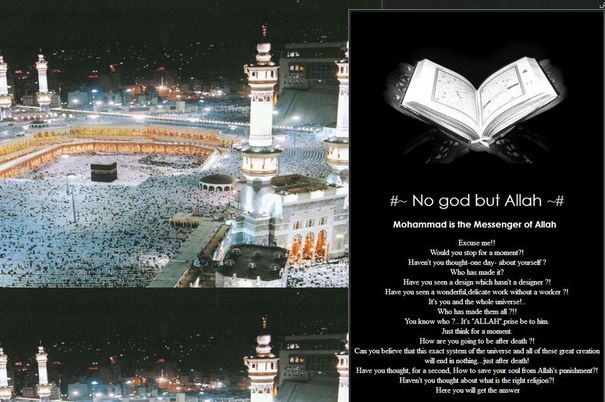
Charlie Hebdo [“Charlie Weekly”], kind of The Onion of France, published an issue last week entitled “Charia Hebdo”, which featured a cartoon of Mohammed saying (in French) “100 lashes if you don’t die laughing!”. The November 2 issue was retitled “Charia Hebdo” (referring to the holy Islamic code of laws called Sharia), and listed Mohammed as “guest editor” for the issue. In response, the publication’s website was hacked, showing a picture of Mecca and the text [in English] “No God But Allah”, followed by a series of questions arguing for theism (specifically Islam, but they were pretty generally theistic questions, like “Have you seen a wonderful delicate work without a worker?”). A 20 year old IT worker in Turkey claimed responsibility for the hacking. Shortly before the issue hit the streets, Charlie Hebdo’s offices were set on fire (via a molotov cocktail, according to telegraph.co.uk) and much of the inside of them was destroyed.

tendancecoatesy.wordpress.com

The hacked Charlie Hebdo website.

Given the recent passing of the bill that banned the wearing of niqabs and burkas under penalty of monetary fine, the demonstration of further European French/Muslim French tension is unsurprising and worrisome. The demographics of France are disputed, with reports from 2009 ranging from 4%-10% of the population being Muslim, but it is agreed upon that the Muslim population in France is increasing rapidly. Muslims have expressed feelings of ostracization by Sarkozy, especially with the recent head covering bill, and it is evident from Charlie Hebdo’s publication that at least some animosity towards Islam is common among the European French.

Charlie Hebdo’s publication was specifically blasphemous to Islam – more so than, say, Christians would probably find a picture of Jesus saying the same thing [though yes that would be rather upsetting to many people] – because of the specific Islamic mandate against the reproduction of pictures of Mohammed, and the reverence with which the prophet is held.

The French government passed a similiar and vaguer bill prohibiting ‘conspicuous religious symbols’ in 2004. This is just a small demonstration of the staunch secularism in France since 1789, when the revolution removed the huge amounts of power the Roman Catholic Church had over society. After the revolution, France has made it a pretty big deal to avoid giving a religious group such power again, and so has consistently been very intentional about the individualisation of religion and maintaining the separation between church and state.

This separation has worked fairly well for the past few centuries, as devout French Christians became fewer in number and French society as a whole valued an a-religious government, but the increasing Muslim population in France is beginning to disturb that environment. Though the population of Muslims in France is small, the presence of a solid and devout minority in such a staunchly secularist country will foster discord, the beginnings of which can be seen in recent events.

The People’s Library of Occupy Wall Street

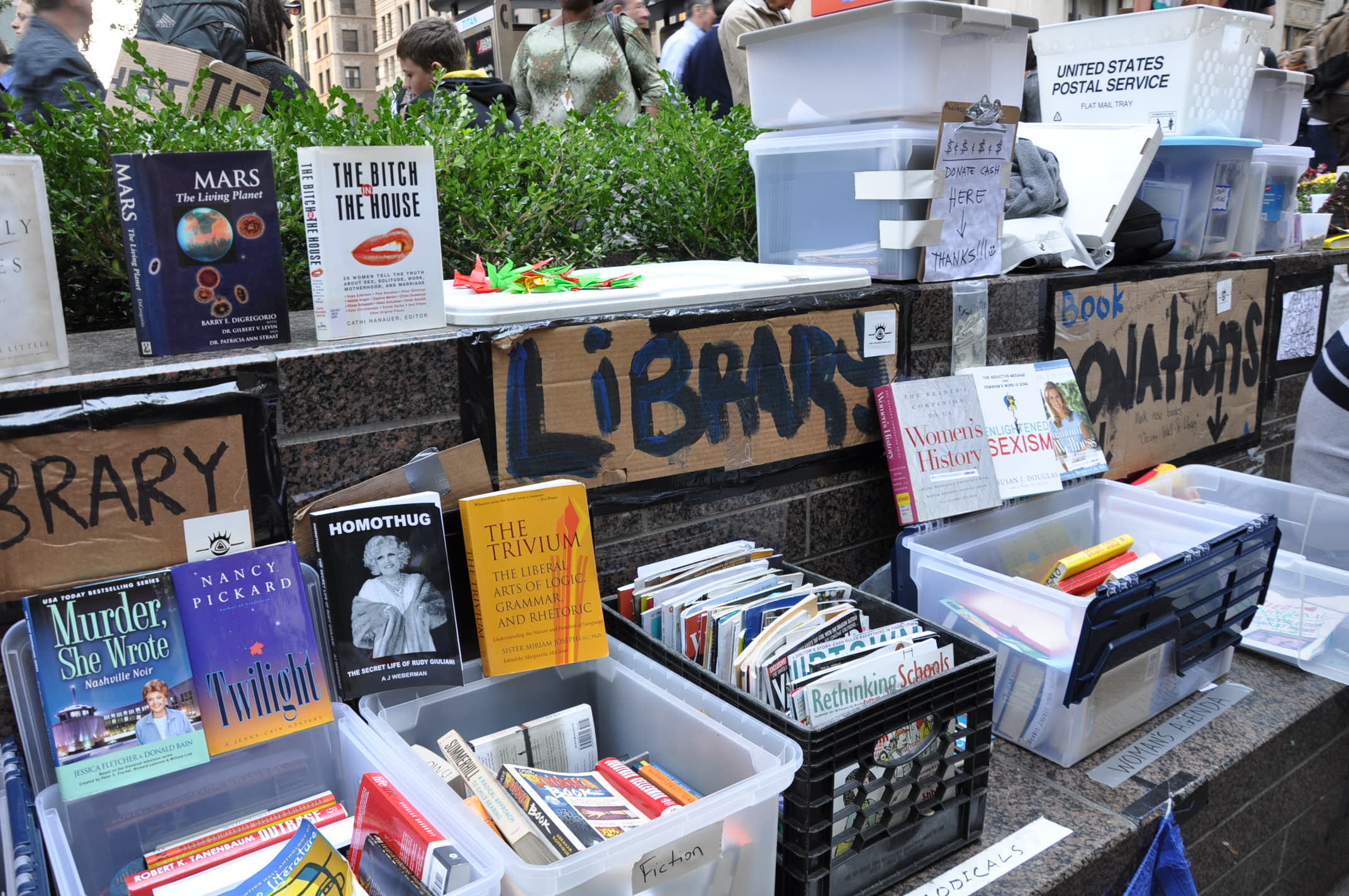
It’s day 24 of Occupy Wall Street 1 and the thousands of protesters there have been organizing themselves into pseudo governments and various working groups. 2 The place is turning into a petri-dish kind of accelerated model of semi-anarchic social planning. The coolest aspect of the new microsociety, however long it’s going to last, is the The People’s Library of #OccupyWallStreet.

source: http://www.flickr.com/photos/listentomyvoice/6215907949/in/pool-1820877@N22
The OWSL was started by an NYU library studies student setting out a pile of books – other protesters started adding books, found protection for the books from the weather, and (now) have made a catalogue of the books and are collecting donations. On the library’s blog, OWSL announced that a criminal justice attorney for a New York nonprofit offered her legal services to the library as it deals with the semi-sketch logistics of being an uncovered library located in a public park. The library has about 15 volunteers (described as “a mix of librarians and library enthusiasts”) and a barcode scanner.

According to their catalogue, the library has about 400 books, with about 50 donations per day coming for the last few days. OWSL’s catalogue includes kind of what is to be expected in the library of a strange semianarchy made up of people with too much time, from Reading Lolita in Tehran to The Shock Doctrine: The Rise of Disaster Capitalism. Volunteers say that they’re having constant requests for copies of A People’s History of the United States by Howard Zinn. There are a few less expected titles in the catalogue, though, too, like Quiverfull: Inside the Christian Patriarchy Movement3 and Cloudy with a chance of meatballs.

OWSL volunteers say that they do not discriminate when it comes to which books they put out – by nature of those donating, they have mostly liberal political and philosophical theory. But, one of the volunteers said, “if someone came with a truckload of Rush Limbaugh’s books, we’d put them out. We’re not opposed to having a dissenting voice.”4

One volunteer was asked to describe the library’s purpose: “People want to know, ‘What’s your agenda?’” he said. “Well, the status quo doesn’t have an agenda. Everyone here, in the aggregate, are people who feel disenfranchised and powerless. It’s perfectly legitimate to be frustrated. I don’t have a solution. I’m not an anarchist. I’m here because I love books.”

I'm not an anarchist. I'm here because I love books.

This attitude is what gives a sense of legitimacy to OWSL: its dedication to the availability of information in general, not just the forward movement of the protesters’ varying agendas. It’s admittedly heartening to see that one of the first things that develops in a group of people staying still for a while is a library. The agendas and decisions of the protest aside, let’s hope that the spirit of the indiscriminate availability of information and discourse remains in at least this aspect of the movement.

1 If you’re not terribly aware of what’s going on in NYC, and are interested in politics or social media or culture or anthropology or basically anything, read up on the Wiki page – for more laughs, read the .
2 For example: Sanitation, Food and Kitchen, Arts & Culture, Public Relations, Direct Action, Media Spokesperson Relations, Internet, Information, and “Peacemakers” [Security]. source: http://www.examiner.com/populist-in-long-island/night-and-day-life-at-occupy-wall-street
3 For substantial feelings of anger, horror, and loss of hope, Google the Quiverfull movement.
4 source:
http://newsfeed.time.com/2011/10/10/occupy-wall-street-their-own-mini-government-complete-with-library/#ixzz1aOZwBPAe

Does The Onion Even Have Lines? #CongressHostage

So The Onion tweeted [#CongressHostage] about Congress holding schoolchildren hostage last Thursday. The Internet, as expected, exploded for a bit in a few places and then returned to normalcy.

A rather convincing photograph of what appears to be Speaker of the House John Boehner holding a little girl hostage

The tweets were fake live-action reports of an Onion headline that day that reported that Congress had taken hostage 12 schoolchildren and were demanding, for their release, 12 trillion dollars “in cash”. A less tasteful part of the story involved John Boehner threatening to kill “one child every hour” until the money was given, with a rather amusing photoshopped picture of Boehner holding a gun to a girl’s head.

The US Capitol police responded with a release affirming that there was no situation of any kind at the Capitol, which created a scad of angry tweets ridiculing at anyone who could “be so stupid to believe” the story – and by scad I mean like hundreds, which seems to be many more than the small amount of people who took the story to be actual news. Time asked if The Onion went to far with #CongressHostage, and lots of followers said that they did, which created another scad of angry tweets ridiculing anyone who would be offended by The Onion story and lamented over the lack of education about satire, etc. etc. Basically summarizing the whole debate, @GS_Design responded to Time’s question: “Does the Onion *have* lines?”

Some people compared the event to the War of the Worlds broadcast in 1938; @kevinhamel55 asked, “@TheOnion today, War of The Worlds in 1938; is there any difference?” (the answer is yes, yes there is, because this time nobody thought the world was actually ending and hundreds of people weren’t calling studios panicked, afraid for their lives; whether this makes the Onion more or less successful than the 1938 broadcast is another matter altogether).

Admittedly, in perhaps poor taste The Onion’s #CongressHostage thing started with this tweet: “BREAKING: Witnesses reporting screams and gunfire heard inside Capitol building.“, which wasn’t really funny or entirely unbelievable in any way. Further tweets were more appropriately hilarious: “Reports from those who know Congress say the legislative body had seemed desperate as of late“. Another tweet that isn’t really funny enough to justify its offensiveness was: “Two chaperones are also being held, one of whom is said to be pregnant “. It’s sort of amusing just because it’s so intensely typical of a hostage situation report, but it had nothing to do with the story’s strongest point, the nature of Congress in real life – as exemplified by the tweet: ‘Obama on bullhorn: “John, I know you can hear me in there. Please, you don’t need to do this.”

The article was a pretty accurate metaphor about Congress’ sense of desperation, as well as the public and presidential opinion of Congress this year, and the #CongressHostage stunt did a good job of drawing attention to it, at least. @TheOnion’s twitter account gained something like 7,000 followers, and the article received a ridiculous amount of news and blog coverage. The whole event was just another example of The Onion doing what The Onion does – drawing public attention to the nature of veracity and sensationalism in news sources, which is almost always good. The best summary of the situation in the current cultural context, in my opinion, came from @FultonMatt, who tweeted: “@TheOnion’s #CongressHostage has gone too far. Why can’t they just hack dead kid’s phones like a real news org?

#OccupyWallStreet: Protesting with Hashtags

So there’s about a thousand people protesting on Wall Street (ish) right now and I don’t really know exactly for what. The movement is #OccupyWallStreet and it started on September 17 and consists of about 1,000 (mostly) student-aged people (My official estimate of the demographic: I’m picturing literary references and lots of beards) just kind of hanging around the Wall Street area. Sometimes there are marches. People are sleeping in the park. People online are ordering pizzas to be delivered to the protesters. One girl took off her shirt.

You might want to know what people are actually protesting – that’s where things get more vague. Some advertisements speak of the need for One Demand, but nobody has decided what that demand is or should be or could be. Interviews with the protesters range from the idiotic to the informed, revealing mostly a mixture of the two (along the “I don’t know who my house representative is but I can tell you the percentage of the population that holds 50% of the wealth” line). The attitudes seem to be predominately socialist, or at least anti-capitalist, with lots of complaints alluding to the Bush tax cuts, the 2008 bank bailouts (if you don’t really know what those are about either, a good explanation by my friend Chris here.), and a lot of derogatory use of the word “corporations”.

An #OccupyWallStreet protester with an Anonymous mask and a hijab.

The whole situation is a strange crossover between internet networking and the real world – the Twitter support and piles of enthusiastic comments and exclamation all over the web have only translated to about 1,000 protesters at any time, and not even in the street the protest was planned for (the NYPD blocked off the key sections of Wall Street before any protesters got there). Online, however, the results are impressive (it’s kind of like looking at the Ron Paul campaign) – Anonymous, the 4chan-based hacker group with frightening amounts of power, is credited for much of the protest’s popularity.

It’s fascinating and kind of beautiful to watch – this is the first generation that grew up with the internet, and you can tell. Twitter-based protests are just called “protests” now. We are the generation that will use hashtags in our protest signs. It’s like old protests, but improved: we still have unconstructive platitudes, but at least some of them are ironic, dangit.

The coming-of-age of the first generation raised on the internet looks like this.

The use of the word “Occupy” in the title seems inaccurate, as if the protesters knew what they would do if they actually got control of the place. I’m imagining collages made with cut-up quarterly reports.

The thing is that Wall Street is now just as nonphysical as the organization of the protests – there’s not really much actual money to burn, anymore, and there aren’t safes full of the hoarded wealth of the rich. Significant money never really physically goes to Wall Street, or really anywhere – money is numbers in a computer and property value and stock value; it’s kind of hard to figure out where it actually exists.

The physicality of the protest is less impressive than its internet following and even seems a little incongruous – it’s like the event is being swallowed by its own abstractness; an internet-developed protest trying to cross the line of physical reality and occur in front of a physically symbolic place just doesn’t work out in the digital age.