Category Archives: news

In Defense of This Generation

Don’t get me wrong, there’s a lot- a lot– to criticize about the millennial generation. There’s creative bankruptcy (see Evan’s post), “slacktivism” and general laziness, ever-shortening attention spans, and of course, loud, obnoxious repetitive music without any discernible beginning, end, or climax.

I cannot state enough how much I hate techno…

Now with all that stated, I do want to address some of the criticisms thrown at Generation Y by our elders and (as they see it, anyways) betters.

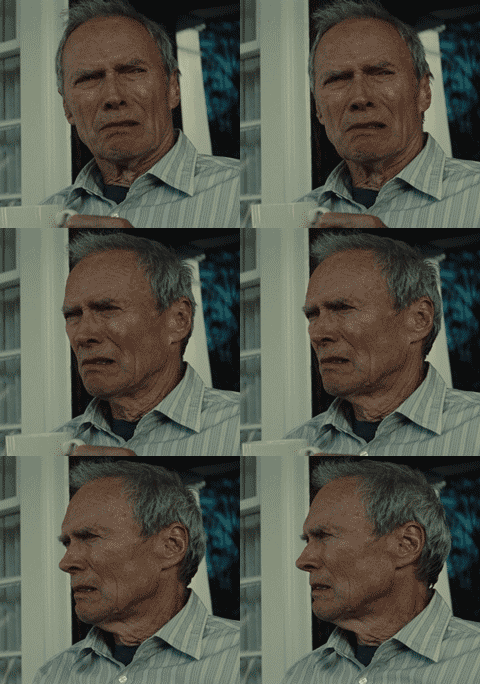
Late last year, I came across this article, titled “5 Ways We Ruined the Occupy Wall Street Generation“. In his defense, the author emphatically states at the beginning of the piece that “This is not a sarcastic apology, I’m not a big enough dick to write all of this as a backhanded insult about how lazy and entitled you are. Because you’re not…”. Even so, it’s tough to read the article and not feel frustrated at some of the more glaring errors, or condescended to by false conclusions drawn from them. Despite the author’s best intentions, you can’t really walk away from the piece without imagining him to look something like this:
I’ll get right into things here with his first point “#5. Making You Ashamed to Take Manual Labor Jobs“. The author opens by offering the example of a piece of dialogue that went viral about a year ago.
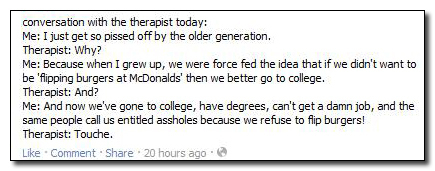
It’s a great little bit, but I still have to stop things right there. We’re not ashamed to take manual labor jobs. We never have been. In this economy more than ever, there are college graduates willing, ready, and even eager to take jobs sweeping floors, unloading crates, answering phones, or stocking shelves. We’re not ashamed of flipping burgers, we just can’t afford to flip burgers. See, we have this funky little thing called “debt”, and not just any debt, the one kind of debt we, by law, cannot have discharged. To clarify- if I went bankrupt, if fire burned down my house and destroyed each and every last earthly possession I had, the only thing I would have left would be tens of thousands of dollars of debt I still need to pay.

The appropriate reaction…

All that’s to say we can’t take jobs flipping burgers because the $7.25 an hour you get for being abused by the customers and/or inhaling carcinogenic fumes just isn’t enough us to live independently and pay off our various mountains of inescapable debt.  Even if we move back in with our parents (more on that in a minute) things will still be tight- and God forbid we should even think about getting married or having kids until we’re in our mid-30’s. Which brings us to our next point- “extension of adolescence”.
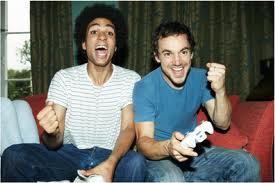
This is a psychologically documented phenomena, and something that’s rather throwing the combined worlds of sociology and psychology. Ever since the line between childhood and manhood ceased to be set at bringing down an elk and bathing in its blood, figuring out exactly when a person ceases to become a kid and becomes an adult is tough. It’s certainly not something new, but it is currently far more pronounced than with previous generations. Take that picture up there for example. Two guys, looking to be in their mid or even late twenties, playing X-Box. There’s the clincher there- the X-Box. The older generations, having had really nothing quite on the level of video games (pac-man doesn’t really count), labeled them as “kids’ stuff” from their inception, and the fact that we still play video games well into our twenties is seen as us extending our teen years, rather than shifting over to being an adult. The author of the article has this as his third point “Adding Seven More Years to Being a Teenager”.

Of course, it’s absolute nonsense once you think about it. What did our grandparents or even our parents do for fun when they were kids? They played cards, board games, hunted, fished, went to the movies, and beat up minorities.
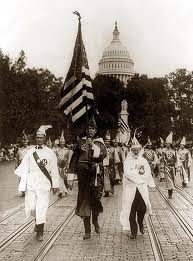
KKK Rally, or as they called it in the 30s, “Wednesday”…

And what do our grandparents and parents do today when they want to have fun? They play cards, board games, go hunting, fishing, and go to the movies (hopefully they’ll have dropped “Harassing Pollacks” from the daily planner by this point). You never hear anyone accuse them of extending their teen years. My grandfather and his friend have been playing cribbage together for over half a century, does anyone tell them that they need to start acting like adults? Let’s face it, when it comes to what this generation does for fun, we really don’t differ from anyone in a previous generation, it’s just that what we do is so radically different, we have the appearance of being immature.

And what about responsibility? Is this generation really lazy and wussy compared to the generation who worked in the mill, took a break to fight Hitler, and went back to working in the mill and raising a family? Last time I checked, we’re in the worst depression since the 1930s (a crisis which we, incidentally, had nothing to do with but still have to pay for) and on top of this we’ve been locked in the longest war in American history- nearly twice as long as the entirety of WWII, just for some perspective. You can say a lot of things about this generation, but you can’t try to claim that we’re somehow just a bunch of young adults still trying to drag out our years as kids.

“Just look at that entitled, lazy kid. No concept of hard work or adult responsibility.”

Of course, we do tend to party, and while I could point to this being true of pretty much every young generation since a Cro-Magnon named Thruk invented partying roughly 43,000 years ago, I’m going to take a different approach.
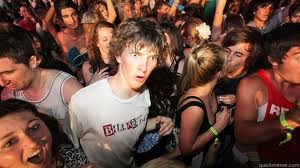
This might come as a shock to some, but young people don’t want to spend their twenties partying because they’re afraid of turning into soulless corporate drones- it’s because we’re enjoying, often for the first time, full independence. Believe it or not, we don’t want to move back in with our parents and spend our youth still under their watchful gaze. We want our own place, our own job, our own car. We want responsibility, and as strange as it sounds, the partying is simply an extension of our attempts to explore our new found freedom.

As for us being entitled, there is something to be said for that. I recall once riding the subway with this blog’s regular contributor Evan and overhearing two youths snivel that the computer they were getting wasn’t quite as advanced as it could be. That said, there’s plenty of so-called “entitlement” that get’s unfairly pinned on us. The Occupy Movement, for example, was criticized by some as being a bunch of lazy kids that expected everything to be handed to them. I mentioned above that the current economic crises responsible for so many of our problems was- and this is key here- not started by us. What was I doing when the economy started to tank? Nothing. I was consuming the food put before me, buying as much stuff as could be expected from a teenager, and working summer jobs when I could. What did I do wrong? Why am I getting stuck with the economic crises I had nothing to do with? If you want to talk about entitlement, let’s talk about the generation who gambled with our collective futures and expects us to clean up the mess. Same goes for the wars we’re currently locked into.

As for our “armchair-activism”, again, there’s plenty wrong with this, and you could spend plenty of time going through what makes it such a pointless endeavor. Nevertheless, I can’t help but feel irked when someone from an older generation- specifically my parent’s generation (who would’ve been my age in the 80s and early 90s). Say what you will about people who mass-forward e-mails about signing petitions or demanding you like a cause on Facebook, there’s at least a level of interest. Barring the grossly simplistic anti-drug movement of the 80s, I can’t exactly recall the major moral movements of that generation. In short, the whole that this generation might be shallow isn’t without merit, but the people who point the finger ought to be awful careful that they pick the log out of their own eye first.

“What do we want?”
“Fluffy hair!”
“When do we want it?”
“After we’re done snorting crack!”

I’m going to finish up here with this last point- addressing the author of the article’s claim that the number one reason “We’ve ruined the occupy wall street generation” is that “we’ve taken away every reason to go outside”.
Am I the only one here who sees a staggering paradox? Am I the only one struggling to resolve how the “Occupy Wall Street People” need to “Get Outside More”? Last time I checked, the protestors at Occupy Wall Street were literally occupying Wall Street.
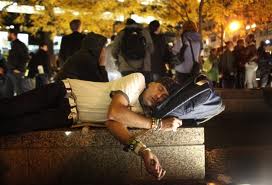
“Look at how pale you are! When’s the last time you went outside? Besides yesterday, and the day before that, and the day before that, and the day before that, and…”

Now do we get outside as much as previous generations. Not really no. But then again, I don’t really see masses of the elderly roaming the streets either. Look, the reason we don’t “go out” is because many of us (who would, by the way, love to go out) are living in cities or urbanized areas. Short of just “walking around”, any major outdoor activity costs us money, which in case you haven’t picked up on by now, isn’t something we have just lying around. Between gas, food, entry fees, and other costs, I’d have to spend nearly a monthly payment to my college debt getting forty-eight hours in the great outdoors. That’s the reason we don’t like paying for entertainment (the author’s fourth point), only it’s not because we expect our entertainment to be free (just ask anyone who’s paid upwards of 60 bucks for a new X-Box game), it’s because we’re trying to be thrifty. If we want to get our own car and our own house to avoid the sneers of our elders, we have to pinch every penny until it slaps us with a sexual harassment lawsuit- entertainment is simply a major way we can save money and not go postal.
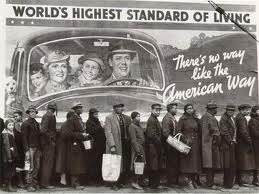
Look at those people trying to get food for free instead of paying for it! Lazy, entitled bunch of bums expecting everything to be handed to ’em, that’s what they are!

So in sum total, that’s my defense of my generation. It’s not a great generation- certainly not yet, anyways. It’s not the worst generation either, though, and before anyone- anyone– wants to label us as lazy or entitled or juvenile; please, look at us in the bigger scheme of things, and better still, look at yourselves. Would you want the standards you place on us applied to you?

Tupac and the Digitally Embalmed

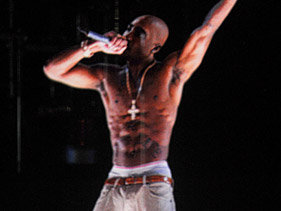
So if you haven’t heard [I hadn’t until yesterday], there was a hologram of Tupac that performed at Coachella.

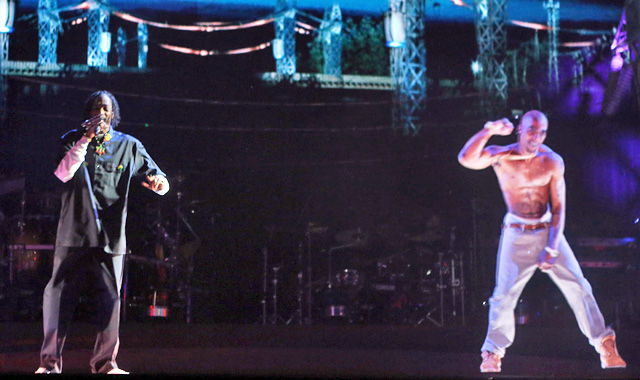
ImageAnd yeah, yeah, we know it wasn’t actually a hologram now, that it was some mirror-projection-onto-glass-thing-that-the-Wall-Street-Journal-explains-better-than-I-could. And we know that there are rumors of a tour of this faux-Tupac, and people are alternately asking when Kurt Cobain will show up and decrying the monstrous zombie-raising performance.

The thing is, you could argue that the hologram/projection isn’t much different from showing videos and voice recordings of the dead. When that technology was new, I imagine people thought it pretty eerie that they could see their loved ones move and breathe and speak on a screen.

Interesting thing: They needed to project the image onto a mirror below the stage, which created a lot of light, which is why I think they made the animation look like it was lit from the bottom - it looked like the glow from the projection apparatus was part of the lighting system.

But the thing about the performance that makes it different from just a new way of looking at recordings of dead people is the new content. The animation of Tupac, at the beginning of his act, shouted “What’s the f*** up, Coachella?”. The choreography of his performance wasn’t just a recording – the people who animated him studied the way he moved, but they controlled his body and created something new. In a sense, Tupac was performing new material.

The Illusion of Interaction
And this is the real issue – not just the commemoration of the dead. We’ve been recalling the dead, through art and technology, as accurately as we can for as long as humans have been dying. But the faux-Tupac isn’t just a 21st century version of an Egyptian sarcophagus mask. What they wanted to create with the Tupac animation – which is why the fact that it was in front of a live audience was such a big deal – was the sense that Tupac was interacting with Snoop Dogg and the audience, just as a real live performer would.

This is about creating an illusion of interaction, and while a scripted interaction with an animation might be actually quite close to the way concerts can be formalized and scripted (like pro wrestling), it’s still just an illusion.

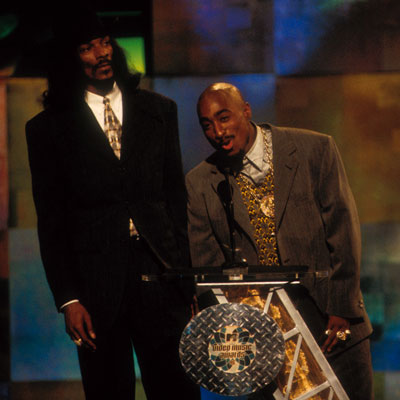
Snoop Dogg and Tupac, both about 25, in 1996

One of the weirder things though, for me,  was the age discrepancy between Snoop Dogg and Animated Tupac. Snoop Dogg is 40, and has grey hair. When Tupac died in 1996, Snoop Dogg was like 25. Tupac, who was shown as a young, shirtless 20-something, would be turning 41 this year if he were still alive, and might not look as good as his hologram did in white sweatpants.

Snoop Dogg, 40, and the Tupac Illusion, still 25

The juxtaposition of digitally-embalmed washboard-ab Tupac and 40-year-old greying Snoop Dogg was probably the most eerie element of the whole performance.

If this trend continues, I think the problem is the illusion of interaction. The essence of human existence is interaction – it’s why we still feel a little weird hearing about guys dating digital AIs, and why the most popular games are the ones that allow you to play on the internet with others. Interaction with humans, illogical and annoying as we are, can’t quite be simulated. And judging from Snoop Dogg’s awkward performance with faux-Tupac, our interactions with the digitally animated dead will always fall a little short of the real thing.

Terrible Moments in News Media (Not Limited to Rush Limbaugh)

Note: This is a version of a piece I wrote this with my brilliant friend Chris Hartline for our student newspaper, and am reprinting it here. Any goodness in it may be credited to him.

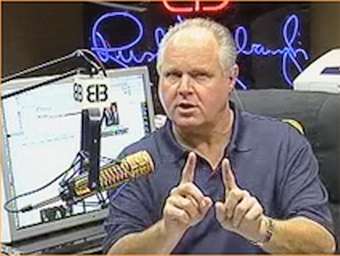
Most of the public is aware of Rush Limbaugh’s stupid and unfunny bit in which he referred to a Georgetown student as a “prostitute” and a “slut” for saying that Georgetown health insurance should cover contraception.

source: lifenews.com

Do not pay attention to this man. He will make you sad.

But the name-calling does not stop there: other instances of sexist slander have been just as offensive but haven’t received as much news coverage as Limbaugh’s insult. Bill Maher, a liberal comedian and amateur political commentator on HBO, referred to Sarah Palin as “a tw-t” and “a c-nt”. Chris Matthews, MSNBC host, called Hillary Clinton “witchy,” “uppity,” and claimed that she was elected to the Senate only because her “husband messed around.”

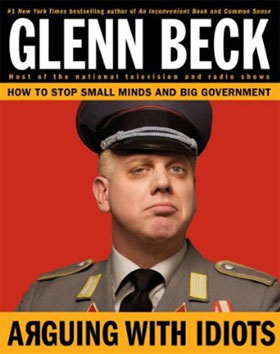
source: glennbeck.com

Looks like public discourse to me.

The state of the news media today is disheartening because the system of acidity seems to be self-perpetuating. Indeed, truculence has become a prevailing rhetorical device. Keith Olbermann had a segment on his show (and a book) called “The Worst Person in the World”. Glenn Beck wrote a book in 2009 called “Arguing with Idiots: How to Stop Small Minds and Big Government”.

Another clear manifestation of the deficit of trust of the media was a 2009 poll done by Time magazine. Walter Cronkite held the title (since 1974) of “Most Trusted Man in America”. Cronkite was the most visible figure in the media, which at the time provided objective discourse and information to the public, and he died in 2009. In the subsequent Time poll, voters said that the most trusted news anchor in America was Comedy Central host and political satirist Jon Stewart.

The fact is that the media is supposed to provide a momentary stay against political hostility, an unbiased source of objective information for the public, and that it is not doing this. Consequently, the public is losing their faith in the news media, and by extension the American political system itself.

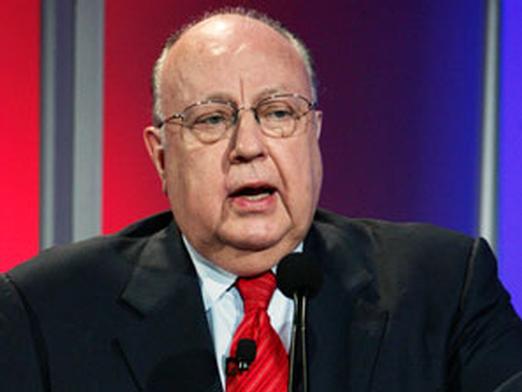
The media has become tool used by political parties to influence the opinions of the public. A blatant example of this is the “Plan for Putting the GOP in the News” memo from the Nixon administration. The 15-page memo was anonymous, and has written comments on it by Nixon’s then-advisor and current Fox News President Roger Ailes.

Roger Ailes!

Roger Ailes: founding CEO of Fox News and adviser to Nixon, Reagan, and Bush. Also credited for possessing the world's least attractive set of jowls.

The memo stated that television was the best medium for political persuasion because of its imminent popularity: “People are lazy. With television you just sit – watch – listen.  The thinking is done for you.” The plan was to record prepackaged interviews with Republican politicians and deliver the videotapes to local news stations. Presently, critics say that Fox News has demonstrated their role as an arm of the Republican Party.

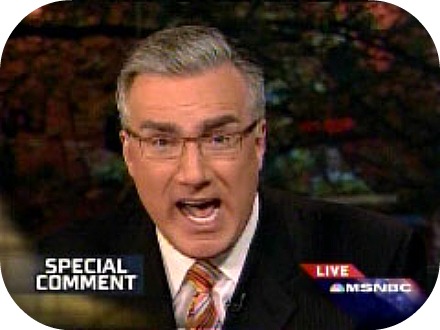
source: msnbc.com

All you need to know about Keith Olbermann is that he's not a pleasant person.

MSNBC, while on the opposite side of the political spectrum from Fox News, is similar in its audacious political stance. In a distasteful and recurring ending rant on his show, former host Keith Olbermann once shouted (his monologue was directed at then-President Bush), “This war is not about you … shut the hell up!”. Fellow host Chris Matthews also said after a 2008 Obama speech that he “felt this thrill going up my leg as Obama spoke.”

So it can be concluded that the media has become unabashedly partisan. Even the very fact that it is standard for each major newspaper to endorse a presidential candidate reflects a problem in the nature of journalism. It results in an overtly ideological news organization – the New York Times is liberal, the Wall Street Journal is conservative; the Washington Post is liberal, the Washington Times is conservative, etc.

A news staff tending to lean one way on the opinions page is typical and expected; however, the fear is that the ideological slant of the editorial pages will seep into the news coverage. The potential and underlying ‘spin’ of news stories becomes more important than the objectivity of the events being reported.

And maybe the Nixon administration’s prediction about the easy audience of television was prescient: political commentary television programs can be especially caustic and, at times, juvenile. They seem to appeal to the lowest common denominator of the public and of individuals. Keith Olbermann, Glenn Beck, Rachel Maddow, and Bill O’Reilly are all political commentators who base their rhetoric on the petty mockery of whoever disagrees with them – their arguments are negative, not positive, and clever insults take precedent over constructive criticism.

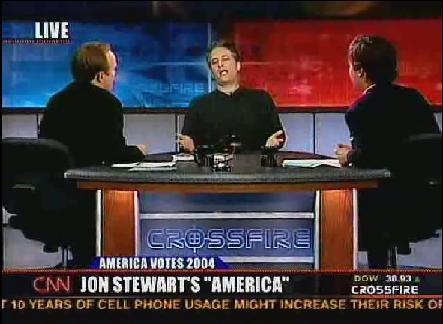
source: portland.indymedia.org

Jon Stewart pleads with the hosts of Crossfire to "stop hurting America." Crossfire was cancelled shortly after Stewart's interview.

The media itself has not only lost its ability to objectively inform the public of unbiased political events – it has become a tool for fostering and encouraging political contention. The role of the news media is not just lost – it has been perverted. As Jon Stewart said to the hosts of Crossfire, this inflammation of petty and theatrical bickering isn’t just bad journalism – it’s hurting America.

David Brooks said: “There’s a collapse in the public’s faith in American institutions. The media has done a poor job. We’ve become as insular and self-regarding as any [other institution].” It is no wonder, then, that there is a deficit of trust among the younger generations – the apparent disintegration of the integrity of our news sources is nothing less than repelling.

Facebook Censorship: A Sign of the Times?

source: serc.net The internet was recently given a leak of Facebook’s censorship standards. Amine Derkaoui, a previous “employee” of Facebook (employee is in quotes here because he was paid $1 an hour plus commission, which is, in a word, horrid) was so disgruntled that he gave Gawker the handbook used by Derkaoui and other assumedly disgruntled workers to know which photographs and comments to censor on Facebook, which ones to send upwards for decision by an administrator, and which ones were ok. Gawker published the one-page “cheat sheet” summarizing the standards on their website.

source: gawker.com

A summary of Facebook's censorship standards, leaked to Gawker

This gives an interesting perspective of what is considered “acceptable” and tasteful by popular consensus. Ear wax is censored, snot is not? (I guess if it was, millions of baby pictures would have to be deleted). For example, the “cheat sheet” says that “Digital/cartoon nudity” should be censored, but “Art nudity ok”, excluding all digitally created images from “art”, which is sort of a surprisingly passe way for Facebook to define things.

Something interesting about the released standard is the fact that it is clearly representing three categories of social unacceptability. The first, the depiction, commitment, planning, or lauding of criminal activity, is expected in a list like this – sexual assault, organized crime, nudity, and hard drugs are pretty normal in a “delete this” list for any censorship website.

The second category is more nuanced – I can only describe this second category as anything which debases humanity. This includes more obvious things like human organs, mutilation, violent speech, or anything encouraging or lauding mutilation or defacement of the human body (and, in some cases, animals). This also applies to willing defacement: threats of suicide, self-harm, and anything promoting eating disorders – this is interesting in light of the fact that pro-ana groups are still on Facebook. Maybe closed groups are immune to censorship – or the people getting paid next to nothing in other countries just haven’t caught them yet.

Another example of the censorship of non-illegal debasement of humanity: the prohibition of any photoshopped pictures of humans, “whether negative, positive, or neutral.” This is interesting; perhaps it is simply the case that it’s too hard to gauge the positive or negative spin of a photoshopped picture, but I think this rule isn’t just about bullying – it’s about the fact that Facebook doesn’t want to turn into Reddit (if they don’t, then they should stop trying to be Tumblr and take away the “follow” option). Their prohibition of any “versus” photo – any image grafting two photographs of people side by side in comparison – would be for the similar reason of “trying to keep Facebook untacky”. This rule is especially ironic considering Mark Zuckerberg’s famous-now-that-we’ve-all-seen-The-Social-Network first project facemash.com. Prohibitions of holocaust denial fall under the goal of no human debasement – but they apply to the third category as well.

The third and final category I’ll call “Nobody Get Mad At Us Please.” The most interesting rule in this one is the censorship of any maps of a part of Turkey (Kurdistan) and the prohibition of language or images against Mustafa Kemal Ataturk, as those laws seem suspiciously anti-free-speech-ish, and Turkey is a part of the UN.

The internet as it is currently developing has been compared to the semimythical Wild West of early American history – looking back in 50 years on this time, we’ll probably be astonished at how unregulated everything was. Governments just don’t have a good enough grasp on this new platform for data and information to be able to figure out how to effectively and efficiently (and ethically) regulate it – yet. This conversation applies to file sharing and copyright infringement as well, but Facebook’s censorship guidelines illuminate a more necessarily practical standard – things made up by businesses and not government are almost always more necessarily practical, if perhaps less ethically consistent.

You Should Care About Super PACs

The new potentially-sort-of-boring-topic-about-which-we-should-educate-ourselves (this is the first election I’m paying attention to and I’m finding a lot of these things) is the issue of Super PACs and their effect on the current election.

To summarize, Political Action Committees (PACs) have been around for a while. They are organizations that raise money to use toward elections, usually television commercials — they are limited to collecting small amounts of money from individuals, political parties, and other PACs — and the stipulation was that they could only accept $5000 per person per year, which meant that (at least in theory) candidates’ support would be semi-related to the amount of supporters donating to them.

In 2010, however, it became legal for some organizations to receive unlimited donations from corporations and unions: organizations which accept these unlimited donations are called “super PACs.” They are like PACs, but much more evil. While PACs forced candidates to build a large support base to earn a substantial amount of money, a few millionaire individuals or corporations can fund a candidate’s entire ad campaign.

Super PACs are devastating to the essence of democracy: Why should congressional and presidential candidates care more about the votes of single constituents than the needs of unions and corporations when campaigns can be made or broken by union and corporate funding?

Super PACs allow campaigns to distance themselves from negative ad campaigns while reaping the benefits from commercials slandering political opponents — Mitt Romney’s PAC (the idiotically named “Restoring Our Future” — okay, one might restore hope for the future, but not the future itself) spent $3 million running negative campaigns against Newt Gingrich, effectively killing his campaign.

(evil?)Super PACs allow corporations and unions to spend huge amounts of money on elections — billions, in the 2010 midterm election — and that directly translates into influence on government decisions. If you’re imagining large men in suits grinning evilly while photographing themselves with dollar bills coming out of their ears, keep imagining it: there’s a picture of Mitt Romney that looks exactly like that.
Super PACs are a key factor in the commercialization of the political process. Since the late 90s, the money involved in elections (adjusted for inflation) has increased at an alarming rate. The amount of money that went into the 2008 election ($1 billion, 86 million) was more than twice that of the 1996 election (599 million dollars, adjusted for inflation) — Barack Obama’s 2008 campaign alone spent more than was spent in 1996 ($799 million).

Super PACs do not have to report the amount of money they receive, or how they spend it. A candidate’s super PAC can fund ridiculous amounts of illogical and negative commercials without having to pin the candidate’s name on the commercials at all. A candidate’s super PAC can also donate money to other PACs, effectively buying the good will of other politicians. Recent Supreme Court decisions deem this legal.

You should buy one of these tshirts on Colbert's website. And protect democracy.

The Colbert Report flaunted the troubling legalities of Super PACs in last Thursday’s episode, when Stephen Colbert’s Super PAC (Americans for a Better Tomorrow, Tomorrow) was transferred from Colbert to Jon Stewart as Colbert announced his fake intention to run for president. Colbert is not supposed to coordinate with the super PAC, his lawyer said on the show, but he could remain business partners with Stewart and the staff of his PAC didn’t have to change, even though they clearly knew everything about his election strategy.

Super PACs are the final step in making political campaigns entirely about money and slander. The political scene becomes a game of who-can-find-the-most-loopholes, with politicians focusing their energies on how to betray the spirit of the law without breaking the letter of it, which seems quite bad indeed.

GOP 2012: Why Competence and Communication are Important

NB: I’m a registered Democrat, but not a terribly leftist one. I’m a Democrat the way most college students are Democrats, I suspect – by default.


I’ve been thinking about the circus that is the Republican nomination race. You should know that I’m not a politics nut, nor do I plan on being one – but the state of my society does interest me sometimes. The GOP right now is both amusing and extremely sad. A series of caricatures who have served their time as one-month fads leaves me wondering about the state of American politics. The string of slip-up clips zooming through the internet and the idiotic things that these candidates have said might receive too much focus, according to some – but I think that the dismal communication and public speaking skills of the candidates this year is itself something to be concerned about, before even delving into their political views (too complicated for me to do any justice).

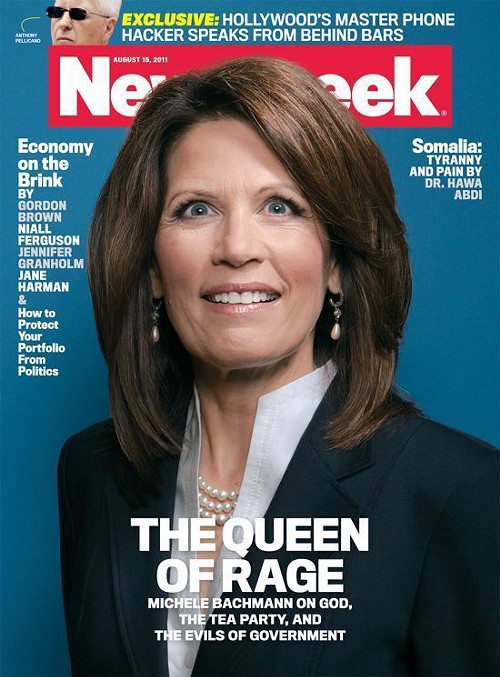
Bachman's disastrous Newsweek cover

Michele Bachmann was kind of the first fad of the GOP, and was slammed repeatedly for her bizarre and factually inaccurate comments in public – waxing poetic about New Hampshire, calling it “the state where the shot was heard round the world in Lexington and Concord,” while Lexington and Concord are actually in Massachusetts. She commented on the census, saying that “[My family] won’t be answering any information beyond [number of people in our household], because the Constitution doesn’t require any information beyond that,” which also isn’t true – the Constitution mandates citizens to fill out census forms. Or this gem about carbon dioxide: “carbon dioxide is not a harmful gas, it is a harmless gas. Carbon dioxide is natural. It is not harmful. It is part of Earth’s life cycle…And yet we’re being told that we have to reduce this natural substance and reduce the American standard of living to create an arbitrary reduction in something that is naturally occurring in the earth.” The woman is not a good speaker – she is clearly grasping for patriotic straws when she calls forth grand images of the Revolutionary War, and clearly grasping for Tea Party straws when she pigheadedly and uneducatedly dismisses the idea of global warming. This kind of saying-anything-to-please-a-crowd is not, not at all, a quality one should accept in a presidential candidate.

Rick Perry: Oops

Rick Perry was always too much like GWB to stand a chance. Not terribly substantial – seemed like the kind of guy I’d like to have a beer with but, like W, doesn’t even seem like he’d want to be the president, at the end of the day. I think the stress of even the race was too much for him.

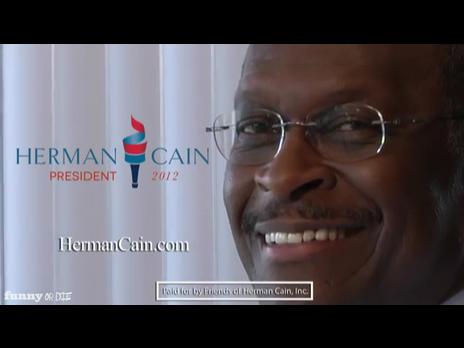
Screenshot from Cain's abysmal campaign commercial

When Herman Cain was declared frontrunner of the Republican Party, it was the last time that I was surprised/horrified at the state of the GOP candidates. Herman Cain, who attended Glenn Beck’s rally in Israel. Herman Cain, who said: “When they ask me who’s the president of Ubeki-beki-beki-beki-stan-stan, I’m going to say, ‘You know, I don’t know. Do you know?'” Herman Cain, who said: “I don’t have facts to back this up, but I happen to believe that these demonstrations are planned and orchestrated to distract from the failed policies of the Obama administration.” Herman Cain, who is a terrible, terrible candidate and appears to be willfully ignorant of foreign policy – or, at least, he imagines that that image is more desirable than utilizing his education.

So once Newt Gingrich was declared frontrunner, the GOP picking terrible candidates was sort of an expected pattern. Newt Gingrich was disgraced in the ’90s for having the worst Speakership in history – he suggested that the government shutdown was a personal attack against him, was the first Speaker of the House to receive ethical sanctions, and resigned in disgrace, commenting: “My only fear would be that if I tried to stay, it would just overshadow whoever my successor is.” I remember his name being the punch-line of jokes when I was a kid.

Also, he calls himself Newt, and he runs under “NEWT 2012”. Even without his ludicrous political career, no president should have an animal name, I’ve decided.

So why, why is the GOP choosing candidates whom I can mock by just quoting things that they actually said? Why are voters sashaying from Neo-Sarah-Palin to Neo-George-W. to Foreign-Policy-Knowledge-Have-Not to Only-Slightly-More-Desirable-As-A-President-Than-An-Actual-Newt?

An attack on the speaking skills of candidates might seem petty, but the speech- and communication- related responsibilities of the United States President are nothing to be neglected. I do suspect that the pressure on a candidate is more intense than in any other political position, and that slips in speech are widely a result of that pressure combined with the rabidness of the amusing-slip-up-snatching-and-amplifying media, but I also think that our standards for the public speaking skills of our president should be high. The pressure on candidates to not commit to anything – to sound good without making any promises – has caused the degeneration of political debates into a rhetoric-slinging festival resembling arguing grade schoolers.

These people are politicians – they have college degrees – they were popular enough to make it into the political scene and be elected to (in most cases) at least one high government office and run it with some level of competence. At least, that’s what I stubbornly assume, as I am afraid to allow myself to abandon all my hope in the political system. So let’s assume that the candidates are fairly competent and can sometimes speak without sounding like grade schoolers. Why, then, is everything about the GOP race so ridiculous?

I think that the 2012 GOP race so far demonstrates the logical extreme of a system built on fear of commitment and fear of offending even the most idiotic constituents. Noncommital and pretty-sounding political doublespeak is ridiculous in itself and always has been; in this year’s race, the insipid rhetoric has been deconstructed to reveal its logical core: nonsense. Politicians have been trained to say nothing for a long time; instead of learning what they need to know, they only need to be able to appear to know it; we are beginning to see the evidence of this more obviously. And with it, the apparent neglect of the American public to remember that the President is not only a likeable face, but the Commander in Chief of our army; not only a spearhead for conservative/liberal policy (depending on his/her affiliation, obvs.) but a position with the opportunity to encourage negotiation between the two sides of Congress and a key communicator with heads of state of other countries. And that is why the state of the GOP leanings isn’t just amusing – it’s dismal. Discouraging. One can only hope that the nominee will be someone we can take seriously.