Earlier today Evan sent me a link to a documentary on YouTube dealing with the subject of “hacktivists,” or more specifically, the rise of internet mischief and mayhem group “Anonymous.” For the most part, the movie was decent enough, though of course it wasn’t without its own agenda and a there are a few misconceptions resulting from that. But this post isn’t going to be a review. Rather, it’s going to launch off from an interesting phenomena I saw throughout the documentary- and that was the way people talked about Anonymous.

See, whenever people talk about the group, they usually have to veer off into a parenthetical speech where they try to explain just exactly who these guys are, and how at the same time they can be anybody, because anybody can be “Anonymous.” The end result is that they wind up sounding like a paranoid schizophrenic or conspiracy theorist, and the explanation itself doesn’t sound all that believable. After all, how can any individual or group take on the mantle and conduct whatever hacking or pranking or ranting they do against their enemies without some leadership? How do they do anything if they have no demands or agenda?
The problem here (and elsewhere, but we’ll get to that in a minute) is that a completely wrong lens is being used to look at the group. People are looking for structure or goals- the two things that usually define any collection of people, and that’s where it falls apart. Anonymous isn’t a group, it’s an idea. It’s a culture.

Now that sounds strange, but bear with me here.
What’s a conservative?

You probably have an image in your head right now. You can probably tell me what a conservative would think about a certain issue, or how he or she would act in a certain scenario, or the general value system one might have, but if I really pushed you for criteria, my guess is that you wouldn’t be able to give me one. After all- there are varying ideas of “conservatism,” and no real defined boundaries. You’ll find conservatives who state that the “religious extremists” have a skewed view of conservative values, and those same extremists offer the exact same criticism of those wimpy fiscal conservatives. Regardless of the specifics, once you stand back, both groups do fit neatly into the category of “conservative.”
Now apply the same general lens to Anonymous.
What’s “Anonymous”? It’s not a group with an ideology- it’s an ideology with a group, or rather, a whole bunch of groups. Consensus isn’t made through secretive discussion boards or by a clandestine collective of angry computer-geeks. Consensus isn’t made at all- actions simply stem from a general set of perspectives and ideas (the most major of which is freedom of speech and opposition to censorship) held by the adherents. Anonymous doesn’t exist as a coherent, structured group anymore than any culture or subculture exists as a coherent, structured group. Sure you’ve got your major players, and you’ve got various projects or movements within, but at the end of the day, there’s no list of demands, just a set of values.
The reason I bring this up is that this kind of organic organization is becoming more and more prevalent in our culture, the most notable example perhaps being the “Occupy Movement.” Critics of the movement, in its early days, continually parroted the protest of “But what do they want?“- the issue with that being that there was no, and never could be, any list of demands. Occupy wasn’t a structured or unified group- it was, like Anonymous is, a culture. A massive number of people sharing (and developing) certain common perspectives and values and then taking actions based on those views (those actions further developing those views, and so on ad infinitum). Trying to get demands out of Occupy protestors would’ve been about as fruitful as trying to get demands out of conservatives. You’re going to get conflicting specifics, even if there is a general set of guiding principles.
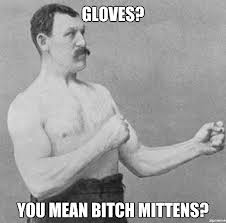
And of course, there are others out there. Though there’s no real term or name for it yet, there’s a rising “Manly” culture, comprised of elements of survivalists, masculinists, and guys who debate each other on-line about how to build porches and properly maintain classic muscle cars. Now I can’t claim to know the origin of this- perhaps it’s partly a reaction against our increasing dependence on technology, perhaps it stems from our powerlessness in a time of political and economic hardship- but either way, it is a growing culture based in principals of independence, self-sufficiency, self-control.

On the other side of the spectrum, there’s the general philosophies and ideas of the trans-humanists, futurists, utopians, geeks, nerds, and people who worship the ground Bill Nye and Neil DeGrasse Tyson walk on. Those who view technology as being the solution to most, if not all, human ills, and eagerly await the day when you can get a free jet-pack when you go in for your cancer vaccine.
Now why bring any of this up?
Because it’s important.
We’re currently breaking away from the liberal/conservative paradigm, and we’re going to need to understand what else is out there. This isn’t to say that we’ve only had conservative and liberal cultures- that simply isn’t true. But we can’t deny that there has been, over the past decade, developments of new value-systems which are really neither here nor there. New and alternative views for what the world ought to be, and how you ought to be in it. Over the course of the next few weeks, I’ll be focusing on dissecting these various concepts, so be sure to stop by next Monday for my examination of “Manly” culture.




 Culture War Reporters