Author Archives: Elisa

Hugo: Scorsese Tells a Story and is Awesome at it

source: alualuna.wordpress.comHugo was another demonstration that a large part of Scorsese is dedicated to documentary. His movie plots rarely rely only on a simple story structure, but draw at truth about some world or society or person – in The Aviator, it was the telling of the life of Howard Hughes; in Kundun it was the exile of Dalai Lama Tenzin Gyatzo from India; In Shutter Island it was the mechanics of early 20th century mental health treatment. Scorsese has also made a fair share of documentaries, on topics like Italian cinema, The Rolling Stones, and Bob Dylan.

source: typofile.com

The film tells the story of early and revolutionary filmmaker Georges Melies

In Hugo, Scorsese tells the story of Georges Méliès and the beginning of filmmaking in general. At points the movie goes very far into documentary-land, like in the flashback/exposition which serves as the emotional denoument of the story, which rather adorably self-consciously begins with a full-on direct shot of Ben Kingsley’s face, and involves long clips of Méliès’ original film.

Scorsese uses archetype expertly well, wielding it like a tool and using structure as a support, not a creative hindrance. The plot devices are intentional, elegant, and familiar enough to be pleasant but done well enough to avoid the negative aspects of cliche: the plucky, adorable girl, the awkward side love story, the child-who-is-the-exception-to-the-rule, and the ultimately relatable and flawed authority figure whose villiany is centered on the fact that he does not notice that the child is the exception-to-the-rule [complete with semi-frightening animal companion, physical deformity, past pain, awkward love interest…].

source: hollywoodreporter.com

Hugo and his father, who is briefly and attractively played by Jude Law

The aesthetic themes of the film, too, are constructed elegantly. Hugo is a boy who only sees the world through cracks and holes – through the numbers in the station clocks, through the holes in the vent windows, and through the metal grid of the automaton’s chest. He ultimately enters the world through these cracks, too, when he slips out of the vents or climbs out of the clock face to hang outside. Hugo’s relation to cracks and holes and small spaces mirrors Méliès’ relationship with the camera lens: he sees the world through a lens and ultimately enters it through the lens as well.

The film uses as sort of wheel spokes Hugo’s various relationships with the people surrounding him. The most obvious one is his father, and the automaton which connects them. There’s also, however, the fact that in a fit of frustration he flings himself into his degenerate uncle’s armchair; there’s the moment when the previously hostile bookseller (given gravitas by being played by Saruman) lends Hugo Robin Hood, and there’s Hugo’s emotional infiltration to Georges via Isabelle and Georges’ wife.

The film is ultimately a demonstration of developed connections and necessary maintenances, without which the characters would remain inoperable, like the broken automaton. The relationship aspect of Hugo includes Scorsese’s relationship with the film itself, and the thing reads like a love letter to filmmaking in general.

Worth noting:

source: aceshowbiz.com

Sacha Baron Cohen in Hugo

Sacha Baron Cohen is absolutely brilliant in his complex portrayal of a character which could very easily be buffooned.His stuttering speech is not quite ridiculous enough for us to laugh at, and it complements the familiar crippling self-consciousness that sort of oozes out of his character’s dialogue. He is a fool, but in a relatable sense. He is terribly awkward, but we cringe instead of laugh at his misfortunes. His air of self-confidence is quite transparent and allows us to see the very real human being underneath. Sacha Baron Cohen does excellently.

It seems kind of moot to point out that Ben Kingsley also does a tremendous job. The part spans a huge amount of time and character development, demanding that Kingsley not just play the secretive, intelligent, and broken older Méliès, but also the pre-war inspired artist, delivering platitudes to young boys while wearing a lobster costume. In Hugo, Ben Kingsley is everything that his part should be.

The aesthetics are another solid part of the film. Hugo is (and it does this wonderfully) a war-era film glazed in steam punk. The aesthetic is wrapped in gears, trains, skeleton keys, and old video cameras, and topped with flower sellers in berets and a reassuring sense of the fantastic – lovers of flim noir, steam punk, cyber punk and any aesthetically-intentional style may drool a little. I am unsure about how I feel about 3D – I am too poor and not interested enough to see the more expensive version of the movie – but the fact that directors like Scorsese and Jackson are using it is making me consider itmore carefully. I can at least see how the aesthetic would work well with the round, polished dimension that 3D movies have.

Hugo is a story and, if you Wikipedia Georges Méliès, a true one at that. Its comments on the changing public reception to fantasy and story telling are especially pertinent: the generation that grew up on ultra-ironic media like Shrek, The Office, and SNL are more often receiving stories told unapologetically, like Hugo and Avatar and Harry Potter, and it is interesting to see how we’ll react.

Social Service and the 2012 Election

I was sitting at a meeting reviewing cases of indicted abusers – I intern at a social services office near my college, in the second poorest county in New York – and one case involved a man who had served a few months’ probation for abuse and then, upon release, committed a horridly violent act against the same victim. “We failed this kid,” an officer at the meeting said of the victim.

I like working in social services because it simultaneously disenchants and inspires me in regards to the mechanisms of helping people. I work in an office that gives legal and practical assistance to domestic violence victims, houses a women’s shelter, and runs a food pantry.

Many of our clients tell us that they don’t know what they would do without us, that we were their last chance, etc. After these cases, there is a sense that our tax dollars are being put to good use, as it were – that the social service is doing what a social service is supposed to do. But some clients aren’t as easily rewarding. Some are demanding and abrasive; their accounts of incidences don’t match police reports and they tell scattered and narcissistic stories, the verity of which crumble when anyone asks them to repeat a statement. We get people in our office who are clearly victims, but we also get the conniving, the liars, and people who file abuse complaints just to be vindictive. Our services are alternately treasured and taken advantage of.

Whatever the makeup of social service is, it is definitely not black and white; working with the logistics of public service enforces the fact that there are no clear cut cases, and that every policy is going to, at some point, meet an exception of the rule. Sometimes these exceptions are people; sometimes they are failed by the system. Sometimes (oftentimes) people seek to suck as many resources out of the public sphere as they are legally allotted. A general sense of entitlement pervades the population, which often means that public resources are given out at a competitive, first-come-first-serve basis.

But does the fact that the system is occasionally cheated discount the help it provides others? This is a question that must be asked in regards to every public service.

Charity is not so simple as shelling out money to the poor – though money helps, the uncomfortable truth is that anyone (of any class) who receives money will often not use it to their long term benefit or to that of society. The other danger of charity is the possibility of using monetary donation to excuse ourselves from any personal discomfort or investment. If we consider money the thing that solves the problem (and, believe me, it does help), we can ignore the ugly logistics of how and when and why to distribute it.

This is why any candidate who proposes “simple” tax plans (Herman Cainn, Rick Perry) ends up looking kind of foolish. Perry recently called Social Security a “Ponzi scheme” and called for the privatization of the whole thing. While basically everyone says that Social Security is pretty screwed up, much of Perry’s criticism of SS seems to be driven by a fad-like propensity for drastic calls for smaller Federal government, and the implications of such a trend on social services is worrisome.

Ron Paul, on the other hand, does have the advantage of actually sticking to his guns on the issues, it seems – but I can’t believe that his defense of less government in regard to social issues – that “increasing federal funding leaves fewer resources available for the voluntary provision of social services” – is practical at all. Calls for smaller federal government often cite the support of the power of state governments instead, but the basic philosophy seems like it would call for less state governments as well as federal.

Policy change is what is really effective. The problem is that there is no one policy change that will fix everything; social programs need to be constantly restructured to adapt to a changing society. This makes policy changes less flashy and more complicated than large donations or huge influxes of funding, and so they receive less public and political attention than they should. The logistics of helping people can be terribly complicated, and a perfect policy will never be implemented, but public assistance is still a noble, if not a glamorous, necessity for society.

A Letter to Anyone Entering the Job Market in 2012

Cynicism about the economy, the job market, and basically anything in “the world today” is inappropriately and lazily fashionable right now, I think. Not that I’m foolish enough to say that the aforementioned institutions have nothing going wrong with them; it’s just that the default conversation seems to too often involve predictions of our gloomy, futureless futures, especially for my demographic – that is, middle class college students in the US.

Those of us who are reading this on the internet, who have enough food to eat, who have clean water to drink and somewhere warm to sleep, and who are able to rely on at least temporary financial assistance from our relatives if we really needed it – we are some of the most privileged people in the world right now, economically and situationally.

To be clear, I don’t think we’re guaranteed happiness. Life is hard. And sad. But I do think that we have been given ample resources to construct a stable and joyful existence, however, and I think that it might be healthy to occasionally reflect upon that fact with a simple and unaffected sense of baffled gratitude.

Students now are groomed not only to succeed academically but to operate professionally. We’ve been taught textbooks worth of information and, more importantly, a work ethic—the emotional benefits of which you can discount if you like but which does, it cannot be denied, set one up rather nicely for social and economic success (in the West at least). Some of us read nonfiction and enjoy it sometimes. Most of us will never be homeless. Almost all of us have some sort of skill that we cultivate for no career-oriented reason. We have learned that sometimes we are wrong, that sometimes our opinions matter and (possibly most importantly) that sometimes they don’t.

And yeah, going from college into the Real World is going to be a rather shocking change for many of us. But I think most of us will thrive on the opportunity to do work for money, after floundering in abstract work while paying lots of money to do so (yes, in the long term this makes sense, but when you are writing a paper at 3 in the morning and think to yourself that this is costing you your life’s savings, the logic of the situation is hard to articulate).

When the terror of post-graduation becomes paralyzing, I think it might be helpful to remember that we are all rather intelligent, capable, ingenuous people. We might get a job the summer after we graduate that has nothing to do with our major, but we will know to be thankful for a job, and we will be able to do it to the best of our overqualified abilities. And we might not be able to achieve whatever two-dimensional ideal of living we hold in our heads (I’m an English major, so for most of my friend group this involves “a cabin in the woods somewhere” and lots of books and wine and maybe facial hair), but I think we have the resources to find joy and a sense of potency in whatever work is at hand, whether it be academic work or scraping by for a few years at a job for which we are wholly overqualified. So I have hope that my generation can survive if given the chance.

The Implications of Charlie Hebdo’s Mockery of Islam and Muslims’ Response

source: gatesofvienna.blogspot.com

On the cover of Charlie Hebdo last week, Mohammed is saying (in English), "100 lashes if you don't die laughing!". Reproductions of images of Mohammed are considered particularly offensive in Islam.

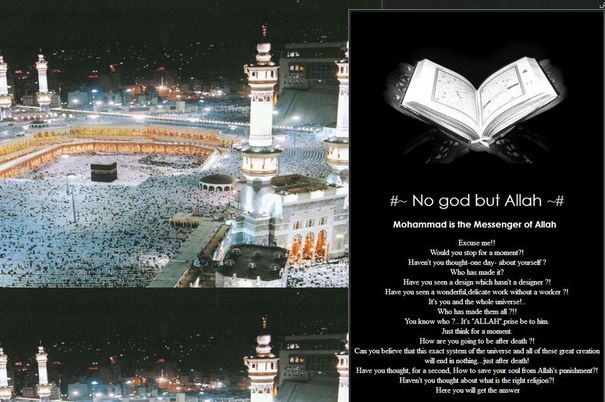
Charlie Hebdo [“Charlie Weekly”], kind of The Onion of France, published an issue last week entitled “Charia Hebdo”, which featured a cartoon of Mohammed saying (in French) “100 lashes if you don’t die laughing!”. The November 2 issue was retitled “Charia Hebdo” (referring to the holy Islamic code of laws called Sharia), and listed Mohammed as “guest editor” for the issue. In response, the publication’s website was hacked, showing a picture of Mecca and the text [in English] “No God But Allah”, followed by a series of questions arguing for theism (specifically Islam, but they were pretty generally theistic questions, like “Have you seen a wonderful delicate work without a worker?”). A 20 year old IT worker in Turkey claimed responsibility for the hacking. Shortly before the issue hit the streets, Charlie Hebdo’s offices were set on fire (via a molotov cocktail, according to telegraph.co.uk) and much of the inside of them was destroyed.

tendancecoatesy.wordpress.com

The hacked Charlie Hebdo website.

Given the recent passing of the bill that banned the wearing of niqabs and burkas under penalty of monetary fine, the demonstration of further European French/Muslim French tension is unsurprising and worrisome. The demographics of France are disputed, with reports from 2009 ranging from 4%-10% of the population being Muslim, but it is agreed upon that the Muslim population in France is increasing rapidly. Muslims have expressed feelings of ostracization by Sarkozy, especially with the recent head covering bill, and it is evident from Charlie Hebdo’s publication that at least some animosity towards Islam is common among the European French.

Charlie Hebdo’s publication was specifically blasphemous to Islam – more so than, say, Christians would probably find a picture of Jesus saying the same thing [though yes that would be rather upsetting to many people] – because of the specific Islamic mandate against the reproduction of pictures of Mohammed, and the reverence with which the prophet is held.

The French government passed a similiar and vaguer bill prohibiting ‘conspicuous religious symbols’ in 2004. This is just a small demonstration of the staunch secularism in France since 1789, when the revolution removed the huge amounts of power the Roman Catholic Church had over society. After the revolution, France has made it a pretty big deal to avoid giving a religious group such power again, and so has consistently been very intentional about the individualisation of religion and maintaining the separation between church and state.

This separation has worked fairly well for the past few centuries, as devout French Christians became fewer in number and French society as a whole valued an a-religious government, but the increasing Muslim population in France is beginning to disturb that environment. Though the population of Muslims in France is small, the presence of a solid and devout minority in such a staunchly secularist country will foster discord, the beginnings of which can be seen in recent events.

Filling the Market Void: Why the E-Reader is not the End of the World


Some of the more literary types in my life (I am an English major so there are a quite a few of these) have been lamenting the demise of the good-old-paper-book since the very first e-readers appeared on Christmas lists. I cannot assuage the material frets of such people (What will hipsters put in their wedding photos if not piles of old books?), and it does seem sort of inevitable that paper books will go the way of vinyl. But as a movement in literature (if not material aesthetics), the e-reader does not worry me as much as it does some, who say that the Kindle and the Nook aren’t only the demise of nice-looking books but the quality of writing and fiction in general, touting the mass of self-published books and the hypothetically lower standards of publishers and editors.

There will always be a world of literature that is distinguished from books written and sold purely for entertainment, just as there will always be films made that are distinct from Hallmark TV movies, even though the same medium is being used to create the two things. This is the world that I am commenting on. The distribution of entertainment has always been fairly automatic – whatever medium is most popular will be used to make the most profit. Yaay, capitalism. There probably isn’t anything intrinsically wrong with this, but it’s important to remember that the hordes of paperbacks on the shelves in Walmart are not the front-runners of what’s being published right now – the most currently popular art will not necessarily be the most enduring.

Any media change creates a market void, and this medium is going to change, which means that there’s going to be a new horde of mediocre (and bad) material produced. I think that society tends to judge media change as culture-killing (or satanic or elitist or antielitist or condemning adjective of the day) (this generally only applies to media changes brought on by those in a younger age cohort than the complainer) and point to the “clear evidence” of the new medium’s depravity: the slew of obviously artistically empty new entertainment. But the fact is that artistically empty (unedifying, depraved, what have you) entertainment is like a cultural given – it has and will always exist. But I think that [maybe not all but at least some] humans are never going to fail to be surprisingly and inspiringly creative.

Barnes and Noble Partners with Wayfair.com, World Becomes a Sadder Place

Barnes and Noble: now your source for superfluously shiny things

Barnes and Noble will now be selling, among other things, popcorn makers, vacuum cleaners, and dehumidifiers via their website. The former sanctuary of all things book-related has prostituted itself out, it seems, to Wayfair, an online retailer. I may represent a non-objective opinion while relaying this information.

Wayfair is one of those frightening oh-my-gosh-we-sell-fricking-everything (like seven different types of bread boxes everything) websites where everything is in Helvetica (I watched that movie and am now a temporary font snob1) but all of the products elicit the same creepy feeling one gets from the idea of ordering cookies from magazines or packages of prepared meals from dieting programs. The kind of website that offers an ice bucket shaped like a crown for $517.49 and a Wonderbread plastic sandwich box for $3.99. That has 101 search results for the words “tissue box covers”.

So I weep for you, Barnes and Noble. I know that you were doing that thing where you tout overpriced polka-dotted notebooks under “Designed Exclusively for Barnes and Noble by [vaguely exotic name],” and I know that you were doing that thing where you partnered with Godiva, but at least the stationary was book-related and the chocolate was delicious. But furniture? Infomercial cookware? Who is going to buy their thermostat from Barnes and Noble, I ask you?2

I’m sure that there’s a grand marketing scheme going on here, and that by all calculations this will probably be a profitable move for Barnes and Noble, or the deal they struck with Wayfair was a steal enough for them to cut their losses if it doesn’t work. But the idea of like the internet-aged Wells Fargo catalogue just doesn’t make sense. Amazon and Walmart did not spend the majority of their retailing lifespans dedicated to a single item like you have, Barnes and Noble. Do not think that you can become them. You can’t. Borders is even gone, and you were doing way better than them anyways, on the internet front – you started earlier than they did and handled it a lot more classily (til now, that is). You kind of have the Nook thing going on, and if you get your act together on that front instead of diversifying your attention away, you could actually continue to matter in that market. Don’t let Amazon get you down!

Remember when you used to at least pretend like you were a friendly bookstore instead of a gigantic, impersonal corporation? You’re definitely failing at that with this move. I will just be interested to see what making yourself an unspecified and abstract retailer does to your customer loyalty.

1 I’m not even sure if the website’s font actually IS Helvetica, but it’s something trying to look Swedish, I can tell you that much

2 Weird upper-middle class people with too much mascara and blonde hair, that’s who, I’m pretty sure.