Category Archives: art

Oscar Nominated Live Action Shorts Review (Also Austin is a Hipster City)

So I’m spending my February break in Austin, which is like a surprising hipster bastion in the middle of the yee-hawing gunslinging frying pan that is Texas. It is a strange situation.

I took a picture of this myself but it was at nightThe Alamo Drafthouse, for example, is not very much like the Alamo or a traditional drafthouse. The Alamo (at various locations; we went to South Lamar) in Austin greets you first with its selection of Princess Bride wines (“As You Wish White” and “Inconceivable Cab”), lightbulbs set in old film reels, and murals of retro movie scenes on the walls. Instead of trivia questions (“How many movies has Tom Hanks starred in that start with M?”) while you are waiting for the movie, they show old cartoons and news reals from the early 20th century; instead of a timid reminder to silence cell phones, they show a video clip of an old lady coming to beat you up if you speak or leave your cell phone on at all. On top of this, they serve pretty decent food that you can order throughout the film. Some people may call this Heaven (Who knew that Heaven would be in Texas?). The Alamo plays blockbusters, but also has events like Marlon Brando marathons and Princess Bride quote-alongs and – what I went to see last Sunday – a showing of the 5 Oscar-nominated short films.

All of the movies are 100% worth watching and you should go do it right now if you are doing nothing better (which I’m going to assume is the case). They range from a sad and stressful tale of moral ambiguity (Indian/German collaboration Raju) to a short (and brilliantly acted) depiction of an altar boy’s revenge (Pentecost).
The shortest film, Time Freak, has (arguably) the most pleasantly original plot scenario and is only 10 minutes. I recommend it (it’s on iTunes for 2 bucks and probably on the Internet somewhere illegally. But hey – support good filmmakers).
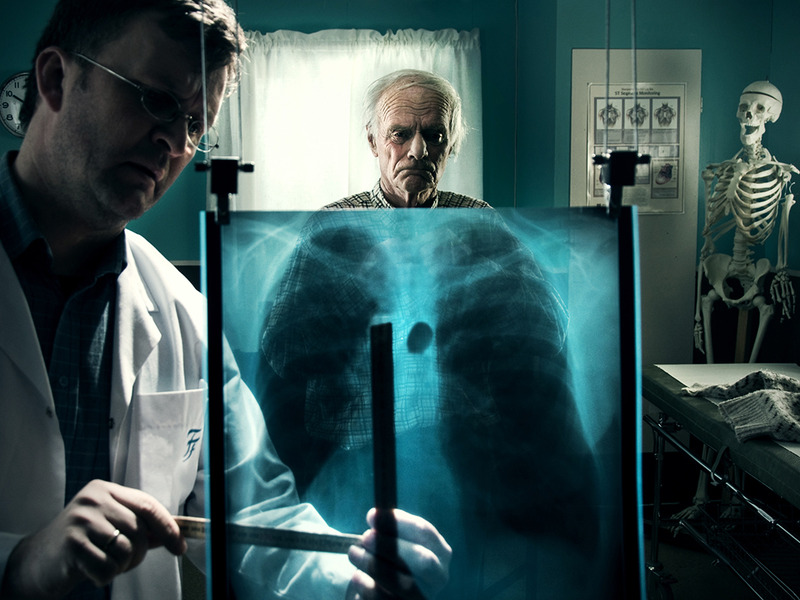
Tuba Atlantic, directed by Hallvar Witso

The most memorable part of the whole collection is in the Norwegian film Tuba Atlantic, directed by 27-year-old Hallvar Witzo. The film follows an old man, with a hatred for seagulls, who is told that he has 6 days to live. There is a sudden cut scene to Oskar (the dying guy) opening his door to a youthful, braces-bearing blonde girl, who says “Hi, I’m your local angel of death!”. If my vote were relevant, it’d be for Tuba Atlantic, I think.

Oscar winner for Best Live Action Short "The Shore", by Terry and Oorlagh George

I actually thought that the winner, The Shore, had the weakest acting of all of the films. That’s not too much of a slight, as all of the films were excellent, and the film’s ability to cram 25 years of backstory into a single, pivotal moment was impressive – but each of the other films, I thought, worked better with presenting interesting present moments and didn’t depend so much on measured history-exposition.

Go watch short films. Now.
I like short films – they seem more honest, especially plot-wise, than longer films, which sometimes just fill in an allotted time slot with pre-approved plot devices. The happy thing about short films is that their time constraints depend more on the demands of the story than anything else – the films nominated this year ranged from 10 minutes to over half an hour. Short films are worth your time; they are less likely to be contrived and the length allows them to develop honestly and cleanly, without being bogged down by the need to fill in time constraints or plot holes. So go see some, if you get the chance.

Facebook Censorship: A Sign of the Times?

source: serc.net The internet was recently given a leak of Facebook’s censorship standards. Amine Derkaoui, a previous “employee” of Facebook (employee is in quotes here because he was paid $1 an hour plus commission, which is, in a word, horrid) was so disgruntled that he gave Gawker the handbook used by Derkaoui and other assumedly disgruntled workers to know which photographs and comments to censor on Facebook, which ones to send upwards for decision by an administrator, and which ones were ok. Gawker published the one-page “cheat sheet” summarizing the standards on their website.

source: gawker.com

A summary of Facebook's censorship standards, leaked to Gawker

This gives an interesting perspective of what is considered “acceptable” and tasteful by popular consensus. Ear wax is censored, snot is not? (I guess if it was, millions of baby pictures would have to be deleted). For example, the “cheat sheet” says that “Digital/cartoon nudity” should be censored, but “Art nudity ok”, excluding all digitally created images from “art”, which is sort of a surprisingly passe way for Facebook to define things.

Something interesting about the released standard is the fact that it is clearly representing three categories of social unacceptability. The first, the depiction, commitment, planning, or lauding of criminal activity, is expected in a list like this – sexual assault, organized crime, nudity, and hard drugs are pretty normal in a “delete this” list for any censorship website.

The second category is more nuanced – I can only describe this second category as anything which debases humanity. This includes more obvious things like human organs, mutilation, violent speech, or anything encouraging or lauding mutilation or defacement of the human body (and, in some cases, animals). This also applies to willing defacement: threats of suicide, self-harm, and anything promoting eating disorders – this is interesting in light of the fact that pro-ana groups are still on Facebook. Maybe closed groups are immune to censorship – or the people getting paid next to nothing in other countries just haven’t caught them yet.

Another example of the censorship of non-illegal debasement of humanity: the prohibition of any photoshopped pictures of humans, “whether negative, positive, or neutral.” This is interesting; perhaps it is simply the case that it’s too hard to gauge the positive or negative spin of a photoshopped picture, but I think this rule isn’t just about bullying – it’s about the fact that Facebook doesn’t want to turn into Reddit (if they don’t, then they should stop trying to be Tumblr and take away the “follow” option). Their prohibition of any “versus” photo – any image grafting two photographs of people side by side in comparison – would be for the similar reason of “trying to keep Facebook untacky”. This rule is especially ironic considering Mark Zuckerberg’s famous-now-that-we’ve-all-seen-The-Social-Network first project facemash.com. Prohibitions of holocaust denial fall under the goal of no human debasement – but they apply to the third category as well.

The third and final category I’ll call “Nobody Get Mad At Us Please.” The most interesting rule in this one is the censorship of any maps of a part of Turkey (Kurdistan) and the prohibition of language or images against Mustafa Kemal Ataturk, as those laws seem suspiciously anti-free-speech-ish, and Turkey is a part of the UN.

The internet as it is currently developing has been compared to the semimythical Wild West of early American history – looking back in 50 years on this time, we’ll probably be astonished at how unregulated everything was. Governments just don’t have a good enough grasp on this new platform for data and information to be able to figure out how to effectively and efficiently (and ethically) regulate it – yet. This conversation applies to file sharing and copyright infringement as well, but Facebook’s censorship guidelines illuminate a more necessarily practical standard – things made up by businesses and not government are almost always more necessarily practical, if perhaps less ethically consistent.

From Puppetry to Pod Races

I love alliteration. It’s short, it’s snappy, and it has a lot of mental sticking power. I’ve used it in the title of my interview with the Batgirl of San Diego, and when I named my self-indulgent essay comparing StarCraft and Barbara Kingsolver’s literature. This time around, I find it appropriate to utilize this literary technique in bringing attention to Star Wars.

It’s not news to the movie fan or the Star Wars fanatic that there have been quite a few changes made in the rereleases of the classic films, old content packaged in a new format. A few of the alterations seem pretty logical [the Rebels’ computers are looking pretty dated when compared to the holograms of the prequel trilogy], while others are downright upsetting [replacing Sebastian Shaw with Hayden Christensen in the Jedi ghost scene]. With Blu-ray being the new format on the block, a new change has been announced for the rerelease of The Phantom Menace.

Episode I can be remembered as the last of the Star Wars films to feature the diminutive Master Yoda using puppetry. There are no backflips or lightsabre fights with bearded Sith lords that nobody likes, just a short green alien with a penchant for reversing the order of his sentences, sitting down. After The Phantom Menace CGI was used to render the Jedi Grand Master.

On the left, Yoda as he appeared in 2009. On the right, Yoda on Blu-ray.

While this alteration causes the first of the prequels to fit in with the following two films, what it loses is a bit of its connection with the original trilogy. Yoda was voiced by Frank Oz, but he was also controlled by the man, who acted as a puppeteer for the first four films. While he’s certainly more expressive, he lacks a lot of the signature movements that once characterized him.

But what does this say about film? Green screens are being used more than ever before, forcing actors to show fear, confusion, and even awe while standing in front of immense emerald sheets. While technology has been moving ever forward in delivering realistic CGI, it’s apparent that it still has a way to go.

Consider the animatronic dinosaurs in Spielberg’s Jurassic Park. Created in the early 90s,  it featured creatures that looked real because they were. They had actual size and weight and texture and you could have touched them if you were there. Compare Neytiri from James Cameron’s Avatar with Ron Perlman as Hellboy from the eponymous film. The difference from the left to the right is that of computer generated imagery to simple prosthetics and makeup.

In an age when CGI seems to be taking over it’s always a pleasant surprise to see the more traditional techniques, be they puppetry or prosthetics, to help suspend the audience’s disbelief. When Hollywood’s pumping out real-world-meets-animated-characters films like The Smurfs, we can all thank God for Jason Segel.

Why I Disagree With Dota 2

Gamers everywhere were rejoicing yesterday as Valve released the first official footage of their newest game, DotA 2, made more special by the fact that the footage was from a livestream of the first DotA 2 tournament ever.

To back up a little, DotA, or Defence of the Ancients, is a custom game mode for the Blizzard-made RTS WarCraft III. Although many mods of the game exist, there are none that can compare to the popularity that DotA has with the gaming community. Influential to the point that it has spawned its own genre of video game,and been the inspiration for the similar titles League of Legends and Heroes of Newerth, DotA has actually become a  feature at worldwide tournaments, including the Asian World Cyber Games. To say that this is just another mod is an immense understatement.

For a bit of background on Valve, they have been the brilliant minds that havebrought us titles such as Half-Life, Left 4 Dead, and Portal. For the most part these are all games that are saturated with narrative and feature inventive, innovative gameplay. Valve has long been seen as a company that deeply cares for its fans, their constant release of new content for the [now free to play] shooter Team Fortress 2 being a prime example.

On October 13th of last year, Valve announced that they were creating DotA 2. IceFrog, a modder who maintained and developed the original game was hired by the company in 2009 and has since been working on the sequel.

That last word is one of my first issues with the game. The very usage of the name “DotA” with the addition of the “2” seems to state that this is yet another sequel to another already-owned property, such as Half-Life 2. This could not be further from the truth. While IceFrog did help a great deal in furthering the game, as a mod it belongs to the community that helped create it, the hundreds of men and women who suggested heroes or contributed icons or penned lore for the heroes they loved playing as. The name, of course, was chosen simply for familiarity, which brings me to my next point.

In order to ease players into the transition from the WarCraft III mod to the new and improved DotA 2 Valve needed more than just a title. According to Game Informer:3

DotA-Allstars‘ roster of 100+ heroes is being brought over in its entirety. The single map games take place on is functionally identical to the one that you can download for free today in the Warcraft III mod. Items, skills, and upgrade paths are unchanged. Some hero skills work slightly better due to being freed from the now-ancient Warcraft III engine, but Dota 2 will be instantly familiar to any DotA player.

Along with the heroes being brought over were their models. Since the world editor in Warcraft III only allowed for so much customization, unit models from the game itself were used in DotA. Instantly recognizable after years of playing the mod, Valve chose to make their heroes look as close to their blockier counterparts as possible.

To the left is an example of the icons used for the heroes, the ones on the left from DotA and the ones on the right from DotA 2.

The first, Prophet [known as Nature’s Prophet in Dota 2], features the same beard and horns, as well as facial tattoos. What was even more disconcerting, however, was the name of the image file for the latter, “furion_lg.png.” Furion is the name of the original hero, and is actually taken from a character in WarCraft III itself.

The second is known by Dazzle in both games, and clearly depicts a troll-ish kind of creature with a skull face tattoo. The colouration is extremely similar.

The third, called Storm Spirit by both, gets only slightly more original. Instead of portraying a humanoid panda DotA 2 instead changes the character to a human, albeit wearing extremely similar garb.

Valve has always been a company that pumped out solid, original content, and watching the tournament replays of this game made me deeply upset. The Anti-Mage attacks just as he always did with long, curved blades on each hand, Leshrac gallops swiftly forward on all fours, torso rocking back rhythmically as usual.

I could point out countless similarities, especially to character design that has always been distinctly Blizzard’s, but I won’t. The fact of the matter is that the easiest way to familiarize a gamer with something new is to show them exactly what they’ve seen before. A muscular red orc with a topknot hefting an immense axe remains exactly that, even with sleeker graphics.

DotA 2 is a game that has a very large number of players waiting to get their hands on it. The genre is only growing more and more popular, and Valve has found a way to successfully cash in on that market. It’s just a shame that this was the way that they chose to do it.

1. See? There’s even a Wikipedia page on it! <http://en.wikipedia.org/wiki/Dota_genre>

2. Seriously, no strings attached. <http://www.tf2.com/freetoplay/>

3.  Source to this and much of the other facts in this post: <http://www.gameinformer.com/b/features/archive/2010/10/13/dota-2-announced-details.aspx>

Ai Weiwei and the inevitable human rights movement in China

Ai Weiwei: sunflower seed enthusiast, among other things

So Ai Weiwei has been in the news recently because he spoke for the first time about the details of his 3 month detention. “Who the heck is Ai Weiwei?”, you ask? LET ME TELL YOU.

Arrest
Some background: Ai is sort of a politically active artist (or artistic political activist) who’s famous for speaking against the People’s Republic of China, specifically its inhibition of free speech and cover-ups of police brutality and general nastiness towards anyone who complains about anything the government’s doing. The People’s Republic of China demolished Ai’s studio earlier this year and arrested him on April 3rd (just as he was getting ready to fly to Hong Kong) for the kind of horrifyingly vague reason given that he had “other business” to attend to. One of Ai’s anonymous associates was quoted by the New York Times as saying: “[Ai] told me that when he was taken from the airport, the police told him: ‘You always give us trouble, now it’s time for us to give you trouble.’

Later the People’s Republic of China rather unconvincingly changed the charge on Ai to tax evasion.

Artwork

Ai Weiwei, “Dropping a Han Dynasty Urn”

Most everyone else, however, figures that the reason has something more to do with his vocal political activism, both on his Twitter account and in his artwork, like the photo triptych of him breaking a Han Dynasty urn, or Grass Mud Horse Covering the Middle, which doesn’t seem terribly political until you find out that the title, in the original language, sounds something like “F*** your mother, Chinese Communist Party.”

Ai Weiwei, "Grass Mud Horse Covering the Middle", the title of which sounds like "F*** your mother, Chinese Communist Party" in Chinese

The Growing Human Rights Movement in China
Ai Weiwei is just the most media-visible figure in a large network of grass-roots human rights activists in China, one that can only continue to grow. And every effort the People’s Republic of China makes to cover up a situation or detain an inconveniently vocal activist creates a chain reaction of others publicly calling for that person’s release and bringing more, not less, attention to protestors: Zhao Lianhai, who spent time in prison after he organised a group seeking compensation for families of children who died or became ill due to tainted baby formula, was shortly detained after calling for Ai’s release; this drew more attention to Zhao and his claim that he was force-fed through the nose while on a hunger strike. Wang Lihong, an activist who draws attention to and investigates instances of suspected government injustice, was arrested in March and faces prison time for “creating a disturbance“; her case is in turn receiving public attention largely because Ai Weiwei is calling for her release.

It’s kind of nerve-wracking to watch but it seems sort of inevitable that as China becomes more prevalent in the international economy, it will become harder for the Chinese government to censor communication across the internet, and the human rights movement will become something impossible for the government stifle.

Things are going to get serious, is what I’m trying to say, and the human rights movement in China is going to be getting a lot of attention in the next decade.