Category Archives: media

Lisbeth, the Sexualized Autist: What The Girl with the Dragon Tattoo says about American Culture

Let’s just be clear: I know that The Girl with the Dragon Tattoo is Swedish. My comment is on its popularity in American culture: its best-seller status in the NYT for 18 months, triggering a Hollywood remake of the original Swedish film. The heroine, Lisbeth, is whom I’m most interested in.

Rooney Mara in Girl with the Dragon Tattoo

Noomi Rapace as Lisbeth in the 2009 Swedish film and Rooney Mara in the 2011 American version

Lisbeth is the poster child of counter-culture: mowhawk, dyed hair, androgenous, facial piercings – what attracts people to her is that she manages to pull all of these things off (the reason being she is astoundingly beautiful) and references to her terrible experiences conveniently switch her label from “irresponsible” to “misunderstood”. Lisbeth, I think, represents two key memes in contemporary culture, the subtle prevalance of which interest me: the sexualized autist and the competent social outcast.

The Autist

Rooney Mara in Girl with the Dragon TattooLet me be clear: I’m not talking about a classified DSM-IV disorder when I talk about Lisbeth’s autistic traits – I’m just talking about the word autist as it derives from the root autos (self), which refers to a lack of empathetic sensitivity. Classic autists in fiction include: Spock, Data, Sherlock Holmes, C3PO, Sheldon from The Big Bang Theory, Monk, and (often) children. Autists serve the purpose of deconstructing society: they often involve humorous responses to or dissections of modes of relating that come natural to most humans. Here is Sheldon’s deconstruction of the social idea of dating:

I present to you the Relationship Agreement. A binding covenant that in its 31 pages enumerates, illuminates and codifies the responsibilities of Sheldon Lee Cooper (hereinafter referred to as the “Boyfriend”) and Amy Farrah Fowler (hereinafter referred to as the “Girlfriend”)

In TGWTDT, Lisbeth interacts autistically: one of the first things said about her report is that though it is thorough, it lacks her personal opinion. She, stonefacedly, refuses to acknowledge that she understands any reason why her opinion would be useful. Throughout the movie, Lisbeth is expertly and unthinkingly wholly dedicated to performing her obsessive tasks with excellence: autists almost always are (Monk, River Tam).

The Competent Social Outcast
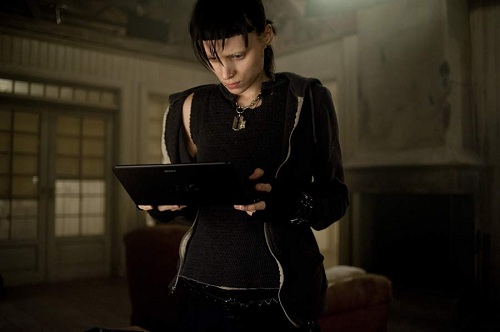
Rooney Mara in Girl with the Dragon TattooLisbeth’s upbringing and fringe placement in society should, according to social evolution, render her unable to support herself. On the contrary, she achieves competency without the support of society, and spends much of her time defending herself from the flaws of the establishment (every scene with the social worker, his eventual blackmail). She joins Julia Roberts in Pretty Woman, the woman from The 5th Element, and Jane Eyre as the neglected gamines who nonetheless flourish and become experts at fending for themselves.

Sexualized
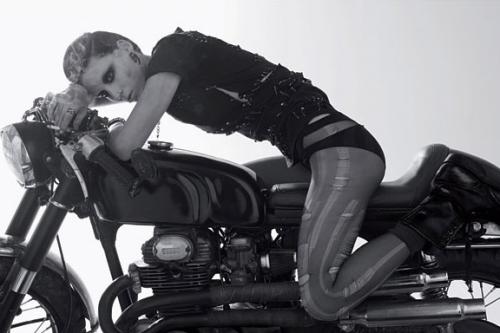
The essence of Lisbeth’s character is a common one that seems to be increasingly attractive to American audiences: the sexualized, independent autist. This is River Tam from Firefly, the woman from The 5th Element, and is echoed in Edward Cullen from Twilight, Dexter, and Dr. House. These characters reveal society’s increasing fetish of self-efficacy – they exude strength, independence, and provide an expression of rage at the more subtle social injustices and inhibitions of social norms. They do not respond to social patterns and expectations, like Sheldon Cooper or or C3PO, but unlike those humorous characters, the sexualized competent autist provides a violent and hypersexual (almost gnostically sexual – oftentimes, like with Julia Roberts in Pretty Woman and Lisbeth, the characters detach themselves from their sexuality and use it as a tool) successful escape. They offer a character who does not succumb to illogical non-verbal communication and oppressive social codes: they interact logically, not heatedly (Lisbeth asking Mikael for permission to kill a serial killer), and ultimately succeed, and achieve a sexualized, center-character status at that, as opposed to the comic relief status of the typical autist.

What does this say about American culture? I’d say that it indicates a reaction against the stress of social niceties. These movies could be called counter-culture, but a very thinly veiled counter-culture – no, sexualized autistic characters are not appearing in chick flicks with Owen Wilson, but The Girl with the Dragon Tattoo was by no means an obscure movie. The characters precede what I think is going to become a more prevalent theme in American culture: a fetish of successful social rejection.

Rooney Mara in Girl with the Dragon Tattoo

Media in 2011

This past year I had a resolution, of sorts. It was to log, day by day, the amount of media that I experienced. For the sake of convenience, music, YouTube videos, and comic books were all exempt from being logged. TV shows, movies, and books were the main focus here.

In picking a month to show you, I chose September in that it was a month entirely spent at school, without any breaks. All media was experienced in the free time I had outside of classes and schoolwork. Breaks tend to severely skew the average amount; an example of this is my watching five seasons of 30 Rock in January during the Christmas break.

Media in September

Television

  • 8 episodes of Deadliest Warrior [40 minutes each]
  • 1 episode of Futurama [20 minutes]
  • 1 episode of The IT Crowd [20 minutes]
  • 5 episodes of Cromartie High School [10 minutes each]
  • 2 episodes of Regular Show [10 minutes each]
  • 2 episode of Adventure Time [10 minutes each]
  • 7 episodes of Breaking Bad [45 minutes each]
  • 4 episodes of How I Met Your Mother [20 minutes each]
  • 1 episode of The Office [20 minutes]
  • 1 episode of Community [20 minutes]
  • 2 episodes of The Big Bang Theory [20 minutes each]
  • 2 episodes of New Girl [20 minutes each]

Film

  • Scott Pilgrim vs. The World [112 minutes]
  • Helvetica [80 minutes]
  • Paul [104 minutes]
  • Batman & Robin [125 minutes]
  • Hot Rod [88 minutes]
  • Ironclad [121 minutes]
  • Terminator Salvation [115 minutes]

Books

  • Part of The Odyssey
  • Most of The Aeneid
Totaled, that’s (if Google didn’t fail me on the math part), 965 minutes of television, 745 minutes of television, and about 3 or four hours of reading. After some fancy addition, that’s 28.5 hours spent watching in the month of September. A month I also partially picked because it had significantly less than others.
As an English/Writing Major, this is very unsettling to think about. Over a day of September was spent staring at a screen [not including YouTube or daily browsing], and even though comics were omitted my reading total still pales greatly in comparison. I justify my excessive viewing in a way, citing the study of plots and character progression in both television and film as a way of improving myself as a writer. Apart from this blog, however, I did little to no personal writing whatsoever in that time period.

The average American [which I am not, being neither] watches more than 151 hours of TV a month. With that in mind, I feel strangely validated. We don’t have a television in our house, and instead hook our laptops up to a monitor in the living room. This means that there is no casual turning on of the TV, no languid channel surfing. Apparently this has contributed greatly to my watching 80% less than most people.

I began this blog post with the intent to depict exactly how much media I consume in a given month, and hold that up as a shocking example of a 21-year old’s usage of his time. Contrary to that, I’ve discovered that I’m not doing too badly compared to America. At 28.5 hours per month, I’m actually doing really great.

Does this mean that I should continue to do what I’ve been doing? My answer is no. As I’ve mentioned, September was actually a low month in regards to media viewed. The month after I watched easily twice as many shows. The fact that this still ranks me as watching 40% as much as most has inspired me not to watch the same amount, but less. I’m doing better than average, but better doesn’t equal good. As someone who says he cares for literature, I need to at least pretend that that’s true in my actions. And that’s as good a resolution as any.

GOP 2012: Why Competence and Communication are Important

NB: I’m a registered Democrat, but not a terribly leftist one. I’m a Democrat the way most college students are Democrats, I suspect – by default.


I’ve been thinking about the circus that is the Republican nomination race. You should know that I’m not a politics nut, nor do I plan on being one – but the state of my society does interest me sometimes. The GOP right now is both amusing and extremely sad. A series of caricatures who have served their time as one-month fads leaves me wondering about the state of American politics. The string of slip-up clips zooming through the internet and the idiotic things that these candidates have said might receive too much focus, according to some – but I think that the dismal communication and public speaking skills of the candidates this year is itself something to be concerned about, before even delving into their political views (too complicated for me to do any justice).

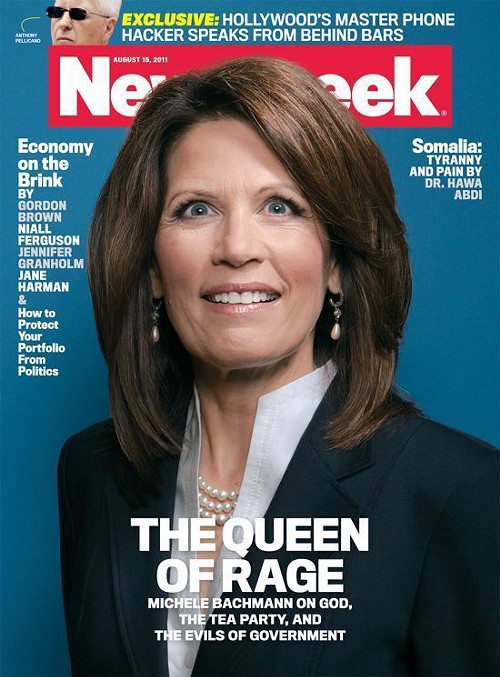
Bachman's disastrous Newsweek cover

Michele Bachmann was kind of the first fad of the GOP, and was slammed repeatedly for her bizarre and factually inaccurate comments in public – waxing poetic about New Hampshire, calling it “the state where the shot was heard round the world in Lexington and Concord,” while Lexington and Concord are actually in Massachusetts. She commented on the census, saying that “[My family] won’t be answering any information beyond [number of people in our household], because the Constitution doesn’t require any information beyond that,” which also isn’t true – the Constitution mandates citizens to fill out census forms. Or this gem about carbon dioxide: “carbon dioxide is not a harmful gas, it is a harmless gas. Carbon dioxide is natural. It is not harmful. It is part of Earth’s life cycle…And yet we’re being told that we have to reduce this natural substance and reduce the American standard of living to create an arbitrary reduction in something that is naturally occurring in the earth.” The woman is not a good speaker – she is clearly grasping for patriotic straws when she calls forth grand images of the Revolutionary War, and clearly grasping for Tea Party straws when she pigheadedly and uneducatedly dismisses the idea of global warming. This kind of saying-anything-to-please-a-crowd is not, not at all, a quality one should accept in a presidential candidate.

Rick Perry: Oops

Rick Perry was always too much like GWB to stand a chance. Not terribly substantial – seemed like the kind of guy I’d like to have a beer with but, like W, doesn’t even seem like he’d want to be the president, at the end of the day. I think the stress of even the race was too much for him.

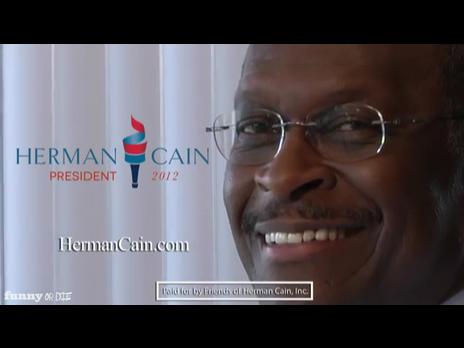
Screenshot from Cain's abysmal campaign commercial

When Herman Cain was declared frontrunner of the Republican Party, it was the last time that I was surprised/horrified at the state of the GOP candidates. Herman Cain, who attended Glenn Beck’s rally in Israel. Herman Cain, who said: “When they ask me who’s the president of Ubeki-beki-beki-beki-stan-stan, I’m going to say, ‘You know, I don’t know. Do you know?'” Herman Cain, who said: “I don’t have facts to back this up, but I happen to believe that these demonstrations are planned and orchestrated to distract from the failed policies of the Obama administration.” Herman Cain, who is a terrible, terrible candidate and appears to be willfully ignorant of foreign policy – or, at least, he imagines that that image is more desirable than utilizing his education.

So once Newt Gingrich was declared frontrunner, the GOP picking terrible candidates was sort of an expected pattern. Newt Gingrich was disgraced in the ’90s for having the worst Speakership in history – he suggested that the government shutdown was a personal attack against him, was the first Speaker of the House to receive ethical sanctions, and resigned in disgrace, commenting: “My only fear would be that if I tried to stay, it would just overshadow whoever my successor is.” I remember his name being the punch-line of jokes when I was a kid.

Also, he calls himself Newt, and he runs under “NEWT 2012”. Even without his ludicrous political career, no president should have an animal name, I’ve decided.

So why, why is the GOP choosing candidates whom I can mock by just quoting things that they actually said? Why are voters sashaying from Neo-Sarah-Palin to Neo-George-W. to Foreign-Policy-Knowledge-Have-Not to Only-Slightly-More-Desirable-As-A-President-Than-An-Actual-Newt?

An attack on the speaking skills of candidates might seem petty, but the speech- and communication- related responsibilities of the United States President are nothing to be neglected. I do suspect that the pressure on a candidate is more intense than in any other political position, and that slips in speech are widely a result of that pressure combined with the rabidness of the amusing-slip-up-snatching-and-amplifying media, but I also think that our standards for the public speaking skills of our president should be high. The pressure on candidates to not commit to anything – to sound good without making any promises – has caused the degeneration of political debates into a rhetoric-slinging festival resembling arguing grade schoolers.

These people are politicians – they have college degrees – they were popular enough to make it into the political scene and be elected to (in most cases) at least one high government office and run it with some level of competence. At least, that’s what I stubbornly assume, as I am afraid to allow myself to abandon all my hope in the political system. So let’s assume that the candidates are fairly competent and can sometimes speak without sounding like grade schoolers. Why, then, is everything about the GOP race so ridiculous?

I think that the 2012 GOP race so far demonstrates the logical extreme of a system built on fear of commitment and fear of offending even the most idiotic constituents. Noncommital and pretty-sounding political doublespeak is ridiculous in itself and always has been; in this year’s race, the insipid rhetoric has been deconstructed to reveal its logical core: nonsense. Politicians have been trained to say nothing for a long time; instead of learning what they need to know, they only need to be able to appear to know it; we are beginning to see the evidence of this more obviously. And with it, the apparent neglect of the American public to remember that the President is not only a likeable face, but the Commander in Chief of our army; not only a spearhead for conservative/liberal policy (depending on his/her affiliation, obvs.) but a position with the opportunity to encourage negotiation between the two sides of Congress and a key communicator with heads of state of other countries. And that is why the state of the GOP leanings isn’t just amusing – it’s dismal. Discouraging. One can only hope that the nominee will be someone we can take seriously.

Kim Jong-il is Dead; Nobody Knows What is Going on in North Korea (Still)

source: christanpost.com
So Kim Jung Il has died, purportedly, and I have no other choice but to write about it. Not really as a political analyst (okay not at all as a political analyst), but just as someone who kind of watches world events like sports, in a nihilistic sort of way.

Right around 10:20pm EST the Associated Press announced that North Korea said that Kim Jong-il was dead. ABC and the NYT quickly reported the story, saying that Korean Central TV reported: “Our great leader Comrade Kim Jong-il passed away at 8:30 a.m. on Dec. 17.” 8:30am in North Korea translates to 6:30 pm EST on Friday.

source: nyt.com

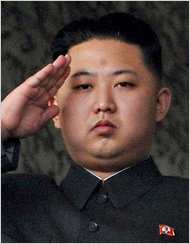
Kim Jong-un, the cheerful new dictator of North Korea

So what on Earth is going to happen to North Korea? Will the dictator’s death grip on the media continue? Kim Jong-il did some crazy things – Kijong-dong, for one, which was an entire empty city built in view of South Korea in the 50s to encourage defection. There was the claim that he was born under a double rainbow, that he scored 38 below par on his first golf game (and then promptly retired), and that he was a “worldwide fashion icon”. The idea of truth coming out of North Korea is roughly equivalent to tactful and thoughtful speech coming out of Rush Limbaugh. The whole event of Kim’s death and the transfer of power to Kim Jong-un is steeped in uncertainty. Heck, even the New York Times doesn’t know exactly how old Kim Jong-un is.

So the world is just kind of freaking out this morning. China’s pretty nervous. Everyone’s wondering what the long-oppressed people of North Korea are going to do – is the regime’s cult so ingrained in people’s heads that they will complacently move right on to Kim Jong-un as the most handsome and benevolent evil dictator ever? This event passing with no unrest in North Korea would be the most depressing thing ever.

Of course, this event causing violence between the North and South Koreas which ended up in someone (North Korea, the US…) using an atomic bomb would also be pretty depressing. The US, China, Japan, and Europe are all kind of staring at North Korea the way one would stare at a baby that just picked up a carving knife. North Korea test-fired missiles right before they announced Kim Jong-il’s death, so that’s not exciting at all. Stocks in China fell significantly. South Korea placed all of its military units on alert.

I have no parting comments. We’ll see what happens. While we wait, go to this hilarious Tumblr of Kim Jong-il looking at things for some comic relief.

Hugo: Scorsese Tells a Story and is Awesome at it

source: alualuna.wordpress.comHugo was another demonstration that a large part of Scorsese is dedicated to documentary. His movie plots rarely rely only on a simple story structure, but draw at truth about some world or society or person – in The Aviator, it was the telling of the life of Howard Hughes; in Kundun it was the exile of Dalai Lama Tenzin Gyatzo from India; In Shutter Island it was the mechanics of early 20th century mental health treatment. Scorsese has also made a fair share of documentaries, on topics like Italian cinema, The Rolling Stones, and Bob Dylan.

source: typofile.com

The film tells the story of early and revolutionary filmmaker Georges Melies

In Hugo, Scorsese tells the story of Georges Méliès and the beginning of filmmaking in general. At points the movie goes very far into documentary-land, like in the flashback/exposition which serves as the emotional denoument of the story, which rather adorably self-consciously begins with a full-on direct shot of Ben Kingsley’s face, and involves long clips of Méliès’ original film.

Scorsese uses archetype expertly well, wielding it like a tool and using structure as a support, not a creative hindrance. The plot devices are intentional, elegant, and familiar enough to be pleasant but done well enough to avoid the negative aspects of cliche: the plucky, adorable girl, the awkward side love story, the child-who-is-the-exception-to-the-rule, and the ultimately relatable and flawed authority figure whose villiany is centered on the fact that he does not notice that the child is the exception-to-the-rule [complete with semi-frightening animal companion, physical deformity, past pain, awkward love interest…].

source: hollywoodreporter.com

Hugo and his father, who is briefly and attractively played by Jude Law

The aesthetic themes of the film, too, are constructed elegantly. Hugo is a boy who only sees the world through cracks and holes – through the numbers in the station clocks, through the holes in the vent windows, and through the metal grid of the automaton’s chest. He ultimately enters the world through these cracks, too, when he slips out of the vents or climbs out of the clock face to hang outside. Hugo’s relation to cracks and holes and small spaces mirrors Méliès’ relationship with the camera lens: he sees the world through a lens and ultimately enters it through the lens as well.

The film uses as sort of wheel spokes Hugo’s various relationships with the people surrounding him. The most obvious one is his father, and the automaton which connects them. There’s also, however, the fact that in a fit of frustration he flings himself into his degenerate uncle’s armchair; there’s the moment when the previously hostile bookseller (given gravitas by being played by Saruman) lends Hugo Robin Hood, and there’s Hugo’s emotional infiltration to Georges via Isabelle and Georges’ wife.

The film is ultimately a demonstration of developed connections and necessary maintenances, without which the characters would remain inoperable, like the broken automaton. The relationship aspect of Hugo includes Scorsese’s relationship with the film itself, and the thing reads like a love letter to filmmaking in general.

Worth noting:

source: aceshowbiz.com

Sacha Baron Cohen in Hugo

Sacha Baron Cohen is absolutely brilliant in his complex portrayal of a character which could very easily be buffooned.His stuttering speech is not quite ridiculous enough for us to laugh at, and it complements the familiar crippling self-consciousness that sort of oozes out of his character’s dialogue. He is a fool, but in a relatable sense. He is terribly awkward, but we cringe instead of laugh at his misfortunes. His air of self-confidence is quite transparent and allows us to see the very real human being underneath. Sacha Baron Cohen does excellently.

It seems kind of moot to point out that Ben Kingsley also does a tremendous job. The part spans a huge amount of time and character development, demanding that Kingsley not just play the secretive, intelligent, and broken older Méliès, but also the pre-war inspired artist, delivering platitudes to young boys while wearing a lobster costume. In Hugo, Ben Kingsley is everything that his part should be.

The aesthetics are another solid part of the film. Hugo is (and it does this wonderfully) a war-era film glazed in steam punk. The aesthetic is wrapped in gears, trains, skeleton keys, and old video cameras, and topped with flower sellers in berets and a reassuring sense of the fantastic – lovers of flim noir, steam punk, cyber punk and any aesthetically-intentional style may drool a little. I am unsure about how I feel about 3D – I am too poor and not interested enough to see the more expensive version of the movie – but the fact that directors like Scorsese and Jackson are using it is making me consider itmore carefully. I can at least see how the aesthetic would work well with the round, polished dimension that 3D movies have.
Hugo is a story and, if you Wikipedia Georges Méliès, a true one at that. Its comments on the changing public reception to fantasy and story telling are especially pertinent: the generation that grew up on ultra-ironic media like Shrek, The Office, and SNL are more often receiving stories told unapologetically, like Hugo and Avatar and Harry Potter, and it is interesting to see how we’ll react.

The Implications of Charlie Hebdo’s Mockery of Islam and Muslims’ Response

source: gatesofvienna.blogspot.com

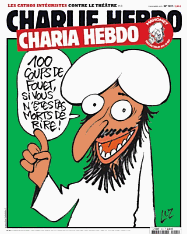
On the cover of Charlie Hebdo last week, Mohammed is saying (in English), "100 lashes if you don't die laughing!". Reproductions of images of Mohammed are considered particularly offensive in Islam.

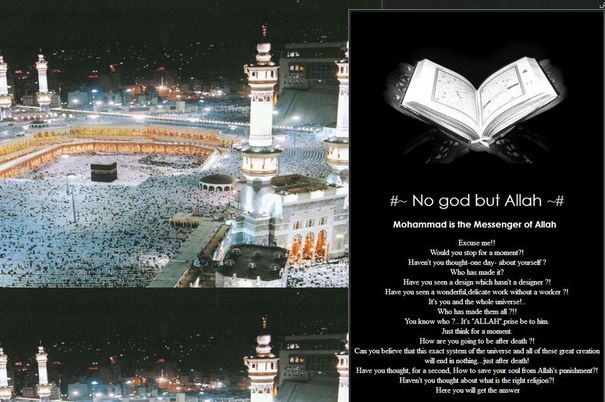
Charlie Hebdo [“Charlie Weekly”], kind of The Onion of France, published an issue last week entitled “Charia Hebdo”, which featured a cartoon of Mohammed saying (in French) “100 lashes if you don’t die laughing!”. The November 2 issue was retitled “Charia Hebdo” (referring to the holy Islamic code of laws called Sharia), and listed Mohammed as “guest editor” for the issue. In response, the publication’s website was hacked, showing a picture of Mecca and the text [in English] “No God But Allah”, followed by a series of questions arguing for theism (specifically Islam, but they were pretty generally theistic questions, like “Have you seen a wonderful delicate work without a worker?”). A 20 year old IT worker in Turkey claimed responsibility for the hacking. Shortly before the issue hit the streets, Charlie Hebdo’s offices were set on fire (via a molotov cocktail, according to telegraph.co.uk) and much of the inside of them was destroyed.

tendancecoatesy.wordpress.com

The hacked Charlie Hebdo website.

Given the recent passing of the bill that banned the wearing of niqabs and burkas under penalty of monetary fine, the demonstration of further European French/Muslim French tension is unsurprising and worrisome. The demographics of France are disputed, with reports from 2009 ranging from 4%-10% of the population being Muslim, but it is agreed upon that the Muslim population in France is increasing rapidly. Muslims have expressed feelings of ostracization by Sarkozy, especially with the recent head covering bill, and it is evident from Charlie Hebdo’s publication that at least some animosity towards Islam is common among the European French.

Charlie Hebdo’s publication was specifically blasphemous to Islam – more so than, say, Christians would probably find a picture of Jesus saying the same thing [though yes that would be rather upsetting to many people] – because of the specific Islamic mandate against the reproduction of pictures of Mohammed, and the reverence with which the prophet is held.

The French government passed a similiar and vaguer bill prohibiting ‘conspicuous religious symbols’ in 2004. This is just a small demonstration of the staunch secularism in France since 1789, when the revolution removed the huge amounts of power the Roman Catholic Church had over society. After the revolution, France has made it a pretty big deal to avoid giving a religious group such power again, and so has consistently been very intentional about the individualisation of religion and maintaining the separation between church and state.

This separation has worked fairly well for the past few centuries, as devout French Christians became fewer in number and French society as a whole valued an a-religious government, but the increasing Muslim population in France is beginning to disturb that environment. Though the population of Muslims in France is small, the presence of a solid and devout minority in such a staunchly secularist country will foster discord, the beginnings of which can be seen in recent events.