American Heroes and the British Men Who Play Them

Everyone’s talking about this “Asian Invasion” of basketball, but general interest due to someone of my ethnicity garnering fame aside that’s not what I want to write about today. I’m writing about a British Invasion. And no, I don’t mean the influx of musician from the UK that occurred during the mid-sixties. I mean the fact that this summer the British are coming. To the big screen. As superheroes.

There’s no solid argument when it comes down to naming the three most well-known superheroes out there. From a purely global standpoint, SupermanBatman, and Spider-Man top the list. Two have feature films that will be hitting theatres this summer, with the third being released next year. As coincidence would have it, all three films have their headlining roles cast with British actors.

Coming out this July 3rd, The Amazing Spider-Man stars Andrew Garfield in the Marc Webb-directed reboot of the franchise. Garfield made an international name for himself starring opposite Jesse Eisenberg in The Social Network. In it he portrays Brazilian Harvard student Eduardo Saverin, though with a clean-cut American accent. The other side of the mask he will be putting on is Peter Parker, teenage outcast and all-around grittier-looking-than-Tobey-Maguire.

The next month brings us The Dark Knight Rises, the third and final piece in Christopher Nolan’s Batman Trilogy. Christian Bale is not new to the big screen or American roles, playing one in American Psycho, The Machinist, 3:10 to Yuma, and many others. His command of his accent is such that when he freaked out while filming Terminator Salvation, he actually switched back and forth between American and British. When not growling underneath the cowl he portrays seemingly mild-mannered billionaire Bruce Wayne.


In 2013 we finally get that Superman movie we’ve been waiting for, which takes the form of Zack Snyder’s Man of Steel. Suiting up in the red and blue tights is relative newcomer Henry Cavill, who exercised both his muscles and his British accent in Immortals, which came out last year. For the most part he hasn’t done much in the way of portraying Americans, which may be a challenge when asked to take on the mantle of a hero as American as apple pie. When not rocking the spit curl Cavill will be Kansan journalist Clark Kent, a character who may be a little more mild-mannered than Bruce.

With those summaries out of the way, what exactly does this mean? I’m no expert on the trends in Hollywood, but I can’t imagine that casting British actors in American roles is anything new or something to be strongly desired. If casting directors are doing their jobs correctly, then they’re accepting whoever is most qualified for the role, regardless of nationality. As a Canadian and someone who believes that the most talented actors deserve the spotlight this is something I cannot disagree with.

In regards to culturally American icons being portrayed by actors of other nationalities, well, why not? If they bring the energy and commitment to a role and portray it as best they can, then they will do a better job than, say, George Clooney, who portrayed the Caped Crusader as a homosexual. If any actor respects the character they’re given than they will do as much as they can to ensure that he or she is depicted well.

It is an interesting coincidence, but hopefully one that can, in its own way, push forward the idea that superheroes don’t always have to be White Americans. That if Spider-Man can be black in the comics then maybe it can happen on the big screen as well.
Fairy-Tale Weddings and the Decline of Marriage


So marriage is less popular than it was 50 years ago (this may not be terribly surprising but which I am going to back up with SCIENCE): a study by the Pew Research Center (my new favorite thing) revealed that while in 1960 72% of adults were married, only 51% were in 2010. The median age of first marriages also went up like 6 years – 28.7 for men and 26.5 for women; up from 22.8 and 20.3 (respectively) in 1960.

A lot of comments on these statistics revolve around the idea that marriage is being taken less seriously, which certainly has merit: the rising divorce rate makes divorce a less socially discouraged decision and therefore diminishes the permanent sense of the commitment taken. Also, varied living options and mobile societies make the legal ramifications of marriage more public; no longer a church ceremony involving the boy down the street and a community event, marriage is for many people predominately about tax laws and the legal status, not the community proclamation.

And yeah, those things are probably true. But I suggest that there might be another factor: that, as much as marriage is becoming unimportant socially, we are taking weddings way too seriously psychologically.

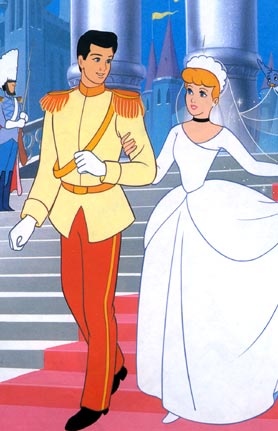
For the Millenials (born between 1980 and 2000), weddings were presented to us as the Happy Ending to stories. Marriage was the denoument – the end-all-be-all – the MacGuffin. Disney movies, early romantic comedies, books, and plays all dramatize the beginning of a relationship – before commitment, when things are exciting (right?) – and a wedding at the end serves as the success. The idea of a princess wedding fascinated females (I wasn’t/am not by any means a very girly girl, for example, and even I can remember slumber party discussions of wedding colors, flower selections, and first-dance-song-choices) of our entire generation.

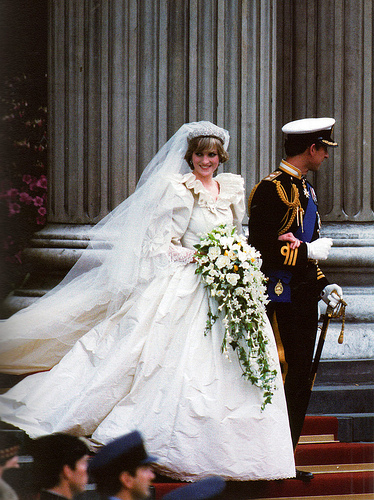
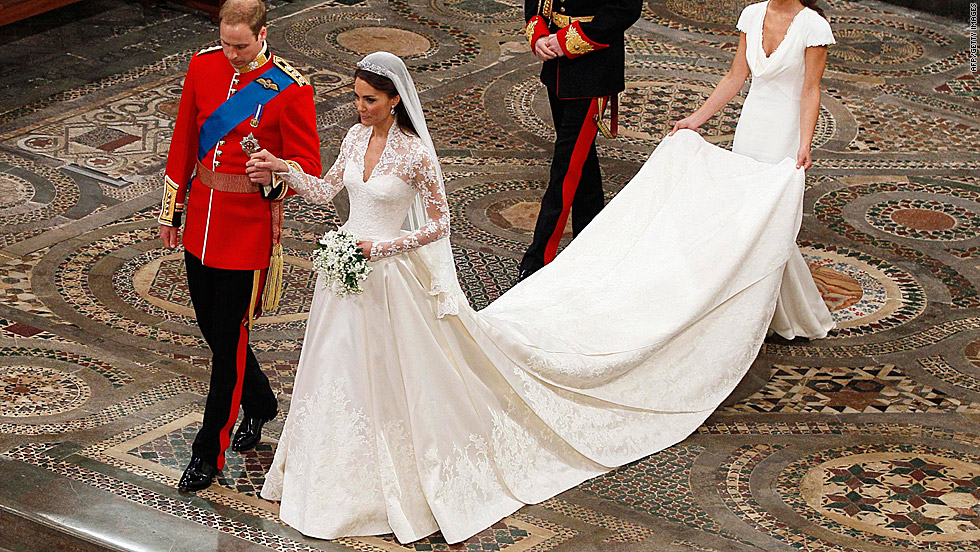
source: madameguillotine.comThis may have had something to with Princess Di’s wedding – or at least, that wedding didn’t hinder the fairy tale story by any rate. Kate and William’s wedding will serve a similar (if possibly less dramatic) purpose for the continuation of the happy-ending weddings portrayed in fiction.

So we, in a weird, way, take marriage way too seriously – idealistically. We fetishize it. It has to be Perfect – and so we have modest weddings costing about $10,000 and shows like Bridezillas, a half-and-half(ish) divorce rate, and the married adult population decreasing by about a third in 50 years. Fairy-tale representations of weddings may be part of the cause of marriage’s approachingly fictional status.

This increase in expectations in our generation might also affect the increase in marriage age – the tendency among young adults now is to become established (don’t get married before you own your own home!) and stable before marriage, instead of going through that scarier economic climb with your spouse. The wedding has to be perfect, and so does the relationship and your economic status – and so we wait.

Is this a bad thing? After all, 44% of Millenials think that marriage is becoming an obsolete institution. Cohabitation is increasingly popular. One possible trouble might lie in the instability of couples leading to more single, economically depressed parents, raising children and working on their own: quite the contrast to the fairy-tale weddings we grew up hearing about.

Dakota Fanning Being Sexy on Magazine Covers

Dakota Fanning will be posing for Playboy Magazine.

Now that I’ve got your attention, let me be the first to say that this definitely isn’t true. The article I found it on, DAKOTA FANNING POSES FOR PLAYBOY was hosted by Weekly World News, a “news” site that features categories like “ALIENS” and “MUTANTS.” It’s unfortunate that at least one person out there failed to question its validity, but that’s just the internet for you.

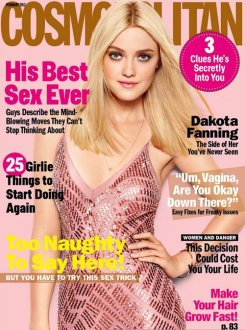
While I was initially taken aback by the news, a perfunctory Google search revealed it for what it was, while also calling attention to something that actually happened. 17-year-old Dakota Fanning appeared in this month’s issue of Cosmopolitan, and people got fairly upset about it.

A bit of context: Fanning turns 18 on the 23rd of this month. That being said, many were outraged that a minor would appear on a cover with such headlines as “His Best Sex Ever” and “Too Naughty To Say Here!” According to The Daily Mail twitter users were particularly vocal, with one user tweeting: “Dakota Fanning is 17 years old and on the cover of Cosmo. Am I the only one who sees a problem with this?”

On the other side of things we have self-described former editor-in-chief of Cosmopolitan and mother of a 21-year-old daughter, Bonnie Fuller. She takes the stance that since the media [primarily shows like Gossip GirlKeeping Up With The Kardashians, etc] has, and continues to depict sex “pretty explicitly,” this is nothing to get upset about. Add to that the fact that Fanning has already taken on many “very adult” roles and what we’re looking at was more to be expected than anything else.

There’s a certain legitimacy in both viewpoints. On one hand, there’s something that should be at least mildly disturbing about a teenager surrounded by sex headlines. On the other, culture as a whole is doing little to hide the fact that teenagers have sex and we know and are okay with it. Where Fuller gets a little shaky is leaving the specific context of Dakota Fanning on the cover of Cosmo. Would her viewpoints change if it were a different 17-year-old? How young an actress does one have to be to raise her hackles? She cites both Miley Cyrus’ scandalous photo shoot and Kendall Jenner as crossing the line, so clearly she’s bothered by some cases.

In general, Cosmopolitan is a magazine that has not shied away from its sexual content, using catchy headlines like “YOUR ORGASM GUARANTEED.” As “the lifestylist for millions of fun fearless females who want to be the best they can in every area of their lives” the publication is a force that affects women and the way they view themselves and each other. How exactly they choose to do this remains entirely up to them.

Naked Boys Singing: For Your Enjoyment

After a 13-year run, Naked Boys Singing left its off-Broadway stage, leaving the rest of us to switch to plan B for our bachelorette parties1.

It’s really quite incredible, though – the show ran for 13 years, which is the second longest off-Broadway show ever (the first is the Fantasticks), has had over 3,000 performances and, not surprisingly, hosted over 2,000 bachelorette parties. It’s also been translated into 5 different languages.

The show is a gem of off-Broadway qualified ridiculousness. One of the writers has an Emmy, they had the choreographer from The Producers, 2 of the cast members were porn stars, and one of the cast members only has one testicle (and used a prosthetic). The show is a musical revue, and opens with a song called “Gratuitious Nudity” and goes on to serenade the audience with (for example) a number about being gay in a men’s locker room, and something called “Muscle Addiction”. From reviews, towels and jock straps are sometimes involved, but the majority of the show is performed nude.

The show was more than a little unconventional: after opening and advertising predominately to the young gay population in NYC, the producers quickly realised that they needed a broader viewer base – 13 years later, the show was marketed to “people from all walks of life,” including “men, women, senior citizens, mothers, fathers, Rabbis, [and] strippers” and was a popular bachelorette party destination. The theatre was also once booked by a gay nudist colony, the members of which brought gallon plastic baggies (for their clothes) and towels (for the seats). In 2005, a Milwaukee production of the show was closed down by police, and shows in Atlanta, San Juan, and Provincetown (Mass.) were shut down by the city governments as well. After the Milwaukee production was shut down, the Milwaukee Gay Arts Center won a censorship lawsuit against the city of Milwaukee for $20,000.

If you feel like you’ve missed out, the show is still playing London.

1And unconventional bachelor parties.

This is how The Office Ends: Not with a Bang, but with a Spinoff

It being a Thursday morning and all, I felt it an appropriate time to wax poetic on the fall [and fall] of NBC’s The Office. It doesn’t take a die-hard fan to realize that the show was on shaky ground once Michael Scott moved to Colorado, and like a newborn giraffe it had to struggle to get to its feet. Unlike a newborn giraffe, however, it was not ready to start running within the first few hours.

The first nail in the coffin came in the form of talks about a Dwight Schrute spinoff in which Rainn Wilson’s character would headline a show set on his bed and breakfast/beet farm. Apparently executive producer Paul Lieberstein and Wilson have been “joking for years” about this concept, and they’ve finally decided to do something with it.

The second sign that the show is on its way out is actress Mindy Kaling [who plays Kelly Kapoor] and her move to Fox to star on her own show. The program would feature Kaling as a “Bridget Jones-type OB/GYN doctor balancing her personal and professional life,” which sounds like yet another title to add to the list of shows revolving around a single woman and her zany existence [See: New Girl, Whitney]. So we have that to look forward to too, I guess.

Reasons we know the show’s coming to a close aside, I suppose the question to ask is why the show fell. It can’t simply be because of Steve Carell leaving, because the writers have demonstrated time and time again that they have a solid cast, with over a dozen well-rounded [funny] familiar characters. What they haven’t always demonstrated is the ability to use them.

Andy Bernard as boss is a great choice, but his having to compete for the spotlight with Robert California is uncomfortable at the best of times. Pam has been gone on maternity leave for weeks now and has a brunette replacement whose name doesn’t come to mind because she has no personality. Angela is still married to the supposedly gay senator, and no one really cares. I could go on, but I think you get my point: the show has stagnated.

While there have been good episodes this season, they’ve been few and far between. My only hope is that this season doesn’t become remembered as the new Scrubs: Interns, the ninth season of an excellent show reviled by both fans and people of good taste alike. “Goodbye, Michael” was a fantastic episode that ended well, and actually the fourth to last of this past season. If things end up the way they have been I’m going to have to consider it start considering it the last of the series.

You Should Care About Super PACs

The new potentially-sort-of-boring-topic-about-which-we-should-educate-ourselves (this is the first election I’m paying attention to and I’m finding a lot of these things) is the issue of Super PACs and their effect on the current election.

To summarize, Political Action Committees (PACs) have been around for a while. They are organizations that raise money to use toward elections, usually television commercials — they are limited to collecting small amounts of money from individuals, political parties, and other PACs — and the stipulation was that they could only accept $5000 per person per year, which meant that (at least in theory) candidates’ support would be semi-related to the amount of supporters donating to them.

In 2010, however, it became legal for some organizations to receive unlimited donations from corporations and unions: organizations which accept these unlimited donations are called “super PACs.” They are like PACs, but much more evil. While PACs forced candidates to build a large support base to earn a substantial amount of money, a few millionaire individuals or corporations can fund a candidate’s entire ad campaign.

Super PACs are devastating to the essence of democracy: Why should congressional and presidential candidates care more about the votes of single constituents than the needs of unions and corporations when campaigns can be made or broken by union and corporate funding?

Super PACs allow campaigns to distance themselves from negative ad campaigns while reaping the benefits from commercials slandering political opponents — Mitt Romney’s PAC (the idiotically named “Restoring Our Future” — okay, one might restore hope for the future, but not the future itself) spent $3 million running negative campaigns against Newt Gingrich, effectively killing his campaign.

(evil?)Super PACs allow corporations and unions to spend huge amounts of money on elections — billions, in the 2010 midterm election — and that directly translates into influence on government decisions. If you’re imagining large men in suits grinning evilly while photographing themselves with dollar bills coming out of their ears, keep imagining it: there’s a picture of Mitt Romney that looks exactly like that.

Super PACs are a key factor in the commercialization of the political process. Since the late 90s, the money involved in elections (adjusted for inflation) has increased at an alarming rate. The amount of money that went into the 2008 election ($1 billion, 86 million) was more than twice that of the 1996 election (599 million dollars, adjusted for inflation) — Barack Obama’s 2008 campaign alone spent more than was spent in 1996 ($799 million).

Super PACs do not have to report the amount of money they receive, or how they spend it. A candidate’s super PAC can fund ridiculous amounts of illogical and negative commercials without having to pin the candidate’s name on the commercials at all. A candidate’s super PAC can also donate money to other PACs, effectively buying the good will of other politicians. Recent Supreme Court decisions deem this legal.

You should buy one of these tshirts on Colbert's website. And protect democracy.

The Colbert Report flaunted the troubling legalities of Super PACs in last Thursday’s episode, when Stephen Colbert’s Super PAC (Americans for a Better Tomorrow, Tomorrow) was transferred from Colbert to Jon Stewart as Colbert announced his fake intention to run for president. Colbert is not supposed to coordinate with the super PAC, his lawyer said on the show, but he could remain business partners with Stewart and the staff of his PAC didn’t have to change, even though they clearly knew everything about his election strategy.

Super PACs are the final step in making political campaigns entirely about money and slander. The political scene becomes a game of who-can-find-the-most-loopholes, with politicians focusing their energies on how to betray the spirit of the law without breaking the letter of it, which seems quite bad indeed.