Category Archives: Christianity

Hitler, Ray Comfort, and the Dismal State of Discussion

I did something bad for my health that I do not recommend. I watched “180”, a half-hour documentary made by Ray Comfort.

It is a bastardization of discourse from all sides. In an interview with Steve, a neo-Nazi punk type of young man, Steve says that he’s certain of his opinions about the falsehood of the Holocaust and other offensive things. To combat this, Comfort asks Steve to spell shop (Steve does) and then asks: “what do you do at a green light?” The question is a trick to get the mind to quickly respond “stop”, which is semi-associated with green lights and rhymes with “shop”, and the person answering looks silly. Sure enough, Steve responded “Stop” and looked silly. And then – well, then Comfort treated that like an actual argument for something.

The documentary was dipped in dramatic music, photos of piles of dead bodies, and use of gratuitously violent photographs. What is most interesting to me, however, is the use of what seems to be the universal argument-ender: comparisons of things to Hitler.

Hitler, the Nazis, and Lazy Discussion
Hitler and the Holocaust have become mythic elements of American culture, I think, and to the detriment of the truth of the actual historical events. I was recently visiting a small church where the members, after the service, started (sort of randomly) to wax poetic about the horrors of Hitler and the Nazis. They weren’t saying anything new – everyone was just affirming that Hitler was inhuman and the Nazis were too. It was the fervent insistence that “real humans could never do that sort of thing” that struck me – I thought of all of the other genocides and massacres of the past century alone, of the killing of civilians in wars by troops of every nationality, of atomic bombs. But even in light of all of these things, current conversation about Hitler seems to serve contrast to our new, very human, very un-barbaric society. We talk about Hitler basically like Satan – an ultimate evil; a rhetorical catch-all.

Ray Comfort and 180: Unethical Discourse

Steve, in the movie "180" by Ray Comfort

Comfort’s specific use of the Hitler argument is reductive and tired. It is, if anything, an exploration of how charged and empty rhetoric in the realm of politics is being mirrored in general culture. His interviewees are inconsistent, and seem to know very little about philosophy, theology, or basic logic. Comfort’s questions are also always precisely and pseudo-cleverly leading, and it doesn’t seem that he wants to engage with the interviewees at all: “Does this mean you’ve changed your mind about abortion?”, he asks. “Are you going to vote differently in the future?” It is not a conversation, is the point: it is a poorly executed set of rhetorical acrobatics. Is this the way to foster discourse and an informed public? Probably not. Arguments depending on rhetorical cleverness are insulting to both parties.

Comfort’s series of interviews are not only annoyingly inconsistent and poorly constructed, however: the movie is also a manipulative presentation of complex issues and events, presented crassly and with a smugly triumphant attitude. One of the less graceful moments was when Comfort asked a woman if she’d had an abortion; she said that she had. He then immediately asked: “Do you feel guilty about it?”

As the big finish, Comfort sets up a game-show setup of moral responsibility and the afterlife, and awkwards them into admissions of fright and death anxiety:

  • Comfort asks people if they have lied/stolen/been lustful: most of them say that they have.
  • Comfort then gets them to admit that this makes them liars/thieves/adulterers.
  • Comfort gets them to admit that liars/thieves/adulterers go to hell.
  • Comfort elicits from the interviewees an understandable anxiety about the prospect of hell.
  • Comfort asks them if they are going to go read their Bibles.
  • Some of them say yes.

Alesia, from Ray Comfort's movie "180"

Theologically, morally, rhetorically, and logically, this is one of the most horrible things ever. Comfort’s quick-talking way of “tricking” people into professing a fright of punishment does very little for the moral health of humanity or the search for truth within rhetoric and theology. The triumphant music and photos of bloody sheets are no help for the legitimacy of the movie.

There are also 40 thousand comments. I do not recommend those either. They are not a happy picture of humanity.

It makes sense to protest the legalization of abortion and to be horrified at the amount of deaths occurring if one believes that life begins before birth. Comfort’s smugness and “gotcha” questions, however, lack earnestness, humility. The whole thing turns a serious situation into an awkward and unproductive onslaught of unhelpful rhetorical inconsistencies, devoid of integrity and, therefore, real efficacy.

In sum, the movie is a disjointed account of unproductive discussions with unproductive people with vague and uninformed opinions. It’s a disheartening representation of the state of discourse on American sidewalks.
Fairy-Tale Weddings and the Decline of Marriage


So marriage is less popular than it was 50 years ago (this may not be terribly surprising but which I am going to back up with SCIENCE): a study by the Pew Research Center (my new favorite thing) revealed that while in 1960 72% of adults were married, only 51% were in 2010. The median age of first marriages also went up like 6 years – 28.7 for men and 26.5 for women; up from 22.8 and 20.3 (respectively) in 1960.

A lot of comments on these statistics revolve around the idea that marriage is being taken less seriously, which certainly has merit: the rising divorce rate makes divorce a less socially discouraged decision and therefore diminishes the permanent sense of the commitment taken. Also, varied living options and mobile societies make the legal ramifications of marriage more public; no longer a church ceremony involving the boy down the street and a community event, marriage is for many people predominately about tax laws and the legal status, not the community proclamation.

And yeah, those things are probably true. But I suggest that there might be another factor: that, as much as marriage is becoming unimportant socially, we are taking weddings way too seriously psychologically.

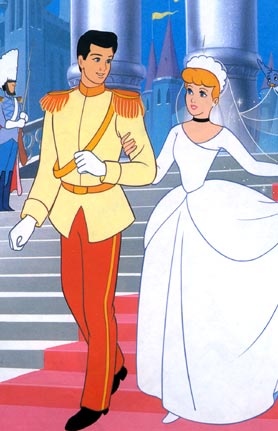
For the Millenials (born between 1980 and 2000), weddings were presented to us as the Happy Ending to stories. Marriage was the denoument – the end-all-be-all – the MacGuffin. Disney movies, early romantic comedies, books, and plays all dramatize the beginning of a relationship – before commitment, when things are exciting (right?) – and a wedding at the end serves as the success. The idea of a princess wedding fascinated females (I wasn’t/am not by any means a very girly girl, for example, and even I can remember slumber party discussions of wedding colors, flower selections, and first-dance-song-choices) of our entire generation.

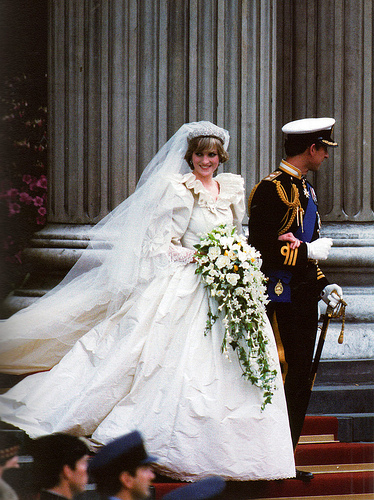
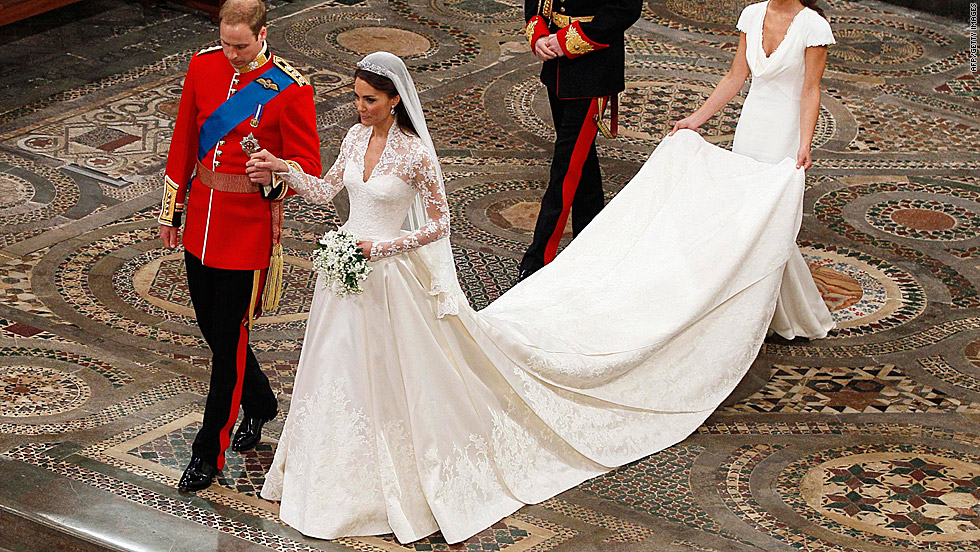
source: madameguillotine.comThis may have had something to with Princess Di’s wedding – or at least, that wedding didn’t hinder the fairy tale story by any rate. Kate and William’s wedding will serve a similar (if possibly less dramatic) purpose for the continuation of the happy-ending weddings portrayed in fiction.

So we, in a weird, way, take marriage way too seriously – idealistically. We fetishize it. It has to be Perfect – and so we have modest weddings costing about $10,000 and shows like Bridezillas, a half-and-half(ish) divorce rate, and the married adult population decreasing by about a third in 50 years. Fairy-tale representations of weddings may be part of the cause of marriage’s approachingly fictional status.

This increase in expectations in our generation might also affect the increase in marriage age – the tendency among young adults now is to become established (don’t get married before you own your own home!) and stable before marriage, instead of going through that scarier economic climb with your spouse. The wedding has to be perfect, and so does the relationship and your economic status – and so we wait.

Is this a bad thing? After all, 44% of Millenials think that marriage is becoming an obsolete institution. Cohabitation is increasingly popular. One possible trouble might lie in the instability of couples leading to more single, economically depressed parents, raising children and working on their own: quite the contrast to the fairy-tale weddings we grew up hearing about.

Virgin Comments on TLC Depiction

It’s been a recent development, but I’m beginning to love TLC. No, I don’t mean the band, though their song Waterfalls will always have a special place in my heart, I mean the TV network. The best comparison I can make to watching the channel is driving past a car crash; it’s horrible, but you can’t bring yourself to look away.

It’s not all tragic scenes of humanity, though. The faux fallout bunkers that the people on Extreme Couponing are building are fascinating, as well as the fact that I have watched people buy $400 worth of stuff for under 50 cents. In a similar vein, Extreme Cheapskates teaches a wide variety of ways to save money, such as cutting an “empty” tube of toothpaste in half to get at a week’s supply.

Then, on the other hand, we have the same show featuring Roy Haynes, a man willing to ask for other people’s leftovers while eating dinner with his wife on their 25th anniversary. We also have  Toddlers & Tiaras, where the world of child beauty pageants makes images like this feel like a breath of fresh air.

Premiering at the beginning of this month, The Virgin Diaries is a program that will be easier for me to show, then write an introduction for.


I must confess, I have not seen the show. This extended clip was being thrown around on Facebook on December first, and I later read about it again on one of my favourite blogs. What little I have to say about it has been garnered from clips and reviews I found online.

To follow up that last confession with another, I am also still a virgin. A 21-year-old college senior et cetera, and without any apparent physical deformities or social disabilities that come to mind. I had briefly mentioned this before, and I can summarize my reason for not having premarital sex again now as being primarily based on my faith and my knowledge of relational intimacy.

My question for the show is this: What does TLC, a program I learned today stands for The Learning Channel, want us to think about this? We’re meant to root for the savers on Extreme Couponing, evidenced by the show’s eager chronicle of how much they can accomplish given a deadline. My Strange Addiction is there to evoke an awkward catharsis, a purging of emotions as we see how far others have fallen as well as a strange sense of justification in whatever odd practices we may engage in.

What I take from the teaser above is, at least in that couple’s particular case, that  the light the show is shining on adult virgins is much closer to What Not to Wear then it is to The Little Couple. Program-title-specific jargon aside, everything about the clip speaks poorly about members of this particular life style. Not only does the husband seem completely oblivious to why his wife “want to kiss so much,” her description of their wedding night is painful to behold. Couple with that the fact that a good portion takes place in a playground, furthering their descent into the immature. The kiss, of course, rises above all else as the preview’s crowning glory.

Shelby Fero, of aforementioned favourite blog fame, recounted hours of her life that were taken up by television, Brussels sprouts, and veggie bacon. In closing, she described what she thought of the first episode of The Virgin Diaries.

A way more interesting show would be to watch these people go through therapy and work through their issues. Instead we just laugh at the guy who can barely smooch his wife and ignore how depressing it is when he asks her “Why do you want to kiss so much?”

Entertainment Weekly said the exact same thing in their review of the program’s premiere, the penultimate paragraph of the article ‘Virgin Diaries’ react: Most uncomfortable TV hour ever? going as follows:

Oprah had an episode of her show this past season dealing with a few women in their late 20s who were virgins. With all of them, there was some kind of anxiety/intimacy issue. I can’t help but think if TLC is really interested in being the learning channel, a better idea might be to follow these people around for several episodes, employ a therapist and help them get over some of their hang-ups so they can have fulfilling adult relationships — and yes, those include sex.

The fact that TLC now has a show that is all about adult virgins is only mildly comforting to me. On one hand, there’s now an example on television of people like me, something that others can mentally turn to when they find out where I stand. On the other hand, there’s now an example on television of people like me, something that others can mentally turn to when they find out where I stand.

Christians, Sex, and Marriage, part 2(ish)

A while ago Evan wrote “Christians, Sex and Marriage”, in which he discussed the culture of sex among Christian young adults. Most of them, it was assumed, would be “saving themselves” for marriage, which is (on the surface) a fairly safe assumption, and applicable to a fair amount of Christian students. The culture of silence about sex, however, and the nervous giggles that attend any discussion of it, and the lack of admission that respected, smiling young Christian couples could possibly be doing anything but kissing chastely behind the dormitories makes me want to shout from the rooftops:

Lots of Christian students are having sex. What’s more worrisome is that lots of Christian students are professionals at alternately justifying and denying it.

Even more students are doing everything they possibly can with each other as often as possible without having the kind of sex that potentially impregnates women—and yeah, I think that the long list of not-actually-that-kind-of-sex possibilities is significantly different from the real deal. I also think that it’s sex. I’m pretty sure it would be as defined by our commandment-following-12-year-old selves, at least.

The problem with sex (for nervous promise-ringed young adults) is that it’s a good thing. The other commandments have translated pretty well into a social behavioral code, because one could argue that stealing, lying, murder, etc. are basically destructive things; sex, however, out of all of the commandments, is not.

So sex is super important, is my point, and an essentially good thing. It is one of the most creative things humans can do. It’s taught to us, however, with all the other Evangelical commandments: Don’t be drunk, Don’t do drugs, Don’t have sex. It’s treated, largely, as a thing to be avoided, feared, or even dismissed (“I Love My Future Wife, And I haven’t Even Met Her Yet” shirts, I’m looking at you). Our sex drives, in a vestigial Gnosticism in the contemporary church that saddens me, are seen as shameful things to be suppressed or ignored.

This attitude works fine until we are actually with someone. The main reason to remain celibate was often, basically, “Because the Bible says so,” an argument which weakens palpably the moment you’re alone with an attractive human being who’s attracted to you too. Most of the sex—including the sex leading up to the “real” sex, which, yes, is very different and which, yes, I’m going to continue to assert is still a big deal (commandment-breaking, I would posit, if you’re concerned about such things)—is wrapped up in substantial layers of vague guilt and shame and self-berating.

To assuage our guilt, we also end up deciding upon arbitrary Ultimate Borders of Virginity (which tend towards frequent revision), e.g., “We’re going to keep on all our clothes.” We then realize, e.g., how much one (I guess two) can actually accomplish while remaining clothed. Rinse and repeat with almost any “line” with which we decide to define Purity. I have never seen any line, like “hands above the waist,” work for a couple. Ever. And yet, sadly, it seems to be one of the main strategies of the inhabitants of steamy cars (or, for the carless: stairways, practice rooms, lean-tos, lobbies, cafeteria booths, parking lots, closets, or lawns).

So what we do is immerse ourselves in cycles of guilt and denial and more guilt. This, needless to say, isn’t super healthy. We start to talk about how it’s basically impossible to find a consistent definition of “adultery” as it’s used in the Old Testament. We find out that “fornication” often only applied to women and commandments against it are preceded by things like “don’t marry your dead husband’s brother.” We reassure ourselves that “sexual immorality” in the New Testament, when you come down to it, is pretty vague. The subject of our “Virginity Rocks” t-shirts becomes somewhat more complex than perhaps we once thought, and these newfound nuances conveniently complement our recently emerged interests.

This quick justification, while rather impressive in its ability to persuade even the previously prudest new couples (our argumentative skills and ability to think outside the box can probably be attributed to a strong liberal arts education), is seriously unhealthy. We are taught from an early age to regard sex as plainly Bad, down there with murder and lying and stealing, and so when we realize that it isn’t quite so terrible, it’s pretty easy to renege on our former simplistic convictions. This—not the sex itself, but the quick way in which we flip from “Obviously Not” to “well maybe just a little bit”—is worrisome.

Christian students are deprived of practical conversation about sex. It seems that the contemporary Christian church doesn’t really know what to do with sex besides tell young people to avoid it. Unless the goal is to leave young people confused and ridden with guilt, unless the goal is to communicate an attitude of oversimplified fear and denial when it comes to sex, and unless we prefer a confused silence to more risky and constructive dissenting discourse, the attitude with which sex is approached throughout young Christians’ lives needs to change.

Christians, Sex, and Marriage

A few nights ago I sat on a friend’s front porch, nursing my drink and amusedly watching at least one of them smoke a cigar. Our conversation meandered here and there, but eventually struck a notable point when the married one directed at another:

You know, you will probably not have sex on your wedding night. Your wife will be far too tight.

While this was hilarious largely due to the person he was talking to [and his particular stance on women/relationships], it stuck with me because of  the assumptions that were present in the statement.

Firstly, there was the assumption that all of us were Christians [most of us were]. The second assumption was that as Christians  we were saving ourselves for  marriage, and that in turn we were also looking for a spouse that would uphold the same ideals. This happens to be true for me, and it got me thinking about a topic I’ve thought a lot about before.

As a Christian who would like to one day be married, what are my options? Attending a Christian college certainly helps, and the aforementioned question explains why we have the terms “ring by spring” and “getting my MRS.” There’s a pervasive feeling that there’s only so much time to find that special someone, and once you’re out in the real world your search multiplies in difficulty.

There is a culture of Christian young people, and as young people their search for that significant other is constantly manifesting itself. Bible studies for those in high school, colleges and careers groups for those a little bit older, both become hunting grounds for eligible dudes/ladies. A friend of mine, when talking about her church’s young adult group, related that the guys there basically gauged the dateability of every girl there before waiting around for new members.

This reveals a lot about world views, the Christian, and, by reversing this view, the non-Christian. In one there is the expectation to stay pure and for your future spouse to do the same. In the other the assumption is that the person you will marry will have had sexual partners [though hopefully not too many]. The former is plagued by the fear that they may not find the one. The latter suffers the same phobia, yet finds itself with quite a few more options.

I haven’t done the math, so I can’t tell you with complete certainty that Christians are searching more desperately than their peers of alternate beliefs. I can, however, tell you that I can definitely wait a few more years before marriage becomes something I seriously think about. But I can’t speak for anyone else.