Category Archives: America

Recent Graduates Face a Molasses-Like Economy

About a year ago I wrote about education inflation. A year later, I’ve graduated undergrad, started two jobs, and found an apartment. I’ve also watched a number of my friends in the same “fling-yourself-out-into-the-world” circuit, and so my viewpoint has definitely refined.
source: sodahead.com
A year ago, I was thinking about the nature of my education, and now I’m really just worried about getting a job, and so is everybody else I know – I’m finding that one thing that demonstrates the inflation of higher education is the fact that young graduates right now are facing 50% un- or under-employment.

We (collective college graduates, that is) are presented, upon getting off the bus singing “NYC” from that one Broadway show, with a dismal job market for recent grads. We are also presented with loan payments, apartments that require us to earn triple their rent to even apply there, and “entry level” job lists full of positions that require 5 years of experience.

Bachelors’ degrees mean less to employers, and there are two possible reasons for this: either their prevalence simply means that BAs and BSs are less of a distinction than they used to be, or employers find that Bachelors’ degrees don’t really ensure quality work. This second reason explains why employers are requiring more and more experience for “entry-level” jobs; bachelor’s degrees used to be enough to indicate an applicant’s competency; now, employers don’t want to risk hiring any new college grad who hasn’t proven him/herself in the workforce first.

source: weeatfilms.com

Sitting on the couch all day looking for jobs that aren’t there is, surprisingly, exhausting

This traps recent college grads with little-to-no full time experience in a rather depressing catch-22. Half of us are taking jobs that don’t pay enough or are in fields unrelated to our major; a full quarter of us are working for free to get experience. A third of us go back to school after trying to enter the work force with just a bachelors’ degree. A confirmed1 94% of us consume triple the amount of ice cream than we did a year ago.

In terms of status in the work force, bachelors’ degrees have become the equivalent to what a high school education used to be. In terms of time and money, however, bachelors’ degrees are painfully different – instead of entering the workforce at 18 with generalized competence, college grads are old enough to want permanent homes, long-term relationships, and career-based jobs, but are entering the workforce equipped with almost nothing to achieve those goals.

I’m not sure what’s going to happen, but this is a problem that needs to self-correct (if you want to be all Adam Smith about it). Many degrees are now including internships as part of their requirements, and it seems to me that (perhaps even more significantly) nervous mothers talk about them to sullen college students at a higher rate. Maybe the undergraduate degree will become more like a vocational school, in that sense, or a stepping stone to graduate school for those inclined towards academia. It seems less likely that students will find more success trying to get four years of experience, starting from the bottom up out of high school, but it’s a possibility.

What’s more, unemployment yields depression and lowered self-efficacy. Because so many of the unemployed population are young, this means that a huge portion of the emerging workforce and maturing economic leaders which will have debilitating effects on the US as a whole in the near and distant future.

Society as a whole is suffering and will continue to suffer from education inflation, as more overeducated students with little actual experience are flung into a floundering economy.

1Not really confirmed

Where’s the Counter-Culture?

In my last post, I grossly oversimplified a Marxist concept called “Alienation”. Today, I’ll be grossly oversimplifying the Marxist concept of dialectics.

Don’t give me any of that “Hegel said it first!” crap.

Boiled down to its basic components, it functions more or less as Newton’s third law of motion. Every action has an equal and opposite reaction, and that applies to society as well. Every spirit of the times is accompanied by a little inverted version of itself- or at least, its key values. Now according to dialectics, the conflict between these two opposites ultimately resolves in an evolved combination of the two, but in this post, we’re only addressing the first part.

Or at least, we would be if I could figure out what today’s counterculture is…

Think about it…

Look at the 1950s. For all the white-picket fences; sagely, pipe-smoking fathers; dutiful housewives/mothers, general patriotism and decency, and terror at the prospect of infiltration by degenerate Commies, there were greasers and bikers.

Despite the 1950s conjuring up images of idealized suburbia, this decade was the one that gave birth to rock and Hells Angels. Trafficking and dumping excrement and urine on their initiates doesn’t quite mesh with the general ideals of the time.

The same can be said for the sixties, which produced the hippies and the civil rights movement in the face of an otherwise conservative culture desperately trying to maintain the status quot.

Or the 70s, whose militancy and pessimism were a rejection of the peace, love, and hope values that arose during the previous decade.

Or the wildly egotistically and self-centered 80s producing (or at least, nurturing) anti-establishment and anti-corporate punks culture.

Even the 90s saw rise to goths, opposing the (comparatively) cheery and consumerist zeitgeist of the time.

So why not our era?

The Occupy Movement? I did consider them, but they don’t really fit the profile.

Despite being viciously cracked down on by the powers-that-be, the OWS protestors never really presented anything shockingly antithetical to the values we hold today. At least, not entirely.

Violence is (almost) universally decried as a means of protest and social change by all but those doing it. While America hasn’t seen much of it, continued rioting in Europe could very well mean not so much a brief outburst of rage as a entirely new perspective on what is and isn’t acceptable in society in general.

That’s one way of calling for social change…

Hipsters? I did briefly consider the whole Indy/Hipster movement as a possible subculture, and generally despised, the hordes of lost lumberjacks wandering the streets really don’t stand for anything that mainstream society is opposed to.

You are NOT a lumberjack and this is NOT Ok…

Annoying? Absolutely. Opposed to the spirit of the time? Not really. At most the hipster culture is guilty of desperately trying to cling to childhood nostalgia in the face of creative bankruptcy (see Evan’s post) and espousing thriftiness in the middle of a major economic depression (see my old post).

Bros. Everyone hates ’em, from their obnoxious machismo to their flaming skull t-shirts and spray-on tans.

Problem with this group is that it’s not a new group- just the latest reincarnation of the same kind of people. The same basic mentality can be found clear on back in Shakespeare’sRomeo and Juliet, which essentially starts with a bunch of bros crashing a party to pick up girls.

the 1890s, when “Bros” were called “Chums”…

Ok, so what if we look at what we have in society today and just invert it? What’s the major defining element of our generation? Technology. Internet and smartphones. Social media and memes. Anonymous and scams. The opposite of all this would be the primitivist subculture, right? The people who don’t wash or shave and live in compounds in the middle of nowhere.

And while it makes sense theoretically, we’re just not seeing a vibrant primitivist counterculture or even subculture. Even when you add in the survivalist subculture (in case you don’t know, those are they guys who think the gum’mint out ta git ’em), there’s still not exactly a rising trend in people learning how to skin squirrels or live in total harmony with the earth-mother.

What about these guys?

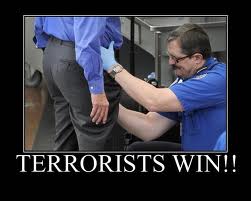
This site (which I’ll be delving more deeply into next week) really does seem to have an actually beef with contemporary culture- specifically in regards to men. Offering instructions on how to polish your shoes, store your fedora (you’re expected to have one, and if you don’t, to go out and get one), shave (or trim your beard, if that’s your thing), throw a punch, or patch a hole in your drywall (holes may be caused by punching it). In a lot of ways, the reverence this site has for the “traditional” concept of what a man ought to be like is reflective of a more general reaction against skinny jeans and YouTube comment section debates. While the site itself has a devoted cult following (and not a ton else), I have seen this general sentiment expressed, and I’m seeing it expressed more and more. Granted, I might be too close to the issue to be seeing it clearly- I myself think guys wearing skinning jeans should be put in stocks for all the village children to throw dead animals at- but perhaps you’ve run into this too. Just last night I heard a comedian complaining that the current generation were (in short) wimps. Gone, he said, were the days when you could chuck a television set out of a hotel window after some drug-fueled rock band had just given human decency the finger via a seven minute guitar solo. Another comedian remarked that “Our fathers would never take the crap we’re taking… the founders revolted because of a 3% tax increase- we won’t even riot when we’re being forced to strip down at an airport!”.

There is doubtlessly a certain mystique and appeal to the figure of powerful, well-dressed men, sitting around roaring fires, puffing on cigars and sipping aged scotch to celebrate that they were in complete control of their lives. Plenty of guys today would give their right arms to be Don Draper.

Though ideally minus the aggressive lung cancer and liver failure…

And interestingly enough, this general “Manly” reaction against emotionalism, appearance (over functionality), pacifism/nonviolence, and interdependence has elements from each of the cultures I described above. There’s the primitive concept of being free from dependence on technology that bears a similarity to the DIY slogans espoused by the “Manly”. There’s the “if you gotta punch a guy, you gotta punch a guy” mentality that seems related to the Black Bloc protest tactics. The simplicity of the Hipsters is here, and even the general “I am Man, here me roar” vibe seems to be a more sane version of Bro machismo.

But that’s all just a theory. Might be true- might be just a passing fad, though if it is just a fad, then we’re back at square one with a rather uncomfortable question.

If there is no counter-culture- what does that say about our culture today? Have we reached a point where we’re so pluralistic and tolerant and multicultural that everything’s acceptable- or is there just nothing substantial to rebel against? If there’s no antithesis, is there even a thesis?

Why We Need Graphic Violence

Once upon a time, a lion was sent to the king of Sweden. After it died, its skin and bones were sent to a taxidermist so that the animal could be stuffed and preserved- the only problem was that this was the eighteenth century, and the taxidermist had never seen a lion before. His resulting work was this:

With only the most cursory knowledge of what a lion was, the work turned-out something that looks like it was pulled straight from a Looney-Tunes episode.

I’d suggest laughing at that picture for as long as you can- the rest of this post is going to be pretty unpleasant.

Most people’s Facebook news feeds are made up of snippets of conservations between friends, invitations to apps you’ll never use, the occasional rant, and baby pictures. Most people, but not so much me- only I do get to see pictures of babies, but more on that in a minute.

See, I grew up in the Middle East, specifically in Syria. For those of you who don’t keep up with the news (at all), my adopted homeland is currently in the grips of a brutal civil war. One of the ways the rebels and dissidents spread news is through social media- especially Facebook, and having “liked” such pages as “Syrian Days of Rage” and “Syrian Revolution 2011”, my news feed is mostly comprised of grainy YouTube videos of soldiers declaring their defection to the Free Syrian Army (FSA), or pictures of mass protests, or of a solitary Republic flag tied to a streetlight. Or a baby.

I warned you before that things were going to become unpleasant- again, if you’re sensitive, stop reading now.

This picture was of a baby who was killed in Gaza during the short-lived but brutal Gaza war in the early weeks of 2009. It was a bombing that killed the child. It was burned so badly the skin still on it had been turned soot-black, and was tight and shiny. You might mistake it for one of those life-sized baby dolls if two broken femurs hadn’t been sticking out where the legs should have been, or if the flesh around the left arm hadn’t melted off the bone.

It was frozen like that. Eyes closed and head rolled back so that against all reason, it looks like her or she could have been sleeping. The body’s held up by a Red Crescent paramedic, and there are no words in any language that will ever describe the look that’s on his face.

There are more of them. A young man on a hospital bed, the right side of his jaw ripped open and hanging against his neck, smiling as best as he still can and gesturing the peace sign. A man killed in a shelling bombardment, held together with white gauze and bedsheets.  A little boy, dead on the floor, drenched in blood and the right side of his body blown off.

That last one was from earlier today.

Last week, I mentioned how this generation is living in the longest war in American history, three times as long as WWII. I want to underscore this. I’m twenty one, and more than half of my existence has been during a period of uninterrupted conflict. I was eleven years old when the US went to war in Afghanistan, and today I could join up to fight in that exact same war. In a couple years, we’ll have kids going to high school who have never had a day of peace.

But this isn’t about that. I’m not here to rage against war, or take a stand for it. I’m not going to throw up my hands and declare that we’ve always been at war with Eastasia.

Though it wouldn’t too far from the truth…

I’m not going to talk about what war does to us so much as I’m going to discuss what we do to war.

Let’s face it, for many of us, the current wars the US (and other nations) are involved in don’t affect us much. We’re not on rations, or ducking into bomb shelters, or being told that if we don’t carpool the Axis wins.

Not in so many words, anyways…

Whether a village in some valley in central Afghanistan is controlled by American or Taliban forces really doesn’t change our plans for the day. A harsh as it sounds, whether or not people are killed in Afghanistan doesn’t have much bearing on anyone but the families of the deceased, and it’s there that the problem lies.

See, we have had a problem in our society for a long time, but with the advent of the internet and similar technologies, it’s becoming worse and worse. Alienation. If you’ve heard it, it was probably in relation to Karl Marx, talking about the separation of workers from the ability to control their lives.

Because we’re dealing with some rough stuff, here’s a picture of Marx smiling…

In a more general sense, it’s simply it’s the separation of things that should naturally go together. Profit shouldn’t be separated from work, and work shouldn’t be separated from profit. Merit shouldn’t be separated from recognition, and recognition shouldn’t be separated from merit. Above all else, actions shouldn’t be separated from consequences- only that’s exactly what we have today.

Most of us are more than willing to wolf down a juicy hamburger, but how many of us would be willing to watch the cow be killed, let alone kill it ourselves? How many of us who wear shirts and shoes made in sweatshops would be willing to stand in the sweatshop hurling profanities and threats at the twelve year-olds hunched over the machinery? How many of us enjoy the advances of the civil rights movement would, back in the 60s and 70s, face off police dogs, hoses, and fire-bombs?

See, we’re a nation that enjoys the hard work of other people. We’re a nation that doesn’t like getting its hands dirty. We’re a nation that has no problem sending kids off to fight, kill, and die on some windswept ridge in Afghanistan because we don’t have anything to do with them afterwards. War is cheap for us. The men and women of our armed forces are expendable to us. Again, I’m not trying to condemn or vindicate the wars we’re in, but what I am saying is that we can’t make reasonable decisions about war until we’re actually confronted with the ugly, bloody, gritty consequences of it. We need pictures of the dead. We need them shoved in our faces on a daily basis. We shouldn’t be able to turn on the news without seeing rubble, the smoke, the wounded, or the dying in graphic detail. For all the outcry against violence in our media, the truth of the matter isn’t that the problem is with violence, but with violence that has been tailored to give us satisfaction and strip away all meaning to it. War, for good or ill, is all for nothing unless we actually understand it. Can we honestly say that we’re acting in the same way now we would be if we actually had to witness the consequences of our actions?

Until then, we’re just the same Swedish taxidermist, making ridiculous travesties out of things we don’t understand. We need graphic violence.

In Defense of This Generation

Don’t get me wrong, there’s a lot- a lot– to criticize about the millennial generation. There’s creative bankruptcy (see Evan’s post), “slacktivism” and general laziness, ever-shortening attention spans, and of course, loud, obnoxious repetitive music without any discernible beginning, end, or climax.

I cannot state enough how much I hate techno…

Now with all that stated, I do want to address some of the criticisms thrown at Generation Y by our elders and (as they see it, anyways) betters.

Late last year, I came across this article, titled “5 Ways We Ruined the Occupy Wall Street Generation“. In his defense, the author emphatically states at the beginning of the piece that “This is not a sarcastic apology, I’m not a big enough dick to write all of this as a backhanded insult about how lazy and entitled you are. Because you’re not…”. Even so, it’s tough to read the article and not feel frustrated at some of the more glaring errors, or condescended to by false conclusions drawn from them. Despite the author’s best intentions, you can’t really walk away from the piece without imagining him to look something like this:

I’ll get right into things here with his first point “#5. Making You Ashamed to Take Manual Labor Jobs“. The author opens by offering the example of a piece of dialogue that went viral about a year ago.
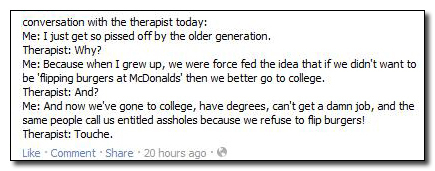
It’s a great little bit, but I still have to stop things right there. We’re not ashamed to take manual labor jobs. We never have been. In this economy more than ever, there are college graduates willing, ready, and even eager to take jobs sweeping floors, unloading crates, answering phones, or stocking shelves. We’re not ashamed of flipping burgers, we just can’t afford to flip burgers. See, we have this funky little thing called “debt”, and not just any debt, the one kind of debt we, by law, cannot have discharged. To clarify- if I went bankrupt, if fire burned down my house and destroyed each and every last earthly possession I had, the only thing I would have left would be tens of thousands of dollars of debt I still need to pay.

The appropriate reaction…

All that’s to say we can’t take jobs flipping burgers because the $7.25 an hour you get for being abused by the customers and/or inhaling carcinogenic fumes just isn’t enough us to live independently and pay off our various mountains of inescapable debt.  Even if we move back in with our parents (more on that in a minute) things will still be tight- and God forbid we should even think about getting married or having kids until we’re in our mid-30’s. Which brings us to our next point- “extension of adolescence”.
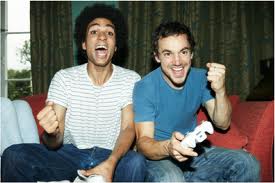
This is a psychologically documented phenomena, and something that’s rather throwing the combined worlds of sociology and psychology. Ever since the line between childhood and manhood ceased to be set at bringing down an elk and bathing in its blood, figuring out exactly when a person ceases to become a kid and becomes an adult is tough. It’s certainly not something new, but it is currently far more pronounced than with previous generations. Take that picture up there for example. Two guys, looking to be in their mid or even late twenties, playing X-Box. There’s the clincher there- the X-Box. The older generations, having had really nothing quite on the level of video games (pac-man doesn’t really count), labeled them as “kids’ stuff” from their inception, and the fact that we still play video games well into our twenties is seen as us extending our teen years, rather than shifting over to being an adult. The author of the article has this as his third point “Adding Seven More Years to Being a Teenager”.

Of course, it’s absolute nonsense once you think about it. What did our grandparents or even our parents do for fun when they were kids? They played cards, board games, hunted, fished, went to the movies, and beat up minorities.
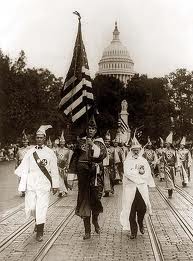
KKK Rally, or as they called it in the 30s, “Wednesday”…

And what do our grandparents and parents do today when they want to have fun? They play cards, board games, go hunting, fishing, and go to the movies (hopefully they’ll have dropped “Harassing Pollacks” from the daily planner by this point). You never hear anyone accuse them of extending their teen years. My grandfather and his friend have been playing cribbage together for over half a century, does anyone tell them that they need to start acting like adults? Let’s face it, when it comes to what this generation does for fun, we really don’t differ from anyone in a previous generation, it’s just that what we do is so radically different, we have the appearance of being immature.

And what about responsibility? Is this generation really lazy and wussy compared to the generation who worked in the mill, took a break to fight Hitler, and went back to working in the mill and raising a family? Last time I checked, we’re in the worst depression since the 1930s (a crisis which we, incidentally, had nothing to do with but still have to pay for) and on top of this we’ve been locked in the longest war in American history- nearly twice as long as the entirety of WWII, just for some perspective. You can say a lot of things about this generation, but you can’t try to claim that we’re somehow just a bunch of young adults still trying to drag out our years as kids.

“Just look at that entitled, lazy kid. No concept of hard work or adult responsibility.”

Of course, we do tend to party, and while I could point to this being true of pretty much every young generation since a Cro-Magnon named Thruk invented partying roughly 43,000 years ago, I’m going to take a different approach.
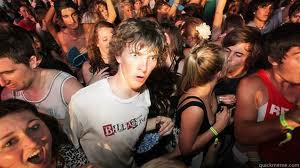
This might come as a shock to some, but young people don’t want to spend their twenties partying because they’re afraid of turning into soulless corporate drones- it’s because we’re enjoying, often for the first time, full independence. Believe it or not, we don’t want to move back in with our parents and spend our youth still under their watchful gaze. We want our own place, our own job, our own car. We want responsibility, and as strange as it sounds, the partying is simply an extension of our attempts to explore our new found freedom.

As for us being entitled, there is something to be said for that. I recall once riding the subway with this blog’s regular contributor Evan and overhearing two youths snivel that the computer they were getting wasn’t quite as advanced as it could be. That said, there’s plenty of so-called “entitlement” that get’s unfairly pinned on us. The Occupy Movement, for example, was criticized by some as being a bunch of lazy kids that expected everything to be handed to them. I mentioned above that the current economic crises responsible for so many of our problems was- and this is key here- not started by us. What was I doing when the economy started to tank? Nothing. I was consuming the food put before me, buying as much stuff as could be expected from a teenager, and working summer jobs when I could. What did I do wrong? Why am I getting stuck with the economic crises I had nothing to do with? If you want to talk about entitlement, let’s talk about the generation who gambled with our collective futures and expects us to clean up the mess. Same goes for the wars we’re currently locked into.

As for our “armchair-activism”, again, there’s plenty wrong with this, and you could spend plenty of time going through what makes it such a pointless endeavor. Nevertheless, I can’t help but feel irked when someone from an older generation- specifically my parent’s generation (who would’ve been my age in the 80s and early 90s). Say what you will about people who mass-forward e-mails about signing petitions or demanding you like a cause on Facebook, there’s at least a level of interest. Barring the grossly simplistic anti-drug movement of the 80s, I can’t exactly recall the major moral movements of that generation. In short, the whole that this generation might be shallow isn’t without merit, but the people who point the finger ought to be awful careful that they pick the log out of their own eye first.

“What do we want?”
“Fluffy hair!”
“When do we want it?”
“After we’re done snorting crack!”

I’m going to finish up here with this last point- addressing the author of the article’s claim that the number one reason “We’ve ruined the occupy wall street generation” is that “we’ve taken away every reason to go outside”.
Am I the only one here who sees a staggering paradox? Am I the only one struggling to resolve how the “Occupy Wall Street People” need to “Get Outside More”? Last time I checked, the protestors at Occupy Wall Street were literally occupying Wall Street.
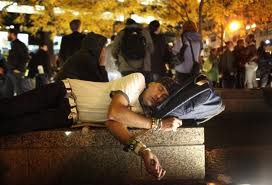
“Look at how pale you are! When’s the last time you went outside? Besides yesterday, and the day before that, and the day before that, and the day before that, and…”

Now do we get outside as much as previous generations. Not really no. But then again, I don’t really see masses of the elderly roaming the streets either. Look, the reason we don’t “go out” is because many of us (who would, by the way, love to go out) are living in cities or urbanized areas. Short of just “walking around”, any major outdoor activity costs us money, which in case you haven’t picked up on by now, isn’t something we have just lying around. Between gas, food, entry fees, and other costs, I’d have to spend nearly a monthly payment to my college debt getting forty-eight hours in the great outdoors. That’s the reason we don’t like paying for entertainment (the author’s fourth point), only it’s not because we expect our entertainment to be free (just ask anyone who’s paid upwards of 60 bucks for a new X-Box game), it’s because we’re trying to be thrifty. If we want to get our own car and our own house to avoid the sneers of our elders, we have to pinch every penny until it slaps us with a sexual harassment lawsuit- entertainment is simply a major way we can save money and not go postal.
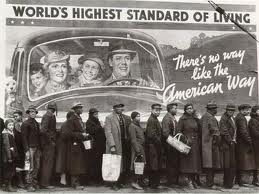
Look at those people trying to get food for free instead of paying for it! Lazy, entitled bunch of bums expecting everything to be handed to ’em, that’s what they are!

So in sum total, that’s my defense of my generation. It’s not a great generation- certainly not yet, anyways. It’s not the worst generation either, though, and before anyone- anyone– wants to label us as lazy or entitled or juvenile; please, look at us in the bigger scheme of things, and better still, look at yourselves. Would you want the standards you place on us applied to you?

Obama: the brand

Jim Messina was an undergraduate when he managed his first campaign, and has won every race since then. He’s now manager of the Obama reelection campaign and going to great lengths to maintain his record.

source: huffingtonpostMessina has purportedly read volumes of US election history, but he spent the first months before beginning the Obama campaign in earnest meeting not with successful senators and former campaign managers, but with CEOs and senior execs of Apple, Google, facebook, Zynga, and DreamWorks. While Obama looks for support from left side of the House and Senate, Messina’s also brought Stephen Spielberg and Vera Wang into the campaign. Messina’s campaign, he says, is more based on wunderkind business strategies (Zynga and facebook, for example) than any elections from previous centuries.

The most interesting part to me of Messina’s campaign is the part focused not on intellectual persuasion, but attachment-building via branding. To contrast this with Mitt Romney’s campaign, look at the merchandise pages of each of the candidates’ websites:

Romney’s store has:
2 types of bumper stickers
a window decal
2 buttons
4 different t-shirts (2 of the with just the semi-unrecognizable logo on them)
a baseball cap
a lapel pin, and
(regrettably) a heather grey quarter-zip-up sweatshirt

All of his products are on one page, and most of them look like print-screened logos on shirts from AC Moore.

Obama’s store includes:
iPhone cases,
Earth Day packs,
“I bark for Barack” magnets,
v-neck shirts for women under 45,
calendars,
yoga pants,
a $95 Monique Pean scarf,
a Vera Wang bag, a $95 “Thakoon Panichgul“, whatever that is,
dog bandanas,
dog sweaters,
Joe Biden mugs,
Obama jerseys,
rubber bracelets,
pint glasses,
aprons,
bangles,
cufflinks,
baby bibs,
grill spatulas,
soy candles,
golf divot tools,
and a six-pack cooler.

There’s also about a billion different types of tshirts, buttons, and bumper stickers, and a “for Obama” series: women for Obama, nurses for Obama, veterans for Obama, African Americans for Obama, Latinos for Obama, Hispanics for Obama, Asian American & Pacific Islanders for Obama, and environmentalists for Obama.

Romney’s shirts say, at most, “Romney” or “Believe” – one of Obama’s shirts says “Health Reform Still a BFD.” Granted, Romney is aiming at a different demographic (LL Bean fans, eg), but Obama’s 19 pages of merchandise make Romney’s 1 page look pitiful, from a branding point of view.

The Obama campaign’s brand-focused strategy is closely integrated with its other image-focused tactics: assigning Romney the cold, out-of-touch persona, for example.
While critics of the Bain capital narrative put out by the Obama campaign said that things like negativity and party inconsistency (Bill Clinton’s subsequent praise of Romney’s management skills, eg) rendered the move moot, an article in Bloomberg said that Messina may not have been so concerned about persuasion at that point: “Messina is adamant that the Bain attack succeeded among the uncommitted voters he’s concerned with, who ignore pundits and are only now beginning to form opinions of Romney.”

For a lot of voters, Romney’s business and managing experience are just off the table. The Bain Capital anti-campaign put on by the Obama team wasn’t so much a persuasion for some voters as an excuse to keep holding their current opinion. K street and the hill will argue about the relevance and logical holes in different arguments, and about the influence of different political figures voicing their opinions, but humans decide things more based on instinct than consideration, I think.

David Plouffe, a political strategist, commented: “When people say, ‘How’s the Bain thing playing?’ it doesn’t matter what the set of Morning Joe has to say about it.”

Voters’ behavior and attitudes are hugely dependent on their initial impressions of politicians. People will take things like the Bain story how they want to, based on what they’ve already consciously or unconsciously decided. And some might criticize the Obama campaign for putting a lot of money into what seems like frivilous merchandise, but things like brand and image aren’t meant to persuade – they’re meant to create a stronger identity and community within the already-present supporters. Such branding is what made Facebook, Google, and Apple such monstrosities – and they are precisely where Messina went for advice.

The Problem With Protest

I thought today I might address the subject of protest.

At the tail end of last year, I came across this picture posted on Reddit:

Despite an overall positive response to the message, one of the highest ranked comments was a person arguing that the Klansmen, unlike the protestors, had permits to march, while the OWS movements across the nation were illegally squatting. Because they are on private property, it is only right that the police should respond in the ways they do.

I wonder if that person would’ve reacted the same way fifty years ago, when these young men and women were illegally occupying private property.

That’s the Greensboro Four, occupying private property in 1960 in protest of racial segregation. Ought the police to have pepper sprayed them for refusing to leave? The problem with attempting to make out the OWS protestors as criminals who are attacking social order is that this same reasoning has to be applied to criticize the women’s rights movement, the civil rights movement, the abolitionist movement, and so on. Even the men and women of the American revolution would, under this blind obedience to the law, be considered criminals and rioters- even traitors. Trying to pretend that the OWS protestors are nothing but vagrants and lawbreakers simply doesn’t work.

However, even if you can’t call them criminals, you can at least call them crazy.

I’m not going to lie, I’m not always a big fan of the crazy outfits some people will wear to protests to make a point. I don’t think dressing up as the Monopoly guy is really all that effective at communicating the messages you want to make.

You’re already protesting en-masse, the satire might be a little overkill…

I’m not saying that I’m right, maybe a couple zombie-protestors is just what you need to drive home a point of mindless consumerism. And I’m not against people wearing what they want to wear- I think the Guy Fawkes masks a la V for Vendetta are actually pretty effective at empowering people and creating a sense of unity. Nevertheless, you still hear people trying to discredit the movement because they don’t like the way the protestors look.

Is this what we’ve really come to? Because the OWS protestors aren’t clean shaven or wearing suits and ties (zombie bankers excluded), they’re just a bunch of moochers? Since when does nonconformity to a social “norm” suddenly create grounds for disproving someone’s views? You could take Jesus, drop him the middle of Times Sqaure, and if he’s dressed in the same clothes he would’ve worn two thousand years ago, then he’d be written off as some hobo or crazy ex-hippie.

But of course, not all the protestors are dressed like something you’d encounter in a post-apocalyptic carnival. You will find protestors cleanly shaven and dressed in suits and ties (who aren’t zombie bankers). What do we call these people?

Hypocrites- or at the very best, spoiled and privileged college kids. That’s right, dress shabbily, and you’re a bum, dress sharply, and you’re a naive idealist completely detached from reality. That’s not to say that such people don’t exist- I have a tough time accepting “revolutionaries” wearing Nike or buying from Starbucks, but to attempt to label the occupy movement as a bunch of hypocrites because they aren’t living in poverty is crazy. No matter what you do, you’re either an outcast of society or from the cream of society- either way, you’re message isn’t worth hearing. Perhaps the best mockery of this line of thought is this picture here:

This seems to be part of a greater issue with protest that people have- a vicious antipathy towards protest regardless of the content or the method. Let me explain.

A criticism a friend of mine once hurled at the OWS movement was that they “Just don’t do anything. They came, they complained, and now they should go home.” Now you might point out that many of the protestors are at the Occupy camps because they have no homes anymore, or even that one of the actions of OWS protestors is helping evicted families reclaim their homes, but let’s just focus on the protest itself. To some degree he- he and others like him- have a point; there’s only so much marching, chanting, and picketing can do. Take this guy for example:

I’m going to go out on a limb here and say that the Knesset isn’t going to rip down the barrier-walls in the West Bank or put a moratorium on new settlements because this guy demands it. There are very definite limitations to what this kind of protest can do, and as much as it is decried as pointless, do these critics really want to see the alternatives?


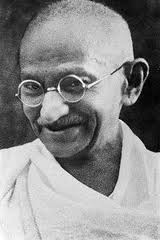
Let’s talk about civil disobedience hear- still (typically) non-violent, but certainly a step up from rallying. We’re talking about sit-ins, human walls, trespassing, and a host of other activities typically leading to charges of disturbing the peace and disrupting productivity. The kind of actions generally associated with MLK Jr., and his inspiration, Gandhi.

Seductive Gandhi is Seductive…

Of course, there are limits on this as well. For all the disruption a group may cause, there’s always the authorities to contend with- you might recall this particular photo:

There’s a case to be made for civil disobedience, but this does really lead back to the original problem of legality. Even if you want to argue for nonviolent actions against the law, one might point out that this is only effective in a situation where there’s a limit on how much you’ll be beaten, imprisoned, or in cases, even killed. I’m guessing that most people wouldn’t have told Jews, Gypsies, Gays, Socialists, and Jehovah’s Witnesses that civil disobedience would have been the best tactic against the Nazis. Considering that the OWS movement is a form of civil disobedience, one might also simply comment that no effective action is being taken by the protesters.

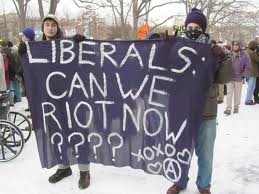
So what about “direct action”, as certain protestors affectionately call it? Black Bloc tactics. The smashing of windows, the overturning of cars, the setting fire to of public decorations (see the Greek anti-austerity protests), and so forth?

While without a doubt the most confrontational of all the protest methods available to the angry and the frustrated, this is nevertheless the single most universally condemned tactic, even by those who are supportive of the goals in question. “The Black Bloc protestors discredit the movement!” you hear over and over. From the latest NATO or G20 conference clear back to the so-called “Battle in Seattle”, you can hear the authorities railing against these “hooligans” and “rioters” and even the major figures of the protest pleading for non-violence.


And while the destructive methods employed by the more extreme elements of any protest are attacked, ranking in a close second in ridicule is on-line petitioning, Facebook sharing, and a host of other activities shoved under the umbrella pejorative of “Slacktivism”. The past “Kony 2012” campaign, while certainly questionable in its content, seemed to receive the majority of criticism by those who viewed the young people involved as arm-chair activists; at best, misled college kids caught up in the latest cause célèbre; at worst, lazy and entitled brats on a tier lower than the Occupy hipsters.

Now let’s take a step back and look at all of this. Marching- doesn’t work. Civil disobedience- either illegal or still ineffective. Violence- something to be avoided at all cost. Petitions- worse than marching. Added all together, the only acceptable option for people who believe that the system no longer works seems to be abandoning that belief. At this point, we really have to consider the idea that the issue isn’t with how people protest, but with protest itself. That these criticisms are all just rooted in the deeper reaction against public disturbance. There is an element of society who, when asked what action we should take, simply respond “don’t take action!”. Regardless of how you present yourself, or what you do, or to what extremes you do or do not go to- they will always be opposed.

And as disheartening as that might seem- there is positive flip-side to this.

If you just can’t please these people, why bother trying? With the fact in mind that there’s always going to be someone scowling from the sidelines, you’re free to do whatever you want to convince those who are actually willing to listen. If that’s not comforting, I don’t know what is.