Is “Art of Manliness” Sexist?

Imagine my surprise to log on to Culture War Reporters to jot down my Tuesday post, only to find Elisa having already written something. I can only imagine that her cutting in on my territory means that she’s looking to start a fight so vicious, bloody, and prison-lunch-line-shanking-ly brutal it will make the combined carnage of the fall of Masada and the genocide at Wounded Knee look like a slap-fight between a couple of elderly Mennonites.

But I’m not here to talk about that. I’m here to make good on my promise last week- to investigate and determine whether or not Art of Manliness is sexist.


Of course, before we begin we have to define what “sexism” is. The obvious answer would be discrimination/prejudice against women, but it has got to be more than that. The stereotyping of women (regardless of whether its positive or negative) has also got to be a part of sexism, just as much as it would be a part of racism or any other form of bigotry.

Now at first glance, Art of Manliness really doesn’t touch on the subject of gender relations all that much. For every one of their articles on subjects such as “What to Wear on a First Date“, there are ten articles on how to shine your shoes, shuffle a deck of cards, hitchhike around the US, make maple syrup, and even a world history of shaving. On the whole, the blog is far more invested in trying to break from what it sees as a culture totally lacking in strength, competence, and independence.
But of course, you really can’t devote an entire blog to what makes a man a man without every once in a while stumbling across the subject of women.

For example, take a look at “Women and Children First? Down with the Ship?” or “Womanly Things We Wish Women Still Did“. In both cases, the author simply brings up the subject, allowing the readers to duke it out in the comments section on whether or not the old cry of “Women and children first!” is still right or fair (or if it ever was to begin with).

On the whole, Brett McKay (the principal author) understands that the subject of feminism and feminist issues are still quite controversial, and only more volatile in the venue of his Art of Manliness blog. For the most part, he either allows his readers to debate such questions as “should men hold doors open for women?”, or refers the issue to his wife (and co-author) Kate. Indeed, from everything I’ve read on the blog, it would appear that the single most “edgy” post on gender roles (“What Can Manly Men Expect of Women?”) really doesn’t do anything more than point out (what the author sees) as a double-standard in what men and women can ask of each other. In fact, I’ll stick my neck out there and say that the author makes some solid points on women’s issues and feminism.


When I was in college, my house was once visited by a collection of female students bearing cookies that they had baked for the men of the campus. The self-titled “Domestic Divas” claimed their mission was to call for a return to “Biblical” roles for men and women, and a rejection of “feminism”. My reaction, and the reaction of every sane man and woman on that campus, went sort of like this:


As many pointed out, this well-meaning but idiotic group had ignored the fact that their ability to be at college (or to speak to men without us having spoken to them first) was a direct result of feminism. And while perhaps not as extreme as in the case I just cited, this basic problem seems rather prevalent in our culture- many women seem to take the struggles and hardships of their predecessors for granted. The (few) benefits of 1950s society are looked back on fondly, but the abuse, neglect, and degradation is completely forgotten. I don’t think Brett McKay is sexist for decrying equality in gender roles combined with inequality in social expectations. McKay isn’t stating that its a woman’s place to dress up for a date, but simply that its as an appreciated gesture as flowers or getting the door.

No, I think Art of Manliness is sexist for completely different reasons.

And in the defense of the authors of the blog, I don’t think it’s anything intentional.

My main issue comes down to this. Art of Manliness is a good site. Heck, it’s a great site. The information is useful, the writing is concise and simple. The subject matter is instructive and edifying. Only it’s directed solely at men.

Don’t get me wrong, I’m not saying that I don’t think both myself and the males of my generation could stand to toughen up a bit…

I just don’t think that the characteristics or skills in the blog are in any way unique to men. Starting fires, shooting guns, shuffling a deck of cards, picking out a good scotch, backing up a trailer, breaking down a door, wrestling alligators (yeah, that’s an article)- these are all things just as useful to women as they are to men. There’s even an article titled “How To Parallel Park… Like a Man!“.

See, I’d imagine that we’d just call that “Parallel Parking”, since driving isn’t exactly exclusive to men or something men are just better at. And I don’t want to hear the whole “Men are evolutionary predisposed to having better spatial judgment” schpeel. First, if it’s correct, it just means men are more likely to have better spatial abilities- it’s not universally true. Second, just because I’m six feet tall doesn’t mean I stand a chance against a five foot NBA star in a basketball match- training trumps negligible physique every time. I’m a man and a relatively new driver- I’d bet that every woman driver in the city I live in can parallel park faster and better than I can.

Case in point…

The real problem with Art of Manliness isn’t so much the content but that the content is labeled as being “for men”. Even the abstract qualities brought up in the blog are good for men and women alike. The post on the virtue of justice uses an illustration in which justice is depicted as a woman, for ****’s sake. Bravery, intelligence, perseverance, leadership, heroism- can you really tell me that these aren’t just as admirable in women as they are in men?

(Just as a final note, I want to thank and recommend Reaction Gifs, from where I frequently borrow my illustrations- it’s a neat site, check it out).

Recent Graduates Face a Molasses-Like Economy

About a year ago I wrote about education inflation. A year later, I’ve graduated undergrad, started two jobs, and found an apartment. I’ve also watched a number of my friends in the same “fling-yourself-out-into-the-world” circuit, and so my viewpoint has definitely refined.
source: sodahead.com
A year ago, I was thinking about the nature of my education, and now I’m really just worried about getting a job, and so is everybody else I know – I’m finding that one thing that demonstrates the inflation of higher education is the fact that young graduates right now are facing 50% un- or under-employment.

We (collective college graduates, that is) are presented, upon getting off the bus singing “NYC” from that one Broadway show, with a dismal job market for recent grads. We are also presented with loan payments, apartments that require us to earn triple their rent to even apply there, and “entry level” job lists full of positions that require 5 years of experience.

Bachelors’ degrees mean less to employers, and there are two possible reasons for this: either their prevalence simply means that BAs and BSs are less of a distinction than they used to be, or employers find that Bachelors’ degrees don’t really ensure quality work. This second reason explains why employers are requiring more and more experience for “entry-level” jobs; bachelor’s degrees used to be enough to indicate an applicant’s competency; now, employers don’t want to risk hiring any new college grad who hasn’t proven him/herself in the workforce first.

source: weeatfilms.com

Sitting on the couch all day looking for jobs that aren’t there is, surprisingly, exhausting

This traps recent college grads with little-to-no full time experience in a rather depressing catch-22. Half of us are taking jobs that don’t pay enough or are in fields unrelated to our major; a full quarter of us are working for free to get experience. A third of us go back to school after trying to enter the work force with just a bachelors’ degree. A confirmed1 94% of us consume triple the amount of ice cream than we did a year ago.

In terms of status in the work force, bachelors’ degrees have become the equivalent to what a high school education used to be. In terms of time and money, however, bachelors’ degrees are painfully different – instead of entering the workforce at 18 with generalized competence, college grads are old enough to want permanent homes, long-term relationships, and career-based jobs, but are entering the workforce equipped with almost nothing to achieve those goals.

I’m not sure what’s going to happen, but this is a problem that needs to self-correct (if you want to be all Adam Smith about it). Many degrees are now including internships as part of their requirements, and it seems to me that (perhaps even more significantly) nervous mothers talk about them to sullen college students at a higher rate. Maybe the undergraduate degree will become more like a vocational school, in that sense, or a stepping stone to graduate school for those inclined towards academia. It seems less likely that students will find more success trying to get four years of experience, starting from the bottom up out of high school, but it’s a possibility.

What’s more, unemployment yields depression and lowered self-efficacy. Because so many of the unemployed population are young, this means that a huge portion of the emerging workforce and maturing economic leaders which will have debilitating effects on the US as a whole in the near and distant future.

Society as a whole is suffering and will continue to suffer from education inflation, as more overeducated students with little actual experience are flung into a floundering economy.

1Not really confirmed

Where’s the Counter-Culture?

In my last post, I grossly oversimplified a Marxist concept called “Alienation”. Today, I’ll be grossly oversimplifying the Marxist concept of dialectics.

Don’t give me any of that “Hegel said it first!” crap.

Boiled down to its basic components, it functions more or less as Newton’s third law of motion. Every action has an equal and opposite reaction, and that applies to society as well. Every spirit of the times is accompanied by a little inverted version of itself- or at least, its key values. Now according to dialectics, the conflict between these two opposites ultimately resolves in an evolved combination of the two, but in this post, we’re only addressing the first part.

Or at least, we would be if I could figure out what today’s counterculture is…

Think about it…

Look at the 1950s. For all the white-picket fences; sagely, pipe-smoking fathers; dutiful housewives/mothers, general patriotism and decency, and terror at the prospect of infiltration by degenerate Commies, there were greasers and bikers.

Despite the 1950s conjuring up images of idealized suburbia, this decade was the one that gave birth to rock and Hells Angels. Trafficking and dumping excrement and urine on their initiates doesn’t quite mesh with the general ideals of the time.

The same can be said for the sixties, which produced the hippies and the civil rights movement in the face of an otherwise conservative culture desperately trying to maintain the status quot.

Or the 70s, whose militancy and pessimism were a rejection of the peace, love, and hope values that arose during the previous decade.

Or the wildly egotistically and self-centered 80s producing (or at least, nurturing) anti-establishment and anti-corporate punks culture.

Even the 90s saw rise to goths, opposing the (comparatively) cheery and consumerist zeitgeist of the time.

So why not our era?

The Occupy Movement? I did consider them, but they don’t really fit the profile.

Despite being viciously cracked down on by the powers-that-be, the OWS protestors never really presented anything shockingly antithetical to the values we hold today. At least, not entirely.

Violence is (almost) universally decried as a means of protest and social change by all but those doing it. While America hasn’t seen much of it, continued rioting in Europe could very well mean not so much a brief outburst of rage as a entirely new perspective on what is and isn’t acceptable in society in general.

That’s one way of calling for social change…

Hipsters? I did briefly consider the whole Indy/Hipster movement as a possible subculture, and generally despised, the hordes of lost lumberjacks wandering the streets really don’t stand for anything that mainstream society is opposed to.

You are NOT a lumberjack and this is NOT Ok…

Annoying? Absolutely. Opposed to the spirit of the time? Not really. At most the hipster culture is guilty of desperately trying to cling to childhood nostalgia in the face of creative bankruptcy (see Evan’s post) and espousing thriftiness in the middle of a major economic depression (see my old post).

Bros. Everyone hates ’em, from their obnoxious machismo to their flaming skull t-shirts and spray-on tans.

Problem with this group is that it’s not a new group- just the latest reincarnation of the same kind of people. The same basic mentality can be found clear on back in Shakespeare’sRomeo and Juliet, which essentially starts with a bunch of bros crashing a party to pick up girls.

the 1890s, when “Bros” were called “Chums”…

Ok, so what if we look at what we have in society today and just invert it? What’s the major defining element of our generation? Technology. Internet and smartphones. Social media and memes. Anonymous and scams. The opposite of all this would be the primitivist subculture, right? The people who don’t wash or shave and live in compounds in the middle of nowhere.

And while it makes sense theoretically, we’re just not seeing a vibrant primitivist counterculture or even subculture. Even when you add in the survivalist subculture (in case you don’t know, those are they guys who think the gum’mint out ta git ’em), there’s still not exactly a rising trend in people learning how to skin squirrels or live in total harmony with the earth-mother.

What about these guys?

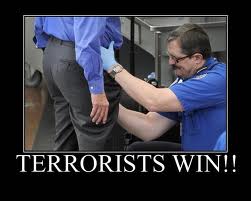
This site (which I’ll be delving more deeply into next week) really does seem to have an actually beef with contemporary culture- specifically in regards to men. Offering instructions on how to polish your shoes, store your fedora (you’re expected to have one, and if you don’t, to go out and get one), shave (or trim your beard, if that’s your thing), throw a punch, or patch a hole in your drywall (holes may be caused by punching it). In a lot of ways, the reverence this site has for the “traditional” concept of what a man ought to be like is reflective of a more general reaction against skinny jeans and YouTube comment section debates. While the site itself has a devoted cult following (and not a ton else), I have seen this general sentiment expressed, and I’m seeing it expressed more and more. Granted, I might be too close to the issue to be seeing it clearly- I myself think guys wearing skinning jeans should be put in stocks for all the village children to throw dead animals at- but perhaps you’ve run into this too. Just last night I heard a comedian complaining that the current generation were (in short) wimps. Gone, he said, were the days when you could chuck a television set out of a hotel window after some drug-fueled rock band had just given human decency the finger via a seven minute guitar solo. Another comedian remarked that “Our fathers would never take the crap we’re taking… the founders revolted because of a 3% tax increase- we won’t even riot when we’re being forced to strip down at an airport!”.

There is doubtlessly a certain mystique and appeal to the figure of powerful, well-dressed men, sitting around roaring fires, puffing on cigars and sipping aged scotch to celebrate that they were in complete control of their lives. Plenty of guys today would give their right arms to be Don Draper.

Though ideally minus the aggressive lung cancer and liver failure…

And interestingly enough, this general “Manly” reaction against emotionalism, appearance (over functionality), pacifism/nonviolence, and interdependence has elements from each of the cultures I described above. There’s the primitive concept of being free from dependence on technology that bears a similarity to the DIY slogans espoused by the “Manly”. There’s the “if you gotta punch a guy, you gotta punch a guy” mentality that seems related to the Black Bloc protest tactics. The simplicity of the Hipsters is here, and even the general “I am Man, here me roar” vibe seems to be a more sane version of Bro machismo.

But that’s all just a theory. Might be true- might be just a passing fad, though if it is just a fad, then we’re back at square one with a rather uncomfortable question.

If there is no counter-culture- what does that say about our culture today? Have we reached a point where we’re so pluralistic and tolerant and multicultural that everything’s acceptable- or is there just nothing substantial to rebel against? If there’s no antithesis, is there even a thesis?

Supreme Court, Media Slips, and general un-with-itness

When I was a kid, I pretty much imagined the adult world as a complex and efficient system abounding in efficiency, professionalism, and self-restraint. The more I interact with the real world, though, and see how and why things get done, the more I’m convinced that society is perpetually on the brink of collapse.

This is sort of comforting, because it means that I will actually fit into this society of flawed individuals. There were a few things about the Supreme Court ruling on the health care mandate that reminded me of this on Thursday –

First,

source: News Wrong On Individual Mandate  article.wn.com
source: jimromenesko.com

These things. CNN and Fox have gotten enough news coverage for their slipups, but the the fact that 2 out of the 3 major US news cable networks reported incorrectly in haste – on a supreme court ruling, no less – is fairly disconcerting. The race to report the news made everyone scramble semi-ridiculously on Thursday, and CNN and Fox happened to be the ones to scramble in the wrong direction. One could consider the NYT’s release conservatively paced, and they only waited for 20 minutes before reporting. What’s more, at least CNN apologized for the error –

“CNN regrets that it didn’t wait to report out the full and complete opinion regarding the mandate,” the NYT quoted. “We made a correction within a few minutes and apologize for the error.”
Fox news released: “Fox reported the facts as they came in,” even though they reported that the mandate was found unconstitutional. This in contrast with CNN’s staff memo: “We got it wrong and we take that very seriously.” CNN’s release didn’t even try to weasel their way out with the fact that the mandate was technically ruled unconstitutional under the Commerce Clause: “CNN reported that fact, but then wrongly reported that therefore the court struck down the mandate as unconstitutional”.

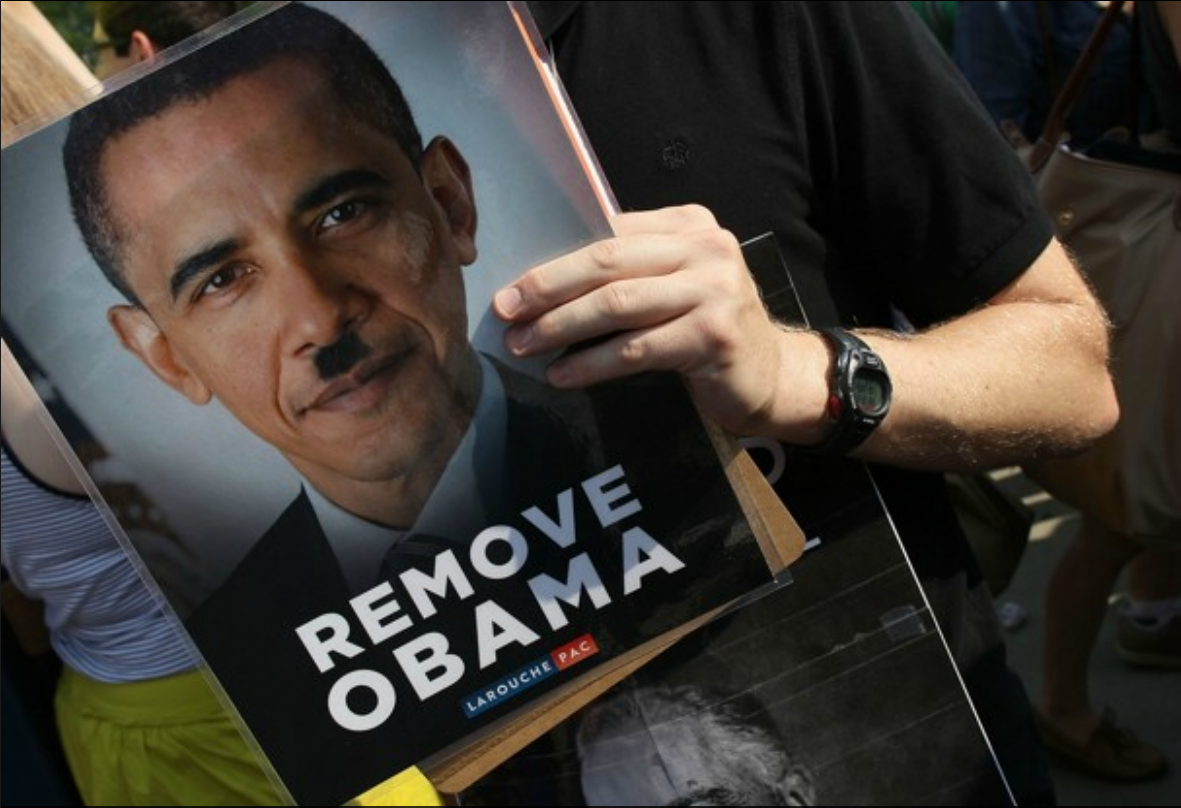
The strangely tabloidic media buzz surrounding the Supreme Court decision was reflected in the protesters and supporters of the mandate outside the building Thursday (the Washington Post has a pretty interested slide show of the crowd here), which included a few of these:

I have no grand conclusion about all of this1 – these were just instances of a not-entirely-together social infrastructure in the past week.2

1I never do
2This title is less catchy than Evan’s
Also, I couldn’t figure out how to make this relevant but this photo also came of the debacle, which is another cause for sadness.

Why We Need Graphic Violence

Once upon a time, a lion was sent to the king of Sweden. After it died, its skin and bones were sent to a taxidermist so that the animal could be stuffed and preserved- the only problem was that this was the eighteenth century, and the taxidermist had never seen a lion before. His resulting work was this:

With only the most cursory knowledge of what a lion was, the work turned-out something that looks like it was pulled straight from a Looney-Tunes episode.

I’d suggest laughing at that picture for as long as you can- the rest of this post is going to be pretty unpleasant.

Most people’s Facebook news feeds are made up of snippets of conservations between friends, invitations to apps you’ll never use, the occasional rant, and baby pictures. Most people, but not so much me- only I do get to see pictures of babies, but more on that in a minute.

See, I grew up in the Middle East, specifically in Syria. For those of you who don’t keep up with the news (at all), my adopted homeland is currently in the grips of a brutal civil war. One of the ways the rebels and dissidents spread news is through social media- especially Facebook, and having “liked” such pages as “Syrian Days of Rage” and “Syrian Revolution 2011”, my news feed is mostly comprised of grainy YouTube videos of soldiers declaring their defection to the Free Syrian Army (FSA), or pictures of mass protests, or of a solitary Republic flag tied to a streetlight. Or a baby.

I warned you before that things were going to become unpleasant- again, if you’re sensitive, stop reading now.

This picture was of a baby who was killed in Gaza during the short-lived but brutal Gaza war in the early weeks of 2009. It was a bombing that killed the child. It was burned so badly the skin still on it had been turned soot-black, and was tight and shiny. You might mistake it for one of those life-sized baby dolls if two broken femurs hadn’t been sticking out where the legs should have been, or if the flesh around the left arm hadn’t melted off the bone.

It was frozen like that. Eyes closed and head rolled back so that against all reason, it looks like her or she could have been sleeping. The body’s held up by a Red Crescent paramedic, and there are no words in any language that will ever describe the look that’s on his face.

There are more of them. A young man on a hospital bed, the right side of his jaw ripped open and hanging against his neck, smiling as best as he still can and gesturing the peace sign. A man killed in a shelling bombardment, held together with white gauze and bedsheets.  A little boy, dead on the floor, drenched in blood and the right side of his body blown off.

That last one was from earlier today.

Last week, I mentioned how this generation is living in the longest war in American history, three times as long as WWII. I want to underscore this. I’m twenty one, and more than half of my existence has been during a period of uninterrupted conflict. I was eleven years old when the US went to war in Afghanistan, and today I could join up to fight in that exact same war. In a couple years, we’ll have kids going to high school who have never had a day of peace.

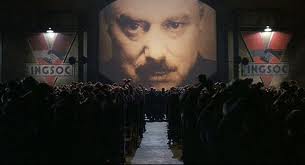
But this isn’t about that. I’m not here to rage against war, or take a stand for it. I’m not going to throw up my hands and declare that we’ve always been at war with Eastasia.

Though it wouldn’t too far from the truth…

I’m not going to talk about what war does to us so much as I’m going to discuss what we do to war.

Let’s face it, for many of us, the current wars the US (and other nations) are involved in don’t affect us much. We’re not on rations, or ducking into bomb shelters, or being told that if we don’t carpool the Axis wins.

Not in so many words, anyways…

Whether a village in some valley in central Afghanistan is controlled by American or Taliban forces really doesn’t change our plans for the day. A harsh as it sounds, whether or not people are killed in Afghanistan doesn’t have much bearing on anyone but the families of the deceased, and it’s there that the problem lies.

See, we have had a problem in our society for a long time, but with the advent of the internet and similar technologies, it’s becoming worse and worse. Alienation. If you’ve heard it, it was probably in relation to Karl Marx, talking about the separation of workers from the ability to control their lives.

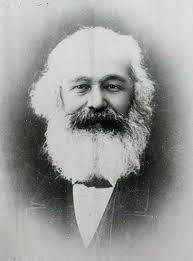
Because we’re dealing with some rough stuff, here’s a picture of Marx smiling…

In a more general sense, it’s simply it’s the separation of things that should naturally go together. Profit shouldn’t be separated from work, and work shouldn’t be separated from profit. Merit shouldn’t be separated from recognition, and recognition shouldn’t be separated from merit. Above all else, actions shouldn’t be separated from consequences- only that’s exactly what we have today.

Most of us are more than willing to wolf down a juicy hamburger, but how many of us would be willing to watch the cow be killed, let alone kill it ourselves? How many of us who wear shirts and shoes made in sweatshops would be willing to stand in the sweatshop hurling profanities and threats at the twelve year-olds hunched over the machinery? How many of us enjoy the advances of the civil rights movement would, back in the 60s and 70s, face off police dogs, hoses, and fire-bombs?

See, we’re a nation that enjoys the hard work of other people. We’re a nation that doesn’t like getting its hands dirty. We’re a nation that has no problem sending kids off to fight, kill, and die on some windswept ridge in Afghanistan because we don’t have anything to do with them afterwards. War is cheap for us. The men and women of our armed forces are expendable to us. Again, I’m not trying to condemn or vindicate the wars we’re in, but what I am saying is that we can’t make reasonable decisions about war until we’re actually confronted with the ugly, bloody, gritty consequences of it. We need pictures of the dead. We need them shoved in our faces on a daily basis. We shouldn’t be able to turn on the news without seeing rubble, the smoke, the wounded, or the dying in graphic detail. For all the outcry against violence in our media, the truth of the matter isn’t that the problem is with violence, but with violence that has been tailored to give us satisfaction and strip away all meaning to it. War, for good or ill, is all for nothing unless we actually understand it. Can we honestly say that we’re acting in the same way now we would be if we actually had to witness the consequences of our actions?

Until then, we’re just the same Swedish taxidermist, making ridiculous travesties out of things we don’t understand. We need graphic violence.

Game of Thrones translates better to the screen than Lord of the Rings


I read Game of Thrones back when it was a relatively nerdy thing to do (I’m not bragging; the geekiness of it at the time cancels out any hipster cred I could claim now) – back when I had to tell people that it was “fantasy, but also good”. So seeing the books translated into an HBO series (insert shout-out to the casting directors for being awesome) is pretty exciting, and seeing it done well is even more exciting.

During the (EDIT: second-to-last episode) of Season 2 – specifically, the siege scene – there was this shot of Stannis’ army lifting up ladders to the walls of King’s Landing, and one of my friends said that it looked like the Two Towers. Upon further thought, I realized that I liked the film representation of the King’s Landing siege – and the Game of Thrones books in general – better than I liked the Lord of the Rings adaptations. As the LotR movies were the most significant and noticeable film event in my life so far, this was a pretty strange realization. So I tried to figure out why I thought that Game of Thrones was doing a better job on screen.

I do love extravagant battle scenes, and the LotR movies delivers, but I always feel kind of jerked around by the battle scenes in LotR. I was watching The Two Towers and noticed how formulaic the Helm’s Deep battle sequence is. The tactics are interesting enough, but the camera just focuses on giving us series of tantalizing deaths to push my hopes one way or another – we’ll see a handful of individual “good team” deaths accompanied by tragic music, only to then be fed a series of orcs getting killed by archers to keep us hopeful and interested. Tactically, Helm’s Deep isn’t a very interesting battle – good team is losing/bad team is scary, Gandalf comes back with Eomer, good team is winning again.

EDIT: I have been informed that I am woefully underinformed, and this giant scary battering ram’s name is Grond and is NOT from the battle of Helm’s deep. I’m keeping this picture up, though.

In terms of effects and extravagance, the LotR team did an incredible job. The scenes are beautiful. But the use of repeated grisly deaths and cruelly interesting kills just to jerk around the viewers’ emotions started to feel like a cheap tactic.

A quote you wouldn’t hear in Lord of the Rings: “Those are brave men knocking at our door. Let’s go kill them!”

In Game of Thrones, however, I noticed the battle in the Season 2 finale was different. For one thing, there wasn’t a specific side to cheer for – I mean, everybody likes Tyrion and Sansa, but it probably wouldn’t be a terrible thing if Joffrey were kicked off the throne, and what’shisface’s (the Stag guy’s) bitterness is relateable, and not necessarily borne of some intransigent evil. The scene also depicted more of the tactics and the actual progression of the battle, I thought, than dragging the viewers along by alternately dashing and keeping up their hopes.

The whole story of Game of Thrones, I think, falls short of the story of LotR. Martin relies too much (like Ayn Rand in We the Living) on making us disappointed – true, the events are appropriately random and unexpected, but (is it ridiculous to say this?) random and unexpected for 1200 pages gets sort of predictable. Or at least, rhythmic. But the honesty of the characters and the anti-gloriousness of their predicaments makes it more suited to visual media than LotR. The broad, mythic scope of LotR made for beautiful movies that would never quite live up to the epicness of the books. In the end, even after all of the stunning shots of New Zealand, the story was too big to be sold.

In LotR, we know , essentially, that the good team is going to win. In Game of Thrones, while the Stark family is pretty unabashedly Good, the rest of the characters are up for grabs. Villanous actions in LotR are generally due to some inherent evil (orcs, Uruk-Hai, Sauron), but villainous actions in Game of Thrones are usually the product of a relateable motivation (love, fear, greed) and aren’t generally limited to specific characters. Game of Thrones is morally messier, and while LotR calls upon values like honor and steadfastness, the characters in Game of Thrones are constantly questioning the actual merits of those values

Questioning the merits of virtue
Jaqen: “A girl has no honor!” Arya: *shrug*

LotR is a myth. Grittiness of character is not its thing – it excercises a style of storytelling that requires suspension of disbelief and an appreciation value of behavioral archetypes. In LotR, Aragorn becomes king and is reunited with Eowyn – in Game of Thrones, Eddard Stark dies in the middle of the first book. LotR’s plots make for fabulous books, and the prose and the world Tolkien created is LotR’s real strength. Game of Thrones by no means compares to Tolkien’s prose, but it makes for interesting characters, engaging dialogue, and non-predictable battles. Because of this, Game of Thrones is way, way better for visual media.

In Game of Thrones, Robert says of killing people: “They never tell you how they all sh** them selves, They don’t put that part in the songs.” Lord of the Rings was the song, and Game of Thrones is showing us the parts the songs leave out. Each type of story is legitimate in its own right – but Game of Thrones seems to translate better to the screen.