Family Guy, Nine Years of Testing Our Patience

I could have had this post focus on Seth McFarlane’s cartoons, and how they’re the current low point in animation this decade. I could do that, but I won’t. Kyle Evans already did too good a job discussing this in his article “The ‘Art’ of Seth McFarlane“.

What I’m going to be talking about is McFarlane’s debut show Family Guy, known all around North America as the show that challenged, then defeated, The Simpsons.1  While I have watched a great deal of the show [essentially the last eight seasons] I have decided not to begin this upcoming tenth season. What follows is my primary reason for giving up on the show.

I’ve run out of patience. Continue reading

News written by computers will make opinions matter more

For the first time, automatically generated articles are becoming practical for news sources to use – this carries interesting implications for journalism and internet writing. A variety of news sites, including The Big Ten Network, have published articles generated by a computer program written by Narrative Science, a company that uses computer algorithms to generate news articles. It saves money on writers and the public can’t really tell the difference. Here’s an excerpt from an article generated by Narrative Science [from MediaBistro]:

“Wisconsin jumped out to an early lead and never looked back in a 51-17 win over UNLV on Thursday at Camp Randall Stadium. The Badgers scored 20 points in the first quarter on a Russell Wilson touchdown pass, a Montee Ball touchdown run and a James White touchdown run. Wisconsin’s offense dominated the Rebels’ defense. The Badgers racked up 499 total yards in the game including 258 yards passing and 251 yards on the ground.”

The program, for sports articles, will even determine the MVP of the game and select a photograph to use for the article.

This is an interesting development in the “What the frick is going to happen to journalism?” question that is frequently discussed. And yeah, the fact that articles can be generated like the above, saving publishers time and money, does seem to be another pretty strong indicator of the slow and hard-to-watch decay of journalism. But I don’t think that the demand for a professional, reliable, and enjoyable source of important information is going to go away – not enough to eliminate the need for good news sources completely. I think that a story like the one above points to the fact that journalism is going to change, possibly drastically, to fill a slightly new niche in contemporary society.

One thing that might happen is the inflation of value in organic things – things clearly human, like more creative sentence structure, original metaphor, and distinct voice. I think there is a strong possibility of a reaction against cheaply written, algorithmic writing – whether computer-generated (as in the sports article quoted in the mediabistro article) or written by a sad and poorly paid writer (as in the 98% of sports articles that sound exactly like the computer generated one that are basically written by the thesaurus entries for “won” and “lost”. Not that such writing would cease to exist, but that it would fade into the background, especially amongst higher quality internet publications, the way low-quality websites do now: they contain information, but if we can tell nobody put any time into designing or laying out the website, nobody’s going to read it. I think that with the advent of more commonly computer-generated writing, readers are going to become more sensitive to what was written by a person and what is simply stark information.

As previously hard-to-get interviews and inside data (stuff stops being hard-to-get once it goes on the web) become more ubiquitous, the thing that is going to make a publication stand out in the market will be wit, voice, narrative skill, and opinion. IE, a good opinion article that you find yourself reading the whole way through will be distinctly more important to publishers and editors than an article that simply relays information that you can get from a variety of headlines.

News sources will also need to provide more background information that explains news stories. Again, the news about the latest events in Libya could be found throughout the internet, but the NYT offers topics pages on Libya (Wikipedia-esque), interactive maps of the conflicts as they unfold day-by-day, copious links to news analysis, and debates and predictions about what will happen next.

This, not cold journalism, is what is going to make or break internet news sources. Readers will be affected by how much they can interact with the information, how much they can learn in one place, and the level of trust they place in not the veracity of the information being relayed (that can be checked against any other news source instantaneously available to him/her) but the arrangement and explanation of that information.

The Office and Why It Could Use a F◦R◦I◦E◦N◦D

First thing’s first, Michael Scott left the office. Sorry, did I say Michael Scott? I meant Steve Carrell. And no, I don’t mean to imply that he won’t have a very successful film career due to him only being seen as the boss of a paper company.Clearly he’s proven he can play many different characters.

The point is, he’s not returning. In the near future. I don’t doubt that he’ll be popping up for a special episode eventually. The point and important news that everyone probablyalready knows is this: there will be no replacement boss.

To be a little more specific, there will be no character that acts as a replacement for Michael Scott. James Spader, who will be acting as the new CEO of Dunder Mifflin, is quoted as saying, “The show is very balanced right now and they want to utilize the ensemble cast.”

Which is honestly not something I have a problem with. It’s just that, having been a big fan of The Office and knowing that Carrell was leaving, I’ve always envisioned a particular person stepping behind that desk in the Scranton Dunder Mifflin branch. I’ll give you a hint, it’s none of the people they hinted in the last episode of last season.3

The person is Matthew Perry. AKA, Chandler from Friends. My argument is this:

Where Carrell played a boss who was extremely competent yet whollyinappropriate, Perry could portray a neurotic bundle of nerves. It’s the character he played on Friends, and one who also makes appearances in 17 Again,as well as the short-lived Mr. Sunshine.5

He would be uptight and constantly nervous and always freaking out, and because of this I think it would be an opportunity for the other characters in the office to affect their boss more than the other way around. Where Michael Scott influenced everyone he interacted with, this would be a character that would grow and change because of the people he worked with.

After that I suppose he’d have to go, since a show can’t continue with everything being right in the world; a principal character being calm and at peace with himself is awkward at best.

Either way,  I’m just thinking out loud. I’m very excited to see how the show will continue without Carrell, and I can only hope that the network or whoever is correct in thinking the current cast will be able to hold their own. I guess in one week we’ll know.

1. See Mark Hamill’s film career post-Star Wars.

2. I honestly don’t know how much people keep up on stuff like this. I really don’t know.

3. Though I loved Jim Carrey’s character. As well as Ray Romano’s. I was not especially endeared to the rest of them.

4. Personally, I thought Zac Efron played a great old Matthew Perry trapped inside the body of a young Zac Efron.

5. Not that I’ve seen it. I’m just disappointed it was cancelled after one season.

Some Frightening Things About Popular Technology

Frederick Jameson said that “Contemporary people alternate between states of euphoria and anxiety.”

Euphoria, perhaps, because that is one natural reaction to being in the state of perpetual stimulation and entertainment and comfort (at least objectively) that we, the middle class, experience. Every minute, 48 hours of video is uploaded to YouTube. Any thought of YouTube, really, or Hulu or Grooveshark, makes one realize how kind of horrifyingly immense is the amount of entertainment available to anyone with an internet connection.

Cyborgs are probably going to start showing up soon. Hopefully Jean Luc Picard will be among them (if we can get a non-evil version).

You could do nothing but read, watch, and play on the internet for the rest of your life and there would still be more things you hadn’t seen or read. Information has always been that vast – for at least the last few centuries – but never before has it been so readily available almost all the time. With smartphones and future developments like SixthSense, access to the internet is going to start feeling like an extra limb – something without which you will feel nervous and clumsy and limited. For some people, this is already true – think about most people who’ve owned a smartphone for more than a few months, or anyone in a fantasy football league, or the fact that a SecondLife Shakespeare Company exists.

In The Shallows (read a good reflection on the book at The Millions), Nicholas Carr speculates and muses about the various psychological, social, and cultural effects of more completely immersing ourselves in an environment made entirely out of nonphysical stimulation.

As a member of the first generation to really experience internet access (if you count AOL 4.0 as internet access) for our whole lives, I look to the future of the human brain with interest and horror.

9/11: Ten Years Later

I understand that there are people out there who believe that it’s
irreverent and disrespectful to refer to what happened to the World Trade Centre with an abbreviation, but the news has deemed it an acceptable term, so I have no qualms in doing so.

To further preface this post, I am a Canadian. More than that, I spent roughly half my life in Asia, so I don’t have the deep emotional connections to the event that many of you probably do. I watched the replays of the towers fall while in the Philippines, an ocean away.

I was deeply saddened and shocked by what occurred, but didn’t think much about it again until about two years ago, when I heard about what was being done with the remains of the towers. Right now there is a battleship named The USS New York, a Navy assault ship built with steel from the World Trade Centre. As a symbol it certainly holds a different viewpoint when it comes to beating swords into ploughshares.

Much more recently I stumbled upon the infographic on the right. It goes into detail about the new World Trade Centre, and the awe-inspiring ideas behind it.

The new building will be 1,776 feet, the tallest in the US. While the exact height is representative of the years of the country’s independence, I think it represents more than that. The USS New York is the remnants of a tragedy forged into a weapon. The new World Trade Centre may only be 49 feet taller than the former, but the fact that it stands that much taller communicates America’s fearlessness and audacity; if you knock it down we will rebuild it bigger.

There’s quite a bit of news all over the place about memorial services, and servicemen and servicewomen not being able to attend due to “important” people being there, but that’s for other, more well-researched articles. The point I’m trying to make is that ten years ago catastrophe occurred, and since then a nation has been trying to get back on its feet. The whole world is paying close attention to see how exactly America will choose move forward.

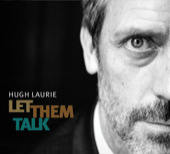
Let Them Talk: Hugh Laurie’s new blues album

Hugh Laurie puts out his first blues album tomorrow.

If you’re American (actually, if you’re anyone with a television who’s not British), you know probably Hugh Laurie as Dr. House, that snarky doctor with the good writers and a screechy female following. If you’re British, you know Hugh Laurie as that guy your parents talk about who seems to be sort of common-law married to Stephen Fry.

"The question of why a soft-handed English schoolboy should be touched by music born of slavery and oppression in another city, on another continent, in another century, is for a thousand others to answer before me: from Korner to Clapton, the Rolling Stones to the Joolsing Hollands. Let’s just say it happens."

And if you’re into New Orleans blues, you have no idea who Hugh Laurie is at all. But don’t worry! He isn’t doing a blues album because that’s the cool thing for actors to do now, and he isn’t trying to convince anyone that he was born in New Orleans. He’s doing it – well, he’s doing it for no discernible Hollywood-esque reason. He’s a musician and he love New Orleans blues, and in the context of his celebrity it doesn’t really make a lot of sense, and he knows and admits that: “Let this record show that I am a white, middle-class Englishman, openly trespassing on the music and myth of the American south.”

As someone who – well, I’m not like a jazz expert, let’s just say As a 21 year old who knows who Jelly Roll Morton is, there were two things that made me want to pay attention to this album. The first was the preface he wrote to the album, at once gushing about the greats and saying that he doesn’t want to see blues “confined to a glass cabinet, under the heading Culture: Only To Be Handled By Elderly Black Men”. The second was his recording of St. Louis Blues, which starts out with a seriously impressive (but not obnoxious) piano intro, and features Hugh Laurie singing in all his British earnestness, and it somehow works. This is not the album of a poser or a bored celebrity. Elvis Costello reportedly said, upon hearing Laurie play, “This guy is a musician before he’s anything else. He’s probably a better musician than an actor.”