First thing’s first: I’m currently paying $0.19 a minute for internet right now, so I don’t have a lot of time. Secondly, I’m writing this from the floor of the Suvarnabhumi Airport in Bangkok, Thailand. I’m waiting for my flight to Chiang Mai, in the north, where I will be spending Christmas with my family.
Due to these developments there will probably not be an “Evan and Gordon Talk” for tomorrow, or at least not one that will be on time. I will also be posting an official update as to when Culture War Reporters as a whole will be taking a break, because I think we both deserve one.
Thanks for now for all of the readership we’ve been getting, especially the traffic that’s gotten my post on Aveline de Grandpré to number three on Google. That’s pretty amazing, and I’m glad I was able to write something that can reach so many.
That’s it for now, guys and girls. Time [and money] is a’ wasting.
Last night The Big Bang Theory aired its 122nd episode, entitled “The Santa Simulation.” News that its premise hit the internet and avid television watchers everywhere began to cry what may one day become a familiar saying, “Community did it first!” Every single one of them was wrong.
A full year before “Advanced Dungeons and Dragons,” [one of the best episodes of Community‘s second season, in my opinion] there was “Jen the Fredo,” the first episode of British sitcom The IT Crowd‘s fourth season. Both of these episodes were some of the best of their respective shows, so I was pretty excited for what TBBT had to offer.
The thing about the D&D-centric episode is how it’s been used as a plot device. As a role-playing game the players are able to reveal aspects about themselves that might not otherwise come out, and you can see this being done with various degrees of effectiveness in each episode. Spoilers for all three episodes past this point.
The IT Crowd [S4E1]
“Jen the Fredo”
I realize that most of you have not seen, or maybe even heard of, The IT Crowd. Let me sum in up in that it is, in my ways, what The Big Bang Theory could be. It’s a show about two, well, nerds that work in the IT department of a large company and their boss, who knows nearly nothing about computers. One of the best aspects of the show is that it brings you into the nerdiness of Moss and Roy, and in watching you begin to feel like you really relate to them, becoming equally frustrated when people ask them for help with their computers.
“Jen the Fredo” is, if you’ve seen The Godfather films [which I haven’t], a clear reference to the character Fredo, whose job it was to take out of town businessman and “show them a good time.” Jen takes on the role of helping to entertain a few business partners, but ultimately fails when she takes them to see “The Vagina Monologues.”
Enter Dungeons and Dragons. Moss has been preparing to DM [Dungeon Master, can be used as a verb] and convinces Jen that it’s exactly what these gentlemen are looking for. The best part is, he succeeds [I had a great YouTube clip here but someone decided to make it private].
While the idea of entertaining [and riveting] a few rowdy businessmen with a little D&D is hilarious in and of itself, but there’s more to it than that. Moss uses the game to confront Roy about the latter’s painful breakup, something he’d been avoiding talking about for a while. The conclusion is tear-filled and, more importantly, immensely funny. You can catch it on Netflix, or here, though you didn’t hear that from me.
Community [S2E14] “Advanced Dungeons and Dragons”
This episode has easily the most actual gameplay of the three, since essentially the entire episode consists of the Greendale Seven playing D&D in the library. It also treats the source material the most lovingly, complete with a voice over and fantastically appropriate score.
The game is set up due to Jeff wanting to help out “Fat Neil,” a young man planning to end his life [understated by the narration] due to his new nickname. Once everything is set up, with Abed as the DM, things really get going.
Each member of the study group essentially plays a version of themselves, with the voice over near the beginning describing them as “Troy the Obtuse,” and “Britta the Needlessly Defiant.” They react to the situations within the game as they normally would, with Jeff impatient and unwilling to put up with nonsense as usual. The best parts, however, are when you discover a little something about the character you thought you knew, well-illustrated in the following scene with Annie:
In this episode Pierce owns his most [as far as I’m concerned] unpopular role: The Villain. Incensed at being excluded from the game he steals Fat Neil’s magical sword and runs away, later using D&D manuals to cheat and garner immense power to himself.
Everything ends, as usual, with a fairly warm and fuzzy conclusion. Pierce is defeated, mostly through his friends forgiving him for his dickishness [hence his title, “Pierce the Dickish]. Neil’s spirits are lifted and he finds the motivation to keep on living.
The Big Bang Theory [S6E11]
“The Santa Situation”
A “guys’ night” is happening and the activity of choice is Dungeons and Dragons, which is territory you’d have expected these characters to have explored in-depth quite a few seasons back. Heck, as far as I can recall they spent more time playing Settlers of Catan than throwing around a 12-sided dice.
The game begins and Leonard, the DM, lets it drop that their quest is to rescue Santa Claus. Queue Sheldon’s disappointed face due to the fact that he a) loves D&D and b) hates Christmas. Also Raj gets shot in the face with a cannon in the first few minutes of the game, highlighting the fragility of life in a world that values perception checks.
Oh, and they ditch their respective girlfriends to play, which led to this scene, the last line of which was delivered excellently:
Using the structure of the game Leonard gets Sheldon to sing [all five verses of] “Good King Wenceslas” and all three remaining players to play “Jingle Bells” using, the obvious instrument of choice, bells.
Upon finding Jolly Old St. Nick in chains they move forward to rescue him, only to have Sheldon cast a paralyzing spell on his companions. He then confronts Santa [or Leonard, in this case] and tells the heartbreaking story of how he asked Father Christmas for only one thing as a child, to have his grandfather back. He then walks out, leaving the old many to die.
In Conclusion
As far as really exploring well-established characters, Community probably succeeds the most, by virtue that it only has the one central plot that revolves around a single game of D&D. While it does feature Pierce continuing on his course to become more cartoonishly evil, Britta’s response to the beleaguered gnomes is a perfect example of how her character will react both in and out of the real world.
The IT Crowd and The Big Bang Theory tread the very similar ground. Moss uses the game to force Roy to come to terms with the love he lost, something that would have been impossible otherwise. Sheldon’s childhood experience with Santa Claus never would have come about without Leonard guiding him to that place where he could talk to the man who disappointed him.
My hope is that there will be a continuation of this trend, with there having being one D&D episode per year from 2010-2012. As the current DM of an ongoing gothic horror campaign I am well-aware of the storytelling capabilities of the game as well as how enjoyable it is to know people you know well deal when presented with fantastical situations. Although 2/3 of the above shows do feature “nerds” I’m sure that this could still appear in the more bizarre sitcoms, such as New Girl and Happy Endings.
This blog is called “Culture War Reporters,” and by and large I think that my co-writer and I manage to cover topics that are about the culture we presently live in, whether it be about why we give or why we put up with watching Family Guy. Today I’m writing about an aspect of North American culture that clashes with a particular European tradition.
Last night a friend and I were talking about the social work program he’s currently taking, particularly about his fellow students and how seriously they take their course of study. The same friend I debated the usage of the word “rape” with, he stressed the importance of finding humour in everything. He recounted, with distaste, being snapped at for telling a racist joke.
Oversensitivity runs rife in North America, for better or for worse. It’s the reason lines like this one in Modern Family exist, and why we find them so funny and relatable. Political correctness and striving to not offend are held in high regard, and when comparing it to the opposite end of the spectrum, utter ignorance and obnoxiousness, it appears to be the reasonable choice. Continue reading →
The reason I didn’t want to talk about donating to charity, especially during the Christmas season, is because it’s so often portrayed and spoken of as a thought-free, morally spotless, warm-fuzzy inducing act. A no-brainer. Nothing to fret over. It’s also often one of those things we try to exchange for middle-class guilt; we donate $50 to charity in order to feel free to spend hundreds (thousands) on ourselves and our family and friends without qualms.
The act of donating to charity is a pit of postmodern angst: it’s cliché, it breeds self-righteousness, it can make a student go crazy with self-consciousness and infinite reevaluations of our “real motivations,” and it can instill in us (alternately) a false sense of optimism or a nihilistic feeling of despair and ultimate uselessness (when the realization of the ratio between our donations and our own frivolous personal expenses sets in). It is not, by any means, a no-brainer.
Another problem with donating is that charities are confusing and sometimes we don’t agree with how they operate. We can look up budget reports all day and still not ever really know how charities and government organizations decide which families get turkeys. Also, religious NGOs may direct finances towards pro-life or anti-gay-rights legislation; secular charitable organizations might fund birth control distribution, military support, or homosexual rights. Odds are, you’re going to disagree with some practice of whatever organization you choose.
What I’m worried about is when the confusing details and qualms prevent or inhibit action; we discuss donating to charities, argue about different ones, donate less than we could, and then feel guilty about our own prosperity – the whole process becomes so unpleasantly self-conscious that we begin to avoid it. A lot of us went through a period as children when we got excited about giving money to the poor; then we realized that the hole we’re trying to fill is bottomless. And yeah: social service is like that. It’s bottomless. Need is never ending. Because of this, if we donate to charity with the idea of fixing things permanently, or to assuage some sense of guilt, our worry and shame in this case will only compound upon themselves. And the poor can’t fill their children’s stockings with middle-class guilt.
But seriously. Yes, it feels stupid to think that your two dollars will “make a difference in someone’s life”. Yes, even the bother of donating something is enough to keep our money in our pockets. Yes, it’s a little paralyzing to think of how much we’re giving versus how much we’re keeping and receiving. But seriously. Seriously – just stop analyzing your intentions and donate something. Suck up your self-conscious selves, do some research and deposit some money into your community. Something is better than nothing, but nothing will ever be enough, so don’t feel useless for donating a small amount and don’t feel too satisfied for donating a large amount. And don’t think you have to defend your decision not to donate anything, or fear that you donated less than you think other people think you could or should have, or avoid donating because of your qualms about your possibly selfish motivations — either write a check or don’t, and stop fretting about it so much.The reason I didn’t want to talk about donating to charity, especially during the Christmas season, is because it’s so often portrayed and spoken of as a thought-free, morally spotless, warm-fuzzy inducing act. A no-brainer. Nothing to fret over. It’s also often one of those things we try to exchange for middle-class guilt; we donate $50 to charity in order to feel free to spend hundreds (thousands) on ourselves and our family and friends without qualms.
The act of donating to charity is a pit of postmodern angst: it’s cliché, it breeds self-righteousness, it can make a student go crazy with self-consciousness and infinite reevaluations of our “real motivations,” and it can instill in us (alternately) a false sense of optimism or a nihilistic feeling of despair and ultimate uselessness (when the realization of the ratio between our donations and our own frivolous personal expenses sets in). It is not, by any means, a no-brainer.
Another problem with donating is that charities are confusing and sometimes we don’t agree with how they operate. We can look up budget reports all day and still not ever really know how charities and government organizations decide which families get turkeys. Also, religious NGOs may direct finances towards pro-life or anti-gay-rights legislation; secular charitable organizations might fund birth control distribution, military support, or homosexual rights. Odds are, you’re going to disagree with some practice of whatever organization you choose.
What I’m worried about is when the confusing details and qualms prevent or inhibit action; we discuss donating to charities, argue about different ones, donate less than we could, and then feel guilty about our own prosperity – the whole process becomes so unpleasantly self-conscious that we begin to avoid it. A lot of us went through a period as children when we got excited about giving money to the poor; then we realized that the hole we’re trying to fill is bottomless. And yeah: social service is like that. It’s bottomless. Need is never ending. Because of this, if we donate to charity with the idea of fixing things permanently, or to assuage some sense of guilt, our worry and shame in this case will only compound upon themselves. And the poor can’t fill their children’s stockings with middle-class guilt.
But seriously. Yes, it feels stupid to think that your two dollars will “make a difference in someone’s life”. Yes, even the bother of donating something is enough to keep our money in our pockets. Yes, it’s a little paralyzing to think of how much we’re giving versus how much we’re keeping and receiving. But seriously. Seriously – just stop analyzing your intentions and donate something. Suck up your self-conscious selves, do some research and deposit some money into your community. Something is better than nothing, but nothing will ever be enough, so don’t feel useless for donating a small amount and don’t feel too satisfied for donating a large amount. And don’t think you have to defend your decision not to donate anything, or fear that you donated less than you think other people think you could or should have, or avoid donating because of your qualms about your possibly selfish motivations — either write a check or don’t, and stop fretting about it so much.





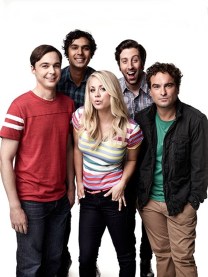 The Big Bang Theory [S6E11]


 Culture War Reporters