
Cartoons are a complicated thing. For example, children’s cartoon characters are required, in general, to always be wearing a seatbelt when in a vehicle. British TV character Peppa Pig was forced to wear one in all future episodes once parents raised concern about safety [the first few episodes would also be reanimated to reflect the change].
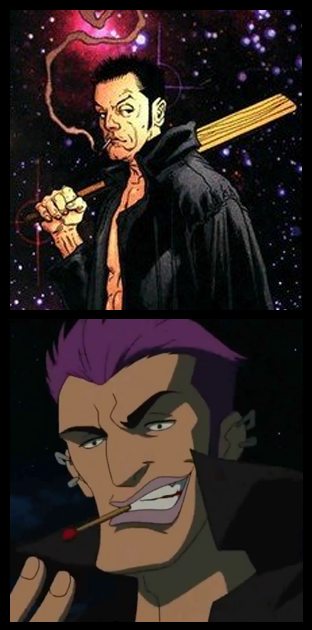
The presence of tobacco is yet another issue. In the upcoming DC animated movie “Superman vs. The Elite” British antihero Manchester Black is portrayed without his customary cigarette hanging from his lips. As you can see by the images to the right, it has been replaced by a matchstick.
What I’m slowly trying to get to is death in cartoons, and how it’s handled. The reason that this post didn’t go up yesterday was that I was powering through an entire season of “The Avengers: Earth’s Mightiest Heroes.” While I was watching the show, however, the same thought kept running through my mind: so many people just died.
Large fight scenes abound in the show as the Avengers battle to save New York City and the world, and collateral damage abounds. Skyscrapers fall and cars are thrown around, often with the implication that there are indeed people inside. A movie can be rated PG-13 for “sci-fi destruction and violence,” and I wonder how the show would stand up to the MPAA’s standards.
Similarly, in Pixar’s “The Incredibles” it is very strongly implied [though never outright seen/stated] that people, specifically Syndrome’s henchmen, die. There is a scene where Dash fights one of these goons and causes him to crash his vehicle into a cliffside. The result is a fiery explosion. From what I could tell the first few times I saw the movie, the man had definitely perished in the blast. Out of curiosity, however, I watched it again yesterday at half the speed.
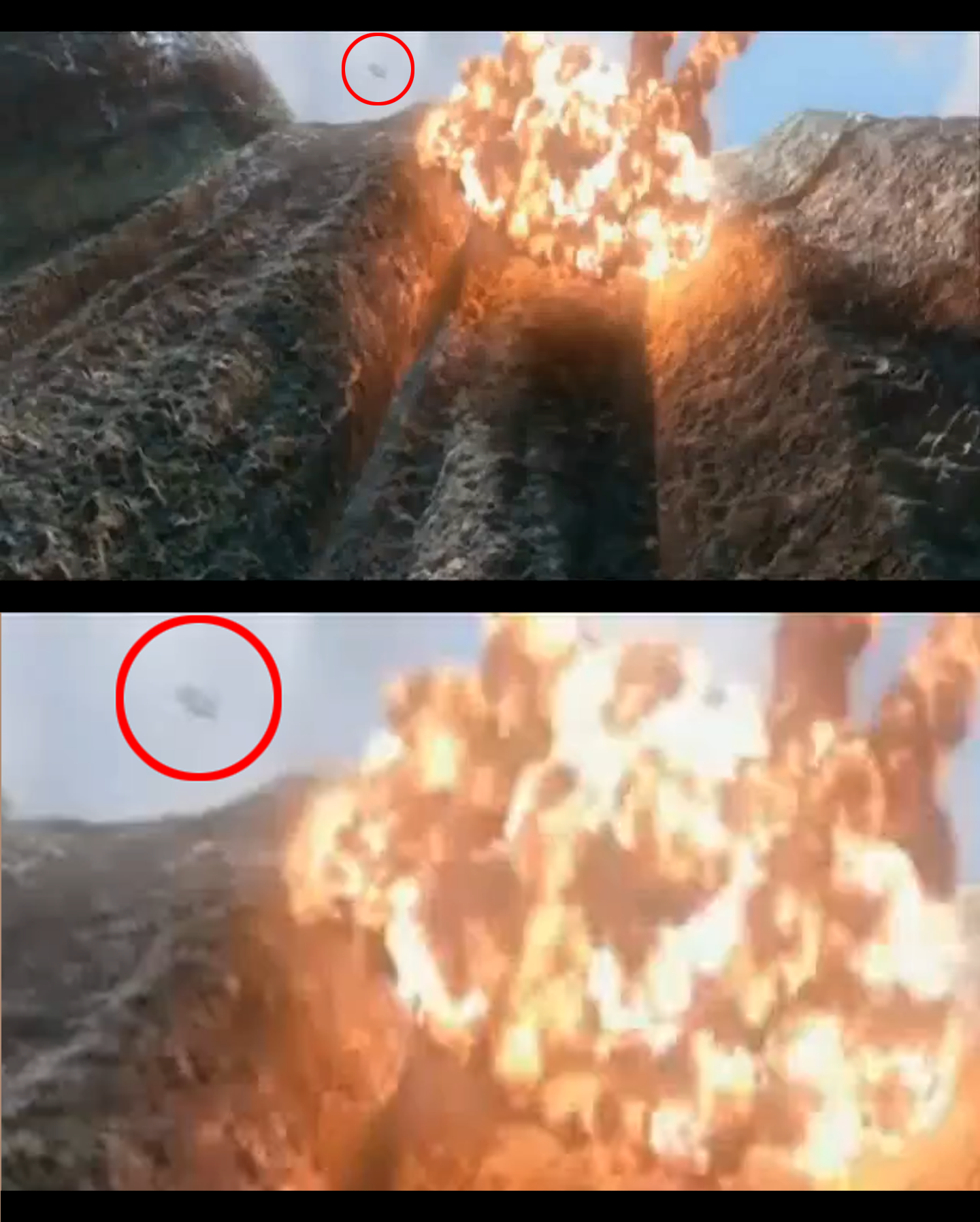
As you can see, there is a brief second where a piece of debris can be glimpsed that could maybe be interpreted as some sort of escape pod. I sincerely doubt it, though. And this causes me to wonder how Pixar managed to get away with it, and how exactly the rules can be bent. In the scene pictured above a ten-year-old boy is the cause of a man’s death. Is that something worth considering, would children even notice or be bothered by it?
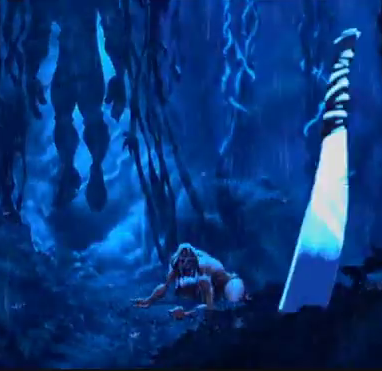 Death in cartoons has always been a very important event. Primary antagonists are normally relegated to some sort of dramatic end, and Disney movies are a fine example of this. Gaston [Beauty and the Beast] plummets to his death in a gorge, Clayton [Tarzan] ends up hanging himself from vines, and Commander Rourke [Atlantis: The Lost Empire] is turned into crystal and ends up shattering after hitting the fan of a hot air balloon. Their henchmen are, by and large, simply knocked out, oftentimes in a comical manner.
The question I’m trying to ask is whether or not we should continue to uphold the concept of death as this sacred thing in cartoons. Does a henchman’s demise deserve any kind of gravitas, or should he die in the first place? How much credit do we give children to understand what is happening when a character dies on screen? I can’t say that I have the answers, but becoming a parent will probably force me to find out.



 Culture War Reporters
This S.H.I.E.L.D. Needs a Little Colour
It marks Joss Whedon’s return to television, as he will be both directing and producing the pilot. Acting as directors and producers, however, are his brother Jed Whedon and his sister-in-law Maurissa Tancharoen. The three formerly worked together on the online cult classic Dr. Horrible’s Sing-Along Blog, which actually leads me to the point of this post.
The DVD and Blu-Ray versions of Dr. Horrible a commentary track titled Commentary! The Musical, which consists of entirely new songs performed by the cast and crew. Track 10 was written and performed by Tancharoen, and I’ve embedded it here:
While obviously very tongue-in-cheek, as an Asian-American in the entertainment industry she’s more than a little aware of the imbalance in roles for racial minorities. Having her and Jed Whedon take off as showrunners if the pilot is a hit, this is a huge opportunity for a show other than Hawaii Five-0 to feature a good number of Asians in their main cast.
The perfect opportunity for this takes the form of S.H.I.E.L.D. agent James “Jimmy” Woo. Originally starting out with the FBI, he created and led the first ever super-hero team to exist with a government mandate. Although he later left to join the Agents of Atlas, Woo was a high-ranking member of S.H.I.E.L.D. and definitely a possible addition to the upcoming series.
In general, it’s exciting to have the comics come to the small screen as a live-action show. Cartoons like The Avengers: Earth’s Mightiest Heroes and the classic Batman: The Animated Series have proven very popular, but were directed at a younger audience. In recent years The Walking Dead is the only program based on comics that has received any amount of positive attention.
Disney/Marvel have a chance, as they often do, to bring diversity through a form of media, this time television. With Jed Whedon and Maurissa Tancharoen at the helm, here’s hoping that we might even see our first ABC series headlining an Asian actor that is also a spinoff of a major motion picture based on a comic book.
Rate this:
5 Comments
Posted in comics, internet, media, race, television
Tagged Agents of Atlas, Asians, Batman: The Animated Series, casting, Commentary! The Musical, Disney, Dr. Horrible's Sing-Along Blog, Hawaii Five-0, Jed Whedon, Jimmy Woo, Joss Whedon, live-action, Marvel, Maurissa Tancharoen, No One's Asian In The Movies, race, roles, S.H.I.E.L.D., television, The Avengers, The Avengers: Earth's Mightiest Heroes, The Walking Dead, Whedon