Tag Archives: media

Porn Is Not Poltergeists

So last Friday I came across the following trailer for a movie called Harmless. Here it is:

In the spring semester of last year I took a writing class called Literary Nonfiction. One of the required reading pieces was Culture Making: Recovering Our Creative Calling, by Andy Crouch. The general gist of the book was that as Christians we have the ability to create our own culture. We live in the world, but we don’t need to be of it. If we can’t find anything out there that we can agree to be part of than we can make our own.

That being said, I’m not sure that I can necessarily support this film. I understand why they did it, though. I’ve seen Paranormal Activity; I understand the way fear is exacerbated by the intimacy of the  mockumentary format. I get that if you want to talk to people about your faith movies are a great way to do it, and the horror genre is an extremely popular one. The problem is that it’s ridiculous.

I won’t lie and say that pornography is all well and good. I do believe that it is degrading to women and can be extremely harmful to relationships and families. I will even go so far as to say that there is a dangerous spiritual component involved, but this is not the time or place to discuss that. I can also tell you what porn is not, though. Porn is not poltergeists.

I can’t agree with a film that could potentially be more ridiculous than the 2006 film Facing the Giants. Trailer seen here:

This was a film that just dripped with cheese.  It’s difficult for me to put into words how awful it was. The messages were certainly positive, but weren’t delivered in a way that was well-written or even believable. If Christian media wants to be taken seriously by those outside of its target audience it has to at least be a decent example of its art form.

I’m all for Christian media, or at least media with a Christian message of sorts. Ted Dekker’s novels Blink and Thr3e are well-written and actually very good. What I wish is that this would spread to the film industry, that as Christians we could do better at making and affecting culture around us, instead of creating something laughable.


[Very] Brief Thoughts On Entertainment

A bitter, angry old man once said:

There’s been a growing dissatisfaction and distrust with the conventional publishing industry, in that you tend to have a lot of formerly reputable imprints now owned by big conglomerates. As a result, there’s a growing number of professional writers now going to small presses, self-publishing, or trying other kinds of [distribution] strategies. The same is true of music and cinema. It seems that every movie is a remake of something that was better when it was first released in a foreign language, as a 1960s TV show, or even as a comic book. Now you’ve got theme park rides as the source material of movies. The only things left are breakfast cereal mascots. In our lifetime, we will see Johnny Depp playing Captain Crunch.

That same man wrote The League of Extraordinary GentlemenV for Vendetta, and one of Time Magazine’s All-Time 100 Novels, Watchmen. Alan Moore certainly has the writing credentials, but is he accurate in his assessment of the future of entertainment?

The truth is, as you’re probably well-aware, that the publishing industry is an ever-changing thing. ComicsAlliance writer Chris Sims has called for the “big two” [Marvel and DC Comics] to get serious about webcomics. In other words, for the two publishers to release content for free to compete in an age where people just aren’t buying print anymore. It would work as a way to increase and maintain interest in their product, and would even help sales; people who like reading something online will typically buy it if they like it enough.

As for creativity, I wrote in a post earlier this month [Mashin’ It Up] about people who are seemingly just reaching into a bucket of tropes and smashing them together at high speeds. Cowboys and Aliens was a movie that came out last year, and it wasn’t even original; it was an adaptation of a [honestly, not very good] webcomic. Not only that, but by next year Gore Verbinski will have directed Lone Ranger, with Johnny Depp as Tonto. That could be considered one step closer to Captain Crunch, I suppose.

At the same time adaptations are being made of novels. They may not be original screenplays, but the original work is nothing like a TV show from the 80s, it’s not built on nostalgia. Audrey Niffenegger’s The Time Traveler’s Wife was adapted for the big screen, and although it didn’t do great with the critics it still stands as evidence that books will do well; and they’ll do well enough to warrant films. This could lead into the conversation about how some books receive film opportunities before they’re even published, but that’s for another time.

The “conventional publishing industry” will continue to change; it has and it will continue to. Alan Moore is a cynical miser of a man [subjective], but he has a point that shouldn’t be ignored. We’re not doing great in regards to creativity, and it’s an area we should expect more from. Cynicism may appear to be the logical place to turn to, but looking for media worthy of attention is the more worthy activity.

Terrible Moments in News Media (Not Limited to Rush Limbaugh)

Note: This is a version of a piece I wrote this with my brilliant friend Chris Hartline for our student newspaper, and am reprinting it here. Any goodness in it may be credited to him.

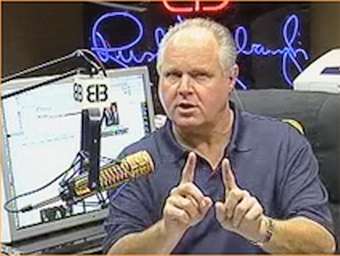
Most of the public is aware of Rush Limbaugh’s stupid and unfunny bit in which he referred to a Georgetown student as a “prostitute” and a “slut” for saying that Georgetown health insurance should cover contraception.

source: lifenews.com

Do not pay attention to this man. He will make you sad.

But the name-calling does not stop there: other instances of sexist slander have been just as offensive but haven’t received as much news coverage as Limbaugh’s insult. Bill Maher, a liberal comedian and amateur political commentator on HBO, referred to Sarah Palin as “a tw-t” and “a c-nt”. Chris Matthews, MSNBC host, called Hillary Clinton “witchy,” “uppity,” and claimed that she was elected to the Senate only because her “husband messed around.”
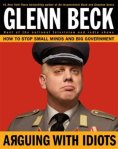
source: glennbeck.com

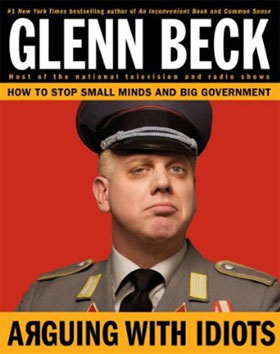
Looks like public discourse to me.

The state of the news media today is disheartening because the system of acidity seems to be self-perpetuating. Indeed, truculence has become a prevailing rhetorical device. Keith Olbermann had a segment on his show (and a book) called “The Worst Person in the World”. Glenn Beck wrote a book in 2009 called “Arguing with Idiots: How to Stop Small Minds and Big Government”.

Another clear manifestation of the deficit of trust of the media was a 2009 poll done by Time magazine. Walter Cronkite held the title (since 1974) of “Most Trusted Man in America”. Cronkite was the most visible figure in the media, which at the time provided objective discourse and information to the public, and he died in 2009. In the subsequent Time poll, voters said that the most trusted news anchor in America was Comedy Central host and political satirist Jon Stewart.

The fact is that the media is supposed to provide a momentary stay against political hostility, an unbiased source of objective information for the public, and that it is not doing this. Consequently, the public is losing their faith in the news media, and by extension the American political system itself.

The media has become tool used by political parties to influence the opinions of the public. A blatant example of this is the “Plan for Putting the GOP in the News” memo from the Nixon administration. The 15-page memo was anonymous, and has written comments on it by Nixon’s then-advisor and current Fox News President Roger Ailes.

Roger Ailes!

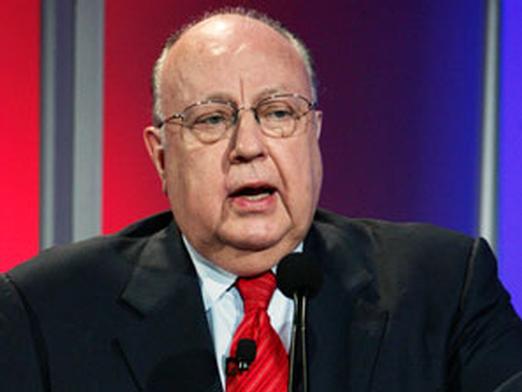
Roger Ailes: founding CEO of Fox News and adviser to Nixon, Reagan, and Bush. Also credited for possessing the world's least attractive set of jowls.

The memo stated that television was the best medium for political persuasion because of its imminent popularity: “People are lazy. With television you just sit – watch – listen.  The thinking is done for you.” The plan was to record prepackaged interviews with Republican politicians and deliver the videotapes to local news stations. Presently, critics say that Fox News has demonstrated their role as an arm of the Republican Party.
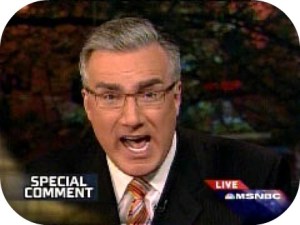
source: msnbc.com

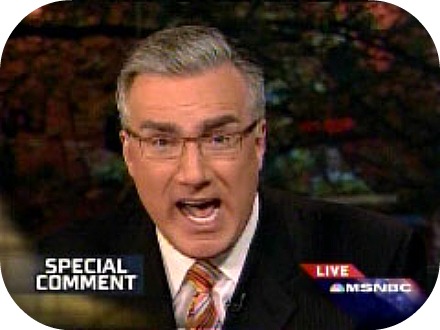
All you need to know about Keith Olbermann is that he's not a pleasant person.

MSNBC, while on the opposite side of the political spectrum from Fox News, is similar in its audacious political stance. In a distasteful and recurring ending rant on his show, former host Keith Olbermann once shouted (his monologue was directed at then-President Bush), “This war is not about you … shut the hell up!”. Fellow host Chris Matthews also said after a 2008 Obama speech that he “felt this thrill going up my leg as Obama spoke.”

So it can be concluded that the media has become unabashedly partisan. Even the very fact that it is standard for each major newspaper to endorse a presidential candidate reflects a problem in the nature of journalism. It results in an overtly ideological news organization – the New York Times is liberal, the Wall Street Journal is conservative; the Washington Post is liberal, the Washington Times is conservative, etc.

A news staff tending to lean one way on the opinions page is typical and expected; however, the fear is that the ideological slant of the editorial pages will seep into the news coverage. The potential and underlying ‘spin’ of news stories becomes more important than the objectivity of the events being reported.

And maybe the Nixon administration’s prediction about the easy audience of television was prescient: political commentary television programs can be especially caustic and, at times, juvenile. They seem to appeal to the lowest common denominator of the public and of individuals. Keith Olbermann, Glenn Beck, Rachel Maddow, and Bill O’Reilly are all political commentators who base their rhetoric on the petty mockery of whoever disagrees with them – their arguments are negative, not positive, and clever insults take precedent over constructive criticism.
source: portland.indymedia.org

Jon Stewart pleads with the hosts of Crossfire to "stop hurting America." Crossfire was cancelled shortly after Stewart's interview.

The media itself has not only lost its ability to objectively inform the public of unbiased political events – it has become a tool for fostering and encouraging political contention. The role of the news media is not just lost – it has been perverted. As Jon Stewart said to the hosts of Crossfire, this inflammation of petty and theatrical bickering isn’t just bad journalism – it’s hurting America.

David Brooks said: “There’s a collapse in the public’s faith in American institutions. The media has done a poor job. We’ve become as insular and self-regarding as any [other institution].” It is no wonder, then, that there is a deficit of trust among the younger generations – the apparent disintegration of the integrity of our news sources is nothing less than repelling.

Media in 2011

This past year I had a resolution, of sorts. It was to log, day by day, the amount of media that I experienced. For the sake of convenience, music, YouTube videos, and comic books were all exempt from being logged. TV shows, movies, and books were the main focus here.

In picking a month to show you, I chose September in that it was a month entirely spent at school, without any breaks. All media was experienced in the free time I had outside of classes and schoolwork. Breaks tend to severely skew the average amount; an example of this is my watching five seasons of 30 Rock in January during the Christmas break.

Media in September

Television

  • 8 episodes of Deadliest Warrior [40 minutes each]
  • 1 episode of Futurama [20 minutes]
  • 1 episode of The IT Crowd [20 minutes]
  • 5 episodes of Cromartie High School [10 minutes each]
  • 2 episodes of Regular Show [10 minutes each]
  • 2 episode of Adventure Time [10 minutes each]
  • 7 episodes of Breaking Bad [45 minutes each]
  • 4 episodes of How I Met Your Mother [20 minutes each]
  • 1 episode of The Office [20 minutes]
  • 1 episode of Community [20 minutes]
  • 2 episodes of The Big Bang Theory [20 minutes each]
  • 2 episodes of New Girl [20 minutes each]

Film

  • Scott Pilgrim vs. The World [112 minutes]
  • Helvetica [80 minutes]
  • Paul [104 minutes]
  • Batman & Robin [125 minutes]
  • Hot Rod [88 minutes]
  • Ironclad [121 minutes]
  • Terminator Salvation [115 minutes]

Books

  • Part of The Odyssey
  • Most of The Aeneid
Totaled, that’s (if Google didn’t fail me on the math part), 965 minutes of television, 745 minutes of television, and about 3 or four hours of reading. After some fancy addition, that’s 28.5 hours spent watching in the month of September. A month I also partially picked because it had significantly less than others.
As an English/Writing Major, this is very unsettling to think about. Over a day of September was spent staring at a screen [not including YouTube or daily browsing], and even though comics were omitted my reading total still pales greatly in comparison. I justify my excessive viewing in a way, citing the study of plots and character progression in both television and film as a way of improving myself as a writer. Apart from this blog, however, I did little to no personal writing whatsoever in that time period.

The average American [which I am not, being neither] watches more than 151 hours of TV a month. With that in mind, I feel strangely validated. We don’t have a television in our house, and instead hook our laptops up to a monitor in the living room. This means that there is no casual turning on of the TV, no languid channel surfing. Apparently this has contributed greatly to my watching 80% less than most people.

I began this blog post with the intent to depict exactly how much media I consume in a given month, and hold that up as a shocking example of a 21-year old’s usage of his time. Contrary to that, I’ve discovered that I’m not doing too badly compared to America. At 28.5 hours per month, I’m actually doing really great.

Does this mean that I should continue to do what I’ve been doing? My answer is no. As I’ve mentioned, September was actually a low month in regards to media viewed. The month after I watched easily twice as many shows. The fact that this still ranks me as watching 40% as much as most has inspired me not to watch the same amount, but less. I’m doing better than average, but better doesn’t equal good. As someone who says he cares for literature, I need to at least pretend that that’s true in my actions. And that’s as good a resolution as any.

Some Frightening Things About Popular Technology

Frederick Jameson said that “Contemporary people alternate between states of euphoria and anxiety.”

Euphoria, perhaps, because that is one natural reaction to being in the state of perpetual stimulation and entertainment and comfort (at least objectively) that we, the middle class, experience. Every minute, 48 hours of video is uploaded to YouTube. Any thought of YouTube, really, or Hulu or Grooveshark, makes one realize how kind of horrifyingly immense is the amount of entertainment available to anyone with an internet connection.

Cyborgs are probably going to start showing up soon. Hopefully Jean Luc Picard will be among them (if we can get a non-evil version).

You could do nothing but read, watch, and play on the internet for the rest of your life and there would still be more things you hadn’t seen or read. Information has always been that vast – for at least the last few centuries – but never before has it been so readily available almost all the time. With smartphones and future developments like SixthSense, access to the internet is going to start feeling like an extra limb – something without which you will feel nervous and clumsy and limited. For some people, this is already true – think about most people who’ve owned a smartphone for more than a few months, or anyone in a fantasy football league, or the fact that a SecondLife Shakespeare Company exists.

In The Shallows (read a good reflection on the book at The Millions), Nicholas Carr speculates and muses about the various psychological, social, and cultural effects of more completely immersing ourselves in an environment made entirely out of nonphysical stimulation.

As a member of the first generation to really experience internet access (if you count AOL 4.0 as internet access) for our whole lives, I look to the future of the human brain with interest and horror.

Hurricane Occurs, Media Freaks Out About Itself

As Hurricane Irene swept up the east coast, the President issued a warning for 10 states (plus DC and Puerto Rico), people stocked up on fresh water and condoms, and, importantly, vaguely famous country singers tweeted about it.

Another name ruined for at least another year.

But as the storm moved north and decreased in intensity, eventually being downgraded to a tropical storm, grumbling started among people who had spent two hours looking for bread, and New Yorkers especially began saying that the hurricane was gratuitously over-hyped. A New York Times article noted that, unlike the forewarnings, “Windows in skyscrapers did not shatter. Subway tunnels did not flood. Power was not shut off pre-emptively. The water grid did not burst. There were no reported fatalities in the five boroughs. And the rivers flanking Manhattan did not overrun their banks.”

People are generally accepting a better-safe-than-sorry-but-I’m-still-kind-of-annoyed attitude, like the building superintendent who said of NYC’s mayor, “Bloomberg, he did O.K., but he made people crazy and spend a lot of money.”

And there was quite a bit of hype about Irene, mostly in the northern states, where hurricanes are less common and therefore more exciting for meteorologists, like this poor weatherguy who pretends to be buffeted around as people hang out on the boardwalk:

(The worse part is when the anchor says “There are, like, people sightseeing behind you. We can see them.” and he says “That’s because they are hardcore weather-watchers!“)

George Will even had nuggets of wisdom to dispense on the topic, saying “[Journalism] shouldn’t subtract from the nation’s understanding and it certainly shouldn’t contribute to the manufacture of synthetic hysteria that is so much a part of modern life. And I think we may have done so with regard to this tropical storm as it now seems to be.”

New Yorker Editorialist Adam Gopnik called ‘startling’ “the relentless note of incipient hysteria, the invitation to panic, the ungrounded scenarios—the overwhelming and underlying desire for something truly terrible to happen so that you could have something really hot to talk about.”

Many commentators, like editorialist Howard Kurtz of The Daily Beast called out news stations for rabidly covering anything to do with the hurricane while failing to adequately cover the political events in Libya.

And of course, there have been deaths and significant losses in states all along the coast. Just because New York City didn’t collapse doesn’t mean that Irene wasn’t a significant disaster, and every time a columnist starts to talk about “sensationalism”, they are quickly reminded of this fact. But this just adds to the media’s kind of embarrassingly transparent public introspection that seems to be common now after significant unplanned events.


And just for fun, here’s that video of that reporter reporting while getting covered in sea gunk: