Tag Archives: Mohammed

BURAAQ: Two Brothers, A Superhero, And the Truth About Islam

adilkamil

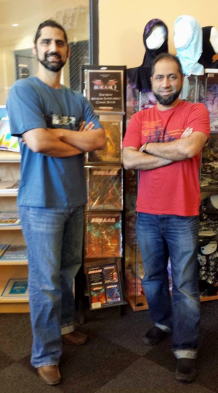
Kamil and Adil Imtiaz.

This past Saturday I had the opportunity to connect with Adil Imtiaz, one half of the two sibling team responsible for the comic book BURAAQ, which stars a Muslim superhero. While he was the illustrator starting out he shared, and continues to share, creative responsibilities with his brother Kamil, and was more than happy to talk to me a little bit more about how this project came to be and why.

Ms. Marvel, as you may have guessed, came up in conversation, and I ended up learning a few things about Islam that I didn’t originally know.
Throughout our talk it was clear that this character and all he presents is a passion for Adil, and that he believes it can, and has done, good things for Muslim youth.

After thanking him for finding the time to speak with me about his work we got right down to questions and answers, the latter of which he was very ready to provide.

Evan: Now I can’t wait to get into talking about BURAAQ, but before we get there would you like to say a few words about yourself?

Adil: Adil Imtiaz is my name. I’m an IT professional, just so you know. And I came here from Pakistan back in 1990; me and my  brother and my family. So we’re here with our families and that’s pretty much it as far as my background is concerned.

Evan: Would you say that your interest in comic books began at a very young age?

Adil: Absolutely. Even in Pakistan as kids, my brother and I used to have a stack of comic books by our bedside. Every night we used to read Marvel, DC, superhero stories. We were, and still are, fascinated with sci-fi and superhero stories and characters.

And movies, of course. Hollywood as you can see is all about superhero films. And we used to draw comics and superhero characters as kids. I got sidetracked when I had to focus on higher education, pursuing a career. I had to put it on the back burner so to speak.
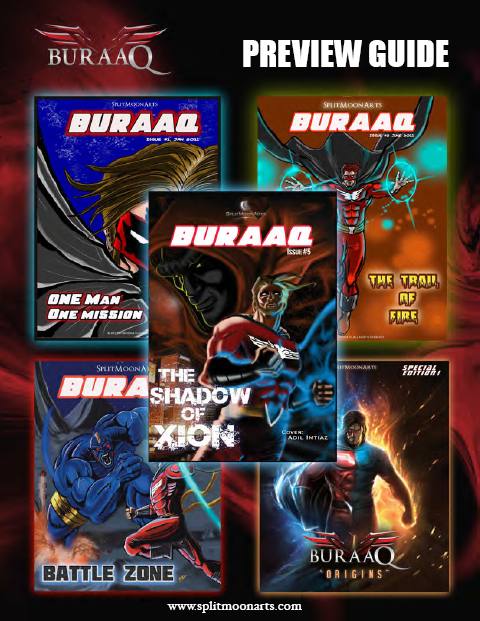
buraaqpreview

Evan: In the PDF I was given to review you and your brother’s mission was very clearly stated, and I’m just going to reiterate it for all my readers:

  • To provide a clean, fun (halal) and positive entertainment media alternative for our Muslim youth.
  • Reconnect our Muslim youth to Islam and make them feel proud to be a Muslim.
  • Enable interfaith dialogue and increase positive Islamic awareness.
  • Our principles are based on the Quran, Islamic values, and the teaching of the Prophet Muhammad (PBUH).

How long this been in the works? It seems particularly relevant now given recent events in North Carolina [with what I’m going to call a hate crime]-

Adil: Well, no, actually. This is something, the idea was born back in 2009 actually. Especially after 9/11 things changed in the US. And in the media, traditionally, Arabs and Muslims have been portrayed in a negative light in Hollywood, but after 9/11 things really picked up steam; a bunch of crazy people around the world who claim to be Muslims and other agencies at play, not to get into politics…

Sammy Sheik as Mustafa in American Sniper.
Continue reading

The Implications of Charlie Hebdo’s Mockery of Islam and Muslims’ Response

source: gatesofvienna.blogspot.com

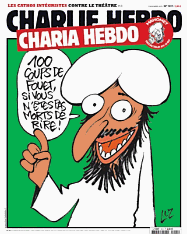
On the cover of Charlie Hebdo last week, Mohammed is saying (in English), "100 lashes if you don't die laughing!". Reproductions of images of Mohammed are considered particularly offensive in Islam.

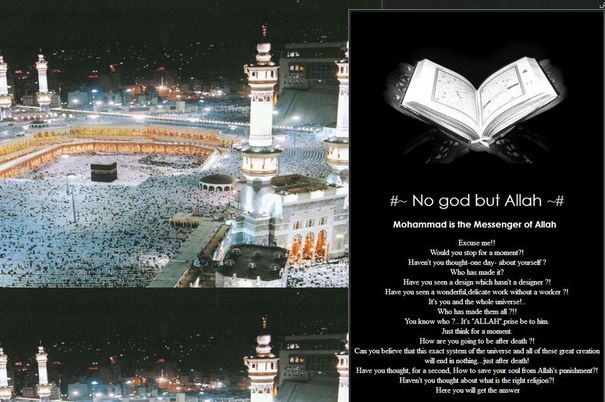
Charlie Hebdo [“Charlie Weekly”], kind of The Onion of France, published an issue last week entitled “Charia Hebdo”, which featured a cartoon of Mohammed saying (in French) “100 lashes if you don’t die laughing!”. The November 2 issue was retitled “Charia Hebdo” (referring to the holy Islamic code of laws called Sharia), and listed Mohammed as “guest editor” for the issue. In response, the publication’s website was hacked, showing a picture of Mecca and the text [in English] “No God But Allah”, followed by a series of questions arguing for theism (specifically Islam, but they were pretty generally theistic questions, like “Have you seen a wonderful delicate work without a worker?”). A 20 year old IT worker in Turkey claimed responsibility for the hacking. Shortly before the issue hit the streets, Charlie Hebdo’s offices were set on fire (via a molotov cocktail, according to telegraph.co.uk) and much of the inside of them was destroyed.

tendancecoatesy.wordpress.com

The hacked Charlie Hebdo website.

Given the recent passing of the bill that banned the wearing of niqabs and burkas under penalty of monetary fine, the demonstration of further European French/Muslim French tension is unsurprising and worrisome. The demographics of France are disputed, with reports from 2009 ranging from 4%-10% of the population being Muslim, but it is agreed upon that the Muslim population in France is increasing rapidly. Muslims have expressed feelings of ostracization by Sarkozy, especially with the recent head covering bill, and it is evident from Charlie Hebdo’s publication that at least some animosity towards Islam is common among the European French.

Charlie Hebdo’s publication was specifically blasphemous to Islam – more so than, say, Christians would probably find a picture of Jesus saying the same thing [though yes that would be rather upsetting to many people] – because of the specific Islamic mandate against the reproduction of pictures of Mohammed, and the reverence with which the prophet is held.

The French government passed a similiar and vaguer bill prohibiting ‘conspicuous religious symbols’ in 2004. This is just a small demonstration of the staunch secularism in France since 1789, when the revolution removed the huge amounts of power the Roman Catholic Church had over society. After the revolution, France has made it a pretty big deal to avoid giving a religious group such power again, and so has consistently been very intentional about the individualisation of religion and maintaining the separation between church and state.

This separation has worked fairly well for the past few centuries, as devout French Christians became fewer in number and French society as a whole valued an a-religious government, but the increasing Muslim population in France is beginning to disturb that environment. Though the population of Muslims in France is small, the presence of a solid and devout minority in such a staunchly secularist country will foster discord, the beginnings of which can be seen in recent events.