Tag Archives: death

Celebrity Mortality and Actual Loss

Eight days ago Michael Clarke Duncan, who you probably know better from the Green Mile but who I remember as the Kingpin in Affleck’s Daredevil, passed away having never fully recovered from a heart attack. Whenever a celebrity dies people take to the internet to mourn, and I saw the following comment on one of MGK’s very simple memorial posts:

What struck me was what exactly made this summer more heartbreaking than any other. Was it the suicide of Top Gun filmmaker Tony Scott? The passing of puppeteer Jerry Nelson? Moreover, was this summer any more “heartbreaking” than 2009, when Michael Jackson, Farrah Fawcett, Ed McMahon, and Billy Mays died? Continue reading

Boy Scouts of America Maintains Ban on Gays

About a week ago, I had added my name to a petition being sent to a member of the BSA (that’s Boy Scouts of America) Board of Directors, demanding that the organization’s notorious ban on gays be overturned. A few minutes ago, I found this article at BBC World stating that the board had unanimously rejected the petition.


See, I’m an Eagle Scout. I worked my up from cub scouts. I’ve been to the camps, memorized the oaths, and folded the flags. I’m proud of the skills I’ve learned. I’m proud of the leadership training I’ve had. I’m proud of the values of civic duty, environmentalism, and honesty I’ve been given. And I am so very deeply ashamed that even now, an organization that’s been synonymous with decency and helpfulness is choosing to maintain a policy of unabashed bigotry.


According to the BSA, homosexuals (both men and women) are prohibited from holding leadership positions in the BSA. Despite maintaining a “don’t-ask-don’t-tell”-esque policy, any individual (employee, member, or even volunteer) who is found to be gay is expelled from the Scouts. The reason given for this was that

“The vast majority of the parents of youth we serve value their right to address issues of same-sex orientation within their family, with spiritual advisers and at the appropriate time and in the right setting,”

-Chief Executive Bob Mazzuca.

Now let’s just run with that. What Mazzuca seems to be asserting here is that the reason for banning gays from the BSA is that a scout’s first introduction to the controversial topic of homosexuality should be with his parents/pastor/etc. Now maybe you could point out that in this culture, the chances that a kid is going to be exposed to the concept of homosexuality before his parents introduce it to him is pretty dang high. Maybe you could point out that it’s really not something you have any actual control of, and that Mazzuca’s reasoning is just an insultingly shoddy veil for the fact that Mazzuca and the rest of the board just don’t want gays in period. But if we live in a world where a kid won’t encounter homosexuality except by introduction of his parents, there’s still a pretty gaping flaw in that already questionable logic.


You remember the bit where I was talking about the stuff I did in boy scouts? Where I said I’ve been to the camps, memorized the oaths, and so on? Yeah, I did more than just that. I shot guns. I fished. I learned to set snares. I threw knives and axes. I used bows.

 
In short, I learned how to kill things.

I gotta ask, which is the more traumatic? Learning that my scoutmaster likes other guys, or learning to shoot a deer or gut a fish?

Surely if I can be trusted to tie knots, use knives, and start fires, I can be trusted to learn that homosexuality exists without going insane and re-enacting Rambo: First Blood, right?

I could only find GIFs from Rambo IV, but the principle is the same…

Interestingly enough, I was exposed to homosexuality in Boy Scouts. Despite Mazzuca’s assertion that the BSA takes no part in bringing up sexuality with its members, the scout troop I was with did take it upon themselves to have a showing of A Time to Tell, an informational video on sexual molestation. The film opens with the host asserting that “…It might feel uncomfortable presenting this subject to an 11 to 14 year old male audience for which it is intended, however, it is because of the unique physical and psychological changes young men experience in adolescence that the subject of sexual molestation should be directly addressed.”


Huh- so bringing up the extremely dark and painful subject of sexual abuse is both right and necessary, but any discussion of homosexuality should not be touched.


But let’s ignore the lousy excuse offered by the BSA board, and look at some other reasoning. One might try to take up the same line of reasoning used in the argument against gays in the military. That close quarters between straight and gay scouts will make for some seriously awkward and uncomfortable dynamics, and essentially prevent the troop from functioning with the kind of camaraderie it’s intended to have. Of course, I could use the whole logic of “people-sexually-attracted-to-each-other-can’t-work-together” to make a case for segregating men and women. The assumption at play is here is the idiotic old myth that gay guys are attracted to all other guys and just can’t help but act on their impulses.

Case and point.

Ok, so gay guys really don’t have any reason from being just as prepared and honorable as their straight counterparts, but what about scoutmasters? Surely gays shouldn’t be in charge of troops of young men!

Here’s where I think the clincher really is. Once upon a time, people didn’t make any distinction between being gay and being a pedophile. Just take a look at this horrific 1950s PSA labeling pedophiles and child molesters as “homosexuals”.

Crazy, right? If you want to see another interesting take on this, there’s an old Law & Order episode that deals with the whole gay/pedophile distinction not existing in the 50s. But of course, that was all more than half a century ago, and while at the time this may have been the reason against allowing gays to take up leadership positions in the BSA, it really can’t be maintained today.


I guess what makes it worse is that as a boyscout, I encountered so many other scouts who were foul, lazy, irresponsible- even some who were outright bullies and sexists. I find it tough to stomach that I had to stand alongside some really lousy kids while a boy who truly embodies the oath and scout law is excluded simply because he’s gay.


But apparently that’s what the board thinks makes a good scout- not his values, not his actions. Not his honesty, his courage, or his work-ethic. His sexual orientation, to Mazzuca and his cronies, is apparently more important than any of that.

Why We Need Graphic Violence

Once upon a time, a lion was sent to the king of Sweden. After it died, its skin and bones were sent to a taxidermist so that the animal could be stuffed and preserved- the only problem was that this was the eighteenth century, and the taxidermist had never seen a lion before. His resulting work was this:

With only the most cursory knowledge of what a lion was, the work turned-out something that looks like it was pulled straight from a Looney-Tunes episode.

I’d suggest laughing at that picture for as long as you can- the rest of this post is going to be pretty unpleasant.

Most people’s Facebook news feeds are made up of snippets of conservations between friends, invitations to apps you’ll never use, the occasional rant, and baby pictures. Most people, but not so much me- only I do get to see pictures of babies, but more on that in a minute.

See, I grew up in the Middle East, specifically in Syria. For those of you who don’t keep up with the news (at all), my adopted homeland is currently in the grips of a brutal civil war. One of the ways the rebels and dissidents spread news is through social media- especially Facebook, and having “liked” such pages as “Syrian Days of Rage” and “Syrian Revolution 2011”, my news feed is mostly comprised of grainy YouTube videos of soldiers declaring their defection to the Free Syrian Army (FSA), or pictures of mass protests, or of a solitary Republic flag tied to a streetlight. Or a baby.

I warned you before that things were going to become unpleasant- again, if you’re sensitive, stop reading now.

This picture was of a baby who was killed in Gaza during the short-lived but brutal Gaza war in the early weeks of 2009. It was a bombing that killed the child. It was burned so badly the skin still on it had been turned soot-black, and was tight and shiny. You might mistake it for one of those life-sized baby dolls if two broken femurs hadn’t been sticking out where the legs should have been, or if the flesh around the left arm hadn’t melted off the bone.

It was frozen like that. Eyes closed and head rolled back so that against all reason, it looks like her or she could have been sleeping. The body’s held up by a Red Crescent paramedic, and there are no words in any language that will ever describe the look that’s on his face.

There are more of them. A young man on a hospital bed, the right side of his jaw ripped open and hanging against his neck, smiling as best as he still can and gesturing the peace sign. A man killed in a shelling bombardment, held together with white gauze and bedsheets.  A little boy, dead on the floor, drenched in blood and the right side of his body blown off.

That last one was from earlier today.

Last week, I mentioned how this generation is living in the longest war in American history, three times as long as WWII. I want to underscore this. I’m twenty one, and more than half of my existence has been during a period of uninterrupted conflict. I was eleven years old when the US went to war in Afghanistan, and today I could join up to fight in that exact same war. In a couple years, we’ll have kids going to high school who have never had a day of peace.

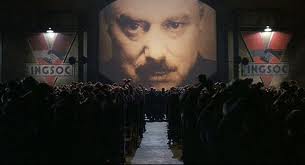
But this isn’t about that. I’m not here to rage against war, or take a stand for it. I’m not going to throw up my hands and declare that we’ve always been at war with Eastasia.

Though it wouldn’t too far from the truth…

I’m not going to talk about what war does to us so much as I’m going to discuss what we do to war.

Let’s face it, for many of us, the current wars the US (and other nations) are involved in don’t affect us much. We’re not on rations, or ducking into bomb shelters, or being told that if we don’t carpool the Axis wins.
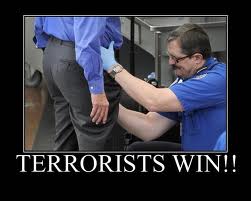
Not in so many words, anyways…

Whether a village in some valley in central Afghanistan is controlled by American or Taliban forces really doesn’t change our plans for the day. A harsh as it sounds, whether or not people are killed in Afghanistan doesn’t have much bearing on anyone but the families of the deceased, and it’s there that the problem lies.

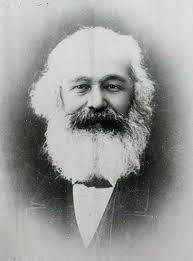
See, we have had a problem in our society for a long time, but with the advent of the internet and similar technologies, it’s becoming worse and worse. Alienation. If you’ve heard it, it was probably in relation to Karl Marx, talking about the separation of workers from the ability to control their lives.

Because we’re dealing with some rough stuff, here’s a picture of Marx smiling…

In a more general sense, it’s simply it’s the separation of things that should naturally go together. Profit shouldn’t be separated from work, and work shouldn’t be separated from profit. Merit shouldn’t be separated from recognition, and recognition shouldn’t be separated from merit. Above all else, actions shouldn’t be separated from consequences- only that’s exactly what we have today.

Most of us are more than willing to wolf down a juicy hamburger, but how many of us would be willing to watch the cow be killed, let alone kill it ourselves? How many of us who wear shirts and shoes made in sweatshops would be willing to stand in the sweatshop hurling profanities and threats at the twelve year-olds hunched over the machinery? How many of us enjoy the advances of the civil rights movement would, back in the 60s and 70s, face off police dogs, hoses, and fire-bombs?

See, we’re a nation that enjoys the hard work of other people. We’re a nation that doesn’t like getting its hands dirty. We’re a nation that has no problem sending kids off to fight, kill, and die on some windswept ridge in Afghanistan because we don’t have anything to do with them afterwards. War is cheap for us. The men and women of our armed forces are expendable to us. Again, I’m not trying to condemn or vindicate the wars we’re in, but what I am saying is that we can’t make reasonable decisions about war until we’re actually confronted with the ugly, bloody, gritty consequences of it. We need pictures of the dead. We need them shoved in our faces on a daily basis. We shouldn’t be able to turn on the news without seeing rubble, the smoke, the wounded, or the dying in graphic detail. For all the outcry against violence in our media, the truth of the matter isn’t that the problem is with violence, but with violence that has been tailored to give us satisfaction and strip away all meaning to it. War, for good or ill, is all for nothing unless we actually understand it. Can we honestly say that we’re acting in the same way now we would be if we actually had to witness the consequences of our actions?

Until then, we’re just the same Swedish taxidermist, making ridiculous travesties out of things we don’t understand. We need graphic violence.

Coping with Cartoon Death

Cartoons are a complicated thing. For example, children’s cartoon characters are required, in general, to always be wearing a seatbelt when in a vehicle. British TV character Peppa Pig was forced to wear one in all future episodes once parents raised concern about safety [the first few episodes would also be reanimated to reflect the change].

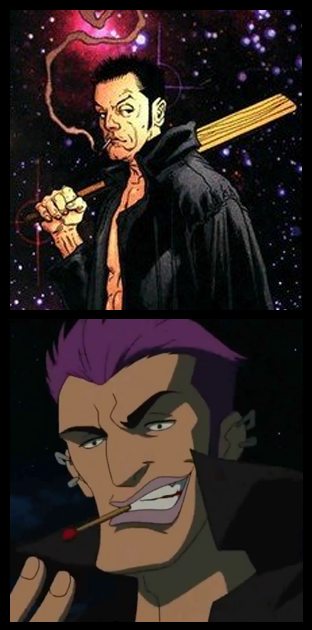
The presence of tobacco is yet another issue. In the upcoming DC animated movie “Superman vs. The Elite” British antihero Manchester Black is portrayed without his customary cigarette hanging from his lips. As you can see by the images to the right, it has been replaced by a matchstick.

What I’m slowly trying to get to is death in cartoons, and how it’s handled. The reason that this post didn’t go up yesterday was that I was powering through an entire season of “The Avengers: Earth’s Mightiest Heroes.” While I was watching the show, however, the same thought kept running through my mind: so many people just died.

Large fight scenes abound in the show as the Avengers battle to save New York City and the world, and collateral damage abounds. Skyscrapers fall and cars are thrown around, often with the implication that there are indeed people inside. A movie can be rated PG-13 for “sci-fi destruction and violence,” and I wonder how the show would stand up to the MPAA’s standards.

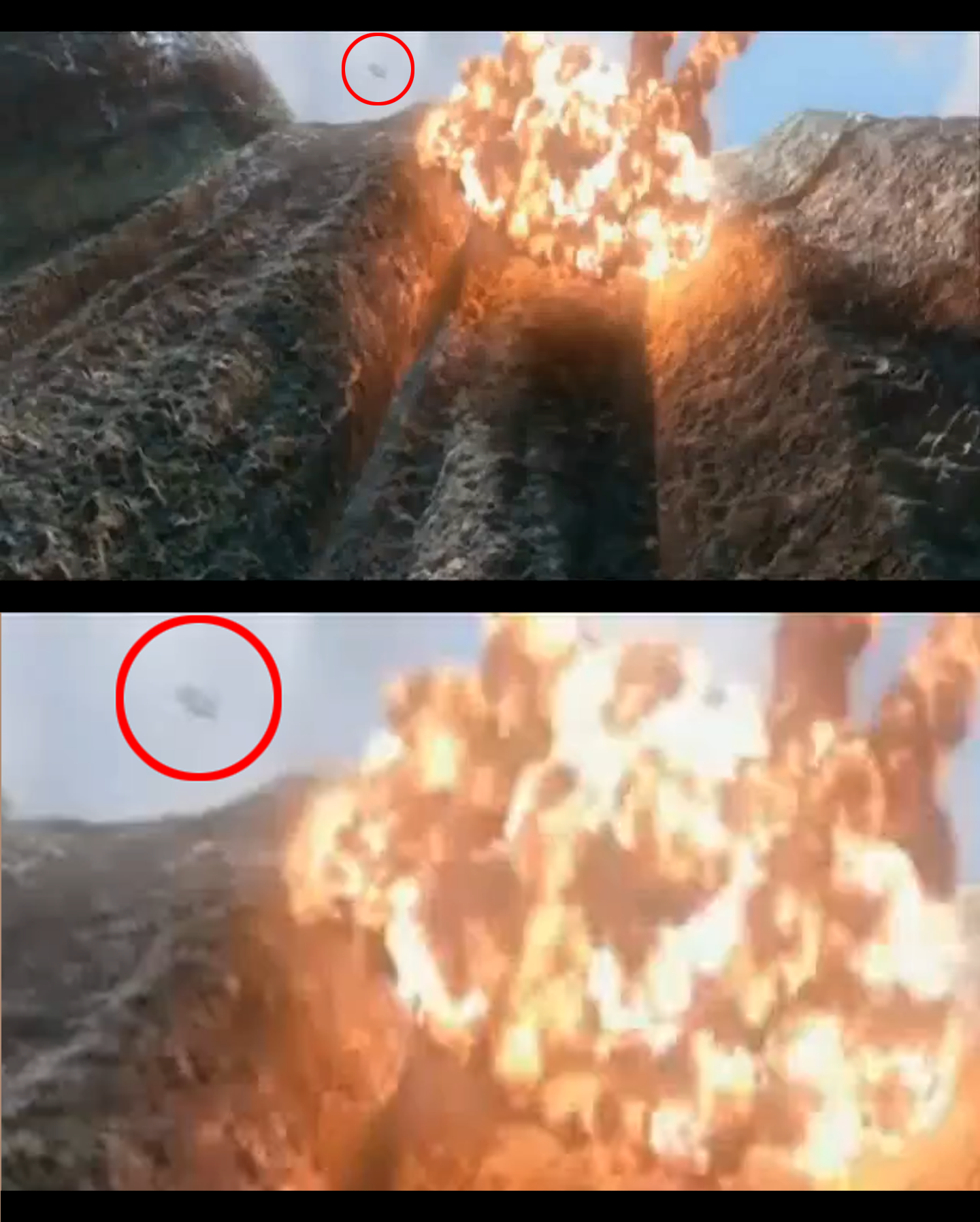
Similarly, in Pixar’s “The Incredibles” it is very strongly implied [though never outright seen/stated] that people, specifically Syndrome’s henchmen, die. There is a scene where Dash fights one of these goons and causes him to crash his vehicle into a cliffside. The result is a fiery explosion. From what I could tell the first few times I saw the movie, the man had definitely perished in the blast. Out of curiosity, however, I watched it again yesterday at half the speed.

As you can see, there is a brief second where a piece of debris can be glimpsed that could maybe be interpreted as some sort of escape pod. I sincerely doubt it, though. And this causes me to wonder how Pixar managed to get away with it, and how exactly the rules can be bent. In the scene pictured above a ten-year-old boy is the cause of a man’s death. Is that something worth considering, would children even notice or be bothered by it?

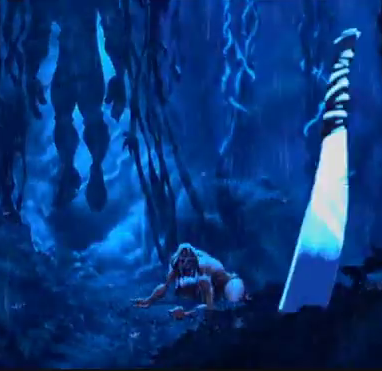
Death in cartoons has always been a very important event. Primary antagonists are normally relegated to some sort of dramatic end, and Disney movies are a fine example of this. Gaston [Beauty and the Beast] plummets to his death in a gorge, Clayton [Tarzan] ends up hanging himself from vines, and Commander Rourke [Atlantis: The Lost Empire] is turned into crystal and ends up shattering after hitting the fan of a hot air balloon. Their henchmen are, by and large, simply knocked out, oftentimes in a comical manner.

The question I’m trying to ask is whether or not we should continue to uphold the concept of death as this sacred thing in cartoons. Does a henchman’s demise deserve any kind of gravitas, or should he die in the first place? How much credit do we give children to understand what is happening when a character dies on screen? I can’t say that I have the answers, but becoming a parent will probably force me to find out.

Tupac and the Digitally Embalmed

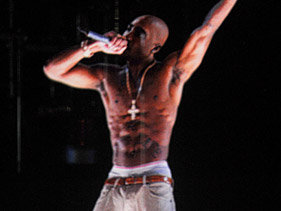
So if you haven’t heard [I hadn’t until yesterday], there was a hologram of Tupac that performed at Coachella.

ImageAnd yeah, yeah, we know it wasn’t actually a hologram now, that it was some mirror-projection-onto-glass-thing-that-the-Wall-Street-Journal-explains-better-than-I-could. And we know that there are rumors of a tour of this faux-Tupac, and people are alternately asking when Kurt Cobain will show up and decrying the monstrous zombie-raising performance.

The thing is, you could argue that the hologram/projection isn’t much different from showing videos and voice recordings of the dead. When that technology was new, I imagine people thought it pretty eerie that they could see their loved ones move and breathe and speak on a screen.

Interesting thing: They needed to project the image onto a mirror below the stage, which created a lot of light, which is why I think they made the animation look like it was lit from the bottom - it looked like the glow from the projection apparatus was part of the lighting system.

But the thing about the performance that makes it different from just a new way of looking at recordings of dead people is the new content. The animation of Tupac, at the beginning of his act, shouted “What’s the f*** up, Coachella?”. The choreography of his performance wasn’t just a recording – the people who animated him studied the way he moved, but they controlled his body and created something new. In a sense, Tupac was performing new material.

The Illusion of Interaction
And this is the real issue – not just the commemoration of the dead. We’ve been recalling the dead, through art and technology, as accurately as we can for as long as humans have been dying. But the faux-Tupac isn’t just a 21st century version of an Egyptian sarcophagus mask. What they wanted to create with the Tupac animation – which is why the fact that it was in front of a live audience was such a big deal – was the sense that Tupac was interacting with Snoop Dogg and the audience, just as a real live performer would.

This is about creating an illusion of interaction, and while a scripted interaction with an animation might be actually quite close to the way concerts can be formalized and scripted (like pro wrestling), it’s still just an illusion.

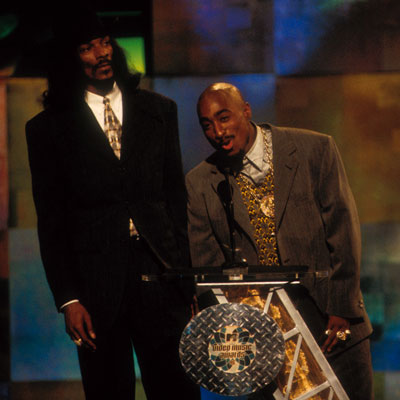
Snoop Dogg and Tupac, both about 25, in 1996

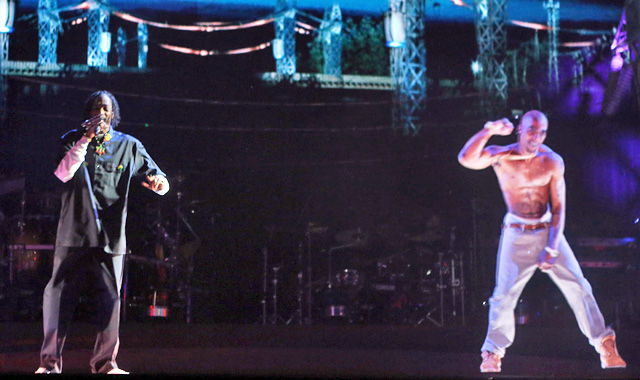
One of the weirder things though, for me,  was the age discrepancy between Snoop Dogg and Animated Tupac. Snoop Dogg is 40, and has grey hair. When Tupac died in 1996, Snoop Dogg was like 25. Tupac, who was shown as a young, shirtless 20-something, would be turning 41 this year if he were still alive, and might not look as good as his hologram did in white sweatpants.

Snoop Dogg, 40, and the Tupac Illusion, still 25

The juxtaposition of digitally-embalmed washboard-ab Tupac and 40-year-old greying Snoop Dogg was probably the most eerie element of the whole performance.

If this trend continues, I think the problem is the illusion of interaction. The essence of human existence is interaction – it’s why we still feel a little weird hearing about guys dating digital AIs, and why the most popular games are the ones that allow you to play on the internet with others. Interaction with humans, illogical and annoying as we are, can’t quite be simulated. And judging from Snoop Dogg’s awkward performance with faux-Tupac, our interactions with the digitally animated dead will always fall a little short of the real thing.