Tag Archives: race

The Marvel Cinematic Universe Moves On [Without The Black Panther]

We all saw The Avengers; let’s not lie to ourselves here. It’s the third highest grossing film of all time, and we are the reason for that. As of earlier this month Joss Whedon was confirmed as returning to direct the sequel, with the film due to hit theatres on May 1st, 2015.

With a bit of a wait between movies, a buffer of films is currently in the works, including sequels Captain America: The Winter SoldierThor: The Dark World, and, probably the most highly anticipated, Iron Man 3. Also on the docket is the spacefaring super-group Guardians of the Galaxy.

All of this news pleases me. What’s problematic is that when researching this article I found out that the Marvel Studios have a model of “releasing just two films per year.” So let’s see what we have here:

  • Iron Man 3 – May 3rd, 2013
  • Thor: The Dark World – November 8th, 2013
  • Captain America: The Winter Soldier – April 4th, 2014
  • Guardians of the Galaxy – August 1st, 2014

With those four films taking up the next two years a horrifying fact emerges:
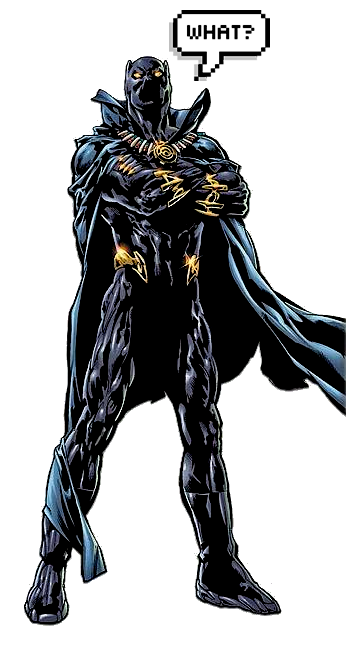
Marvel will not be making or releasing a Black Panther film before the next Avengers movie comes out.

Let me back up a little. Black Panther is, as comic book fans know, T’challa, the king of the fictional African nation of Wakanda. It is an extremely technologically advanced country, and the character himself has a PhD in physics, as well as being a master hunter, martial artist, inventor, and politician. On top of that he wears a suit made of vibranium, the same stuff Captain America’s shield is made of. He’s like if Batman were also the president and he is awesome.

Adding the Black Panther to the Avengers’ roster is not only has precedence in the comics, but it would also add the much-needed diversity that the first film was so sorely lacking. Marvel Studios co-president Louis D’Esposito discussed the possibility of a film starring the Wakandan king by admitting that:

“He has a lot of the same characteristics of a Captain America: great character, good values,”

Which is true. But he doesn’t stop there, going on to say :

“But it’s a little more difficult, maybe, creating [a world like Wakanda]. It’s always easier basing it here. For instance, ‘Iron Man 3’ is rooted right here in Los Angeles and New York. When you bring in other worlds, you’re always faced with those difficulties.”

Cue outrage from fans everywhere. The general argument against the statement above being that a sizeable portion of Thor took place in Asgard. Asgard, the mystical dwelling of the Norse gods. But playing devil’s advocate, as I try to do, perhaps Marvel execs are afraid of portraying Africa badly. Counterpoint: Wakanda is a pretty well-to-do place. Point: maybe they’re afraid of portraying the continent insincerely? Counterpoint: it’s a comic book movie. Point: but, but, but . . . Counterpoint:
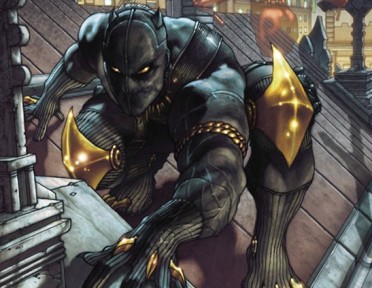
Those eyes sneer at D’Esposito’s claims.

Djimon Honsou is a number of things. An immensely talented Beninese American actor is one. The guy everyone wants to play the Black Panther is another. Honsou actually voiced the character for a short-lived TV series on BET which was essentially a motion comic.

Honsou himself has said in a 2010 interview with MovieWeb.com that:

“It is true that I have said certain things about it some time ago and that I would love to play the Black Panther. Also the opportunity came to do the voice over for the animation so I did that, maybe in the hopes that one-day they would finally get around to doing a movie. We have so many super heroes, but none that really defines the African American. I thought it could definitely happen and I have tried to push that envelope before.”

And if that wasn’t enough, Stan Lee himself is on the record as answering the question “What obscure characters would you like to see adapted into a big budget film?” in an AmA [Ask Me Anything] on reddit. His answer was this:

“Black Panther. He’s not too obscure, I hope.”

If the fans, the actor, and Stan “The Man” Lee [who also co-created the character] are all pushing for this there’s really no reason it should not or cannot happen. All that’s standing in the way are a bunch of executives too willing to take the way that’s “always easier.”

Albert Brennaman, the Patron Saint of White Dancers

I know you’ve probably seen it, but I’m starting with this: 

Arguably one of the most memorable films of 2005 [tenth highest-grossing that year], Hitch wormed its way into our hearts due to a number of reasons. First and foremost was Will Smith, but trailing surprisingly close behind was his co-star, Kevin James, and the bumbling Caucasian everyman he represented.

Now, I’m not one to perpetuate racial stereotypes; I’ve had too many people assume I like rice just by looking at me. But here’s the thing: I Love Rice. As much as many of us would hate to admit it, stereotypes typically have some kind of truth to them. The one I’m writing about today is one many of you have probably heard, and that is that:

White People Can’t Dance.

This is a truth I’ve come to more or less believe due to personal experience. The first piece of evidence being found in college dances I attended [student body 95% Caucasian]. The second was while working at a nightclub a few years ago. A group of four to five white people in their late 20s/early 30s came up to the floor I was busing, and it. . . wasn’t pretty.

Bringing this back to the beginning, what I’ve found is that a lot of the aforementioned not only love that clip from Hitch, they live it. In the most literal sense. Many know the dance by heart, and at parties moves like “the Q-tip” actually make an appearance. The character of Albert Brennaman has been lifted up to this odd place of veneration, his dancing a guide and example for others.

To put it simpler, they are proud of the way they move. There’s no shame there, and they’ve owned the fact that for the most part others don’t think they can dance. Without that social buffer of potential embarrassment, they unknowingly keep the stereotype alive. It’s a vicious cycle, and one illustrated in the equation below:

“White People Can’t Dance” —> white people dance however they want —> white people can’t dance

I’m not judging, it’s just a cultural observation. For an ethnic group to take pride in something they’re not good at is a strange thing, sort of like if Asians decided to own the stereotype that they’re bad drivers. In this case, however, no one is at risk of getting hurt. One group is content to move however they please, and the other is more than happy to sit back and watch it happen.

I leave you with an uncomfortable clip of white people dancing to “Take On Me.”

Flo Rida ft. White Girls (Sort Of)

In 2009 rapper Flo Rida released his single “Right Round,” a song which heavily sampled Dead or Alive’s “You Spin Me Round (Like a Record)” in its hook. On top of shooting to number one on the charts in just three weeks, the track also featured Ke$ha on guest vocals. The following is the music video for the song:

You may notice that Ke$ha, an artist known for being Caucasian, blonde, and very into glitter does not appear in the video. Adding apparent insult to injury, she was only credited for her part outside of the US. To slightly amend the former, the artist said in an interview with Esquire Magazine that “[Flo Rida’s team] wanted me in the video, and I said, ‘Nah, I want to make my own name for myself.'”

Just today I was watching MuchMusic and saw a video for one of Flo Rida’s newer singles, “Wild Ones.” It features Australian recording artist Sia, whose presence on the track received a good amount of attention. Billboard.com described her as having a “bell-clear, campfire voice,” and noted her appearance on the Billboard Hot 100 was a deserved one. Below is the music video for that song:

The woman mouthing the lyrics to the song and accompanying Flo Rida is not Sia, but actually model Analicia Chaves. The implication in both this video and the last is that the artist whose vocals are featured are both a) present, and b) Black non-white [Chaves is Portuguese/Cape Verdean]. When “Right Round” was released everyone was asking themselves who Ke$ha was, and many assumed that she was simply the woman in the video.

I don’t believe that there’s any sort of racial conspiracy going on here, and the quirky similarity I noticed is more than likely only that. At this point neither Ke$ha nor Sia are doing badly for themselves, so it hasn’t harmed their image in the least. Still, it’s interesting to think about the fact that this has cropped up twice with the same rapper. If it happens a third time I think we’ll all know something’s up.

Is Rich Michelson As Good As Anybody?

This past weekend I was privileged to attend the Festival of Faith & Writing at Calvin College. I went to a lot of the sessions and was practically drowned in ideas and information; there’s a lot to process, and I’m only just beginning to look over the notes I took. With that in mind, I’d like to discuss a talk I attended entitled “Extolling or Exploiting?”

10864659-large

Richard (Rich) Michelson is Northampton’s poet laureate. He’s also the author of over a dozen children’s books, many of which have won awards including Amazon.com’s 12 Best Children’s Books of the Decade. His presence was humble, friendly, and unassuming, broken only when he began talking about a topic very sensitive to him, the question and stipulations of who is allowed to write what.

To provide some background, Michelson is White and Jewish. Many of his books explore the lives of Jewish children. Quite a few of his books also feature African-American characters.

In 2008 his book As Good As Anybody: Martin Luther King and Abraham Joshua Heschel’s Amazing March Towards Freedom was published. It tracks the paths of both men, respected spiritual leaders, and the journey that drew them to march together in the 1965 civil rights march from Selma to Montgomery. The book features an introduction by  Martin Luther King’s wife, Coretta Scott King, and was the book to receive the aforementioned award from Amazon.com.

The Coretta Scott King Award is awarded for books about “the African American experience, that are written for a youth audience (high school or below).” In spite of appearing to fit the description of the award perfectly, Michelson’s book was not even considered. There were two reasons for this. The first was that Michelson was not African American. The illustrator, being Latino, was also ineligible.

As he recounted this series of events a slight tension arose in his voice. As Good As Anybody was and is, well, as good as any of these other books. It documents the life of a prominent African American individual and the great deeds he undertook in his life. The issue here lies in the ethnicity of the author.

So he asked us, does intent matter? The Education of Little Tree is a novel that recounts the fictional memoirs of a Cherokee boy. The author, Forrest Carter, was revealed to be Asa Carter, a former member of the Ku Klux Klan. Prior to that being revealed, however, many praised the work, Oprah Winfrey going so far as to promote it on her show in 1994.

Rich Michelson is a White Jewish man, and he wants to tell stories about African American history. By doing so, is he robbing African American authors of that niche market? Are editors maybe more comfortable dealing with him than they  might be with Black authors?

I don’t have the answers, and from what I can tell Michelson doesn’t claim to either. He believes that we can all write what we want, but it’s up to society to determine whether or not they deem your writing “appropriate.”

Missing: Non-White Actors

This past weekend I asked my friends over lunch who the new generation of actors are. Who are this decade’s Julia Roberts and Tom Hanks? Who are the actors who will be representative of these years?

We came to a few conclusions. Nostalgia is a powerful force, and that’s why our Bruce Willis is still Bruce Willis. Leonardo DiCaprio has been acting since Romeo + Juliet in the mid-90s and has continued to go strong with 2010’s Shutter Island and Inception. Newer stars such as Michael Fassbender and Sam Worthington have only really begun gaining recognition in the past five or so years. Name recognition is what matters, and they’re still earning theirs.

Having answered that question, I posed yet another one: Where are all the new non-white actors?

There are actors [using the gender-neutral version of the word] making a reputation for themselves, but they’re men and women like Emma Stone and Andrew Garfield [yes, the leads of this summer’s The Amazing Spider-Man, I think in comic book movies, okay?]. But where are their non-white counterparts? The following are short lists I’ve made categorized by ethnicity-

AFRICAN-AMERICAN/BLACK
Donald Glover tops the list. NBC’s Community has done a lot to get him out there, and he’s beginning to become a household name. Idris Elba will be in this year’s sci-fi epic Prometheus and in Guillermo del Toro giant mech vs. alien action flick Pacific Rim. Anthony Mackie took a backseat to Matt Damon and Emily Blunt in The Adjustment Bureau, but will be starring in a number of films both this year and the next.

HISPANIC
Édgar Ramirez starred in 2008’s Ché, and will be in this summer’s Wrath of the Titans as the Greek god of war Ares. Javier Bardem has been in show business for quite a while, but will be the primary antagonist [okay, villain] of the next Bond film, Skyfall. Gael García Bernal starred opposite Will Ferrel in Casa de Mi Padre, and will be appearing alongside acting greats Pacino and Daniel Day Lewis in the upcoming years.

EAST INDIAN
Similar to Donald Glover television is where Aziz Ansarfi thrives and he’s gained the most recognition for his role on Parks and Recreation.  Russell Peters was in last year’s star-studded New Year’s Eve, and primarily works as a stand-up comedian. Kal Penn [Kumar, of Harold and Kumar fame] will be in the yet to-be-announced Bhopal: Prayer for Rain.

CHINESE, KOREAN, JAPANESE
Ken Jeong has been running around screaming ever since The Hangover; he’s going to keep finding work. John Cho  will be in the Star Trek sequel reprising his role as Hikaru Sulu. Daniel Dae Kim continues to be ridiculously good-looking on CBS’ Hawaii Five-0. Really, all of these actors are Korean.

As far as Asian actors go martial-arts movies are not as popular as they once were. In fact, the two most recent listed on Wikipedia are MMA [mixed martial arts] films, starring White leads. Actors of Asian descent must find work elsewhere, and normally this means in comedy movies.

In general non-white actors find themselves relegated to supporting roles, most lacking the clout in the industry that heavyweights like Will Smith have. There’s an immense multiethnic audience out there but few studios willing to cast actors of different ethnicities in roles where names mean everything.

Actors like Morgan Freeman, Denzel Washington, Chow Yun-fat, and Jackie Chan aren’t getting any younger. These are all names that once were, and still are, recognizable by most. One day, however, they will inevitably retire, and once that happens who will be there to take their place?

Girls: 2 Broke and One New [Pt. 3] – Race

As you may have guessed by the title, this is the third and final part of my observations about the relatively new shows 2 Broke Girls and New Girl. To read the first two posts about cast and humour click on the respective words, or just scroll down if you’re already on the front page.

RACE

For the most part, I’ve already gone into great deal about this topic and 2 Broke Girls in my post titled “Michael Patrick King, Definitely Not Being Racist.” To summarize a lot of what I’ve already written in a few words, the show is not great when it comes to boiling people of different ethnicities down to their bare bones stereotypes. Or they’re really great at it, depending on your point of view.

Per episode the show has a much greater number of new characters as its stars find themselves stumbling into such locales as a thrift store and a pharmacy in a Jewish neighbourhood. With that being said, they’re given countless opportunities to put different spins on people from different cultures and backgrounds, but fall flat again and again. I’d recommend that you turn to the post I linked to in the paragraph above to get a more in-depth look on the matter.

The show’s approach to race has made it the recipient of a lot of flak, and their most recent decision to alleviate said criticism is to bring in a “hot Asian guy.” A casting call was put out last month which sought to find an attractive male of Asian descent to act as a love interest to Beth Behr’s Caroline Channing. While this may seem to be a dictionary definition for “affirmative action,” it may be a step in the right direction.

On the other hand, we have New Girl, a show whose approach to race is summed up quite nicely in the following video clip:


Just like Morgan Freeman and his approach to Black History Month, New Girl tackles race by not making it a big deal. And it does so flawlessly in the first few episodes. The pilot has Zooey Deschanel’s Jess meet a perfectly nice Asian guy who later stands her up on their date. Yes, he’s made out to be a douchebag, and no, that’s not particularly flattering, but you know what else it’s not? A stereotype.

Similarly, in the third episode, “Wedding,” the newlyweds are an interracial couple, with an Asian groom and a Caucasian  bride. There is not a single character who makes a big deal out of it, and everyone on the show takes it as completely normal. Because it is. This is not a situation I can see the writers of 2 Broke Girls passing up for comedy, and the fact that I’m 100 percent certain of that is a sad thing.

Since it’s not plumbing the depths of New York City for people from different ethnicities and the like, New Girl has less diversity than 2 Broke Girls. That being said, its treatment of nonwhite characters is, well, nothing special, which is great. A mixed race group of students might show up, or an Asian judge [“Bells” and “Jess  & Julia” respectively], but no one makes jabs or even hints at ethnic stereotypes. The closest thing the show gets to a joke about race is Winston’s one-liner about Black Friday [I had a YouTube clip but it doesn’t work now; sory].

I’d seen that video of Morgan Freeman years ago, but it never struck me until recently how true it is. If the media simply acknowledges that we live in an incredibly diverse world and stops calling attention to details as nongermane as ethnicity, then we can live in a world where racism truly ends.