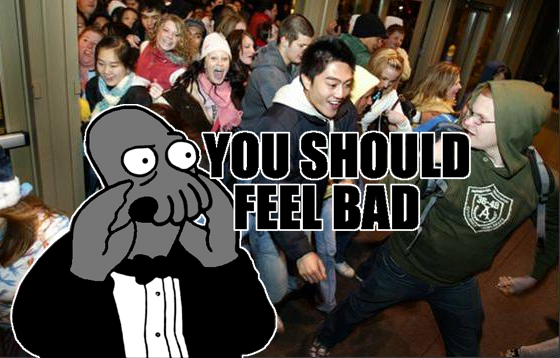
I almost don’t feel like I should have to explain this post. Look at that image on the right, look at that wave of flesh and hunger, which I can only compare to the somewhat recently released World War Z trailer. They move like an organism, a living being that flows into each store, ravenously grabbing at whatever they can.
For the non-Americans among you, Black Friday is the day after American Thanksgiving, which sets off the Christmas shopping season. Last year at this time a few pretty significant events happened, none of which I can say are positive.
At another Walmart in the Tampa area, 73-year-old greeter Jan Sullivan was shoved by a shopper who was trying to exit through doors not available for this purpose. As she fell, she grabbed onto the woman to keep from falling. She was then fired, as Walmart employees are not permitted to touch customers.
If the trend continues this image won’t even make sense anymore.
As a Canadian I’ve celebrated American Thanksgiving only once. It was a time that I spent with a loving family, where copious amounts of food was served and the itis was experienced by many. It was a time of relaxation and enjoying each other’s company, not camping outside superstores in the freezing cold or trampling the meek and lowly [see: Walmart employees] underneath our feet.
All I can say is Happy Thanksgiving, Americans. If you care about at least one retailer [Target] respecting a national holiday, you can sign a petition here. Enjoy your turkey.
Even if you haven’t recognized it for what it is, chances are, you’ve seen elements of it. The resurgence of beards, comments on period piece clips like “Why don’t we wear hats anymore?” or “Dang- they knew how to dress back then.” Or perhaps you’ve stumbled across The Art of Manliness or are (like me) a faithful apostle of Ron Swanson.
Now whether you’re aware of it or not, there is a growing culture based around this general perspective of “manliness” that supposedly existed from 5,000 BC to 1974 AD. The resurgence in the popularity of the beard, the wave of internet memes centered around being “classy,” our love affair with period pieces- all of this compounded has created the beginnings of a whole new subculture.
Don’t believe me? Just take a look at some of our favorite TV characters.
Don “F***-You, Liver!” Draper
Jack “Even Ayn Rand Thinks I’m Egotistical” Donaghy
Rick “Bad Decisions” Grimes
Walter “Tied with Draper for Making People Love Fedoras” White
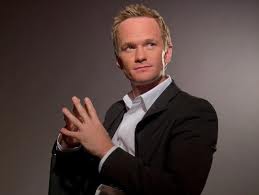
Barney “Legen- wait for it… -DARY!” Stinson
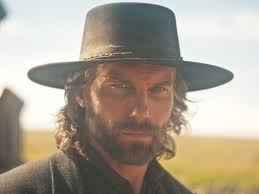
Cullen “I Will Punch You For No Particular Reason” Bohannon
Comedy, Drama, Action/Horror, Westerns- this is a pretty broad range, and we’ve got the same strong, dour antihero type in all of them. Men who remind us of our fathers and grandfathers. Tough as nails bastards who came to this country with only a dollar in their pockets- who took a break from their honest 8 to 8 jobs of hitting metal with other pieces of metal to kill Nazis and look dapper doing it.
So what’s this culture all about? As with any group, we can talk about the superfluous or cosmetic elements- in the case of the “manly” group, handshake etiquette, strait-razor whetting, and driving stick- but to really understand ’em, we’re going to need to look at the underlying values in play here.
Independence:
What do all the men shown above have in common? A degree of independence. They’re DIY guys. Men who aren’t reliant on the help or charity of others- in short, dudes who can take care of themselves in most any situation, from car repair to providing for the family to killing the undead. And on that note…
Initiative:
These are all men who don’t allow themselves to be victims. They’re proactive moment-seizing leaders who don’t wait idly by for someone to step up. Good or bad, they’re leading the way- and speaking of bad…
Stoic:
These are guys who tend to lend credence to the stereotype of the unspeaking, unfeeling male. At best, the strong, silent type- at worse, the uncommunicative lout. One way or another, they don’t let the situation get the better of them. That’d be undignified, and if there’s one thing that they’re about, it’s…
Dignity/Pride:
It’s in the way they dress, the way they speak, the way they expected to be treated. A kind of code that prohibits some things and makes others compulsory. You can’t hold your head high, then what’s the point in having one?
Moral Ambiguity:
These men are all, to varying degrees, antiheroes. Guys with their own agendas and a certain degree of moral ambiguity that keeps you on your toes. There’s a level of egotism, self-centeredness, and disregard for others that makes them pretty good at what they do, but what they do not all that good- certainly they don’t fit the traditional mold of the selfless, self-sacrificial hero.
Wealth:
And while it’s not true for all of them, money tends to be a major element of their stories. A drive to be successful, prosperous, and (again) independent. It’s the age-old dream of being your own boss.
So what does all of this boil down to?
Power.
It’s about power. These guys represent everything we, as a generation, aren’t. Independent, wealthy, self-assured, proud. Does that sound like us? Not at all. We’re the casual dressed, globally conscious masses struggling to make it by, and taking whatever miserable, degrading soulless job we can find. We’re not strong like these glamorized images of our grandparents are (having conveniently erased the racism, bigotry, and misogyny).
But we want to be.
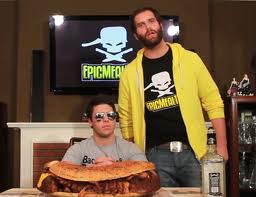
And so begins the perpetual motion machine of life-imitating-art and art-imitating-life. Epic Meal Time, Memes, Period Pieces- the list goes on.
So is this a good thing or a bad thing?
Well, there are good and bad elements to every culture (some more bad than good, and vice versa), but let’s list out the positives and negatives.
Positive:
We can stand to toughen up a bit a lot as a generation. We don’t need to be bending horseshoes with our teeth, but some basic survival skills and a thicker skin when it comes to discomfort and hardship would be nice (battery running out on your phone doesn’t count as suffering).
In these tough economic times, be able to do basic repairs to your house and car aren’t just good- they’re necessary. Same goes for any of the thrifty elements of the culture.
Even if we don’t have it quite yet, demanding a certain level of dignity in our work and our day to day lives isn’t just good for you as an individual- it improves society on the whole.
While we probably shouldn’t worship the fedora or declare the suit to be the only appropriate clothing for a man over the age of twelve, it certainly doesn’t hurt to know how to dress ourselves, or conduct ourselves well in any given situation.
Negatives:
The glorification of the past can, as I jokingly mentioned above, lead to the uglier elements of it being glossed over. We hail our grandfathers as being great men, forgetting how easy it is to make a name for yourself when none of the good or prestigious jobs can be given to equally qualified women or non-white men.
The culture really doesn’t leave a whole lot of room for women at all, other than the kitchen. This is not to say that all adherents of the culture see it this way, but when you’re trying to espouse 1950s society, that includes 50s traditional gender roles as well.
It can’t be denied that there’s a strong conservative appeal in this culture, as well as hints of Ayn Rand’s Objectivism. Glorifying wealth and success, especially when coupled with a “do whatever you need to do” mentality, can lead to the twisted perspective that poor people are poor because they are lazy.
This culture, despite the intentions of its adherents, does give a home for sexism. The uglier elements of the masculinity movement, those who view women as belonging in the home and nowhere else will doubtlessly find it a lot easier to fly under the radar in a culture that’s utterly dominated by males.
So what’s the final verdict?
“Manly” culture doesn’t appear to be either helpful or harmful- at least, not yet. The underlying issue being power, it’s going to be faced with the task of walking the thin line between empowerment and megalomania. So long as self-control is kept in mind, they oughta be fine.
EVAN: So last week I asked people on Facebook what they wanted us to talk about, and the answer that got the most votes was affirmative action. This is a pretty broad topic, but thinking about it in the past couple of days I have at least a few possible directions to go with it. But before we do that, a definition-
“policies that take factors including ‘race, color, religion, gender, sexual orientation, or national origin’ into consideration in order to benefit an underrepresented group ‘in areas of employment, education, and business’, usually justified as countering the effects of a history of discrimination.”
Though of course, we’re probably more familiar with it in regards to racial or gender quotas for certain businesses.
EVAN: Right, like hiring a minority to make some sort of company quota-
GORDON: Ironically, despite the outcry against this particular aspect of affirmative action, it isn’t actually legal in the US to set quotas for any race.
EVAN: Which I did not know. But it happens, of course.
GORDON: That it does. That quota being typically “100% white.”
EVAN: And Gabe’s childish delight at pulling in someone who wasn’t black [Kelly], like all of the other entries were.
GORDON: It’s been a while since I’ve seen it.
EVAN: It’s all good.
GORDON: Let’s get right down to it here- affirmative action is still a contentious practice, but let’s face it, now more than ever it’s demonstrative of inherent bias in the system.
EVAN: As someone who doesn’t keep up with the news as often as he should, the most recent event I can recall that featured this was the rioting that was happening in Paris.
GORDON: Go on…
EVAN: Oh man, I was really hoping you’d remember. But it was a minority group rioting, and the way they solved it all was that employers had to hire people from this group, and pay them regardless of how well/hard they worked.
GORDON: Ergh- it’s France. These are the same people who nearly elected a neo-Nazi to be prime minister, and and have massive racial bigotry issues- just look at their expulsion of the Roma.
I’d hesitate before using them as an example- let’s bring the issue a little closer to home. Take America, for example.
EVAN: Well, your home.
GORDON: We have a workforce completely and utter disproportionate to the population. Even as the white population diminishes, the vast majority of administrative jobs are held by white males.
EVAN: Misrepresentation of an entire population, yeah?
GORDON: Absolutely.
EVAN: So that’s America, but where does affirmative action come into it, are you saying it’s needed?
GORDON: I’m saying that it isn’t working. If affirmative action was meant to end hiring and promotional discrimination on the basis of race and gender, it’s utterly failed, and the proof of that is everywhere around us.
EVAN: Well, you know more about the States than I do, especially with you saying that it’s illegal. Are there any affirmative action movements than you can bring up at all?
GORDON: The only major issue I can recall in the past couple years was a lawsuit brought against Walmart.
EVAN: Go on.
GORDON: Back in 2007, a gender discrimination lawsuit (Walmart v. Dukes) was filed, with a massive number of women citing that despite nearly two-thirds of Walmart employees being women, only a third of management was female- and that’s to say nothing of other charges against Walmart’s routine exploitation of its female employees.
A court (tragically) ruled that the various individuals suing didn’t have quite enough in common to constitute being a “class”, so the case was more or less thrown out.
EVAN: Their sharing a gender not withstanding?
GORDON: Welcome to America.
EVAN: Moving on to something I may know a little more about, affirmative action is a term that comes up quite a lot in regards to Native Americans, or what we in Canada refer to as “First Nations.”
GORDON: Shoot-
EVAN: There’re reservations, of course, land that belongs [is given] to said people. I’ve heard many times friends saying that they were 1/16 such and such, and would be able to “claim land.” Also the fact that gambling is legal on such properties, which I still don’t fully understand.
GORDON: The issue of native rights is an entirely different topic- something we oughta cover, but not quite in this post.
EVAN: I’m just saying that I think it ties directly into what we’re discussing. This is all stuff that’s “usually justified as countering the effects of a history of discrimination.”
GORDON: Granted. One could make an argument for lumping together reparations and affirmative action, but affirmative action is really strictly defined as pertaining to admissions- into either a university or the workplace.
How IS that in Canada, anyways? You got management proportionate to your population makeup?
EVAN: I am not sure. Let me check.
Well, I can confidently say that our minority population is 16%, though this excludes First Nations. Taking them into account, they add 4%, making a solid 20% of our population being nonwhite.
GORDON: Okay. So in your experience, is one in five Canadian manages/execs/bosses/administrators/etc. from a minority group?
EVAN: I’d say that in Toronto, at least, you’re as likely to see a white person as a non-white person. Depending on the neighborhood, you may find it difficult to see more than a handful of Caucasians.
GORDON: But in management…
EVAN: Right. I’m not exactly in a lot of offices… So I don’t know if I can comment on that.
GORDON: Gun to your head…
EVAN: I want to say 1/5 are probably minorities. Which matches up with the statistics I mentioned.
GORDON: Ah, good.
EVAN: I’m a little perturbed that you put a gun to my head in this post.
GORDON: Heh…
Before any of the readers jump down my throat, I know am I’m looking at the problem from a white-liberal viewpoint. Simple fact of the matter is, college is expensive (don’t I know it… **** you Evan, and your ridiculously great government benefits), and the small, wealthy majority in US is (overwhelmingly) white. Someone might make an argument for qualifications being required over race, but that’s exactly where affirmative action is SUPPOSED to come in.
It’s meant to help even the playing field, but it just doesn’t- again, look around.
EVAN: Qualifications required over race and affirmative action. Could you explain that further?
GORDON: Imagine you’re an employer. And imagine this we’re not living some depression-era-hellscape where you’re asking that an entry level employee have five to ten years of experience.
EVAN: . . . I’m listening. This is a dreamworld you’re painting.
GORDON: You have to fill a position, and there are two candidates- a white guy with a college degree, and a black guy without one (again, college is ****ing expensive). Who do you give the job to?
EVAN: The qualified one. The white guy.
GORDON: And imagine you need this position filled again the next year. And the next and the next, and you keep getting the same basic candidates. Who do you pick?
EVAN: Obviously whoever can do the job better. But where is affirmative action, like you said, supposed to come in?
GORDON: The people with jobs get money, the people with money send their kids to college, and so on. Affirmative action is meant to make sure that people aren’t discriminated against on the basis of their race, so that two equally qualified people stand an equal chance of getting in.
It’s like trying to back-paddle in the middle of a maelstrom.
EVAN: Ah, I see what you’re getting at. But what about minority scholarships?
GORDON: Even there, there’s an issue. Poor schools don’t get good funding, they tend to produce students who aren’t as prepared as their wealthier peers, and even bright ones who would otherwise school their peers wind up doing worse on tests. Unless you’re exceptionally gifted…
Again, it’s trying to apply a band-aid to an open wound.
EVAN: One more simile, for the road. Our time’s just about wrapped up.
GORDON: It all boils down to this- there is a need for equity and equality in the workplace- a desperate need. But affirmative action is like using a toothpick to fight dragons [emphasis added]- its the wrong tool of the job, and even if it was appropriate for the situation, it’s still not very effective…
EVAN: Join us next week, where hopefully I know more about what we’re talking about, when we discuss-
About a year ago I wrote about education inflation. A year later, I’ve graduated undergrad, started two jobs, and found an apartment. I’ve also watched a number of my friends in the same “fling-yourself-out-into-the-world” circuit, and so my viewpoint has definitely refined.
A year ago, I was thinking about the nature of my education, and now I’m really just worried about getting a job, and so is everybody else I know – I’m finding that one thing that demonstrates the inflation of higher education is the fact that young graduates right now are facing 50% un- or under-employment.
We (collective college graduates, that is) are presented, upon getting off the bus singing “NYC” from that one Broadway show, with a dismal job market for recent grads. We are also presented with loan payments, apartments that require us to earn triple their rent to even apply there, and “entry level” job lists full of positions that require 5 years of experience.
Bachelors’ degrees mean less to employers, and there are two possible reasons for this: either their prevalence simply means that BAs and BSs are less of a distinction than they used to be, or employers find that Bachelors’ degrees don’t really ensure quality work. This second reason explains why employers are requiring more and more experience for “entry-level” jobs; bachelor’s degrees used to be enough to indicate an applicant’s competency; now, employers don’t want to risk hiring any new college grad who hasn’t proven him/herself in the workforce first.
Sitting on the couch all day looking for jobs that aren’t there is, surprisingly, exhausting
This traps recent college grads with little-to-no full time experience in a rather depressing catch-22. Half of us are taking jobs that don’t pay enough or are in fields unrelated to our major; a full quarter of us are working for free to get experience. A third of us go back to school after trying to enter the work force with just a bachelors’ degree. A confirmed1 94% of us consume triple the amount of ice cream than we did a year ago.
In terms of status in the work force, bachelors’ degrees have become the equivalent to what a high school education used to be. In terms of time and money, however, bachelors’ degrees are painfully different – instead of entering the workforce at 18 with generalized competence, college grads are old enough to want permanent homes, long-term relationships, and career-based jobs, but are entering the workforce equipped with almost nothing to achieve those goals.
I’m not sure what’s going to happen, but this is a problem that needs to self-correct (if you want to be all Adam Smith about it). Many degrees are now including internships as part of their requirements, and it seems to me that (perhaps even more significantly) nervous mothers talk about them to sullen college students at a higher rate. Maybe the undergraduate degree will become more like a vocational school, in that sense, or a stepping stone to graduate school for those inclined towards academia. It seems less likely that students will find more success trying to get four years of experience, starting from the bottom up out of high school, but it’s a possibility.
What’s more, unemployment yields depression and lowered self-efficacy. Because so many of the unemployed population are young, this means that a huge portion of the emerging workforce and maturing economic leaders which will have debilitating effects on the US as a whole in the near and distant future.
Society as a whole is suffering and will continue to suffer from education inflation, as more overeducated students with little actual experience are flung into a floundering economy.














 Culture War Reporters