Category Archives: literature

Archetypes: Why Wizardry Triumphed Over Mythology

Harry Potter and the Philosopher’s Stone [marketed that way everywhere but in the States and India] was released in 2001. Nine years later Percy Jackson & the Olympians: The Lightning Thief, the first film adaptation of Rick Riordan’s series of young adult novels, hit the big screen. One went on to spawn a sequel the following year, while the other is taking as long as three. One of the reasons for this, I think, lies in the studio’s portrayals of the characters in their respective works.

I’m not going to go into a great deal about the Harry Potter franchise. The first book was released in 1997, and since then the films have swept up Western culture [and others] up into a wonderful world of witchcraft and wizardry. This post is written under the assumption that you have at least some familiarity with the works.
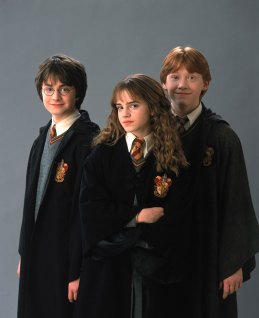
I opted for an image of them really young, since the majority appear to be just shots of good-looking young people staring somewhat broodily at the camera.

At their foundation, Rowling’s novels are built on a trio. Harry Potter is the chosen one, the courageous hero, the primary protagonist. Second is Ron Weasley, redhead, best friend, basically a wimp [for a lot of the series]. Last, but certainly not least, is Hermione Granger, the girl, the genius, the level-headed one. Clearly this is a team with some kind of equilibrium to it and a formula that works, and this is definitely evidenced in Riordan’s pentalogy.

The Lightning Thief, the book the film was based on, stars Percy Jackson, son of Poseidon, talented swordsman, fearless warrior, and new to being a halfblood. Second is his best friend, Grover Underwood, a satyr, kind of a cowardly kid [goat jokes, everyone]. Topping this all off is Annabeth Chase, Athena’s daughter, meaning that she’s definitely got the wisdom thing going on. Clearly if it ain’t broke, don’t fix it. Before you go to assuming that Riordan’s books are a cheap knock-off, don’t; the series is a well-written take on both Greek mythology and the young adult genre as a whole.
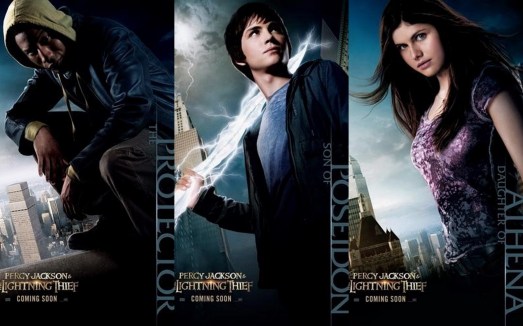
From left to right: Grover, Percy, and Annabeth.

The problem isn’t that the characters appear to mirror those in the Harry Potter books. If anything, this is a strength of sorts, as they’re both familiar and effective. The issue is that the film adaptation of the novel takes these archetypes and throws them out the window. The result is this: three badasses.

In Percy Jackson & the Olympians: The Lightning Thief, Percy, Grover, and Annabeth are all depicted as being a) brave, and b) proficient at fighting, making them essentially slightly different facets of the same archetype. Yes, Annabeth is the one knows more about mythology and magic, et cetera, but she still wields a sword along with the best of them, transforming her from a cold, sharp-tongued girl to an athletic tomboy.

The irony is that Chris Columbus directed both films [as well as Academy Award winning The Help], choosing to faithfully adapt one and tailor the other for a specific audience, going so far as to significantly age the characters. Percy Jackson & the Olympians: The Lightning Thief has all the signs of a movie meant to catch the world’s attention with action, special effects, and good-looking teenagers. Three traditionally heroic characters are three times as entertaining, or at least that’s what a certain type of logic would dictate.

The film did well regardless, pulling in $225 million and with the sequel supposedly [I reserve the right to express some doubts] dropping sometime next year. Fans of the book, however, are hoping that Sea of Monsters is a much better installment than the first. Full character rewrites are rare, so the best they can expect is a film that respects the narrative of the series, and strives to fit their characters into that.
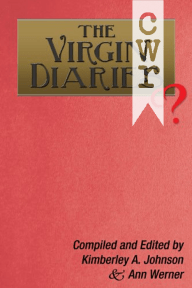
The Virgin Diaries: A Book Review

“What does it feel like to lose your virginity?” This is a question asked in red font, all-caps, at the top of the back cover. This is also a question that I can confidently say The Virgin Diaries answers. With the  stories of 72 men and women and their respective first-time sexual experiences, this is a book that provides several dozen responses.

Edited and compiled by mother/daughter writing team Kimberly A. Johnson and Ann Werner, The Virgin Diaries is made up of stories that span a number of decades. To gather this information anonymous questionnaires were sent out, with the expectation that they be answered in a story format. While the authors of these stories make themselves distinct from one another through their voices, the way in which questions were asked definitely has an impact on how narratives were told and, consequently, how they read. Continue reading

World War Z and other Incidences of the Undead

I read World War Z by Max Brooks over break – I tend to stay away from zombie media,1 but the book was interesting enough to win over my zombie-avoiding tendencies and now I can’t stop noticing the huge and recent (I’d say – recent as in like, the last decade) zombie focus almost everywhere in culture.

Did everyone else but me know about this? Did you know how many zombie poetry websites there are? You can even buy a zombie-themed magnetic poetry set. You know, so you can compose some verses about decaying flesh-eating people on the fridge while waiting for your ramen to heat up.

This guy published his work online in 2005 – excerpt:

Making
love with
zombies can
never be
without consequence.

There’s Aim for the Head, an anthology of 50 poets.

There’s Z-Composition, which is a recent start-up with sections slated for poetry, recipes, and flash fiction, and grand ideas of “a bi-monthly literary e-zine with a yearly print anthology slated to launch in 2012”.

The Zombie Nation (the tagline of which is “Begin the Zombpocalypse”) also has zombie poetry posts.

The Zombie Hunter: A Survivalist’s Journal [“A family man’s guide to surviving the zombie apocalypse”] isn’t poetry but is impressive: it’s been going pretty steadily since 2010, complete with pictures, coconuts, and a thorough knowledge of firearms.

Why are zombies so freaking popular? (or: Elisa thinks too much)
The prevalence of a smaller genre like poetry dedicated to the zombie wave is just a piece of the fascinating trend. The prevailing attraction of zombie/zombie-fighting culture, I think, is the focus on vivacity and resourcefulness amidst the breakdown of society. You have to rob the grocery store to eat and you have to destroy the staircase of a building to secure it from zombies, but the stealing and destruction are by themselves also pretty exciting. And in this generation, one of the first to grow up in such a (generally) stable and structured society, craves some sense of rule-breaking and the ability to use their imagined Crusoe/Macguyver-esque survival skills.

Zombies are also about death, but not because they’re dead. Zombies as a villain are extremely basic (I’m talking about slow-moving zombies, here, generally): in World War Z Brooks pointed out that you have no hope of discouraging zombies; there is no leader to go after and you cannot, like humans, make them uncomfortable or fearful. We fear zombies not because they’ll go after us quickly and suprisingly, but because they’re slow and, as much as we ignore or outrun them, we know that they’re still coming. A scenario in which we lose to zombies wouldn’t be large and violent and exciting – it would be, simply, slow and inevitable.

Our fear of zombies precisely mimics our fear of death, which I think is a sort of manifestation of a denial of death in contemporary culture for the past century.

Here Be Unwise Internet Purchases

Sometime last week I was on the lookout for books on webcomics, searching for covers to inspire a Graphic Design project. Somehow, through liberal use of the keywords “webcomic,” “history,” and “book,” I was led to a book entitled “Webcomics By Year, including: Penny Arcade (webcomic), Jerry Holkins, Mike Krahulik, Child’s Play (charity), Penny Arcade Expo, Penny Arcade Adventures: On The Rain-slick Precipice Of Darkness, Robert Khoo, Poker Night At The Inventory, User Friendly,” the cover of which you can see below.

The first thing you may notice from the cover, after the ridiculous length of the title, is that the book can’t be attributed to any specific author. Instead, the only evidence of there being an origin for the book are the words “Hephaestus Books,” centred and in small print at the bottom of the cover.

Fully intrigued at that point, I checked to see what else Barnes and Noble had to say about this publishing company, and was aghast at my findings. There were tens of thousands of books attributed to Hephaestus Books,  each featuring a title just as [if not more] lengthy and list-like as the first I found. They covered topics ranging from Judy Blume novels to the 1950s in British television. It seemed that Barnes and Noble could show me more, but not explain, and so began my investigation.

A social reading site of sorts, Goodreads ‘ page on Hephaestus Books featured a description about the “author” that goes as follows:

“Hephaestus Books represents a new publishing paradigm, allowing disparate content sources to be curated into cohesive, relevant, and informative books. To date, this content has been curated from Wikipedia articles and images under Creative Commons licensing, although as Hephaestus Books continues to increase in scope and dimension, more licensed and public domain content is being added. We believe books such as this represent a new and exciting lexicon in the sharing of human knowledge.”

In other words it publishes print-on-demand compilations of Wikipedia articles not original works. Caveat Emptor

Author Robin Hobb wrote about the series of books on her website early this month, stating that the concept of Hephaestus Books is one that “offends [her] mightily.” Science fiction writer Jerry Pournelle wrote on his own site that he was concerned in that he had “never authorized ANYONE to make a compilation of a lot of [his] books and sell them in a single volume.” His confusion is well-founded, but in reality what appears to be a single book containing multiple novels is nothing more than, as mentioned above, Wikipedia articles.

Hephaestus isn’t even the only malefactor out there. Fonte Wikipedia and Book LLC are both “publishing companies” that do the exact same thing. A blog post I found entitled Beware the Wikipedia Scrapers exposed both of those examples, and also has a helpful list on how to “avoid this junk.”

I’m not altogether surprised by this scam; it’s one I stumbled upon years ago but have only recently found again. It sadden me, however, that it’s ongoing, and that there have been people who have fallen for it, as evidenced by the used books on sale on these sites.

As writers have said before me, watch out. Caveat emptor. Let the buyer beware. Be on your guard. Please mind the gap. This is a swindle that has befallen others, and as much as a book titled “Novels By R. A. Salvatore, including: Vector Prime, The Dark Elf Trilogy, Legacy Of The Drow, The Woods Out Back, The Icewind Dale Trilogy, The Hunter’s Blades Trilogy, Paths Of Darkness, The Cleric Quintet, The Dragon’s Dagger, Dragonslayer’s Return” might catch your eye, it might be better to stop and think about what you’re doing.

Filling the Market Void: Why the E-Reader is not the End of the World


Some of the more literary types in my life (I am an English major so there are a quite a few of these) have been lamenting the demise of the good-old-paper-book since the very first e-readers appeared on Christmas lists. I cannot assuage the material frets of such people (What will hipsters put in their wedding photos if not piles of old books?), and it does seem sort of inevitable that paper books will go the way of vinyl. But as a movement in literature (if not material aesthetics), the e-reader does not worry me as much as it does some, who say that the Kindle and the Nook aren’t only the demise of nice-looking books but the quality of writing and fiction in general, touting the mass of self-published books and the hypothetically lower standards of publishers and editors.

There will always be a world of literature that is distinguished from books written and sold purely for entertainment, just as there will always be films made that are distinct from Hallmark TV movies, even though the same medium is being used to create the two things. This is the world that I am commenting on. The distribution of entertainment has always been fairly automatic – whatever medium is most popular will be used to make the most profit. Yaay, capitalism. There probably isn’t anything intrinsically wrong with this, but it’s important to remember that the hordes of paperbacks on the shelves in Walmart are not the front-runners of what’s being published right now – the most currently popular art will not necessarily be the most enduring.

Any media change creates a market void, and this medium is going to change, which means that there’s going to be a new horde of mediocre (and bad) material produced. I think that society tends to judge media change as culture-killing (or satanic or elitist or antielitist or condemning adjective of the day) (this generally only applies to media changes brought on by those in a younger age cohort than the complainer) and point to the “clear evidence” of the new medium’s depravity: the slew of obviously artistically empty new entertainment. But the fact is that artistically empty (unedifying, depraved, what have you) entertainment is like a cultural given – it has and will always exist. But I think that [maybe not all but at least some] humans are never going to fail to be surprisingly and inspiringly creative.

Kids Those Days

Twilight Spoilers, if that’s something you care about.
                                                                                                                                                                      

This topic was dated when I wrote about it for my other blog a year ago, August 16th. That being said, you’re going to have to think about popular trends that occurred quite a while ago, no easy task when popularity ebbs and flows as it does nowadays.

A little before my original writing on this subject, Miley Cyrus, the Jonas Brothers, and the Twilight novels were all the rage. I’m going to say right now that it was the best of times, it was the worst of times, with the hopes that what I’m about to say will back it up.

Every trend has its own share of supporters and critics. In this case, everyone everywhere (on the internet) was aghast at this cultural phenomenon that had befallen us. We (a collective we) were disgusted with this slurry that had become every teenage girl’s obsession, and we took every chance we could to denounce and deride Meyer’s novels, the Jonas’ music, and so on.

It struck me one day, however, what exactly we were doing. A lot of the issues that people were nitpicking (and deriding) were tenets that I not only agreed with, but that I lived by as well.

In Twilight Edward refuses to have premarital sex with Bella, and is adamant that if they are to go any further1  they must get married first. The Jonas Brothers wear purity rings to symbolize their commitment to, well, being pure.Lo and behold, these two items were brought under the most scrutiny and were mocked excessively.

So I questioned why, when girls finally had a half-decent role model, they were being ridiculed. Post-nowish Miley Cyrus didn’t wave the banner of blatant sexuality that former It girls Britney and Christina did,3 and that alone would have made me more comfortable letting my daughter obsess over her than many others.

From this point on in my original post I began to write about the Disney/Family Channel, but I’m not headed in that direction this time. What I want to focus on is the spirit of snarky judgementalism that seems to be permeating our culture. The constant search for what to demean and deride next, without any thought as to what good it may contain.

Yes, there are subjects which I will not defend [The Westboro Baptist Church, for example], but for the most part I’d like to call for moments of discernment whenever a target presents itself. Feel free to slam the Jonas Brothers for their musical ability, but leave their spiritual beliefs out of it.4 We should be able to consider that which we belittle and why it is we think so little of it.

To summarize what I’m trying to say, there was a point where people observed the fanatical, obsessive manner in which (pre)adolescents were throwing themselves at certain figures. In backlash against this behaviour they ridiculed their role models, yet targeted attributes which may not have been harmful for young people to mimic.

Be judgemental of those who garner the interest (and obsession) of many, but be smart (and civil) about it.

1. Than their creepy, unnatural kissing where she finds it difficult to find the air to breathe.

2.  Meaning, in this case, to save themselves sexually for their future wives. 

3. Not any more, though. You can’t release a single called “Can’t Be Tamed” and get away with it.

4. And their health issues. People made fun of Nick Jonas for being diabetic. I mean, why?