Here Be Unwise Internet Purchases

Sometime last week I was on the lookout for books on webcomics, searching for covers to inspire a Graphic Design project. Somehow, through liberal use of the keywords “webcomic,” “history,” and “book,” I was led to a book entitled “Webcomics By Year, including: Penny Arcade (webcomic), Jerry Holkins, Mike Krahulik, Child’s Play (charity), Penny Arcade Expo, Penny Arcade Adventures: On The Rain-slick Precipice Of Darkness, Robert Khoo, Poker Night At The Inventory, User Friendly,” the cover of which you can see below.

The first thing you may notice from the cover, after the ridiculous length of the title, is that the book can’t be attributed to any specific author. Instead, the only evidence of there being an origin for the book are the words “Hephaestus Books,” centred and in small print at the bottom of the cover.

Fully intrigued at that point, I checked to see what else Barnes and Noble had to say about this publishing company, and was aghast at my findings. There were tens of thousands of books attributed to Hephaestus Books,  each featuring a title just as [if not more] lengthy and list-like as the first I found. They covered topics ranging from Judy Blume novels to the 1950s in British television. It seemed that Barnes and Noble could show me more, but not explain, and so began my investigation.

A social reading site of sorts, Goodreads ‘ page on Hephaestus Books featured a description about the “author” that goes as follows:

“Hephaestus Books represents a new publishing paradigm, allowing disparate content sources to be curated into cohesive, relevant, and informative books. To date, this content has been curated from Wikipedia articles and images under Creative Commons licensing, although as Hephaestus Books continues to increase in scope and dimension, more licensed and public domain content is being added. We believe books such as this represent a new and exciting lexicon in the sharing of human knowledge.”

In other words it publishes print-on-demand compilations of Wikipedia articles not original works. Caveat Emptor

Author Robin Hobb wrote about the series of books on her website early this month, stating that the concept of Hephaestus Books is one that “offends [her] mightily.” Science fiction writer Jerry Pournelle wrote on his own site that he was concerned in that he had “never authorized ANYONE to make a compilation of a lot of [his] books and sell them in a single volume.” His confusion is well-founded, but in reality what appears to be a single book containing multiple novels is nothing more than, as mentioned above, Wikipedia articles.

Hephaestus isn’t even the only malefactor out there. Fonte Wikipedia and Book LLC are both “publishing companies” that do the exact same thing. A blog post I found entitled Beware the Wikipedia Scrapers exposed both of those examples, and also has a helpful list on how to “avoid this junk.”

I’m not altogether surprised by this scam; it’s one I stumbled upon years ago but have only recently found again. It sadden me, however, that it’s ongoing, and that there have been people who have fallen for it, as evidenced by the used books on sale on these sites.

As writers have said before me, watch out. Caveat emptor. Let the buyer beware. Be on your guard. Please mind the gap. This is a swindle that has befallen others, and as much as a book titled “Novels By R. A. Salvatore, including: Vector Prime, The Dark Elf Trilogy, Legacy Of The Drow, The Woods Out Back, The Icewind Dale Trilogy, The Hunter’s Blades Trilogy, Paths Of Darkness, The Cleric Quintet, The Dragon’s Dagger, Dragonslayer’s Return” might catch your eye, it might be better to stop and think about what you’re doing.

Social Service and the 2012 Election

I was sitting at a meeting reviewing cases of indicted abusers – I intern at a social services office near my college, in the second poorest county in New York – and one case involved a man who had served a few months’ probation for abuse and then, upon release, committed a horridly violent act against the same victim. “We failed this kid,” an officer at the meeting said of the victim.

I like working in social services because it simultaneously disenchants and inspires me in regards to the mechanisms of helping people. I work in an office that gives legal and practical assistance to domestic violence victims, houses a women’s shelter, and runs a food pantry.

Many of our clients tell us that they don’t know what they would do without us, that we were their last chance, etc. After these cases, there is a sense that our tax dollars are being put to good use, as it were – that the social service is doing what a social service is supposed to do. But some clients aren’t as easily rewarding. Some are demanding and abrasive; their accounts of incidences don’t match police reports and they tell scattered and narcissistic stories, the verity of which crumble when anyone asks them to repeat a statement. We get people in our office who are clearly victims, but we also get the conniving, the liars, and people who file abuse complaints just to be vindictive. Our services are alternately treasured and taken advantage of.

Whatever the makeup of social service is, it is definitely not black and white; working with the logistics of public service enforces the fact that there are no clear cut cases, and that every policy is going to, at some point, meet an exception of the rule. Sometimes these exceptions are people; sometimes they are failed by the system. Sometimes (oftentimes) people seek to suck as many resources out of the public sphere as they are legally allotted. A general sense of entitlement pervades the population, which often means that public resources are given out at a competitive, first-come-first-serve basis.

But does the fact that the system is occasionally cheated discount the help it provides others? This is a question that must be asked in regards to every public service.

Charity is not so simple as shelling out money to the poor – though money helps, the uncomfortable truth is that anyone (of any class) who receives money will often not use it to their long term benefit or to that of society. The other danger of charity is the possibility of using monetary donation to excuse ourselves from any personal discomfort or investment. If we consider money the thing that solves the problem (and, believe me, it does help), we can ignore the ugly logistics of how and when and why to distribute it.

This is why any candidate who proposes “simple” tax plans (Herman Cainn, Rick Perry) ends up looking kind of foolish. Perry recently called Social Security a “Ponzi scheme” and called for the privatization of the whole thing. While basically everyone says that Social Security is pretty screwed up, much of Perry’s criticism of SS seems to be driven by a fad-like propensity for drastic calls for smaller Federal government, and the implications of such a trend on social services is worrisome.

Ron Paul, on the other hand, does have the advantage of actually sticking to his guns on the issues, it seems – but I can’t believe that his defense of less government in regard to social issues – that “increasing federal funding leaves fewer resources available for the voluntary provision of social services” – is practical at all. Calls for smaller federal government often cite the support of the power of state governments instead, but the basic philosophy seems like it would call for less state governments as well as federal.

Policy change is what is really effective. The problem is that there is no one policy change that will fix everything; social programs need to be constantly restructured to adapt to a changing society. This makes policy changes less flashy and more complicated than large donations or huge influxes of funding, and so they receive less public and political attention than they should. The logistics of helping people can be terribly complicated, and a perfect policy will never be implemented, but public assistance is still a noble, if not a glamorous, necessity for society.

An Observation, Not Defence, of Community

If you consider yourself someone who is quite partial to NBC’s Community, then the following is probably not news to you. Earlier this week the network released their midseason schedule, revealing that the sitcom had been pulled.

For all of the Community-enthusiasts that hadn’t heard, this does not mean that the show is cancelled. thefutoncritic, on Twitter, reported that all 22 episodes of the 3rd season will still be shot and aired. What it does mean, however, is that the returning 30 Rock will own the 8:00 Thursday timeslot at the beginning of next year, with no indication of when Community will be shown.

The question I pose to you, then, is why? Community is one of the hottest new sitcoms out there, with a following that I can only describe as borderline fanatical, so why is it being taken off the air?

I mean, just look at these good lookin’ kids!

There are a variety of reasons, each of which raise its own sets of questions.

The most important, from what I could tell, was ratings. Community‘s first season was ranked #97 in the ’09-’10 Broadcast Primetime Show Average Viewership with 5 million viewers. It dropped 18 places its second season, down to #115, losing half a million views in the process. Suffice to say, the show is not doing well.

The A.V. Club’s Todd VanDerWerff shines some light on the issue by explaining that:

“Community, unlike, say, Parks And Recreation, is in a format that seems to be deliberately polarizing. If you can’t get on its particular wavelength, it’s going to seem a little cold and clinical to you, and the fact that its fanbase can be a little … relentless certainly doesn’t help matters.”

Basically, it’s a show that not everyone can get into. I’ve certainly talked to a fair amount of people who have tried to get into it and reported back that they just couldn’t. This is a phenomenon I can only explain by comparing the show to the study group itself. Being a part of it is fantastic, something that every member can attest to. Trying to become a part of it, however, is a truly daunting challenge [one that character Ben Chang has not yet completed].

Another comparison [apparently the last one wasn’t the only one] can be made between Community and the film Scott Pilgrim Vs. The World. Both are loved and have large fanbases, yet one is floundering in rating and the other made only a little over half its budget. These are both works that clearly have a set audience, so maybe therein lies the problem.

Their audiences are too small. Yes, there are thousands of TV watchers who adore [worship] Dan Harmon and his show. A quick perusal of any episode’s review on The A.V. Club’s TV Club is evidence of this. These are fans who are so ardently loyal that they harangue the comments section of The Big Bang Theory (though to be fair, TBBT is not a good show). There are people who are all about this show but maybe there are not enough of them.

Perhaps in this case what Community really needs is a shift from quality to quantity in regards to its fans. If the show drops any lower in ratings you can be sure we won’t be watching the study group graduate from Greendale.

A Letter to Anyone Entering the Job Market in 2012

Cynicism about the economy, the job market, and basically anything in “the world today” is inappropriately and lazily fashionable right now, I think. Not that I’m foolish enough to say that the aforementioned institutions have nothing going wrong with them; it’s just that the default conversation seems to too often involve predictions of our gloomy, futureless futures, especially for my demographic – that is, middle class college students in the US.

Those of us who are reading this on the internet, who have enough food to eat, who have clean water to drink and somewhere warm to sleep, and who are able to rely on at least temporary financial assistance from our relatives if we really needed it – we are some of the most privileged people in the world right now, economically and situationally.

To be clear, I don’t think we’re guaranteed happiness. Life is hard. And sad. But I do think that we have been given ample resources to construct a stable and joyful existence, however, and I think that it might be healthy to occasionally reflect upon that fact with a simple and unaffected sense of baffled gratitude.

Students now are groomed not only to succeed academically but to operate professionally. We’ve been taught textbooks worth of information and, more importantly, a work ethic—the emotional benefits of which you can discount if you like but which does, it cannot be denied, set one up rather nicely for social and economic success (in the West at least). Some of us read nonfiction and enjoy it sometimes. Most of us will never be homeless. Almost all of us have some sort of skill that we cultivate for no career-oriented reason. We have learned that sometimes we are wrong, that sometimes our opinions matter and (possibly most importantly) that sometimes they don’t.

And yeah, going from college into the Real World is going to be a rather shocking change for many of us. But I think most of us will thrive on the opportunity to do work for money, after floundering in abstract work while paying lots of money to do so (yes, in the long term this makes sense, but when you are writing a paper at 3 in the morning and think to yourself that this is costing you your life’s savings, the logic of the situation is hard to articulate).

When the terror of post-graduation becomes paralyzing, I think it might be helpful to remember that we are all rather intelligent, capable, ingenuous people. We might get a job the summer after we graduate that has nothing to do with our major, but we will know to be thankful for a job, and we will be able to do it to the best of our overqualified abilities. And we might not be able to achieve whatever two-dimensional ideal of living we hold in our heads (I’m an English major, so for most of my friend group this involves “a cabin in the woods somewhere” and lots of books and wine and maybe facial hair), but I think we have the resources to find joy and a sense of potency in whatever work is at hand, whether it be academic work or scraping by for a few years at a job for which we are wholly overqualified. So I have hope that my generation can survive if given the chance.

Christopher Bird: Should Be Writing For Comics

Part of this post hinges on you having read the last one I did, Aaron Diaz: Has a Lot of Opinions About DC. In it I wrote about webcomicker Diaz, his redesigns of DC characters [and his reasons for doing so] in particular. Where that post and this one overlap is that Diaz wrote new origin stories for his reboots, and these have been the subjects of replete praise.

Christopher Bird, creator [and namesake] of the blog Mightygodking, is another man with ideas that involve the intellectual property of others. A man who knows [and loves] comics, he’s written his fair share of posts about them, and demonstrates an impressive knowledge of the work of both Marvel and DC. We would expect someone in his position to have strong opinions about the direction both companies are going with their comics, maybe even implying that either company would do well to hire him to write for one of their properties.

MGK should write Marvel’s Doctor Strange. And he has reasons.

Eight days ago MGK released the 42nd of his “I Should Write Dr. Strange” posts. That’s 42 reasons why Marvel certainly wouldn’t suffer by putting him in charge of writing about the Sorcerer Supreme himself.

The reasons, however, are never directed at his own qualifications. From the very first post, in which he creates a scenario where the colour blue has been magically leached from our existence, he presents stories. There’s little to no explanation whatsoever before he starts it off with the sentence, “One day, you wake up, and blue is gone.” From then on it’s a description of an eerie, uncomfortable scene right up until the last two paragraphs. The last one is but a single sentence, “And that’s why this is a job for Dr. Strange.”

I read through all 42 of his reasons this week, and was thoroughly engrossed and enchanted by every one. As someone who loves comics but isn’t terribly familiar with Dr. Stephen Vincent Strange, I found myself garnering an appreciation for the character and wishing that these stories, all hypothetical, were a reality.

Where MGK really excels in his knowledge of the lore behind it all. Whereas Diaz took and remade characters, creating an entirely new universe for them, MGK makes his narratives fit in Marvel continuity and acknowledges the world he’s writing in even though he has no obligation to do so. When he writes about Dracula he mentions Blade, and when writing about the death of Cytorrak [picture shown above] he makes sure to hint that there’s a chance not all is well with the Juggernaut. He even justifies his entire act of writing these reasons by explaining how it all continues to work even when Doctor Strange was no longer Sorcerer Supreme.

When it comes to writing about comics, especially Marvel and DC, it’s easy to criticize. While Diaz provided an alternative of sorts there’s a sense, in his redesigns, that he rejects a great deal of the characters’ original origins and histories. I enjoyed a few of his takes on a few heroes, but ultimately wasn’t convinced that this was an entire world worth creating.

MGK, Christopher Bird, on the other hand has won me over with his tremendous tales of superheroism and magic. He tips his hat at every turn to the ones who came before him, even though he technically does not come after them. He doesn’t disparage current writers [which isn’t to say that he’s never criticized any aspect of the industry], but instead provides stories, dozens of them, to prove that he knows the character and what he’s doing.

And, if after all of that, he hasn’t proved that he should write Doctor Strange, maybe he can convince you that he should write The Legion.

The Implications of Charlie Hebdo’s Mockery of Islam and Muslims’ Response

source: gatesofvienna.blogspot.com

On the cover of Charlie Hebdo last week, Mohammed is saying (in English), "100 lashes if you don't die laughing!". Reproductions of images of Mohammed are considered particularly offensive in Islam.

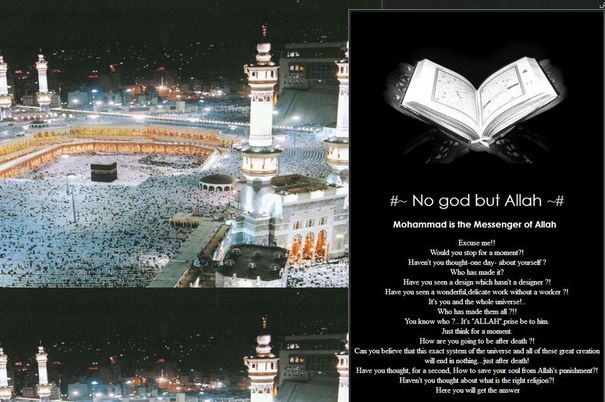
Charlie Hebdo [“Charlie Weekly”], kind of The Onion of France, published an issue last week entitled “Charia Hebdo”, which featured a cartoon of Mohammed saying (in French) “100 lashes if you don’t die laughing!”. The November 2 issue was retitled “Charia Hebdo” (referring to the holy Islamic code of laws called Sharia), and listed Mohammed as “guest editor” for the issue. In response, the publication’s website was hacked, showing a picture of Mecca and the text [in English] “No God But Allah”, followed by a series of questions arguing for theism (specifically Islam, but they were pretty generally theistic questions, like “Have you seen a wonderful delicate work without a worker?”). A 20 year old IT worker in Turkey claimed responsibility for the hacking. Shortly before the issue hit the streets, Charlie Hebdo’s offices were set on fire (via a molotov cocktail, according to telegraph.co.uk) and much of the inside of them was destroyed.

tendancecoatesy.wordpress.com

The hacked Charlie Hebdo website.

Given the recent passing of the bill that banned the wearing of niqabs and burkas under penalty of monetary fine, the demonstration of further European French/Muslim French tension is unsurprising and worrisome. The demographics of France are disputed, with reports from 2009 ranging from 4%-10% of the population being Muslim, but it is agreed upon that the Muslim population in France is increasing rapidly. Muslims have expressed feelings of ostracization by Sarkozy, especially with the recent head covering bill, and it is evident from Charlie Hebdo’s publication that at least some animosity towards Islam is common among the European French.

Charlie Hebdo’s publication was specifically blasphemous to Islam – more so than, say, Christians would probably find a picture of Jesus saying the same thing [though yes that would be rather upsetting to many people] – because of the specific Islamic mandate against the reproduction of pictures of Mohammed, and the reverence with which the prophet is held.

The French government passed a similiar and vaguer bill prohibiting ‘conspicuous religious symbols’ in 2004. This is just a small demonstration of the staunch secularism in France since 1789, when the revolution removed the huge amounts of power the Roman Catholic Church had over society. After the revolution, France has made it a pretty big deal to avoid giving a religious group such power again, and so has consistently been very intentional about the individualisation of religion and maintaining the separation between church and state.

This separation has worked fairly well for the past few centuries, as devout French Christians became fewer in number and French society as a whole valued an a-religious government, but the increasing Muslim population in France is beginning to disturb that environment. Though the population of Muslims in France is small, the presence of a solid and devout minority in such a staunchly secularist country will foster discord, the beginnings of which can be seen in recent events.