
A couple weeks ago, I unleashed my wrath against NBC for their exploitative and fetishistic show, Stars Earn Stripes. Despite their cold, calculated attempt to make a quick profit off of the sacrifices and hardships of the armed forces, NBC, as a channel, still manages to pump out a handful of decent shows.
The same can’t be said for TLC.

If you’re not familiar with TLC, they’re the channel responsible for such shows as Toddlers & Tiaras and those fifteen different series about midgets (yes, I’ll be using the term ‘midget’, get used to it). Now there’s been some criticism already that TLC (The Learning Channel) doesn’t have a thing to do with learning (not anymore, anyways), but my issue with TLC goes further than that. TLC isn’t just unhelpful or unintelligent- it’s straight-up bad for you.

Here’s Why:
I. Whites Only?
When Evan and I were having a discussion about TLC a few days ago, I brought up how strange it was that they had so many shows about midgets. His response was that he suspected it had something to do with the “celebration of diversity.” That’s probably how TLC would spin it, too. Their plethora of shows centering on midgets (Big Tiny, The Little Couple, Little People- Big World) unusually large families (19 Kids and Counting, Table for 12, formerly John & Kate Plus 8, United Bates of America), and other shows such as High School Moms, Sister Wives, or My Big Fat Gypsy Wedding are all part of their mission to portray the diversity our world and help us all learn from each other.
Only that’s some ol’ ********.

See, if TLC were actually showing you giant (by Western standards) families or midgets in the interest of promoting understanding, they might actually show some diversity. But just go to the TLC television show page and tell me what you don’t see.
Where are all the black people? Where are all the Asians? Where are the shows about Hispanic families? For Pete’s sake, the combined non-white population of the US is nearing 50%, and TLC doesn’t have a single show starring a non-white family! What’s up with that? Not only are there no shows centered on non-whites this year, but if you look at their “Past Shows” section, you will find one show with a black star and one show with an Asian co-star. Not only is TLC pretty lacking in racial diversity when it comes to its shows, but other major demographic groups are left out as well. Non-Christian religious groups make up nearly 20% of the population- where’s the show about the day-to-day lives of American Muslims, Buddhists, or atheists? Wouldn’t we benefit from a show about life on a Navajo reservation more than Long Island Medium? I’m gonna go out on a limb here and say “Yeah- yeah, it would be.”

II. The “Freak-Show”
So we’ve established TLC’s programming is more or less exclusively about white people, let’s take a look at what white people. Counting up the subject material of this year’s shows, we have 19 out of 36 programs centered on what could certainly be titled “abnormal”. That is, one out of two TLC shows deals is about midgets, huge families, addiction, hoarding, teen pregnancy, fringe religious groups (see Breaking Amish or Sister Wives), and the like, with the other 17 shows centered (largely) on wedding dresses and people who bake stuff. Is there anything inherently wrong with all of this? Not at all. In fact, a lot of the subject matter these shows cover looks pretty interesting- most notably Abby and Brittany, a series following conjoined twins. You can’t tell me that you aren’t really intrigued by that.

But that’s not the problem. The problem is the vicious redundancy, and what it says about TLC’s motives here. Currently, TLC is airing two shows about large families (to say nothing about all their past shows about large families), as well as three shows centered on midgets (again, they’ve had other shows about midgets in the past). Why the redundancy? Because it’s about money. The concepts behind both sets of shows are being squeezed for every last penny, meaning when TLC has a camera crew following a family of twenty or a four-foot couple, it’s not because they want to make a quick buck.
“But Gordon, you veritable living library of knowledge, do intentions really make a difference?”
Absolutely.
If I went around with Peter Dinklage and said, “Meet one of the most talented actors of our generation who is also a midget”, that would be constructive. If I went around with Peter Dinklage shouting “Yo! Check out the midget!”, that would be awful. Same goes for anything- just look at Michelangelo’s David. The inention of the piece as a representation of Florence as a brave and mighty city is what makes the statue art instead of marble porn.
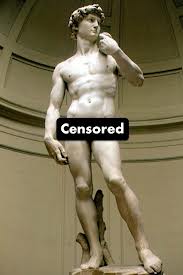
Like so…
With this in mind, doubt must be cast upon the rest of TLC’s programming- we’re forced to strongly consider that shows like Long Island Medium, Addicted, Strange Sex, and the like aren’t here for our edification, but for our entertainment. This is all just voyeurism- a chance to stare at people who are different than us. TLC doesn’t keep pumping out these shows about midgets and massive families because they think each show is unique, but because each show is the same. Because they don’t look at the individual qualities (or lack-thereof) of these people- they’re just reduce them to being nothing more than “abnormal”, which is why they feel they can keep making these series. It’s objectification, pure and simple.
III. Only Encouraging Them
In addition to their lack of diversity, and objectification of people who are (by our standards) “abnormal”, TLC is also responsible for for delightful little pile of festering garbage we all know as Toddlers & Tiaras.

Even if you thought my previous point was a little shaky, you really can’t argue with this. TLC openly advertises T&T as a show you’re meant to laugh at. The ridiculously dolled-up girls, the psychotic mothers, the manipulation, the abuse. It’s a show meant to make you feel better about yourself as a human being; that you’re not some morbidly-obese Midwesterner or spray-tanned monstrosity on your fifteenth cosmetic surgery desperately trying to live out your crushed dreams of glory by slathering your daughter with her weight in makeup. Now I’ve got a seriously dark sense of humor, but not even I think that’s funny.
“But Gordon! It’s not like TLC is promoting this idiocy- you say yourself that you’re meant to laugh at these people!”
Ah, but TLC is rewarding these people. Keep in mind that attention is what this is all about, and that the message here is “You don’t have to be talented or smart or funny to be on tv! If you’re a big enough *******, you can still get on!”. Torment your little girl, and you can still get on nationally-viewed television. If we’re going to make any progress towards getting rid of this child-abuse, we need to stop airing this- it’s just rewarding bad behavior and making us worse on the whole. What’s it say about TLC that they show mothers berating their five year-olds and expect us to be entertained?

No, I am not.
And again, with Toddlers & Tiaras as a major TLC show (along with their spin-off Here Comes Honey Boo Boo), this casts serious doubt on TLC’s intentions with their other shows. If you’re expected to find a collection of mentally disturbed women abusing toddlers funny, are you also really expected to be edified by watching The Little Couple or My Big Fat American Gypsy Wedding, or are these just “freaks” with their lives filmed for your voyeuristic pleasure.

So let’s review what we have here. A channel whose programming is centered almost exclusively on whites, with a majority of its programs centered on “abnormal” families and individuals, presented not for any educational or instructive value, but for your entertainment, demonstrating TLC’s complete and utter contempt for both the “stars” of its shows and for you as an audience. And the rotten, mildewed cherry on top of this bilge-pie is that the entirety of TLC’s programs are presented with this veneer of tolerance and understanding, so they can pass off their twisted side-show as somehow healthy and admirable. At least when the circuses advertised a chance to see the wolf-boy or bearded woman, they were up-front about it.
As with NBC, I have this to say to the folks over at TLC:

 In case you haven’t heard anything at all about this change, allow me to restate what’s been said a thousand times already. In the Ultimate Marvel universe Peter Parker has died, and replacing him is a half black, half Latino teenager by the name of Miles Morales.
 Yesterday I was blessed with the opportunity to interview “The Batgirl of San Diego,” a woman who was at this year’s SDCC [San Diego Comic-Con] dressed as Stephanie Brown’s alter-ego. While she was there she appeared at every DC panel and asked questions which were met with responses ranging from indifference to open hostility. Gotham’s Batgirl may have rid the city streets of crime, but San Diego’s fights to ask why there aren’t more women in comics.


 Culture War Reporters