Tag Archives: writing

David Foster Wallace, Virginia Woolf, and Author Necromancy

Sorry this is late, ye millions of people. I am [still!] traveling through places barren of the internet, but I’m returning to the land of milk and honey soon (or whatever) and will have wireless all the time again.

source: electricliterature.com

I came across this blog on The Outlet that “revisits letters from prominent writers and other artists to revive the dying art of letter writing.” They posted a postcard from David Foster Wallace to Don Delillo (a famous person I haven’t read who seems to have won many awards for books called White Noise and Underworld and Mao II, among others).

First, the phrase “revive the dying art of letter writing” caught my attention. References to “reviving the dying art of [blank]” always have about them a sort of nobility – like when someone tells you that they work for the Peace Corps or rescue puppies for a living. But how does a note from a brilliant man help revive the dying art of letter-writing? The text is a clever note – another person defending the “art of letter[-]writing” might not even recognize it as anything more than an e-mail text.

And then I want to know why we publish and discuss the letters of famous people. David Foster Wallace was particularly brilliant, it’s true, but the post-mortem ransacking of his library was unsettling to hear about. Maybe a year ago I’d think differently, but now reading writers’ letters and diaries (like Virginia Woolf’s) seems me to me a rude, fetishistic, and sort of useless thing to do.
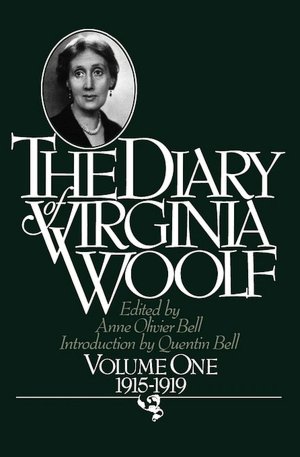
Virginia Woolf's diary, published post-mortem

And yes, the writing is going to be good – but many people can write witty and clever letters. Writers’ letters might be constructed, but they’re only constructed for one person and in that context. Books and published works are written in an entirely different context, for public consumption and enjoyment. Looking for writers’ letters seems to me the equivalent of wanting to hear Beyonce humming while she pees.

In David Foster Wallace‘s letter to DeLillo, he talks about a large palm tree, a book they exchanged, and how Wallace recently got his license in California. The writing is quite witty to read, because Wallace was good at words. But it is saying nothing and communicates nothing but what Wallace wanted to say to DeLillo on the 1st of September of some indiscriminate year. Why do we like reading this? How would this contribute to maintaining the art of letter writing?

Looking for every word on every grocery list scratched out by an author sounds painfully like something that I would have done a few years ago, which might be why I react so strongly against it now.

Knoebel (the blogger) calls the postcard “a prose index of cultural references,” which is pretty characteristic, I think, of the annoying self-effacement with which writers’ personal and accidental writings are usually treated: something must have been so special about these holy people that it is more worth our time to read their private, unrelated writings than it would be to develop our own. And that, I think, is my main problem with this practice – if we really want to appreciate prose, or to revive the art of letter writing, we should probably start working on writing some letters ourselves.
Archetypes: Why Wizardry Triumphed Over Mythology

Harry Potter and the Philosopher’s Stone [marketed that way everywhere but in the States and India] was released in 2001. Nine years later Percy Jackson & the Olympians: The Lightning Thief, the first film adaptation of Rick Riordan’s series of young adult novels, hit the big screen. One went on to spawn a sequel the following year, while the other is taking as long as three. One of the reasons for this, I think, lies in the studio’s portrayals of the characters in their respective works.

I’m not going to go into a great deal about the Harry Potter franchise. The first book was released in 1997, and since then the films have swept up Western culture [and others] up into a wonderful world of witchcraft and wizardry. This post is written under the assumption that you have at least some familiarity with the works.

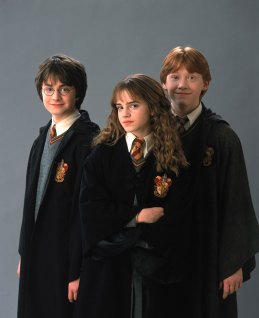
I opted for an image of them really young, since the majority appear to be just shots of good-looking young people staring somewhat broodily at the camera.

At their foundation, Rowling’s novels are built on a trio. Harry Potter is the chosen one, the courageous hero, the primary protagonist. Second is Ron Weasley, redhead, best friend, basically a wimp [for a lot of the series]. Last, but certainly not least, is Hermione Granger, the girl, the genius, the level-headed one. Clearly this is a team with some kind of equilibrium to it and a formula that works, and this is definitely evidenced in Riordan’s pentalogy.

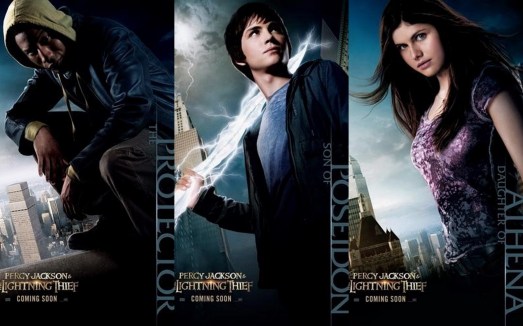
The Lightning Thief, the book the film was based on, stars Percy Jackson, son of Poseidon, talented swordsman, fearless warrior, and new to being a halfblood. Second is his best friend, Grover Underwood, a satyr, kind of a cowardly kid [goat jokes, everyone]. Topping this all off is Annabeth Chase, Athena’s daughter, meaning that she’s definitely got the wisdom thing going on. Clearly if it ain’t broke, don’t fix it. Before you go to assuming that Riordan’s books are a cheap knock-off, don’t; the series is a well-written take on both Greek mythology and the young adult genre as a whole.

From left to right: Grover, Percy, and Annabeth.

The problem isn’t that the characters appear to mirror those in the Harry Potter books. If anything, this is a strength of sorts, as they’re both familiar and effective. The issue is that the film adaptation of the novel takes these archetypes and throws them out the window. The result is this: three badasses.

In Percy Jackson & the Olympians: The Lightning Thief, Percy, Grover, and Annabeth are all depicted as being a) brave, and b) proficient at fighting, making them essentially slightly different facets of the same archetype. Yes, Annabeth is the one knows more about mythology and magic, et cetera, but she still wields a sword along with the best of them, transforming her from a cold, sharp-tongued girl to an athletic tomboy.

The irony is that Chris Columbus directed both films [as well as Academy Award winning The Help], choosing to faithfully adapt one and tailor the other for a specific audience, going so far as to significantly age the characters. Percy Jackson & the Olympians: The Lightning Thief has all the signs of a movie meant to catch the world’s attention with action, special effects, and good-looking teenagers. Three traditionally heroic characters are three times as entertaining, or at least that’s what a certain type of logic would dictate.

The film did well regardless, pulling in $225 million and with the sequel supposedly [I reserve the right to express some doubts] dropping sometime next year. Fans of the book, however, are hoping that Sea of Monsters is a much better installment than the first. Full character rewrites are rare, so the best they can expect is a film that respects the narrative of the series, and strives to fit their characters into that.

Christopher Bird: Should Be Writing For Comics

Part of this post hinges on you having read the last one I did, Aaron Diaz: Has a Lot of Opinions About DC. In it I wrote about webcomicker Diaz, his redesigns of DC characters [and his reasons for doing so] in particular. Where that post and this one overlap is that Diaz wrote new origin stories for his reboots, and these have been the subjects of replete praise.

Christopher Bird, creator [and namesake] of the blog Mightygodking, is another man with ideas that involve the intellectual property of others. A man who knows [and loves] comics, he’s written his fair share of posts about them, and demonstrates an impressive knowledge of the work of both Marvel and DC. We would expect someone in his position to have strong opinions about the direction both companies are going with their comics, maybe even implying that either company would do well to hire him to write for one of their properties.

MGK should write Marvel’s Doctor Strange. And he has reasons.

Eight days ago MGK released the 42nd of his “I Should Write Dr. Strange” posts. That’s 42 reasons why Marvel certainly wouldn’t suffer by putting him in charge of writing about the Sorcerer Supreme himself.

The reasons, however, are never directed at his own qualifications. From the very first post, in which he creates a scenario where the colour blue has been magically leached from our existence, he presents stories. There’s little to no explanation whatsoever before he starts it off with the sentence, “One day, you wake up, and blue is gone.” From then on it’s a description of an eerie, uncomfortable scene right up until the last two paragraphs. The last one is but a single sentence, “And that’s why this is a job for Dr. Strange.”

I read through all 42 of his reasons this week, and was thoroughly engrossed and enchanted by every one. As someone who loves comics but isn’t terribly familiar with Dr. Stephen Vincent Strange, I found myself garnering an appreciation for the character and wishing that these stories, all hypothetical, were a reality.

Where MGK really excels in his knowledge of the lore behind it all. Whereas Diaz took and remade characters, creating an entirely new universe for them, MGK makes his narratives fit in Marvel continuity and acknowledges the world he’s writing in even though he has no obligation to do so. When he writes about Dracula he mentions Blade, and when writing about the death of Cytorrak [picture shown above] he makes sure to hint that there’s a chance not all is well with the Juggernaut. He even justifies his entire act of writing these reasons by explaining how it all continues to work even when Doctor Strange was no longer Sorcerer Supreme.

When it comes to writing about comics, especially Marvel and DC, it’s easy to criticize. While Diaz provided an alternative of sorts there’s a sense, in his redesigns, that he rejects a great deal of the characters’ original origins and histories. I enjoyed a few of his takes on a few heroes, but ultimately wasn’t convinced that this was an entire world worth creating.

MGK, Christopher Bird, on the other hand has won me over with his tremendous tales of superheroism and magic. He tips his hat at every turn to the ones who came before him, even though he technically does not come after them. He doesn’t disparage current writers [which isn’t to say that he’s never criticized any aspect of the industry], but instead provides stories, dozens of them, to prove that he knows the character and what he’s doing.

And, if after all of that, he hasn’t proved that he should write Doctor Strange, maybe he can convince you that he should write The Legion.