Tag Archives: Youth

Evan and Gordon Talk: The Purpose of College

EVAN: This week on E&GT we take a break from scrutinizing film to look back about seven or so months to a different time of our lives: college. Now that we’ve both graduated we find ourselves in a different stage of life, and it begs the question of what those four years did for us, and whether or not that’s what we wanted or expected.

GORDON: Throughout my college career, especially towards the end, I heard a recurring argument:

“College is a scam,” they said, “It’s a trap or, at very best, a waste of money. You don’t learn anything you can actually translate into a job, so either drop out while you can or don’t sweat the grades and party your buns off.”

EVAN: Wait, who is the “they” that was saying this?

GORDON: I’ve read it in various Cracked articles, I’ve seen it covered in webcomics and in comments, I’ve heard it on the radio. Not always the same tone,  but it always boiled down to that essential idea. “College doesn’t teach you what you really need to know, it just puts you in debt and wastes your time.”

EVAN: Well, I guess that really begs the question of “What is it that we’re really supposed to know?” If college is the great institution to prepare us for our lives, what should it have taught us?

GORDON: Some would argue that technical and vocational skills are what we really need. Stuff that’s meant to train us for jobs. Wrenches, not Whitman.

EVAN: Which is the sort of thing you see advertised on television late at night or in the middle of the day; schools for electricians and dental assistants and plumbers and what have you.

GORDON: Which always come across as propaganda films from a dystopic alternate timeline. They can claim to be breaking the mold all they want- I’ll still always just see Orwellian Factory-Schools designed train the subservient masses for laboring in name of supreme leader and glorious fatherland.

EVAN: Heh heh.

The contrast to this idea you brought up when first introducing this topic, that the two sides could be seen as college prepping us for our careers or making us more well-rounded individuals.

There’s obviously more to it than that, but how would you boil the latter option down to its essence?

GORDON: I’d probably cite our own alma mater’s (for me more just “mater”) slogan of “global mindedness.” The idea is to create people who are, first and foremost, thinkers. Logical and critically minded thinkers with strong creative abilities and appreciation for art and wonder. A noble enough sentiment to be sure.

EVAN: To really engage with this topic I feel like we should have equal footing, and I’ll have to give our readers a little bit of context-

I’m currently unemployed, and chose to live the latter part of 2012 living with and taking care of my grandfather, whose wife [my grandmother] passed away in September. My job hunt has only very recently started up again.

I say that because as it stands one of us is currently working and knows how his education has aided him and the other is not.

GORDON: I, unlike my Canadian counter-part, am currently employed, having worked two jobs simultaneously for a while there. Having vainly searched for a job the entire summer and most of the fall, I am now working a job helping unemployed people find work, the irony of which is not lost on me.

EVAN: And did you, my Employed-American friend, find that a degree helped you in your search for work?

GORDON: In all honesty, I’m not sure.

On one hand, I can say that certain classes I brought definitely assisted me in securing a job, but those classes really more on the whole “applied” spectrum of education. I definitely didn’t need to go to a top 3% college. People, it turns out, don’t give a crap about where you went.

EVAN: Again, I can’t comment from experience, but I’d like to say that it depends on the job.

GORDON: This is probably true. However, if you were looking for a job, which is gonna look better on a resume? Four years of college, or four years of experience in that field? From everything that I’ve seen, I’d take experience every time.

EVAN: And I agree with that entirely. I can’t count the number of want ads I’ve seen [and this is for stuff like janitorial work, and dishwasher] that require “minimum 2 years work experience.”

It’s like, heck, what was I doing in school when I could’ve been out working this whole time?

GORDON: But of course, that brings up the first question: what’s the point of college? Are we expected to choose a career path and be trained like the mindless, dehumanized proles that we are?

EVAN: Well, for me personally my career goals were more tailored to an academic setting. My personal interest in writing and editing is definitely something that can and is fostered in that environment.

That being said, if I had skipped my four years of college to simply freelance as hard as I could out there in the real world, would I be a better writer today? I honestly couldn’t tell you.

GORDON: The problem is that both sides have really, really big flaws.

On the one hand, turning college into a simple vocational training course does truly rip the soul right out of academia. It makes it just the place you go to get a desk job instead of a manual one.

On the other hand, college as it is now, while fostering intellect and creativity, is as unhelpful as it is expensive. Why put yourself over a hundred thousand dollars in debt to not get employment?

EVAN: I guess in the bigger picture, what is it that we want to do with our lives?

There are plenty of jobs out there that don’t require a college education, and that certainly benefit from hard work at an early stage.

On the flip-side, there are jobs that you simply can’t get without a degree.

GORDON: We also can’t imagine that we can simply get any job we want to begin with. It’s all a gamble. I can get a degree in biology, but that doesn’t at all mean I’m gonna get a job in biology- heck, I’d probably be lucky if I got something even close!

EVAN: Like a janitor in a pharmaceutical company. Or the guy who delivers mail to a biology professor’s house.

GORDON: Exactly. So is that it, then? It’s the whole dang system?

EVAN: I mean, yeah. I feel like more often than not that’s all it really boils down to.

GORDON: So let’s talk about an ideal universe. Or at least one that ain’t quite so screwed up. What’s college look like? Give me your take.

This does not count as an ideal college…

EVAN: It’s tricky, man- Because I would like everyone to be well-read individuals who think about the media that they access and have a fuller understanding of what makes us who and what we are as a culture, I mean, that’s the dream-

But at the same time I acknowledge that there are people who don’t care a whit about any or all of that.

And with so many people who enjoy poetry and the arts, while those are debatably important parts of society, what happens when they need to find work? How many playwrights can any single country sustain?

GORDON: My response would be “how many playwrights are there actually out there?”

EVAN: I think there’s a difference between the actual number, and how many individuals would actually like to be a part of that number.

GORDON: Touché, but we can blame certain jobs being glorified and others suffering from unwarranted contempt.

But let’s move on. College. Your college- what’s it look like?

EVAN: A thorough exploration of the ideas that created Western civilization, the one most of us live in today, because it’s extremely important to observe our origins before we can look at our present and then ahead, after that.

A strong emphasis on writing with the reason that without the ability to properly communicate our thoughts how can we even really fully think them to begin with.

GORDON: Sounds to me that you’re still leaning more towards the side of academia.

EVAN: Well, like we’ve discussed, I have a slight bias. And I suppose we haven’t really defined the question as far as the purpose of college.

GORDON: My take would a combination of both sides, with the end goal being application. We’re talking about the study of English for the purposes of applying the principles in same, either in writing or screenplays or entertainment or communication of some kind.

I feel this would allow for all the creative and academic elements while keeping the whole process grounded. No ivory towers.

EVAN: I don’t think my take discounts the possibility of lining up with what you said, but that’s a really good description of how college could and maybe should be.

That being said, we are actually overtime.

GORDON: You wanna talk about drugs and culture next time?

EVAN: I think at some point we could hand this back to the viewers, actually. We’ve really gotten a handle on this whole E&GT. I’m just not sure when or how to do so.

GORDON: The readers are slack-jawed cattle who would eat their own shoes if we told them to.

EVAN: I should probably edit that out of the final post.

GORDON: Nah, we can let ’em vote. My subject would be Drugs and Culture.

EVAN: Mine would be . . . um . . . huh. About SNL. How to fix SNL.

GORDON: Nice. Let it be so.

EVAN: Tell the nice people to have a good Wednesday, Gordon.

GORDON: Have a good Wednesday, Gordon.

EVAN: And don’t forget to vote, readers! Thanks for putting up with my co-writer!

Evan and Gordon Talk: The Greatest Flaw of This Generation [Continued]

EVAN: Last week Gordon and I discussed the greatest flaw of this generation, and discussed apathy, laziness, entitlement, and creative bankruptcy. Deciding that we had much more to work with, Gordon left us with this question last week, which heads this continuation of the topic:

““Do we want to be good, or do we just want to look good?”

GORDON: I’m not entirely sure I can come up with any swift dismissal of this possibility, I mean- look at the world we live in. Do we believe in being environmentally and socially conscious? Absolutely. But to what extent? I mean, we’ll chuck our soda cans in the recycling, but are we gonna picket Monsanto?

Are we really just observing these “little” things because they’re expected of us? Do we actually care one way or another?

EVAN: As far as recycling goes, we do that in Canada because it’s the law. Looking good only has so much to do with it.

If we want to go with the example of, say, giving a few dollars towards an environmental organization [or maybe because the fundraiser was cute], that works a little more maybe. It at least contrasts with picketing/protesting. I think we care, but maybe not enough? That’s if we’re quantifying “care” now by the actions that it results in.

GORDON: Is it, perhaps, that we’re cynical? Do we as a generation ultimately despair of the effectiveness of any method of change? Is the reason we’re unable to really go the distance when it comes to our causes because we think it’s all just in vain?

EVAN: Do we think it’s all futile? I mean, we’re certainly led to believe that to some extent. To focus on environmentalism, the extent of the destruction to this earth is growing ever closer to irreversible, and we’re made aware of this.

As far as documentaries and the like go, however, we are told over and over that what we do does indeed matter. Being conscious about how we spend our money and that sort of thing.

GORDON: That’s what we’re told, but then again, the creators of such documentaries are overwhelmingly members of older generations.

Look at the Occupy Movement, for example.

People were there from all demographics, but more than anyone else it was the youth- our generation. Despite massive popularity, that venture ultimately met its death under the boot heels of riot cops and a fog of pepper spray.

It’s been about a year since it all started, and the situation is the same, yet there’s really no push for any resurrection of the movement or even for any major protest at all. Have we given up? We’re all the same people- we have all the same drives and values- have we simply despaired of peaceful protest?

EVAN: It’s funny you should say that, since just yesterday former protesters gathered in a park in Toronto to call attention to the movement that happened a year ago.

That aside, maybe you can explain what exactly happened as the movement petered out. It’s somewhat well-known that the weather was a large contributor to those occupying various streets and cities, but what else led to its collapse. Was it simply fatigue?

GORDON: I’d blame massive crackdowns on the part of the mayors of the occupied cities- let’s not forget that mayor Jean Quan pretty much turned Oakland into a warzone. Injured a protesting war vet so badly most folks thought he was going to become the first casualty of the movement (he pulled through, fortunately).

EVAN: This sort of all falls back to a point I made in relation to apathy our first attempt at this topic. That people care, but simply don’t feel like stepping outside their comfort zones. I realize that this may seem like a ludicrous thing to say in the face of the Occupy Movement, but I feel that the vast majority of youth, our generation, don’t want to do what it takes.

They, we, value comfort too much.

GORDON: I’m gonna have to second that theory.

I remember back when I was in college, going door-to-door trying to get students to boycott various unethical companies [Coca-Cola, Nike] doing business on campus. I was amazed at how many people would nod their heads and smile and agree with each and every word out of my mouth until I called on ’em to stop buying those companies’ products.

Guts. We got none. Difficulty with the concept of actual sacrifice, you know?

EVAN: And the refreshing taste of Coca-Cola is the very basest of comforts. If we can’t part with a caffeinated beverage we’re into, then what can we do?

I’ve joined in your personal boycott of the company, and although it can be a little difficult, it’s certainly nothing compared to being beaten by batons as I march on Parliament.

GORDON: Is that it then? Are our values just skewed ever so slightly in favor of immediate gratification? Do we prefer keeping our skulls in once piece over bread and freedom?

EVAN: History would say: yes. At least until things reach a certain point. Until we realize that being comfortable doesn’t outweigh what we put up with to get that comfort.

GORDON:  So what’s the word for this?

EVAN: To put it simply would be “laziness,” and we both know it’s more than that.

GORDON: “Over-Attachment,” perhaps?

EVAN: “Comfort-Loving”?

GORDON: “Hesitation”? “Looking back towards Sodom”?

EVAN: Looking back towards Sodom assumes that they’re actually doing something.

GORDON: It’s a fear- a very specific kind of fear. The kind where you “choke” just before doing something major.

EVAN: I’m going to say there’s probably something in French or German for that, but since we’re writing this in English we’re pretty limited in our options.

GORDON: Can we make one up?

EVAN: Heh. I don’t see why not.

How about . . . “Statusquophilia.”

GORDON: “Fluxophobia”?

EVAN: Haha, I like how we went different directions with our Greek roots.

GORDON: As do I. Shall we have the readers vote?

EVAN: Sounds good to me, and we should be wrapping things up anyway. Want to summarize how we got here?

GORDON: Ultimately, o readers, it all comes down to this. The great and terrible flaw of our generation- from what we’ve discussed- is not a sin of commission. We are not entitled, we are not lazy, we are not without our values. Our fault is in what we lack the guts to be good, the balls to be bad. In short, the unwillingness to part with what we have for the chance to attain something more. We’re trapped in a dance with the devil we know.

EVAN: Vote for the terminology you like more. “Statusquophilia,” meaning a love for things as they are, or “Fluxophobia,” meaning, in this case, a fear of sacrifice.

GORDON: For next week’s topic, we’ve got: Zombies- Are We Beating a Dead Horse At This Point?

EVAN: Or what is going on with all the wars on television? I’m referring to programs like “Storage Wars” and the like. Real wars are happening, I realize this.

GORDON: And with that, people of the interwebs, we are out of time- make sure to vote for your preferred word as well as the topic for next week, and be sure to check out our new “Fame/Shame Day” feature!

Bad Influence

Last night, I watched Brideshead Revisited, and let me tell you, it is one festering pile of garbage.

Seriously, **** this movie…

Now before anyone launches into a tirade- yes, I am aware that Brideshead was originally a novel and, from what a lot of critics have said, one that was infinitely better than the movie, the later of which reduced all of the author’s points on culture, religion, and relationships to a couple hours of pretty set design and not much else. Simple fact of the matter is Everyone Poops could have been adapted for the big screen and still have been better than this confusing mess.

Michael Bay was going to, but the book was too cerebral for him…

Look- I can’t speak to either the novel or the author. People who have read the book say it was better than the film, and while I have difficulty believing that, I’m willing to give them the benefit of the doubt. I’m not hear to address that- I’m here to address the fact that someone at some point did actually think that what they presented in the movie was somehow not only worth watching, but worth paying for.

It aint- in case you haven’t gotten that message yet…

I’m not a fan of British period-pieces; if I wanted to see eloquent people with miserable lives, I’d talk to English majors.

What we have in this movie is a group of extremely rich youngsters lounging about an elegant mansion, downing enough alcohol to make newyears in Vegas look like a Baptist ice-cream social, and whine and wail for over half an hour about how miserable their lives are. Not in any existentialist sense, mind you- these characters aren’t disillusioned with luxury, they’re just frustrated that they can’t have everything that they want when they want it the way they want it. This is essentially Walden without any redeeming qualities- just pasty, entitled brats with delusions of insight, giving trailing speeches about their long “suffering”.

And I’m not bringing this up just because one movie sucked- this seems to be part of a greater problem in our culture. I’ve seen the same kind of problem in the film I Love You, Man.

Back in college, my housemates loved this movie. Suggested it every movie night just to see me shiver with horror and disgust. In case you’re not familiar with the plot line, let me break it down for you:

Peter’s getting married. Peter simply doesn’t have any guy friends outside of his brother (played by Andy Samberg, who was the only good part of the movie), and he one night overhears his fiancee’s vile, harpy collection of friends gossiping that it’s weird Peter’s not going to have a best man at his wedding. Peter, who apparently bases his self-esteem on the idle chatter of obnoxious strangers is filled with self-doubt and embarks on a quest to get himself a male friend- because, you know, what will his future wife’s evil friends think of him if he doesn’t?

If you’re trying to jump through the screen, grab this guy, and slap him across the face while screaming quotes from Nietzsche- don’t worry, that was my first reaction too. How we’re supposed to sympathize with this self-pitying sadsack is beyond me- the guy makes Ted from Scrubs look like Teddy Roosevelt by comparison.

I’m not trying to say that every character in a movie- or even every main character- has to be someone admirable. Just look at American Psycho. I’m not saying that these characters have to be ultimately successful. Just look at Goodfellas or The Godfather trilogy. I’m not saying that the characters have fit a classic/stereotypical form of “manliness” (in the case of male characters, anyways)- just look at Zombieland, Superbad, Napoleon Dynamite, or Scott Pilgrim vs the World.

Between movies like Brideshead Revisited, I Love You, Man, and pretty much every romance movie that ever has or ever will be made, there’s this common attitude of entitlement, self-pity, and melodrama.

Ok, you could kill yourself or- OR– spend some time working at a homeless shelter, petition on behalf of political prisoners, overthrow corrupt dictatorships since you are, y’know, immortal…
Just say’n…

Now I know you must all be saying “But Gordon, you charming devil- what’s the big deal? So what if a section of film is dominated by this lousy message of egocentricity, ignorance, and impotence?”

Let me show what the big deal is.

See this guy here? This is goth shock-rocker Marilyn Manson. If you’re not a fan, chances are you’ve still heard of him- in the days that followed the Columbine Shootings, Manson was argued by many conservative and religious critics as having been responsible for influencing the shooters. And obviously, that’s just a single example- whether it’s true or not, we’re all familiar with the outcry against violence in the media- be it anything from video games (see any GTA game) to music (Wu-Tang Clan aint nothin’ to fornicate with) to movies (just take your pick).

Let’s assume, just for a minute, that this is all true. I’m going to discuss the whole “does-violence-in-media-cause-more-violence?” question later in the week, but for now, let’s just say that the answer is “yes”. If these things have a serious negative effect on the views- especially young viewers- and deserve to be censored or even banned on that logic, surely the same can be said for the equally detrimental attitudes and actions (or lack thereof) found in movies like Brideshead Revisited and the like. What do these things teach us?

I was going to say “Stalking and manipulative relationships are romantic”, but I really didn’t have the stomach to slog through countless Twilight posters looking for Edward crouched in the window- enjoy this picture instead…

Again- the problem isn’t with romance as a concept or a plot device or anything like that. I’m not a sensitive guy in even the loosest use of the word, but despite my callousness, I really don’t have a problem with romance- it’s just that romance, as a genre, tends to produce these awful, reprehensibly selfish attitudes, and at the same time make the actual relationships pretty dumb as well. Though no one is ever going to admit it, couples like House and Cuddy or Scully and Mulder are both more believable, moving, and inspiring at their worst moments than any Romance film couple at their best.

Obligatory “Still a Better Love Story Than Twilight”…

What else can I say? Romance movies, and indeed, all media that promotes this whiny, entitled message seems to be just as harmful- if not more- than the bloodiest action flick or the most violent rap or rock. I’d be just as worried about the effects of such media on young minds as I am about the most car-stealing-liest-prostitute-beating-iest video game ever made. Allow me to leave you with this brilliant tweet from comedian Dave Chapelle to drive my point home.

In Defense of This Generation

Don’t get me wrong, there’s a lot- a lot– to criticize about the millennial generation. There’s creative bankruptcy (see Evan’s post), “slacktivism” and general laziness, ever-shortening attention spans, and of course, loud, obnoxious repetitive music without any discernible beginning, end, or climax.

I cannot state enough how much I hate techno…

Now with all that stated, I do want to address some of the criticisms thrown at Generation Y by our elders and (as they see it, anyways) betters.

Late last year, I came across this article, titled “5 Ways We Ruined the Occupy Wall Street Generation“. In his defense, the author emphatically states at the beginning of the piece that “This is not a sarcastic apology, I’m not a big enough dick to write all of this as a backhanded insult about how lazy and entitled you are. Because you’re not…”. Even so, it’s tough to read the article and not feel frustrated at some of the more glaring errors, or condescended to by false conclusions drawn from them. Despite the author’s best intentions, you can’t really walk away from the piece without imagining him to look something like this:

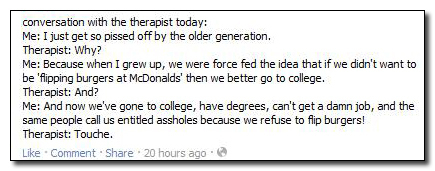
I’ll get right into things here with his first point “#5. Making You Ashamed to Take Manual Labor Jobs“. The author opens by offering the example of a piece of dialogue that went viral about a year ago.

It’s a great little bit, but I still have to stop things right there. We’re not ashamed to take manual labor jobs. We never have been. In this economy more than ever, there are college graduates willing, ready, and even eager to take jobs sweeping floors, unloading crates, answering phones, or stocking shelves. We’re not ashamed of flipping burgers, we just can’t afford to flip burgers. See, we have this funky little thing called “debt”, and not just any debt, the one kind of debt we, by law, cannot have discharged. To clarify- if I went bankrupt, if fire burned down my house and destroyed each and every last earthly possession I had, the only thing I would have left would be tens of thousands of dollars of debt I still need to pay.

The appropriate reaction…

All that’s to say we can’t take jobs flipping burgers because the $7.25 an hour you get for being abused by the customers and/or inhaling carcinogenic fumes just isn’t enough us to live independently and pay off our various mountains of inescapable debt.  Even if we move back in with our parents (more on that in a minute) things will still be tight- and God forbid we should even think about getting married or having kids until we’re in our mid-30’s. Which brings us to our next point- “extension of adolescence”.

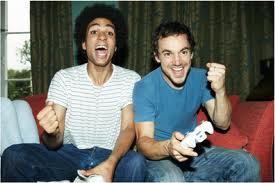
This is a psychologically documented phenomena, and something that’s rather throwing the combined worlds of sociology and psychology. Ever since the line between childhood and manhood ceased to be set at bringing down an elk and bathing in its blood, figuring out exactly when a person ceases to become a kid and becomes an adult is tough. It’s certainly not something new, but it is currently far more pronounced than with previous generations. Take that picture up there for example. Two guys, looking to be in their mid or even late twenties, playing X-Box. There’s the clincher there- the X-Box. The older generations, having had really nothing quite on the level of video games (pac-man doesn’t really count), labeled them as “kids’ stuff” from their inception, and the fact that we still play video games well into our twenties is seen as us extending our teen years, rather than shifting over to being an adult. The author of the article has this as his third point “Adding Seven More Years to Being a Teenager”.

Of course, it’s absolute nonsense once you think about it. What did our grandparents or even our parents do for fun when they were kids? They played cards, board games, hunted, fished, went to the movies, and beat up minorities.

KKK Rally, or as they called it in the 30s, “Wednesday”…

And what do our grandparents and parents do today when they want to have fun? They play cards, board games, go hunting, fishing, and go to the movies (hopefully they’ll have dropped “Harassing Pollacks” from the daily planner by this point). You never hear anyone accuse them of extending their teen years. My grandfather and his friend have been playing cribbage together for over half a century, does anyone tell them that they need to start acting like adults? Let’s face it, when it comes to what this generation does for fun, we really don’t differ from anyone in a previous generation, it’s just that what we do is so radically different, we have the appearance of being immature.

And what about responsibility? Is this generation really lazy and wussy compared to the generation who worked in the mill, took a break to fight Hitler, and went back to working in the mill and raising a family? Last time I checked, we’re in the worst depression since the 1930s (a crisis which we, incidentally, had nothing to do with but still have to pay for) and on top of this we’ve been locked in the longest war in American history- nearly twice as long as the entirety of WWII, just for some perspective. You can say a lot of things about this generation, but you can’t try to claim that we’re somehow just a bunch of young adults still trying to drag out our years as kids.

“Just look at that entitled, lazy kid. No concept of hard work or adult responsibility.”

Of course, we do tend to party, and while I could point to this being true of pretty much every young generation since a Cro-Magnon named Thruk invented partying roughly 43,000 years ago, I’m going to take a different approach.

This might come as a shock to some, but young people don’t want to spend their twenties partying because they’re afraid of turning into soulless corporate drones- it’s because we’re enjoying, often for the first time, full independence. Believe it or not, we don’t want to move back in with our parents and spend our youth still under their watchful gaze. We want our own place, our own job, our own car. We want responsibility, and as strange as it sounds, the partying is simply an extension of our attempts to explore our new found freedom.

As for us being entitled, there is something to be said for that. I recall once riding the subway with this blog’s regular contributor Evan and overhearing two youths snivel that the computer they were getting wasn’t quite as advanced as it could be. That said, there’s plenty of so-called “entitlement” that get’s unfairly pinned on us. The Occupy Movement, for example, was criticized by some as being a bunch of lazy kids that expected everything to be handed to them. I mentioned above that the current economic crises responsible for so many of our problems was- and this is key here- not started by us. What was I doing when the economy started to tank? Nothing. I was consuming the food put before me, buying as much stuff as could be expected from a teenager, and working summer jobs when I could. What did I do wrong? Why am I getting stuck with the economic crises I had nothing to do with? If you want to talk about entitlement, let’s talk about the generation who gambled with our collective futures and expects us to clean up the mess. Same goes for the wars we’re currently locked into.

As for our “armchair-activism”, again, there’s plenty wrong with this, and you could spend plenty of time going through what makes it such a pointless endeavor. Nevertheless, I can’t help but feel irked when someone from an older generation- specifically my parent’s generation (who would’ve been my age in the 80s and early 90s). Say what you will about people who mass-forward e-mails about signing petitions or demanding you like a cause on Facebook, there’s at least a level of interest. Barring the grossly simplistic anti-drug movement of the 80s, I can’t exactly recall the major moral movements of that generation. In short, the whole that this generation might be shallow isn’t without merit, but the people who point the finger ought to be awful careful that they pick the log out of their own eye first.

“What do we want?”
“Fluffy hair!”
“When do we want it?”
“After we’re done snorting crack!”

I’m going to finish up here with this last point- addressing the author of the article’s claim that the number one reason “We’ve ruined the occupy wall street generation” is that “we’ve taken away every reason to go outside”.
Am I the only one here who sees a staggering paradox? Am I the only one struggling to resolve how the “Occupy Wall Street People” need to “Get Outside More”? Last time I checked, the protestors at Occupy Wall Street were literally occupying Wall Street.

“Look at how pale you are! When’s the last time you went outside? Besides yesterday, and the day before that, and the day before that, and the day before that, and…”

Now do we get outside as much as previous generations. Not really no. But then again, I don’t really see masses of the elderly roaming the streets either. Look, the reason we don’t “go out” is because many of us (who would, by the way, love to go out) are living in cities or urbanized areas. Short of just “walking around”, any major outdoor activity costs us money, which in case you haven’t picked up on by now, isn’t something we have just lying around. Between gas, food, entry fees, and other costs, I’d have to spend nearly a monthly payment to my college debt getting forty-eight hours in the great outdoors. That’s the reason we don’t like paying for entertainment (the author’s fourth point), only it’s not because we expect our entertainment to be free (just ask anyone who’s paid upwards of 60 bucks for a new X-Box game), it’s because we’re trying to be thrifty. If we want to get our own car and our own house to avoid the sneers of our elders, we have to pinch every penny until it slaps us with a sexual harassment lawsuit- entertainment is simply a major way we can save money and not go postal.

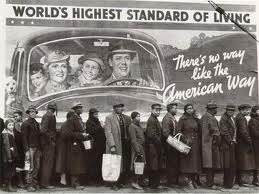
Look at those people trying to get food for free instead of paying for it! Lazy, entitled bunch of bums expecting everything to be handed to ’em, that’s what they are!

So in sum total, that’s my defense of my generation. It’s not a great generation- certainly not yet, anyways. It’s not the worst generation either, though, and before anyone- anyone– wants to label us as lazy or entitled or juvenile; please, look at us in the bigger scheme of things, and better still, look at yourselves. Would you want the standards you place on us applied to you?