Category Archives: interview

Bernie and Rebecca and Melissa Kent: On Her Directorial Debut, Its Creation, And More to Come

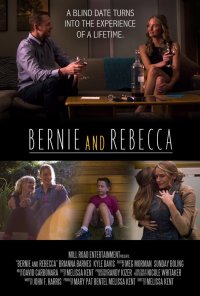
bernierebeccaposterLast month marked the first screening of Melissa Kent’s directorial debut, Bernie and Rebecca, at the Edinburgh Film Festival. Centred on the first date between the titular characters, the short film is a fascinating look at what so many of us dream about when put into similar situations.

On top of being able to review Bernie and Rebecca for myself, I was also given the opportunity to interview Melissa Kent via email about the process of its creation and her work both past and future.


Like so many things in life, you can only have one directorial debut. With that in mind, what made Bernie and Rebecca the first [of many, I’m sure] story that you wanted to tell?

Bernie and Rebecca is about a couple on a first date who imagine a not-so perfect future life together. It provided an ideal showcase for my skills directing romance, comedy, drama—basically a lifetime of love, laughter and tears—in a short 14 minutes.

Having edited so many feature length films what was it like directing a film that clocks at just shy of 14 minutes?

Actually, the filmmaking process is exactly the same, just with a much abbreviated running time. It was exciting to be making all of the pre-production decisions from casting to design to locations, and then of course being on set directing, which was a 3-day shoot. After that, the film required what they all do: editing, music, color grading, and sound mixing.

What was it like both shooting and editing your own footage? Did you ever find yourself skipping ahead in the process, knowing that certain shots would inevitably be thrown out while you were filming them?

There was only one insert I didn’t love while we were shooting so that got nixed, but everything else got used in one way or another. Being an editor probably helped my shot selection to be very efficient.

Given that so many of your past projects are either dramas or comedies [including a personal favourite of mine, The Sisterhood of the Traveling Pants 2] would you say that Bernie and Rebecca falls into a comfortable genre for you? Have you ever considered branching out into any others in the future?

Besides dramas and comedies, I have edited true crime (Captive, An American Crime), science fiction (Supernova) and even a 3D dance movie (Make Your Move). A good story is a good story and as a filmmaker I would not rule out any particular genre. It is more fun to go between genres whenever possible.

A few months ago The Guardian reported that between now and 2018 20th Century Fox and Paramount have no films directed by female directors being released.

Conversely, next year’s Wonder Woman was directed by Patty Jenkins, and Marvel appears to be specifically searching for a female director for their own Captain Marvel the following year.

Do you have any comments about the state of the industry as it stands now in regards to other women in your field?

Much respect to Jenkins and I can’t wait to see Wonder Woman.

Your next project is the upcoming American Pastoral, which both stars and was directed by Ewan McGregor. Is there anything you can tell us about that film, and if you have anything else to watch out for?

The trailer was released a few days ago and can be seen here.

It will be in theaters in October and I hope everyone will check it out!


Bernie and Rebecca is currently screening at the Madrid International Film Festival until July 9th. Watch the trailer at www.bernieandrebecca.com, and learn more about Melissa Kent’s extensive editing career at www.melissakent.com.

For Your Consideration: Adam Prosser Interviews Warcraft Director Duncan Jones

Similar to the last time I did this in March, this feature is meant to provide a brief look at what’s been happening on the internet this week [but without the typical commentary and criticism you’ll find around here].

A few short days ago BBC journalist Adam Rosser interviewed director Duncan Jones about his film Warcraft, which premiered in North America one week ago today. The interview was for Rosser’s show Let’s Talk About Tech for BBC 5Live, and given that he works as a freelancer he uploaded it to his personal YouTube account. A copy of the video can be seen below:

The original version has since been taken down due to it being shared on the Battle.net forums for the game the film is based on. That forum post has in turn also been removed as the negative reaction to the interview unsurprisingly, and it’s depressing that it’s an expected response, spawned death threats. Rosser himself comments that:

While many fans [which I’ll remind you is short for “fanatic”] will always react viscerally to the criticism of that which they hold dear, there’s also something to be said for the way in which Rosser actually conducted the interview. Continue reading

Free State of Mind: Andrew Govender Discusses Acting, Tradition, and Religion

Free-State-Updated-PosterThis is the third and final installment of “Free State of Mind”, a series of Q&As with the cast and crew of a South African film currently making the rounds at film festivals. You can read my review here, find out more about its creation from producer Terwadkar Rajiv here, and get some insight on how co-lead Nicola Breytenbach’s prepared for her role here.
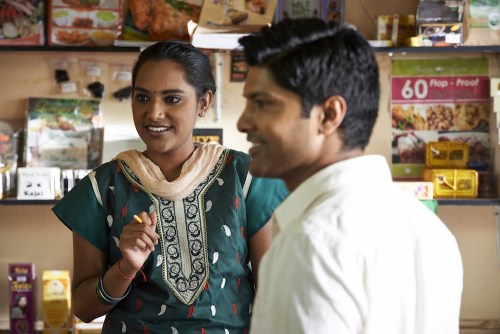
Today’s interview is with Andrew Govender, who plays Ravi, the other half of the couple at Free State‘s core. Another former model like his co-star, he began his career at just sixteen-years-old. Being crowned Mr. South Africa in 2012 is only one of his many achievements, which include creating the Andrew Govender Book Club with the Nelson Mandela Foundation and being involved in various awareness campaigns.

Given that their characters share a few interesting parallels Govender answers a number of the same questions that Breytenbach did, with a few that are unique to Ravi himself.


An arranged marriage is the biggest barrier that Ravi faces in his relationship with Jeanette. How would you say he views that tradition and what it means for his future?

I think he respects it and accepts it. He was brought up in a traditional Indian family and those are Indian traditions. However, when he gets to meet his arranged wife he realises that he doesn’t have much in common with her. That’s when he meets Jeanette and falls madly in love. He knows that he shouldn’t be pursuing a relationship with her because it’s illegal during that time for inter-racial relationships. However, he can’t help himself and that results in detrimental consequences.

ravisister

Ravi makes it clear that he’s concerned about his sister’s safety, but what does he ultimately think about what his family does under cover of darkness?

He understands that they are doing it for a greater cause and he respects that. However, he does care deeply for them and doesn’t want anything to happen to them when they go on these missions. He’s close to his family and wants to protect them.

From what I can tell this is your first role in a feature film. How was that experience, especially with it being a South African production instead of a big Hollywood movie?

It was an incredible experience. I got the opportunity to work with some really talented South African actors. I learnt a lot by being on set and having these actors mentor me throughout the filming process.

Our director Sallas de Jager was also really supportive and helped me to give the best performance I could. Even though this was a South African film, the production standards on the movie were really high. That can be attested to with all the international awards that the movie has won. I really hope that I will have the opportunity to work on more films both in South Africa and Hollywood. Acting is really something that I enjoy immensely.

How much did you know about South Africa’s Immorality Acts before signing on to this film?

Not a lot. I grew up post Apartheid, so most of what I knew was from what I heard, not what I could have experienced. It was quite eyeopening to learn more about that time in South Africa’s history and how Indian people were treated. I gathered as much information as I could from my parents about their experiences during that time. I also was really fortunate that my acting teacher had been in an inter-racial relationship and she was able to help me understand my character better.

meditation

Religion plays a large part in Free State for both Ravi and Jeanette’s families. Did you come from a religious background, and did this have any affect on how you played the role?

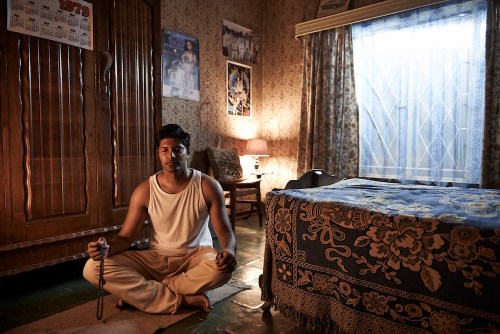
Yes, I did. I grew up in a conservative traditional Indian family so religion was important to us. My character was also brought up with the same core values and so religion would have been important to him too. There’s a scene in the movie where my character meditates and also seeks relationship advice from a guru. So we are aware that he relies on religion to guide him in the choices that he makes.

Free State of Mind: Actress Nicola Breytenbach on Getting in Character

Free-State-Updated-PosterThis is the second installment of “Free State of Mind”, a series of Q&As with the cast and crew of a South African film currently making the rounds at film festivals. You can read my review here, and find out more about its creation from producer Terwadkar Rajiv here.
Today’s interview is with Nicola Breytenbach, who plays Jeanette, one of the two romantic leads. While she has spent the past several years as a successful model, with her career taking her to runways across the world, Free State marks the beginning of her acting career. Just last month The Blue Mauritius began filming in Montreal, with the US and German co-production being her second ever silver screen role.


Jeanette is first introduced returning home to her father after finishing law school. While it isn’t heavily covered in the film, what kind of impact do you think that education had on how she views life, especially after she meets with Ravi [co-lead and love interest]? 

As Jeanette went to Wits University, which was a more liberal university than many others, it would have changed the way she viewed and felt about apartheid and the immorality act. She pursued higher education as it was instilled upon her by Maria and her father, but her true desire was to be a wife and mother.

Jeanette was raised in the very small remote town of Memel and even though it was a Christian white community it was very sheltered, and as she says in the beginning of the film that’s why she was a real ‘political innocent’. She wasn’t exposed to the reality of it much, except for a few remote incidents which completely shocked her. As her mother also passed away at such a young age and her father had a difficult time reaching out to her because of his grief, she was raised almost solely by Maria who is black South African Zulu.

Hence when she met Ravi, she didn’t think about his race and it didn’t deter her from seeing a friendly man who went out of his way to help her in this traumatic incident of a near accident. She only saw his compassion and how selflessly he had helped her. As time goes on, they both come to the realize the severity of the situation they are in, as well as the fact that they are engaged to others, but at this point it is too late, they have already fallen in love. Continue reading

Free State of Mind: Behind the Scenes with Producer Terwadkar Rajiv

Free-State-Updated-PosterLast month I was offered the amazing opportunity to watch a screener of Free State, and published my review at the beginning of this one. Set in mid-70s South Africa the film revolves around an interracial relationship that would have been illegal due to anti-miscegenation laws of that time.

In addition to that I was also able to interview members of the cast and crew via email, with consequent installments of “Free State of Mind” being released in the following days. Up first is a Q&A with Terwadkar Rajiv, who produced the film alongside Piet De Jager and Sallas De Jager.


When many people think of South Africa and racism their minds immediately go to Nelson Mandela and apartheid. What do you think their reaction will be to Free State, which focuses on relations between White people and South Asians, instead of Black people?

Apartheid was one of the dark patches of South Africa, no doubt about that! When South Africa got independence and Nelson Mandela became the President most of the people were thinking – what will be the future of South Africa? Will whites be kicked out of the country? The way things happened clearly shows that all ethnic groups started living towards one nation, South Africa!

Although there are stories during Apartheid where Indians and blacks were tortured, beaten up or even killed by the Police or Army; some whites used to treat Indians & Blacks respectfully! There are so many stories from Apartheid which prove that inter-racial relationships and friendships existed before 1994.

­Free State is a film which focuses on the relationship between Jeanette (Afrikaans White Girl) and Ravi (Handsome Indian man). This also beautifully shows the motherly relationship between Zulu maid Maria and Jeanette, who she raised as her own daughter, ­­making it truly cross cultural and crossing ethnic boundaries. Continue reading

2015’s Cultural Battleground – Evan’s Account

EDITOR’S NOTE: We end this year by each taking a look back and picking our five best posts, explaining both their importance to us and to the world we currently live in.  Clicking the banner images will link you to each post, so as 2014 comes to a close join us in remembering how far we’ve come, but also how far we still have to go.

tumblrsjws

Given the vehicle through which you’re reading these words the relationship between the internet and communication is never very far from my mind. It should also go without saying for those who spend any amount of time online that Tumblr as a community has cultivated quite a reputation for itself over the past few years.

While the sentiments found within this post are certainly nothing new [the squeaky wheel gets the grease, the concept of the vocal minority, etc.] I do think that it establishes them while also backing them up with hard evidence. At the very, very least it also lays out, for those who never cared to look into it, what exactly an “SJW” is.

earlymarriage

Another deeply personal post makes it onto this list, just like last year’s. As if letting you all read my current writing didn’t make me vulnerable enough it also featured a full op-ed from my college days [some stylistic choices make me cringe even now].

“It is difficult to be alone,” reads a since discontinued t-shirt from an AWOL webcomic creator. Those words have felt more and less real as seven years of being single has passed by, and what energy they offered I poured into penning some thoughts on the idea of marriage. Admittedly tailored more to those of the young Christian demographic it’s my hope that it helps at all with fellow single men and women in this group, as well as acting as a bit of an eye-opener for those who aren’t. Continue reading

