Category Archives: literature

Bad Influence

Last night, I watched Brideshead Revisited, and let me tell you, it is one festering pile of garbage.
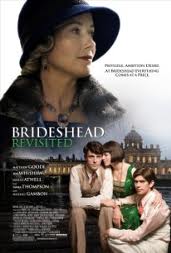
Seriously, **** this movie…

Now before anyone launches into a tirade- yes, I am aware that Brideshead was originally a novel and, from what a lot of critics have said, one that was infinitely better than the movie, the later of which reduced all of the author’s points on culture, religion, and relationships to a couple hours of pretty set design and not much else. Simple fact of the matter is Everyone Poops could have been adapted for the big screen and still have been better than this confusing mess.
Michael Bay was going to, but the book was too cerebral for him…

Look- I can’t speak to either the novel or the author. People who have read the book say it was better than the film, and while I have difficulty believing that, I’m willing to give them the benefit of the doubt. I’m not hear to address that- I’m here to address the fact that someone at some point did actually think that what they presented in the movie was somehow not only worth watching, but worth paying for.

It aint- in case you haven’t gotten that message yet…

I’m not a fan of British period-pieces; if I wanted to see eloquent people with miserable lives, I’d talk to English majors.

What we have in this movie is a group of extremely rich youngsters lounging about an elegant mansion, downing enough alcohol to make newyears in Vegas look like a Baptist ice-cream social, and whine and wail for over half an hour about how miserable their lives are. Not in any existentialist sense, mind you- these characters aren’t disillusioned with luxury, they’re just frustrated that they can’t have everything that they want when they want it the way they want it. This is essentially Walden without any redeeming qualities- just pasty, entitled brats with delusions of insight, giving trailing speeches about their long “suffering”.

And I’m not bringing this up just because one movie sucked- this seems to be part of a greater problem in our culture. I’ve seen the same kind of problem in the film I Love You, Man.
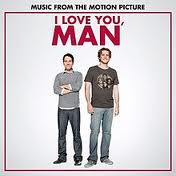
Back in college, my housemates loved this movie. Suggested it every movie night just to see me shiver with horror and disgust. In case you’re not familiar with the plot line, let me break it down for you:

Peter’s getting married. Peter simply doesn’t have any guy friends outside of his brother (played by Andy Samberg, who was the only good part of the movie), and he one night overhears his fiancee’s vile, harpy collection of friends gossiping that it’s weird Peter’s not going to have a best man at his wedding. Peter, who apparently bases his self-esteem on the idle chatter of obnoxious strangers is filled with self-doubt and embarks on a quest to get himself a male friend- because, you know, what will his future wife’s evil friends think of him if he doesn’t?

If you’re trying to jump through the screen, grab this guy, and slap him across the face while screaming quotes from Nietzsche- don’t worry, that was my first reaction too. How we’re supposed to sympathize with this self-pitying sadsack is beyond me- the guy makes Ted from Scrubs look like Teddy Roosevelt by comparison.

I’m not trying to say that every character in a movie- or even every main character- has to be someone admirable. Just look at American Psycho. I’m not saying that these characters have to be ultimately successful. Just look at Goodfellas or The Godfather trilogy. I’m not saying that the characters have fit a classic/stereotypical form of “manliness” (in the case of male characters, anyways)- just look at Zombieland, Superbad, Napoleon Dynamite, or Scott Pilgrim vs the World.

Between movies like Brideshead Revisited, I Love You, Man, and pretty much every romance movie that ever has or ever will be made, there’s this common attitude of entitlement, self-pity, and melodrama.

Ok, you could kill yourself or- OR– spend some time working at a homeless shelter, petition on behalf of political prisoners, overthrow corrupt dictatorships since you are, y’know, immortal…
Just say’n…

Now I know you must all be saying “But Gordon, you charming devil- what’s the big deal? So what if a section of film is dominated by this lousy message of egocentricity, ignorance, and impotence?”

Let me show what the big deal is.
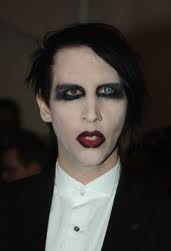
See this guy here? This is goth shock-rocker Marilyn Manson. If you’re not a fan, chances are you’ve still heard of him- in the days that followed the Columbine Shootings, Manson was argued by many conservative and religious critics as having been responsible for influencing the shooters. And obviously, that’s just a single example- whether it’s true or not, we’re all familiar with the outcry against violence in the media- be it anything from video games (see any GTA game) to music (Wu-Tang Clan aint nothin’ to fornicate with) to movies (just take your pick).

Let’s assume, just for a minute, that this is all true. I’m going to discuss the whole “does-violence-in-media-cause-more-violence?” question later in the week, but for now, let’s just say that the answer is “yes”. If these things have a serious negative effect on the views- especially young viewers- and deserve to be censored or even banned on that logic, surely the same can be said for the equally detrimental attitudes and actions (or lack thereof) found in movies like Brideshead Revisited and the like. What do these things teach us?

I was going to say “Stalking and manipulative relationships are romantic”, but I really didn’t have the stomach to slog through countless Twilight posters looking for Edward crouched in the window- enjoy this picture instead…

Again- the problem isn’t with romance as a concept or a plot device or anything like that. I’m not a sensitive guy in even the loosest use of the word, but despite my callousness, I really don’t have a problem with romance- it’s just that romance, as a genre, tends to produce these awful, reprehensibly selfish attitudes, and at the same time make the actual relationships pretty dumb as well. Though no one is ever going to admit it, couples like House and Cuddy or Scully and Mulder are both more believable, moving, and inspiring at their worst moments than any Romance film couple at their best.
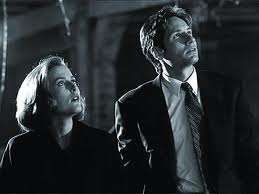
Obligatory “Still a Better Love Story Than Twilight”…

What else can I say? Romance movies, and indeed, all media that promotes this whiny, entitled message seems to be just as harmful- if not more- than the bloodiest action flick or the most violent rap or rock. I’d be just as worried about the effects of such media on young minds as I am about the most car-stealing-liest-prostitute-beating-iest video game ever made. Allow me to leave you with this brilliant tweet from comedian Dave Chapelle to drive my point home.

Game of Thrones translates better to the screen than Lord of the Rings


I read Game of Thrones back when it was a relatively nerdy thing to do (I’m not bragging; the geekiness of it at the time cancels out any hipster cred I could claim now) – back when I had to tell people that it was “fantasy, but also good”. So seeing the books translated into an HBO series (insert shout-out to the casting directors for being awesome) is pretty exciting, and seeing it done well is even more exciting.

During the (EDIT: second-to-last episode) of Season 2 – specifically, the siege scene – there was this shot of Stannis’ army lifting up ladders to the walls of King’s Landing, and one of my friends said that it looked like the Two Towers. Upon further thought, I realized that I liked the film representation of the King’s Landing siege – and the Game of Thrones books in general – better than I liked the Lord of the Rings adaptations. As the LotR movies were the most significant and noticeable film event in my life so far, this was a pretty strange realization. So I tried to figure out why I thought that Game of Thrones was doing a better job on screen.

I do love extravagant battle scenes, and the LotR movies delivers, but I always feel kind of jerked around by the battle scenes in LotR. I was watching The Two Towers and noticed how formulaic the Helm’s Deep battle sequence is. The tactics are interesting enough, but the camera just focuses on giving us series of tantalizing deaths to push my hopes one way or another – we’ll see a handful of individual “good team” deaths accompanied by tragic music, only to then be fed a series of orcs getting killed by archers to keep us hopeful and interested. Tactically, Helm’s Deep isn’t a very interesting battle – good team is losing/bad team is scary, Gandalf comes back with Eomer, good team is winning again.

EDIT: I have been informed that I am woefully underinformed, and this giant scary battering ram’s name is Grond and is NOT from the battle of Helm’s deep. I’m keeping this picture up, though.

In terms of effects and extravagance, the LotR team did an incredible job. The scenes are beautiful. But the use of repeated grisly deaths and cruelly interesting kills just to jerk around the viewers’ emotions started to feel like a cheap tactic.

A quote you wouldn’t hear in Lord of the Rings: “Those are brave men knocking at our door. Let’s go kill them!”

In Game of Thrones, however, I noticed the battle in the Season 2 finale was different. For one thing, there wasn’t a specific side to cheer for – I mean, everybody likes Tyrion and Sansa, but it probably wouldn’t be a terrible thing if Joffrey were kicked off the throne, and what’shisface’s (the Stag guy’s) bitterness is relateable, and not necessarily borne of some intransigent evil. The scene also depicted more of the tactics and the actual progression of the battle, I thought, than dragging the viewers along by alternately dashing and keeping up their hopes.

The whole story of Game of Thrones, I think, falls short of the story of LotR. Martin relies too much (like Ayn Rand in We the Living) on making us disappointed – true, the events are appropriately random and unexpected, but (is it ridiculous to say this?) random and unexpected for 1200 pages gets sort of predictable. Or at least, rhythmic. But the honesty of the characters and the anti-gloriousness of their predicaments makes it more suited to visual media than LotR. The broad, mythic scope of LotR made for beautiful movies that would never quite live up to the epicness of the books. In the end, even after all of the stunning shots of New Zealand, the story was too big to be sold.

In LotR, we know , essentially, that the good team is going to win. In Game of Thrones, while the Stark family is pretty unabashedly Good, the rest of the characters are up for grabs. Villanous actions in LotR are generally due to some inherent evil (orcs, Uruk-Hai, Sauron), but villainous actions in Game of Thrones are usually the product of a relateable motivation (love, fear, greed) and aren’t generally limited to specific characters. Game of Thrones is morally messier, and while LotR calls upon values like honor and steadfastness, the characters in Game of Thrones are constantly questioning the actual merits of those values

Questioning the merits of virtue
Jaqen: “A girl has no honor!” Arya: *shrug*

LotR is a myth. Grittiness of character is not its thing – it excercises a style of storytelling that requires suspension of disbelief and an appreciation value of behavioral archetypes. In LotR, Aragorn becomes king and is reunited with Eowyn – in Game of Thrones, Eddard Stark dies in the middle of the first book. LotR’s plots make for fabulous books, and the prose and the world Tolkien created is LotR’s real strength. Game of Thrones by no means compares to Tolkien’s prose, but it makes for interesting characters, engaging dialogue, and non-predictable battles. Because of this, Game of Thrones is way, way better for visual media.

In Game of Thrones, Robert says of killing people: “They never tell you how they all sh** them selves, They don’t put that part in the songs.” Lord of the Rings was the song, and Game of Thrones is showing us the parts the songs leave out. Each type of story is legitimate in its own right – but Game of Thrones seems to translate better to the screen.

Porn Is Not Poltergeists

So last Friday I came across the following trailer for a movie called Harmless. Here it is:

In the spring semester of last year I took a writing class called Literary Nonfiction. One of the required reading pieces was Culture Making: Recovering Our Creative Calling, by Andy Crouch. The general gist of the book was that as Christians we have the ability to create our own culture. We live in the world, but we don’t need to be of it. If we can’t find anything out there that we can agree to be part of than we can make our own.

That being said, I’m not sure that I can necessarily support this film. I understand why they did it, though. I’ve seen Paranormal Activity; I understand the way fear is exacerbated by the intimacy of the  mockumentary format. I get that if you want to talk to people about your faith movies are a great way to do it, and the horror genre is an extremely popular one. The problem is that it’s ridiculous.

I won’t lie and say that pornography is all well and good. I do believe that it is degrading to women and can be extremely harmful to relationships and families. I will even go so far as to say that there is a dangerous spiritual component involved, but this is not the time or place to discuss that. I can also tell you what porn is not, though. Porn is not poltergeists.

I can’t agree with a film that could potentially be more ridiculous than the 2006 film Facing the Giants. Trailer seen here:

This was a film that just dripped with cheese.  It’s difficult for me to put into words how awful it was. The messages were certainly positive, but weren’t delivered in a way that was well-written or even believable. If Christian media wants to be taken seriously by those outside of its target audience it has to at least be a decent example of its art form.

I’m all for Christian media, or at least media with a Christian message of sorts. Ted Dekker’s novels Blink and Thr3e are well-written and actually very good. What I wish is that this would spread to the film industry, that as Christians we could do better at making and affecting culture around us, instead of creating something laughable.


Is Rich Michelson As Good As Anybody?

This past weekend I was privileged to attend the Festival of Faith & Writing at Calvin College. I went to a lot of the sessions and was practically drowned in ideas and information; there’s a lot to process, and I’m only just beginning to look over the notes I took. With that in mind, I’d like to discuss a talk I attended entitled “Extolling or Exploiting?”

10864659-large

Richard (Rich) Michelson is Northampton’s poet laureate. He’s also the author of over a dozen children’s books, many of which have won awards including Amazon.com’s 12 Best Children’s Books of the Decade. His presence was humble, friendly, and unassuming, broken only when he began talking about a topic very sensitive to him, the question and stipulations of who is allowed to write what.

To provide some background, Michelson is White and Jewish. Many of his books explore the lives of Jewish children. Quite a few of his books also feature African-American characters.

In 2008 his book As Good As Anybody: Martin Luther King and Abraham Joshua Heschel’s Amazing March Towards Freedom was published. It tracks the paths of both men, respected spiritual leaders, and the journey that drew them to march together in the 1965 civil rights march from Selma to Montgomery. The book features an introduction by  Martin Luther King’s wife, Coretta Scott King, and was the book to receive the aforementioned award from Amazon.com.

The Coretta Scott King Award is awarded for books about “the African American experience, that are written for a youth audience (high school or below).” In spite of appearing to fit the description of the award perfectly, Michelson’s book was not even considered. There were two reasons for this. The first was that Michelson was not African American. The illustrator, being Latino, was also ineligible.

As he recounted this series of events a slight tension arose in his voice. As Good As Anybody was and is, well, as good as any of these other books. It documents the life of a prominent African American individual and the great deeds he undertook in his life. The issue here lies in the ethnicity of the author.

So he asked us, does intent matter? The Education of Little Tree is a novel that recounts the fictional memoirs of a Cherokee boy. The author, Forrest Carter, was revealed to be Asa Carter, a former member of the Ku Klux Klan. Prior to that being revealed, however, many praised the work, Oprah Winfrey going so far as to promote it on her show in 1994.

Rich Michelson is a White Jewish man, and he wants to tell stories about African American history. By doing so, is he robbing African American authors of that niche market? Are editors maybe more comfortable dealing with him than they  might be with Black authors?

I don’t have the answers, and from what I can tell Michelson doesn’t claim to either. He believes that we can all write what we want, but it’s up to society to determine whether or not they deem your writing “appropriate.”

[Very] Brief Thoughts On Entertainment

A bitter, angry old man once said:

There’s been a growing dissatisfaction and distrust with the conventional publishing industry, in that you tend to have a lot of formerly reputable imprints now owned by big conglomerates. As a result, there’s a growing number of professional writers now going to small presses, self-publishing, or trying other kinds of [distribution] strategies. The same is true of music and cinema. It seems that every movie is a remake of something that was better when it was first released in a foreign language, as a 1960s TV show, or even as a comic book. Now you’ve got theme park rides as the source material of movies. The only things left are breakfast cereal mascots. In our lifetime, we will see Johnny Depp playing Captain Crunch.

That same man wrote The League of Extraordinary GentlemenV for Vendetta, and one of Time Magazine’s All-Time 100 Novels, Watchmen. Alan Moore certainly has the writing credentials, but is he accurate in his assessment of the future of entertainment?

The truth is, as you’re probably well-aware, that the publishing industry is an ever-changing thing. ComicsAlliance writer Chris Sims has called for the “big two” [Marvel and DC Comics] to get serious about webcomics. In other words, for the two publishers to release content for free to compete in an age where people just aren’t buying print anymore. It would work as a way to increase and maintain interest in their product, and would even help sales; people who like reading something online will typically buy it if they like it enough.

As for creativity, I wrote in a post earlier this month [Mashin’ It Up] about people who are seemingly just reaching into a bucket of tropes and smashing them together at high speeds. Cowboys and Aliens was a movie that came out last year, and it wasn’t even original; it was an adaptation of a [honestly, not very good] webcomic. Not only that, but by next year Gore Verbinski will have directed Lone Ranger, with Johnny Depp as Tonto. That could be considered one step closer to Captain Crunch, I suppose.

At the same time adaptations are being made of novels. They may not be original screenplays, but the original work is nothing like a TV show from the 80s, it’s not built on nostalgia. Audrey Niffenegger’s The Time Traveler’s Wife was adapted for the big screen, and although it didn’t do great with the critics it still stands as evidence that books will do well; and they’ll do well enough to warrant films. This could lead into the conversation about how some books receive film opportunities before they’re even published, but that’s for another time.

The “conventional publishing industry” will continue to change; it has and it will continue to. Alan Moore is a cynical miser of a man [subjective], but he has a point that shouldn’t be ignored. We’re not doing great in regards to creativity, and it’s an area we should expect more from. Cynicism may appear to be the logical place to turn to, but looking for media worthy of attention is the more worthy activity.

David Foster Wallace, Virginia Woolf, and Author Necromancy

Sorry this is late, ye millions of people. I am [still!] traveling through places barren of the internet, but I’m returning to the land of milk and honey soon (or whatever) and will have wireless all the time again.

source: electricliterature.com

I came across this blog on The Outlet that “revisits letters from prominent writers and other artists to revive the dying art of letter writing.” They posted a postcard from David Foster Wallace to Don Delillo (a famous person I haven’t read who seems to have won many awards for books called White Noise and Underworld and Mao II, among others).

First, the phrase “revive the dying art of letter writing” caught my attention. References to “reviving the dying art of [blank]” always have about them a sort of nobility – like when someone tells you that they work for the Peace Corps or rescue puppies for a living. But how does a note from a brilliant man help revive the dying art of letter-writing? The text is a clever note – another person defending the “art of letter[-]writing” might not even recognize it as anything more than an e-mail text.

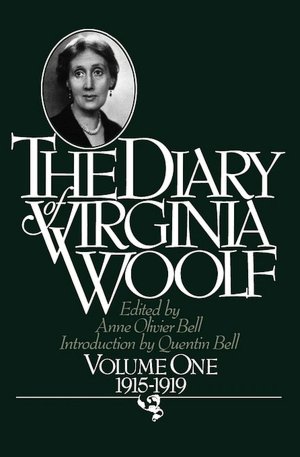
And then I want to know why we publish and discuss the letters of famous people. David Foster Wallace was particularly brilliant, it’s true, but the post-mortem ransacking of his library was unsettling to hear about. Maybe a year ago I’d think differently, but now reading writers’ letters and diaries (like Virginia Woolf’s) seems me to me a rude, fetishistic, and sort of useless thing to do.

Virginia Woolf's diary, published post-mortem

And yes, the writing is going to be good – but many people can write witty and clever letters. Writers’ letters might be constructed, but they’re only constructed for one person and in that context. Books and published works are written in an entirely different context, for public consumption and enjoyment. Looking for writers’ letters seems to me the equivalent of wanting to hear Beyonce humming while she pees.

In David Foster Wallace‘s letter to DeLillo, he talks about a large palm tree, a book they exchanged, and how Wallace recently got his license in California. The writing is quite witty to read, because Wallace was good at words. But it is saying nothing and communicates nothing but what Wallace wanted to say to DeLillo on the 1st of September of some indiscriminate year. Why do we like reading this? How would this contribute to maintaining the art of letter writing?

Looking for every word on every grocery list scratched out by an author sounds painfully like something that I would have done a few years ago, which might be why I react so strongly against it now.

Knoebel (the blogger) calls the postcard “a prose index of cultural references,” which is pretty characteristic, I think, of the annoying self-effacement with which writers’ personal and accidental writings are usually treated: something must have been so special about these holy people that it is more worth our time to read their private, unrelated writings than it would be to develop our own. And that, I think, is my main problem with this practice – if we really want to appreciate prose, or to revive the art of letter writing, we should probably start working on writing some letters ourselves.