Category Archives: review

The Dungeons and Dragons Episode

D&DTVLast night The Big Bang Theory aired its 122nd episode, entitled “The Santa Simulation.” News that its premise hit the internet and avid television watchers everywhere began to cry what may one day become a familiar saying, “Community did it first!” Every single one of them was wrong.

A full year before “Advanced Dungeons and Dragons,” [one of the best episodes of Community‘s second season, in my opinion] there was “Jen the Fredo,” the first episode of British sitcom The IT Crowd‘s fourth season. Both of these episodes were some of the best of their respective shows, so I was pretty excited for what TBBT had to offer.

The thing about the D&D-centric episode is how it’s been used as a plot device. As a role-playing game the players are able to reveal aspects about themselves that might not otherwise come out, and you can see this being done with various degrees of effectiveness  in each episode. Spoilers for all three episodes past this point.

The IT Crowd [S4E1]
“Jen the Fredo”

I realize that most of you have not seen, or maybe even heard of, The IT Crowd. Let me sum in up in that it is, in my ways, what The Big Bang Theory could be. It’s a show about two, well, nerds that work in the IT department of a large company and their boss, who knows nearly nothing about computers. One of the best aspects of the show is that it brings you into the nerdiness of Moss and Roy, and in watching you begin to feel like you really relate to them, becoming equally frustrated when people ask them for help with their computers.

“Jen the Fredo” is, if you’ve seen The Godfather films [which I haven’t], a clear reference to the character Fredo, whose job it was to take out of town businessman and “show them a good time.” Jen takes on the role of helping to entertain a few business partners, but ultimately fails when she takes them to see “The Vagina Monologues.”

Enter Dungeons and Dragons. Moss has been preparing to DM [Dungeon Master, can be used as a verb] and convinces Jen that it’s exactly what these gentlemen are looking for. The best part is, he succeeds [I had a great YouTube clip here but someone decided to make it private].

While the idea of entertaining [and riveting] a few rowdy businessmen with a little D&D is hilarious in and of itself, but there’s more to it than that. Moss uses the game to confront Roy about the latter’s painful breakup, something he’d been avoiding talking about for a while. The conclusion is tear-filled and, more importantly, immensely funny. You can catch it on Netflix, or here, though you didn’t hear that from me.

Community [S2E14]
“Advanced Dungeons and Dragons”

This episode has easily the most actual gameplay of the three, since essentially the entire episode consists of the Greendale Seven playing D&D in the library. It also treats the source material the most lovingly, complete with a voice over and fantastically appropriate score.

The game is set up due to Jeff wanting to help out “Fat Neil,” a young man planning to end his life [understated by the narration] due to his new nickname. Once everything is set up, with Abed as the DM, things really get going.

Each member of the study group essentially plays a version of themselves, with the voice over near the beginning describing them as “Troy the Obtuse,” and “Britta the Needlessly Defiant.” They react to the situations within the game as they normally would, with Jeff impatient and unwilling to put up with nonsense as usual. The best parts, however, are when you discover a little something about the character you thought you knew, well-illustrated in the following scene with Annie:


In this episode Pierce owns his most [as far as I’m concerned] unpopular role: The Villain. Incensed at being excluded from the game he steals Fat Neil’s magical sword and runs away, later using D&D manuals to cheat and garner immense power to himself.

Everything ends, as usual, with a fairly warm and fuzzy conclusion. Pierce is defeated, mostly through his friends forgiving him for his dickishness [hence his title, “Pierce the Dickish]. Neil’s spirits are lifted and he finds the motivation to keep on living.
The Big Bang Theory [S6E11]
“The Santa Situation”

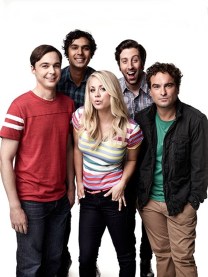
A “guys’ night” is happening and the activity of choice is Dungeons and Dragons, which is territory you’d have expected these characters to have explored in-depth quite a few seasons back. Heck, as far as I can recall they spent more time playing Settlers of Catan than throwing around a 12-sided dice.

The game begins and Leonard, the DM, lets it drop that their quest is to rescue Santa Claus. Queue Sheldon’s disappointed face due to the fact that he a) loves D&D and b) hates Christmas. Also Raj gets shot in the face with a cannon in the first few minutes of the game, highlighting the fragility of life in a world that values perception checks.

Oh, and they ditch their respective girlfriends to play, which led to this scene, the last line of which was delivered excellently:

This was originally a series of four gifs, but I didn't want to embed each one in this order, so I just took a screenshot instead. I think it still works.

Using the structure of the game Leonard gets Sheldon to sing [all five verses of] “Good King Wenceslas”  and all three remaining players to play “Jingle Bells” using, the obvious instrument of choice, bells.

Upon finding Jolly Old St. Nick in chains they move forward to rescue him, only to have Sheldon cast a paralyzing spell on his companions. He then confronts Santa [or Leonard, in this case] and tells the heartbreaking story of how he asked Father Christmas for only one thing as a child, to have his grandfather back. He then walks out, leaving the old many to die.

In Conclusion

As far as really exploring well-established characters, Community probably succeeds the most, by virtue that it only has the one central plot that revolves around a single game of D&D. While it does feature Pierce continuing on his course to become more cartoonishly evil, Britta’s response to the beleaguered gnomes is a perfect example of how her character will react both in and out of the real world.

The IT Crowd and The Big Bang Theory tread the very similar ground. Moss uses the game to force Roy to come to terms with the love he lost, something that would have been impossible otherwise. Sheldon’s childhood experience with Santa Claus never would have come about without Leonard guiding him to that place where he could talk to the man who disappointed him.

My hope is that there will be a continuation of this trend, with there having being one D&D episode per year from 2010-2012. As the current DM of an ongoing gothic horror campaign I am well-aware of the storytelling capabilities of the game as well as how enjoyable it is to know people you know well deal when presented with fantastical situations. Although 2/3 of the above shows do feature “nerds” I’m sure that this could still appear in the more bizarre sitcoms, such as New Girl and Happy Endings.
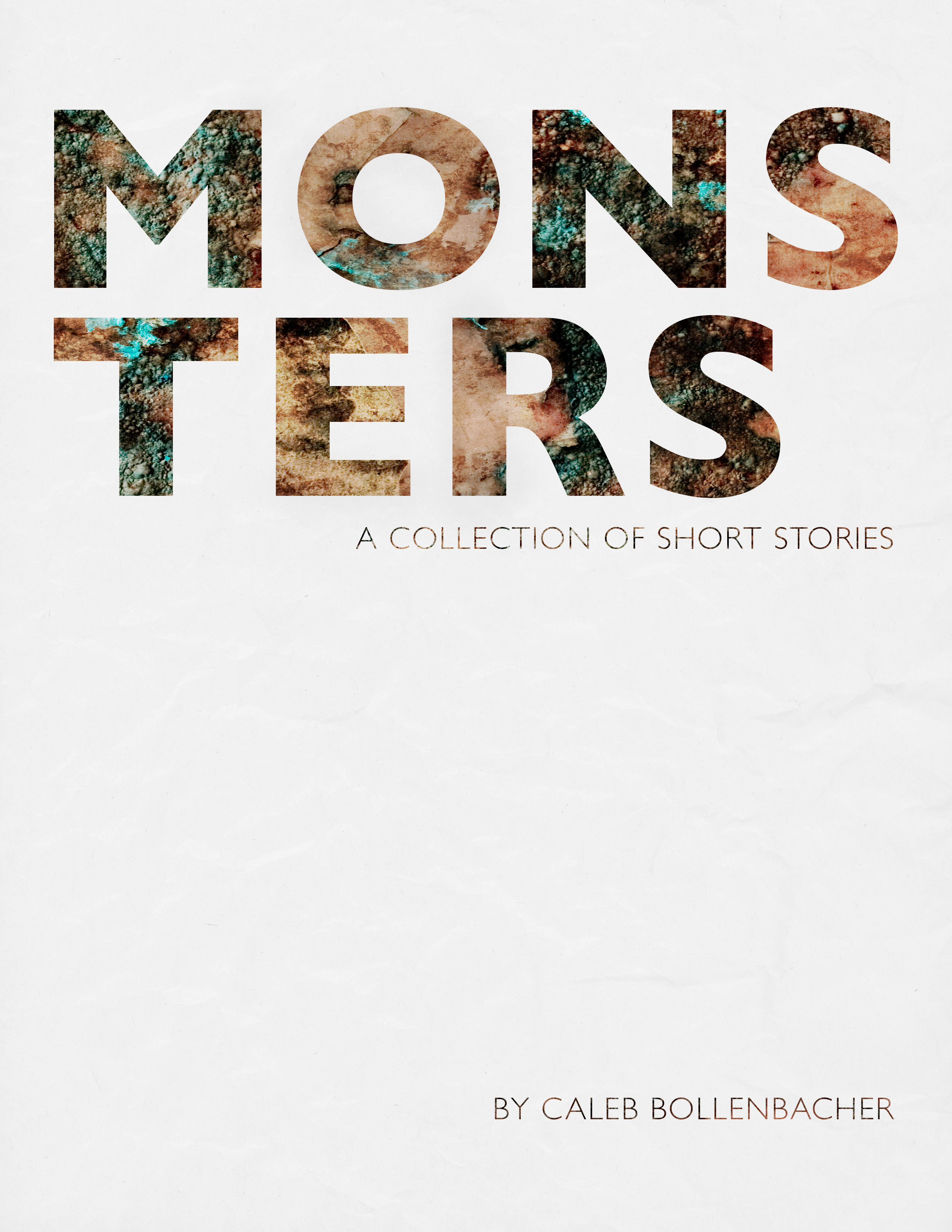
Monsters: A Book Review

I don’t normally review books in soft-copy. It’s difficult to read from a computer screen for that amount of time, and I find it easier to relate to a book’s solid permanence; if I can pick it up to hold and read, maybe you can [and should] too. That aside, I agreed to review something a friend had written, so here it is in all its candidness.

Monsters: a collection of short stories is exactly that, seven tales penned by  Caleb Bollenbacher, a 2011 graduate from Baylor University. Only available on Amazon for the Kindle, an excerpt of the book’s description is as follows:

Nobody yearns to be a monster. But sometimes it works out that way.
Sometimes you merely find yourself looking into the face of one.
Sometimes that face is your own. Continue reading

The Cloaca: A Book Review

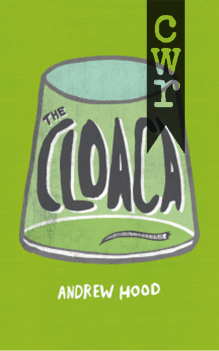
The sophomore collection of short stories from Halifax-based author Andrew Hood, The Cloaca is 138 pages of people who don’t know what they’re doing.

Described on the back cover as “your high school gym coach, drunk and dishing dirt on all the other teachers on the crosstown bus,” the stories in this book capture your attention like a man on a bicycle wiping out in the rain, or a bunch of Italians yelling at each other on the sidewalk [both of which I saw two days ago]. Continue reading

Underemployed, Pilot Episode: A TV Review

Right after finishing the very first episode and right before reading what the A.V. Club’s TV Club thought about it seemed like the perfect time to write my review of MTV’s Underemployed.

As a recent college graduate, the premise instantly caught my attention. Five young Chicagoans begin their first episode slightly buzzed on the eve of their graduation, dreaming about where they’re going to be in a year. Throwing lofty goals back and forth they’ve already begun planning their 1-year reunion where they’ll celebrate their “world domination.”

From left to right: Miles, Daphne, Sophia, Raviva, and Lou.

The characters are Lou and  Raviva, the couple who broke up so that both parties could go on to pursue their dreams [grad school and music, respectively], Miles, the would-be model, Daphne, the aspiring advertiser, and author-to-be Sophia, who I lovingly dubbed “VA” for “virginal Asian girl” [I thought the full acronym somewhat inappropriate].

Flashforward to the present and, to make things easier myself, the friends find themselves making up the following list:

  • Lou is street-canvassing [fundraising] for an environmental organization.
  • Raviva is working at a bar in which music is played.
  • Miles is a part-time male stripper.
  • Daphne is an unpaid intern at an advertising agency.
  • Sophia is working at a “Donut Girl” and is still a virgin.

Now, before I get any further, I’ll have you know that I am a sucker for ensemble shows. Friends is television gold as far as I’m concerned, and as a result I’m fairly into Community, and, even more recently [and into], Happy Endings. That being said, Wikipedia’s extremely scant article on the show categorizes it as a comedy-drama, or “dramedy.”  The problem is, the show is heavy on the drama, and very light on the humour.

Raviva shows up at Lou and Miles’ apartment pregnant. This, of course, creates the situation of Lou realizing he needs to take care of her. How this is dealt with is almost painful, and awkward in a way that just isn’t funny. His clumsy attempts at trying to find out whether or not he’s the father aren’t even cringe-worthy in a way that’s entertaining [see: The Office].

Elsewhere Daphne lets her super-hunky boss know that she has been an unpaid intern for one year, a premise that made me so livid I thought I was going to spit. He, in turn, asks he out to lunch, where they kiss, and then proceed to have sex in his car [after promising her that he’ll work things out].

On the smaller side of things, a cougary woman gives Miles her card while he works catering at an art gallery, which piques his interests since it reads “GQ.” They later have sex. Sophia meets an old classmate who is, of course, on the pathway to success, and his boss, who is a lawyer.

None of these things in and of themselves are terrible, the problem is pacing. Almost everything that’s introduced is almost instantly resolved, meaning that as viewers we don’t have much to look forward in the next episode, or the season to come in general.

For starters, Raviva wastes absolutely no time in giving birth to a beautiful baby girl. Miles finds a job with his dad [albeit after many, many interviews], and Daphne confronts her boss and demands to be paid [and coming out with a great deal of $750 a week and a parking space]. On the comedic side even the joke of Miles thinking he’s gotten a modelling gig is explained away in seconds. The man he thinks is Calvin Klein straight-up tells him that “You’re here to serve mojitos, and mini tacos, and eye candy.”

As far as events that completely blindside the viewer out of nowhere, Sophia is invited out on the phone. We’re led to believe it’s her former classmate, but it’s his boss, which is surprising. What’s even more surprising is that his boss makes a move on her. And then they are having lesbian sex and I no longer had any idea what was going on.

You can tell that somehow the people at MTV realized how the plot leaves us without much to look forward to [save for Daphne’s continuing tryst with hunky boss] by how the episode ends. With a voiceover and caption saying “this season, on Underemployed” followed by almost two full minutes of what’s to come.

In the end, I found myself interested in watching future episodes, but only because of what the teaser provided. While Sophia hints at her search for sexual identity by telling Daphne that “I might be [different]” it takes the teaser to slap us in the face with her saying “I don’t know what my sexuality is.” In other news, new parents Miles and Raviva will struggle, and cheat on each other [just tongue action, as far as I can tell]! All of these things serve to pull the viewer in, but none of these hooks can be found in the pilot.

I’ll probably be tuning in next week to watch at least the second episode, but it’s not very likely. While Underemployed scratches the surface of what it means to find purpose in life after dreams crash and burn, its pacing and distinct lack of laughs also means that it offers a look at life after college that moves both quickly and joylessly.

Stray Observations [something the TV Club does and that I’ve always wanted to do]:

  • None of these characters have average, run-of-the-mill names. To be fair, neither did most of the cast of Friends.
  • For kids who’ve just gone through four years of college, those are some pretty unrealistic goals. Touring as a musician? Writing [let along publishing] a novel?
  • It is oddly refreshing, however, to see an Asian character who majored in English and is big into writing.
  • While I have complained about a dearth of humour, there was a line, said by Raviva’s mother, that I thought was funny: “She is like a set of Russian dolls right now, and every one of them is a total b-tch.”
  • Finding out that Miles became a male stripper was also pretty funny.
  • The episode ends with the five friends having dinner in the biggest apartment I have ever seen. I’m talking bigger than the apartment in New Girl, and a little bigger even than Dave and Max’s in Happy Endings.

There is absolutely no way they could afford this apartment. No. Way.

  • Finally, the show made the decision of actually saying the title of the show in the following line by Sophia: “If life is just about working and earning money we’re all screwed. But if life is about living, none of my friends are underemployed.” I hope they’re proud of themselves for that.

Underemployed
Tuesdays, 10 p.m. EST
MTV

Ashes of Silver: A Book Review

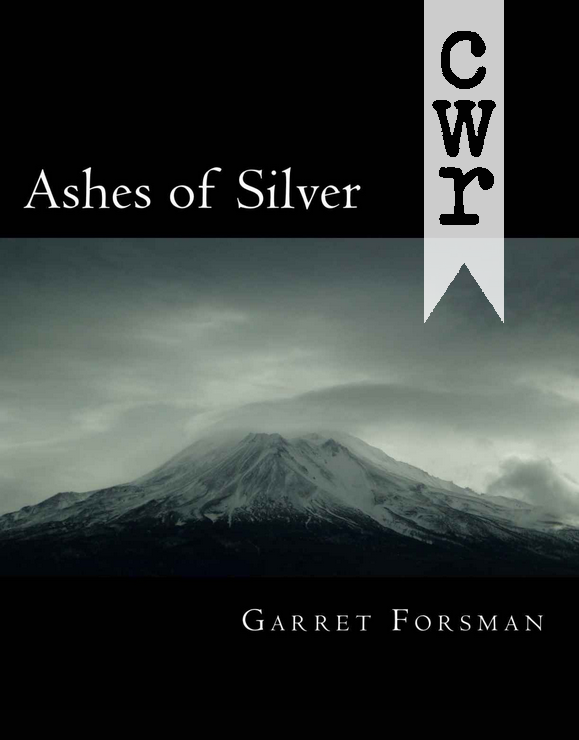
Written by recent college graduate (and former classmate) Garret Forsman, Ashes of Silver is an introduction to the world of Hearthstead and its many inhabitants. Certainly a fantasy novel by any stretch, this self-published novel unfortunately falls short on a number of levels.

An excerpt from the back cover reads:

 In the aftermath of a bitter war, the reclusive mage Xlynx takes the time to write down what he can of the history of Hearthstead. Before he can get far, though, he is called upon to enlist a scattered group of tortured souls at the behest of an enigmatic ally. Continue reading

The Virgin Diaries: A Book Review

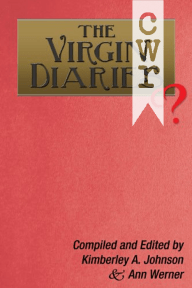
“What does it feel like to lose your virginity?” This is a question asked in red font, all-caps, at the top of the back cover. This is also a question that I can confidently say The Virgin Diaries answers. With the  stories of 72 men and women and their respective first-time sexual experiences, this is a book that provides several dozen responses.

Edited and compiled by mother/daughter writing team Kimberly A. Johnson and Ann Werner, The Virgin Diaries is made up of stories that span a number of decades. To gather this information anonymous questionnaires were sent out, with the expectation that they be answered in a story format. While the authors of these stories make themselves distinct from one another through their voices, the way in which questions were asked definitely has an impact on how narratives were told and, consequently, how they read. Continue reading