Last night, I watched Brideshead Revisited, and let me tell you, it is one festering pile of garbage.
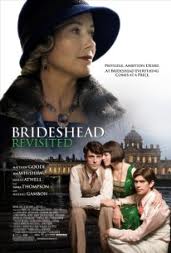
Seriously, **** this movie…
Now before anyone launches into a tirade- yes, I am aware that Brideshead was originally a novel and, from what a lot of critics have said, one that was infinitely better than the movie, the later of which reduced all of the author’s points on culture, religion, and relationships to a couple hours of pretty set design and not much else. Simple fact of the matter is Everyone Poops could have been adapted for the big screen and still have been better than this confusing mess.
Michael Bay was going to, but the book was too cerebral for him…
Look- I can’t speak to either the novel or the author. People who have read the book say it was better than the film, and while I have difficulty believing that, I’m willing to give them the benefit of the doubt. I’m not hear to address that- I’m here to address the fact that someone at some point did actually think that what they presented in the movie was somehow not only worth watching, but worth paying for.

It aint- in case you haven’t gotten that message yet…
I’m not a fan of British period-pieces; if I wanted to see eloquent people with miserable lives, I’d talk to English majors.

What we have in this movie is a group of extremely rich youngsters lounging about an elegant mansion, downing enough alcohol to make newyears in Vegas look like a Baptist ice-cream social, and whine and wail for over half an hour about how miserable their lives are. Not in any existentialist sense, mind you- these characters aren’t disillusioned with luxury, they’re just frustrated that they can’t have everything that they want when they want it the way they want it. This is essentially Walden without any redeeming qualities- just pasty, entitled brats with delusions of insight, giving trailing speeches about their long “suffering”.
And I’m not bringing this up just because one movie sucked- this seems to be part of a greater problem in our culture. I’ve seen the same kind of problem in the film I Love You, Man.
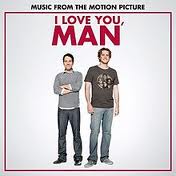
Back in college, my housemates loved this movie. Suggested it every movie night just to see me shiver with horror and disgust. In case you’re not familiar with the plot line, let me break it down for you:
Peter’s getting married. Peter simply doesn’t have any guy friends outside of his brother (played by Andy Samberg, who was the only good part of the movie), and he one night overhears his fiancee’s vile, harpy collection of friends gossiping that it’s weird Peter’s not going to have a best man at his wedding. Peter, who apparently bases his self-esteem on the idle chatter of obnoxious strangers is filled with self-doubt and embarks on a quest to get himself a male friend- because, you know, what will his future wife’s evil friends think of him if he doesn’t?
If you’re trying to jump through the screen, grab this guy, and slap him across the face while screaming quotes from Nietzsche- don’t worry, that was my first reaction too. How we’re supposed to sympathize with this self-pitying sadsack is beyond me- the guy makes Ted from Scrubs look like Teddy Roosevelt by comparison.

I’m not trying to say that every character in a movie- or even every main character- has to be someone admirable. Just look at American Psycho. I’m not saying that these characters have to be ultimately successful. Just look at Goodfellas or The Godfather trilogy. I’m not saying that the characters have fit a classic/stereotypical form of “manliness” (in the case of male characters, anyways)- just look at Zombieland, Superbad, Napoleon Dynamite, or Scott Pilgrim vs the World.

Between movies like Brideshead Revisited, I Love You, Man, and pretty much every romance movie that ever has or ever will be made, there’s this common attitude of entitlement, self-pity, and melodrama.

Ok, you could kill yourself or- OR– spend some time working at a homeless shelter, petition on behalf of political prisoners, overthrow corrupt dictatorships since you are, y’know, immortal…
Just say’n…
Now I know you must all be saying “But Gordon, you charming devil- what’s the big deal? So what if a section of film is dominated by this lousy message of egocentricity, ignorance, and impotence?”
Let me show what the big deal is.
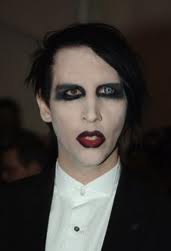 See this guy here? This is goth shock-rocker Marilyn Manson. If you’re not a fan, chances are you’ve still heard of him- in the days that followed the Columbine Shootings, Manson was argued by many conservative and religious critics as having been responsible for influencing the shooters. And obviously, that’s just a single example- whether it’s true or not, we’re all familiar with the outcry against violence in the media- be it anything from video games (see any GTA game) to music (Wu-Tang Clan aint nothin’ to fornicate with) to movies (just take your pick).
Let’s assume, just for a minute, that this is all true. I’m going to discuss the whole “does-violence-in-media-cause-more-violence?” question later in the week, but for now, let’s just say that the answer is “yes”. If these things have a serious negative effect on the views- especially young viewers- and deserve to be censored or even banned on that logic, surely the same can be said for the equally detrimental attitudes and actions (or lack thereof) found in movies like Brideshead Revisited and the like. What do these things teach us?

I was going to say “Stalking and manipulative relationships are romantic”, but I really didn’t have the stomach to slog through countless Twilight posters looking for Edward crouched in the window- enjoy this picture instead…
Again- the problem isn’t with romance as a concept or a plot device or anything like that. I’m not a sensitive guy in even the loosest use of the word, but despite my callousness, I really don’t have a problem with romance- it’s just that romance, as a genre, tends to produce these awful, reprehensibly selfish attitudes, and at the same time make the actual relationships pretty dumb as well. Though no one is ever going to admit it, couples like House and Cuddy or Scully and Mulder are both more believable, moving, and inspiring at their worst moments than any Romance film couple at their best.
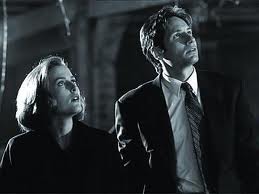
Obligatory “Still a Better Love Story Than Twilight”…
What else can I say? Romance movies, and indeed, all media that promotes this whiny, entitled message seems to be just as harmful- if not more- than the bloodiest action flick or the most violent rap or rock. I’d be just as worried about the effects of such media on young minds as I am about the most car-stealing-liest-prostitute-beating-iest video game ever made. Allow me to leave you with this brilliant tweet from comedian Dave Chapelle to drive my point home.


 Who invented Rock-and-Roll? Who should be credited as the inventor of the video game? Who’s responsible for the Zoidberg meme? Who is responsible for the way we celebrate Halloween?




 Culture War Reporters
People Are Upset About Aveline de Grandpré [What Else Is New?]
So this news came out while I was still at camp, so I’m definitely a little behind the times. Ubisoft revealed at E3 in early June that another game in the Assassin’s Creed series would be joining Assassin’s Creed III when it launched this October 30th. The following is a trailer for that game:
The AC franchise has always been ahead of its time in terms of racial representation. Altaïr ibn La’Ahad, a Syrian assassin, Ezio Auditore da Firenze, an Italian, and Ratohnhaké:ton [Conor Kenway], English/Mohawk are the stars of the first, second, and third games respectively. Each game has given slavish devotion to historical accuracy, but each has also starred a male protagonist. Until now.
Aveline de Grandpré is an African/French assassin, the only black female video game character I can think of besides Rochelle of Left 4 Dead 2, and from what I can tell a complete and total badass. This is a huge step on Ubisoft’s part, and I’m both impressed and proud that they’ve made this choice. Especially when the reception was so expected.
It may seem like this is only to be expected from the video game community, often [and accurately] thought to be both extremely racist and sexist. It was only earlier this year that fans of the book series The Hunger Games took to the internet to express their disgust that Rue, a character in the novel, was portrayed by a black actress in the film.
While the role of Panem-ian heartthrob Finick Odair has already been given to Sam Claflin, months earlier a campaign was started to give it to biracial actor Jesse Williams. This was, again, met with some pretty intense criticism. From racists. Unfortunately a lot of the negative/ignorant comments on this messageboard have been deleted, though Jezebel’s write-up on the situation can be read here. The campaign tumblr is still out there, though it now also discusses racial casting, which I definitely don’t have a problem with.
Suffice to say, the world still has a ways to go before we, in North America, anyway, can simply start accepting that not everyone out there is white, and therefore not everyone who appears in art, either electronic or literary, is either. These comments I posted may just be an example of the “loud minority,” but if female or nonwhite protagonists are really a big deal, maybe we should be loud as well.
I think Aveline de Grandpré is an amazing addition to an already stellar video game series. I think it is fantastic that she’s black and that she is a woman, and I think that you should too.
Rate this:
33 Comments
Posted in internet, literature, race, video games
Tagged Altaïr ibn La'Ahad, Assassin's Creed III, Assassin's Creed III: Liberation, Aveline de Grandpré, biracial, black, comments, Conor Kenway, Ezio Auditore da Firenze, female, Finick Odair, Jesse Williams, Jezebel, Left 4 Dead 2, literature, nonwhite, race, racism, racists, Ratohnhaké:ton, representation, Rochelle, Rue, Sam Claflin, sexism, sexist, The Hunger Games, Ubisoft, video games