Miss Travel is both Lame and Prostitution

I found the worst thing.

Gary Arndt, the blogger at Everything Everywhere, posted about a new site called Miss Travel.

[youtube.com=”http://www.youtube.com/watch?feature=player_embedded&v=JLSiy4nUvnc”%5D

So, as you see, attractive women are paid by rich (mostly married, it seems) men to be “companions” during travel.

I’m tired, so I’m going to let you all think about this and come to your own snarky conclusions.

The site was founded by Brandon Wade, who founded the similarly designed and also terrible whatsyourprice.com.

So obviously, I signed up for the site (which was free) so I could look more into it. The process itself was unsettling – I guess it’s just because I’ve never signed up for a dating site before. It was eerie when they asked my eye and hair color, but then when I saw the options for “relationship status,”

Adventures in creating a fake dating website profile

I remembered that this was a dating website. Very odd. Also, the displayed option of having an internet-sanctioned marital affair was a weird thing to see. I guess I just haven’t had many internet affairs.

So once I filled out – with not a small amount of shame – my fake account, I went and looked at some of the featured “Generous donors”. Jezebel was right – a large amount of married men, most of them (at least reportedly) millionaires (I didn’t even KNOW that there were that many millionaires in the world). Their profiles ranged from the obvious (photos in front of expensive cars – and one that was just a helicopter) to the sort of sad (a 34-year-old, “little bit on the shy side with women. but confident when working,” whose profile photo was just him in an empty white room taking a picture with his iPhone in a mirror) to the amusing (“Want to travel the world before 12/21/12 … all the girls I know have jobs and arent willing to quit there jobs”).

The relationship-seeking options on MissTravel.com

And yes, people are looking for sex. I mean, I’m not surprised – people are often looking for sex. But the sex-looking is just so official and thinly veiled. One Generous traveler, under his description of his desired “Attractive traveler”, wrote “I hope my companion is also sensual and affectionate.”.

There is also the option for Generous travelers to just gift frequent flier miles to Attractive travelers – the dubiousness of the “gift” nature of this is described tactfully: “So why would a Travel Sponsor give you miles? For many reasons. Some may want an online friend.” The lesson is: pictures of your boobs (which most of the profile pictures of Attractive travelers are anyways) will be rewarded.

One odd aside is that MissTravel.com linked the Jezebel article under their media coverage, which is called The Dating Website Where Rich People Take Pretty People on Fancy Vacations, Which Is 100% Definitely Not Prostitutey at All. I guess any publicity is good publicity and all that. But really – the article described the site as having “a F***TON of gross married dudes.”

Also, Gary Arndt was wrong about one thing: he said that “Most of the women in the system seem like very normal women.” If normal women pose in bikinis on their knees on their beds in front of cheap webcams and use profile pictures that cut off their heads so to better display their cleavage, then yes, most of the women on Miss Travel are very normal women.

So, for your weekend meditation, I ask you to consider the impressive ability of the internet to bring all of the bad ideas and unscrupulous people into one place.

Is Rich Michelson As Good As Anybody?

This past weekend I was privileged to attend the Festival of Faith & Writing at Calvin College. I went to a lot of the sessions and was practically drowned in ideas and information; there’s a lot to process, and I’m only just beginning to look over the notes I took. With that in mind, I’d like to discuss a talk I attended entitled “Extolling or Exploiting?”

10864659-large

Richard (Rich) Michelson is Northampton’s poet laureate. He’s also the author of over a dozen children’s books, many of which have won awards including Amazon.com’s 12 Best Children’s Books of the Decade. His presence was humble, friendly, and unassuming, broken only when he began talking about a topic very sensitive to him, the question and stipulations of who is allowed to write what.

To provide some background, Michelson is White and Jewish. Many of his books explore the lives of Jewish children. Quite a few of his books also feature African-American characters.

In 2008 his book As Good As Anybody: Martin Luther King and Abraham Joshua Heschel’s Amazing March Towards Freedom was published. It tracks the paths of both men, respected spiritual leaders, and the journey that drew them to march together in the 1965 civil rights march from Selma to Montgomery. The book features an introduction by  Martin Luther King’s wife, Coretta Scott King, and was the book to receive the aforementioned award from Amazon.com.

The Coretta Scott King Award is awarded for books about “the African American experience, that are written for a youth audience (high school or below).” In spite of appearing to fit the description of the award perfectly, Michelson’s book was not even considered. There were two reasons for this. The first was that Michelson was not African American. The illustrator, being Latino, was also ineligible.

As he recounted this series of events a slight tension arose in his voice. As Good As Anybody was and is, well, as good as any of these other books. It documents the life of a prominent African American individual and the great deeds he undertook in his life. The issue here lies in the ethnicity of the author.

So he asked us, does intent matter? The Education of Little Tree is a novel that recounts the fictional memoirs of a Cherokee boy. The author, Forrest Carter, was revealed to be Asa Carter, a former member of the Ku Klux Klan. Prior to that being revealed, however, many praised the work, Oprah Winfrey going so far as to promote it on her show in 1994.

Rich Michelson is a White Jewish man, and he wants to tell stories about African American history. By doing so, is he robbing African American authors of that niche market? Are editors maybe more comfortable dealing with him than they  might be with Black authors?

I don’t have the answers, and from what I can tell Michelson doesn’t claim to either. He believes that we can all write what we want, but it’s up to society to determine whether or not they deem your writing “appropriate.”

Tupac and the Digitally Embalmed

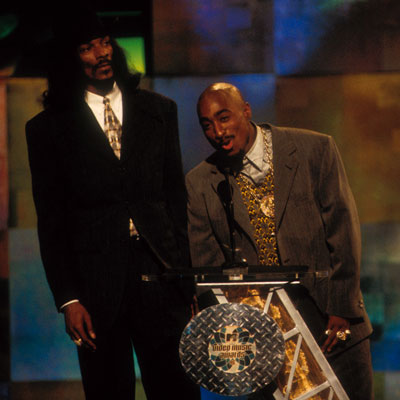
So if you haven’t heard [I hadn’t until yesterday], there was a hologram of Tupac that performed at Coachella.

ImageAnd yeah, yeah, we know it wasn’t actually a hologram now, that it was some mirror-projection-onto-glass-thing-that-the-Wall-Street-Journal-explains-better-than-I-could. And we know that there are rumors of a tour of this faux-Tupac, and people are alternately asking when Kurt Cobain will show up and decrying the monstrous zombie-raising performance.

The thing is, you could argue that the hologram/projection isn’t much different from showing videos and voice recordings of the dead. When that technology was new, I imagine people thought it pretty eerie that they could see their loved ones move and breathe and speak on a screen.

Interesting thing: They needed to project the image onto a mirror below the stage, which created a lot of light, which is why I think they made the animation look like it was lit from the bottom - it looked like the glow from the projection apparatus was part of the lighting system.

But the thing about the performance that makes it different from just a new way of looking at recordings of dead people is the new content. The animation of Tupac, at the beginning of his act, shouted “What’s the f*** up, Coachella?”. The choreography of his performance wasn’t just a recording – the people who animated him studied the way he moved, but they controlled his body and created something new. In a sense, Tupac was performing new material.

The Illusion of Interaction
And this is the real issue – not just the commemoration of the dead. We’ve been recalling the dead, through art and technology, as accurately as we can for as long as humans have been dying. But the faux-Tupac isn’t just a 21st century version of an Egyptian sarcophagus mask. What they wanted to create with the Tupac animation – which is why the fact that it was in front of a live audience was such a big deal – was the sense that Tupac was interacting with Snoop Dogg and the audience, just as a real live performer would.

This is about creating an illusion of interaction, and while a scripted interaction with an animation might be actually quite close to the way concerts can be formalized and scripted (like pro wrestling), it’s still just an illusion.

Snoop Dogg and Tupac, both about 25, in 1996

One of the weirder things though, for me,  was the age discrepancy between Snoop Dogg and Animated Tupac. Snoop Dogg is 40, and has grey hair. When Tupac died in 1996, Snoop Dogg was like 25. Tupac, who was shown as a young, shirtless 20-something, would be turning 41 this year if he were still alive, and might not look as good as his hologram did in white sweatpants.

Snoop Dogg, 40, and the Tupac Illusion, still 25

The juxtaposition of digitally-embalmed washboard-ab Tupac and 40-year-old greying Snoop Dogg was probably the most eerie element of the whole performance.

If this trend continues, I think the problem is the illusion of interaction. The essence of human existence is interaction – it’s why we still feel a little weird hearing about guys dating digital AIs, and why the most popular games are the ones that allow you to play on the internet with others. Interaction with humans, illogical and annoying as we are, can’t quite be simulated. And judging from Snoop Dogg’s awkward performance with faux-Tupac, our interactions with the digitally animated dead will always fall a little short of the real thing.

[Very] Brief Thoughts On Entertainment

A bitter, angry old man once said:

There’s been a growing dissatisfaction and distrust with the conventional publishing industry, in that you tend to have a lot of formerly reputable imprints now owned by big conglomerates. As a result, there’s a growing number of professional writers now going to small presses, self-publishing, or trying other kinds of [distribution] strategies. The same is true of music and cinema. It seems that every movie is a remake of something that was better when it was first released in a foreign language, as a 1960s TV show, or even as a comic book. Now you’ve got theme park rides as the source material of movies. The only things left are breakfast cereal mascots. In our lifetime, we will see Johnny Depp playing Captain Crunch.

That same man wrote The League of Extraordinary GentlemenV for Vendetta, and one of Time Magazine’s All-Time 100 Novels, Watchmen. Alan Moore certainly has the writing credentials, but is he accurate in his assessment of the future of entertainment?

The truth is, as you’re probably well-aware, that the publishing industry is an ever-changing thing. ComicsAlliance writer Chris Sims has called for the “big two” [Marvel and DC Comics] to get serious about webcomics. In other words, for the two publishers to release content for free to compete in an age where people just aren’t buying print anymore. It would work as a way to increase and maintain interest in their product, and would even help sales; people who like reading something online will typically buy it if they like it enough.

As for creativity, I wrote in a post earlier this month [Mashin’ It Up] about people who are seemingly just reaching into a bucket of tropes and smashing them together at high speeds. Cowboys and Aliens was a movie that came out last year, and it wasn’t even original; it was an adaptation of a [honestly, not very good] webcomic. Not only that, but by next year Gore Verbinski will have directed Lone Ranger, with Johnny Depp as Tonto. That could be considered one step closer to Captain Crunch, I suppose.

At the same time adaptations are being made of novels. They may not be original screenplays, but the original work is nothing like a TV show from the 80s, it’s not built on nostalgia. Audrey Niffenegger’s The Time Traveler’s Wife was adapted for the big screen, and although it didn’t do great with the critics it still stands as evidence that books will do well; and they’ll do well enough to warrant films. This could lead into the conversation about how some books receive film opportunities before they’re even published, but that’s for another time.

The “conventional publishing industry” will continue to change; it has and it will continue to. Alan Moore is a cynical miser of a man [subjective], but he has a point that shouldn’t be ignored. We’re not doing great in regards to creativity, and it’s an area we should expect more from. Cynicism may appear to be the logical place to turn to, but looking for media worthy of attention is the more worthy activity.

Evangelical Christianity and Destructive Views of Heaven

ImageAbout two years ago I started attending an Anglican church regularly. It was the first time I had ever attended multiple liturgical services — one of the most surprising things to me, after I got over the water the priest was flicking at us, was that Communion happened every Sunday (in any other church I had been to it was only once a month). What was more was the reverence with which Communion was taken. My previous churches weren’t irreverent, but Communion wasn’t really a big deal at all. This was one of the first discrepancies I noticed between the liturgical service and my own non-denominational upbringing.

My confusion at the Anglican church was due to the fact that I had always learned throughout my childhood that Communion didn’t really count — it was just a nice thing to do together to commemorate something. I strongly internalized the idea that there was nothing particularly important about the act of communion.

This seems like a small idea but it suggests something very significant about the more general physical world — that it doesn’t matter either. More, it’s evil — bodies are the source of temptations and failings, and about as far from divinity as one can get.

This might sound borderline gnostic and/or heretical to some of you, but I think that at least some students might have also been surrounded by similar theologies at some point in their lives. The tone of the churches I attended — mostly Baptist, Bible, and non-denominational — and the Christian influences (radio networks, authors, etc.) inculcated in me the sense that we weren’t so much as “in the world but not of it” but that we were “sort of in the world but definitely not of it nor part of it in any way.”

ImageBodies were inconveniences, to be ignored or, ultimately, despised. I absorbed suggestions that at the rapture our purified souls would leave behind dead corpses. Theological issues and Biblical references like the Kingdom of God on Earth and the resurrection of the body — things having to do with the physical world — were ignored.

Even the Bible’s physical existence was ignored. The first I ever heard of arguments about the canon, Athanasius’ 367 letter, and all those people mad about James and Hebrews was at college. Before then, I think I just assumed that a copy of the KJV fell out of the sky a few hours after the Ascension. How could the Bible be put together by mere non-disciple humans, over a long period of time? I kept the book nicely separate and away from actual human history. This also suited my willful ignorance of the traditions of the Eucharist and other things that I filed under “weird things that Catholics do.”

So I was marinated in this idea that the present world is an unholy place, and therefore not worth participating in, via a solemn practice of communion or crossing one’s self or kneeling during services or repeating a liturgy or anything else.

In my religious surroundings, the logical conclusion to the world’s ungodliness was a huge focus on the afterlife and Heaven. Perhaps I’m being unjust to a necessarily simplified message aimed at young children, but when I was young, church seemed to be mostly about accepting Jesus to get to Heaven.

The prevailing Christian teachings in my life rarely addressed issues of the tensions of existence, and this lack of struggle or mystery was convenient for my young mind. Morality teachings warned against a displeased God, not dysfunctional relationships. Evangelism was never nuanced and existence was never complicated.

Everything seemed to point away from the present and toward the future — toward Heaven, which I was assured I would get to if I said the right prayer. I repeated the inviting-Jesus-into-my-heart prayer once every few months when I was very young, because I was nervous that the first time didn’t take (never had Jesus been so thoroughly invited, I was pretty sure).

The problem that I found was that all of this — the whole prevailing culture — pointed me toward a profound disconnect from the world.

If the only thing that matters is my ticket to Heaven, I began to ask myself, then what am I here for? If nothing of the present right now is holy in any way, I might as well try to expedite my exit, right? Or at least ignore everything until I get to leave?

These considerations troubled me, and still do. I am not at all 100% gung-ho about either tran- or consubstantiation, nor do I cross myself consistently or demand that I only attend high liturgical masses involving incense burning and silk vestments. I really, as far as theology goes, have very little idea of what is going on.

But I do think that we, as evangelicals and Protestants, need to focus less on prepaid train tickets to Heaven and concern ourselves with trying to find a way to live a holy, engaging existence.

I don’t want to argue against points of widely accepted Christian theology, or thoughtful readings of the Bible. I’m arguing against the notion that the only reason to live is for what we believe we get after death — this is, I think, imbued in the current culture; in the unthinking things we say about other doctrines and the assumptions we make about our own. And I think that it is ultimately destructive.

The ticket-to-Heaven idea is by no means ascribable to all of Christian theology, but it is prevalent, especially in Christian culture during the past century. Devaluing physical existence is, I think, an illogical and ultimately damaging thing, and before we talk about how silly Catholics are to believe in transubstantiation we might do well to consider the implications of our own philosophy.

The Avengers and New Footage Fatigue

Mild spoilers, if you’re not constantly watching for comic book movie news [like I do].
                                                                                                                                                                      

Don’t get me wrong, I’m still going to see The Avengers this summer. The thing is, I may as well be watching it for the second time.

Joss Whedon’s biggest directorial experience to date will hit in a little under three weeks with a running time of 155 minutes. After all of the trailers, previews, and TV spots I’ve seen I think that only leaves me about half an hour of footage to experience in the theatre for the first time.

Seriously, though, today I found out that Maria Hill and Nick Fury will have an argument of some sort. I don’t know exactly what it’s going to be about, but I know that it will happen because of an interview Cobie Smulders [playing Hill] did with David Letterman. I also know that Captain America will tell the Gamma-Powered Goliath to smash something. At some point in the film I know that Black Widow will soundly thrash a general and his cronies, because a 43-second clip was released by Marvel.

I don’t mind that Marvel has been advertising this film with everything from Dr. Pepper to Wyndham Hotels. Pixar’s Cars made something like $462 million in the box office, which isn’t bad. What’s even better, though, is the $5 billion they made in merchandise. Movie tie-ins that include toys and such are not at all what worry me. What worries me is knowing too much about the movie before I see it on the big screen.

StarCraft II: Wings of Liberty was what the summer of 2010 held for me, and while waiting for in the ’09-10 academic year I spent a great deal of my free time trying to find out more about the game. In the process I became privy to information on seven or eight missions. That’s about a third of the game. Not only that, but I also perused a site that had posted unit models, robbing myself of experiencing them in the game first-hand.

We live in a world where information is at our fingertips, and leaks and spoilers of any kind can be found within seconds. At this point in time I have no idea what the image on the right is of, only that they are part of Loki’s army and the primary antagonists in The Avengers. I don’t want to know what they are until I see the movie, and it’s getting harder and harder to when I daily visit sites such as ComicBookMovie.com, ComicsAlliance, and io9 [the latter even has a daily feature called Early Morning Spoilers].

From this point on I refuse to watch another TV spot for The Avengers. There’s only so many seconds of new footage they can cram in there before I’ve seen more of the movie than I wanted to. I’m going to see if I can hold out until May 4, and I hope that when I finally see it in theatres I’ll be able to enjoy every second of those 155 minutes like I’m watching them for the first time.