Tag Archives: British Columbia

Quebec Pt. IV: 3 Indespensible (and Free) Tools for Translation

I cannot take personal responsibility for finding a single one of the amazing resources I’m going to include below. Instead, I have to give all the credit to the friends I’ve made here in Trois-Pistoles. If any of you happen to read this, thanks for being so rad.

Word Reference

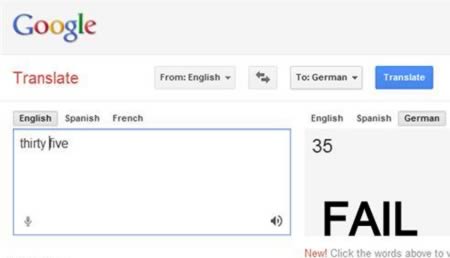
Alright, I have to admit I still use Google Translate now and then, but there is a good reason teachers always tell you to stay away from it. It’s doing translation, and that is all. Unfortunately, literal translation can go very wrong. Like the time I planned a trip to France and told my hosts I could be “catching a coach” from the UK. Turns out instead of using the word for the vehicle, I used the French word for a sports-team coach. Awkward.
googletranslatefail

Also, Google Translate can be a little lazy sometimes.

So, when you find yourself searching for the right word, turn to WordReference instead. It’s not going to pretend to do all the work for you, like Google Translate, but it also isn’t going to pepper your translation with hilarious nonsensical phrases.

WodReference has “two of its own dictionaries plus those of Collins” and the French dictionary alone has “over 250,000 translations”. You can also find a verb conjugator and a forum for each language. Generally speaking you can find every possible definition of a given word, along with any idioms associated with it. If you do have trouble finding a word or phrase, however, you can often find an answer in the language forum. Continue reading

Quebec Pt. III: 4 Things You Inadvertently Learn in French Immersion

1) There are muscles in your mouth you’ve never used before

I’ve never thought much about language, at least not beyond trying to figure out what to say next. Even then I don’t really think things through. If you never had much of an interest in linguistics (like myself) it can come as a surprise when you start to learn about the basics of how spoken language works.

Here at Trois Pistole one of the French Teachers is a linguist and, incidentally, an anglophone. This gives him a lot of insight. As an English Speaker he has first-hand experience with the kind of mistakes we are likely to make while learning French. Then, as a linguist, he has a good idea of why exactly we make those mistakes. Luckily for us, he also hosts a phonetics clinic once a week to teach us the little details of pronunciation. Last week he focused on how French vowels work. The image I’ve included below is meant to represent where French vowel sounds come from in our mouths.

The French “i”, which sounds like an English “e”, is formed at the front of the mouth when the jaw closed (antérieure, fermée). In contract, the French “ɑ” comes from the back of the mouth and requires a wide open jaw (postérieure, ouverte).

Continue reading

BC Girl in a Québécois World Pt. II: What to Expect in Quebec

As you may remember from last week, I’m currently attending a full immersion language school in Quebec. A little over a week ago I gathered in a sweltering auditorium with approximately 250 other students while a professor spoke to us in English, for the last time.

“The people of this village have a name for you anglophones;” he explained, “they call you the ones with the blank stares.”

I’ve been here for about two weeks now, and more often than not that’s how it goes. I limp out something French. The Francophone responds so fast that to my untrained ears a sentence sounds instead like one very long word. It feels a little bit like being two years old again, only with memories of a time when you were actually a competent human being.

Just imagine that first image is someone trying to explain something in French.

Growing up in British Columbia I heard complaints against French language laws, which work to protect French culture. English speakers argued that it was an unfair double standard, and that the French were just being snobby. That has not been my experience here in Quebec.  Continue reading

Shame Day: The BC Government vs. BC Teachers

In full disclosure, for the last few weeks my husband John and I have been working as uncertified Teachers on Call and/or Teacher’s Aides on Call. In my couple weeks attempting to fill the shoes of regular teachers and TAs, I’ve realized that this is an incredibly difficult job. Even though I’ve really loved my experience so far, it’s hard not to notice the ways that teachers are strapped when it comes to providing a good educational experience for the kids.

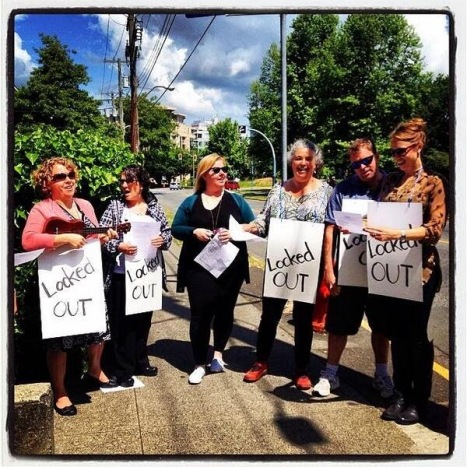
It’s become particularly frustrating over the last few weeks as the BC Teacher’s Union and the Government of British Columbia have gone head-to-head in a battle over several key issues. This has resulted in strikes by the Teacher’s Union and a lock-out by the province (preventing teachers from assisting at lunch, recess, and at extra curricular activities after school). Most teachers I’ve encountered feel frustrated at having to strike, but they are even more frustrated at being locked-out from helping their students.

Locked out at lunch.

Continue reading

Fame Day: Guerrilla Gardeners

I do love a good story of an individual sticking it to “the system”, i.e. the reign of capitalism. But having grown up in British Columbia’s Shuswap region, land of rich earthy gardens and succulent fruit (getting hungry?), I was shocked to discover that in some areas that act of rebellion can be as simple as growing a garden. It’s illegal.

But, but, but WHY???

Continue reading

A Culture War Report: New Prosperity Mine

For the month of July I was living with my in-laws in Williams Lake. So on Monday, July 22nd, I was able to be present at the “first day of public hearings into Taseko’s proposed $1-billion open pit gold and copper mine near Williams Lake, B.C.”

I was working until about one o’clock that day but my mother-in-law, who is a teacher here in Williams Lake, first went downtown around lunchtime at which point two very separate information centers were happening.

Join us and have hot dogs galore!

At one camp, the Taseko mine representatives were serving burnt hot dogs to visitors. There wasn’t much of a crowd, but the vice president of the mine was offering her students jobs if the mine was allowed to come in.

Meanwhile, at the park nearby the Tsilhqot’in nation had prepared a lunchtime feast. There was music and dancing. Most of her friends were at the park. In fact, most of the crowd seemed to be at the park.

Continue reading