Even if you haven’t recognized it for what it is, chances are, you’ve seen elements of it. The resurgence of beards, comments on period piece clips like “Why don’t we wear hats anymore?” or “Dang- they knew how to dress back then.” Or perhaps you’ve stumbled across The Art of Manliness or are (like me) a faithful apostle of Ron Swanson.

Now whether you’re aware of it or not, there is a growing culture based around this general perspective of “manliness” that supposedly existed from 5,000 BC to 1974 AD. The resurgence in the popularity of the beard, the wave of internet memes centered around being “classy,” our love affair with period pieces- all of this compounded has created the beginnings of a whole new subculture.
Don’t believe me? Just take a look at some of our favorite TV characters.
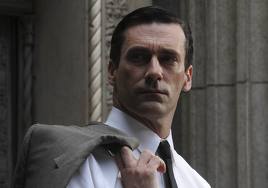
Don “F***-You, Liver!” Draper

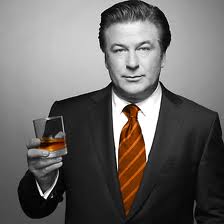
Jack “Even Ayn Rand Thinks I’m Egotistical” Donaghy
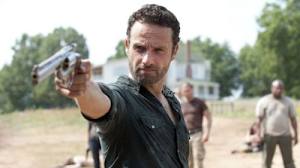
Rick “Bad Decisions” Grimes

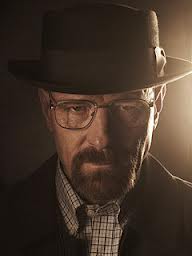
Walter “Tied with Draper for Making People Love Fedoras” White
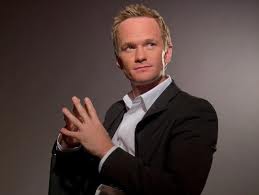
Barney “Legen- wait for it… -DARY!” Stinson
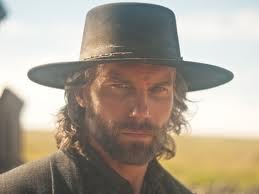
Cullen “I Will Punch You For No Particular Reason” Bohannon
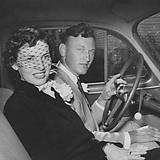
Comedy, Drama, Action/Horror, Westerns- this is a pretty broad range, and we’ve got the same strong, dour antihero type in all of them. Men who remind us of our fathers and grandfathers. Tough as nails bastards who came to this country with only a dollar in their pockets- who took a break from their honest 8 to 8 jobs of hitting metal with other pieces of metal to kill Nazis and look dapper doing it.
So what’s this culture all about? As with any group, we can talk about the superfluous or cosmetic elements- in the case of the “manly” group, handshake etiquette, strait-razor whetting, and driving stick- but to really understand ’em, we’re going to need to look at the underlying values in play here.

Independence:
What do all the men shown above have in common? A degree of independence. They’re DIY guys. Men who aren’t reliant on the help or charity of others- in short, dudes who can take care of themselves in most any situation, from car repair to providing for the family to killing the undead. And on that note…
Initiative:
These are all men who don’t allow themselves to be victims. They’re proactive moment-seizing leaders who don’t wait idly by for someone to step up. Good or bad, they’re leading the way- and speaking of bad…
Stoic:
These are guys who tend to lend credence to the stereotype of the unspeaking, unfeeling male. At best, the strong, silent type- at worse, the uncommunicative lout. One way or another, they don’t let the situation get the better of them. That’d be undignified, and if there’s one thing that they’re about, it’s…
Dignity/Pride:
It’s in the way they dress, the way they speak, the way they expected to be treated. A kind of code that prohibits some things and makes others compulsory. You can’t hold your head high, then what’s the point in having one?
Moral Ambiguity:
These men are all, to varying degrees, antiheroes. Guys with their own agendas and a certain degree of moral ambiguity that keeps you on your toes. There’s a level of egotism, self-centeredness, and disregard for others that makes them pretty good at what they do, but what they do not all that good- certainly they don’t fit the traditional mold of the selfless, self-sacrificial hero.
Wealth:
And while it’s not true for all of them, money tends to be a major element of their stories. A drive to be successful, prosperous, and (again) independent. It’s the age-old dream of being your own boss.
So what does all of this boil down to?
Power.
It’s about power. These guys represent everything we, as a generation, aren’t. Independent, wealthy, self-assured, proud. Does that sound like us? Not at all. We’re the casual dressed, globally conscious masses struggling to make it by, and taking whatever miserable, degrading soulless job we can find. We’re not strong like these glamorized images of our grandparents are (having conveniently erased the racism, bigotry, and misogyny).
But we want to be.
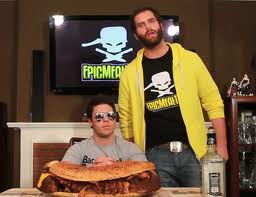
And so begins the perpetual motion machine of life-imitating-art and art-imitating-life. Epic Meal Time, Memes, Period Pieces- the list goes on.
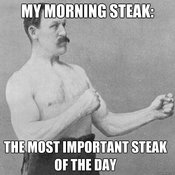
So is this a good thing or a bad thing?
Well, there are good and bad elements to every culture (some more bad than good, and vice versa), but let’s list out the positives and negatives.
Positive:
- We can stand to toughen up
a bit a lot as a generation. We don’t need to be bending horseshoes with our teeth, but some basic survival skills and a thicker skin when it comes to discomfort and hardship would be nice (battery running out on your phone doesn’t count as suffering).
- In these tough economic times, be able to do basic repairs to your house and car aren’t just good- they’re necessary. Same goes for any of the thrifty elements of the culture.
- Even if we don’t have it quite yet, demanding a certain level of dignity in our work and our day to day lives isn’t just good for you as an individual- it improves society on the whole.
- While we probably shouldn’t worship the fedora or declare the suit to be the only appropriate clothing for a man over the age of twelve, it certainly doesn’t hurt to know how to dress ourselves, or conduct ourselves well in any given situation.
Negatives:
- The glorification of the past can, as I jokingly mentioned above, lead to the uglier elements of it being glossed over. We hail our grandfathers as being great men, forgetting how easy it is to make a name for yourself when none of the good or prestigious jobs can be given to equally qualified women or non-white men.
- The culture really doesn’t leave a whole lot of room for women at all, other than the kitchen. This is not to say that all adherents of the culture see it this way, but when you’re trying to espouse 1950s society, that includes 50s traditional gender roles as well.
- It can’t be denied that there’s a strong conservative appeal in this culture, as well as hints of Ayn Rand’s Objectivism. Glorifying wealth and success, especially when coupled with a “do whatever you need to do” mentality, can lead to the twisted perspective that poor people are poor because they are lazy.
- This culture, despite the intentions of its adherents, does give a home for sexism. The uglier elements of the masculinity movement, those who view women as belonging in the home and nowhere else will doubtlessly find it a lot easier to fly under the radar in a culture that’s utterly dominated by males.
So what’s the final verdict?
“Manly” culture doesn’t appear to be either helpful or harmful- at least, not yet. The underlying issue being power, it’s going to be faced with the task of walking the thin line between empowerment and megalomania. So long as self-control is kept in mind, they oughta be fine.
Be sure to look for next week’s installment: “Science” Culture.

 Who invented Rock-and-Roll? Who should be credited as the inventor of the video game? Who’s responsible for the Zoidberg meme? Who is responsible for the way we celebrate Halloween?




 Culture War Reporters
This S.H.I.E.L.D. Needs a Little Colour
It marks Joss Whedon’s return to television, as he will be both directing and producing the pilot. Acting as directors and producers, however, are his brother Jed Whedon and his sister-in-law Maurissa Tancharoen. The three formerly worked together on the online cult classic Dr. Horrible’s Sing-Along Blog, which actually leads me to the point of this post.
The DVD and Blu-Ray versions of Dr. Horrible a commentary track titled Commentary! The Musical, which consists of entirely new songs performed by the cast and crew. Track 10 was written and performed by Tancharoen, and I’ve embedded it here:
While obviously very tongue-in-cheek, as an Asian-American in the entertainment industry she’s more than a little aware of the imbalance in roles for racial minorities. Having her and Jed Whedon take off as showrunners if the pilot is a hit, this is a huge opportunity for a show other than Hawaii Five-0 to feature a good number of Asians in their main cast.
The perfect opportunity for this takes the form of S.H.I.E.L.D. agent James “Jimmy” Woo. Originally starting out with the FBI, he created and led the first ever super-hero team to exist with a government mandate. Although he later left to join the Agents of Atlas, Woo was a high-ranking member of S.H.I.E.L.D. and definitely a possible addition to the upcoming series.
In general, it’s exciting to have the comics come to the small screen as a live-action show. Cartoons like The Avengers: Earth’s Mightiest Heroes and the classic Batman: The Animated Series have proven very popular, but were directed at a younger audience. In recent years The Walking Dead is the only program based on comics that has received any amount of positive attention.
Disney/Marvel have a chance, as they often do, to bring diversity through a form of media, this time television. With Jed Whedon and Maurissa Tancharoen at the helm, here’s hoping that we might even see our first ABC series headlining an Asian actor that is also a spinoff of a major motion picture based on a comic book.
Rate this:
5 Comments
Posted in comics, internet, media, race, television
Tagged Agents of Atlas, Asians, Batman: The Animated Series, casting, Commentary! The Musical, Disney, Dr. Horrible's Sing-Along Blog, Hawaii Five-0, Jed Whedon, Jimmy Woo, Joss Whedon, live-action, Marvel, Maurissa Tancharoen, No One's Asian In The Movies, race, roles, S.H.I.E.L.D., television, The Avengers, The Avengers: Earth's Mightiest Heroes, The Walking Dead, Whedon