Category Archives: Canada

Evan and Gordon Talk: The Greatest Flaw of This Generation [Continued]

EVAN: Last week Gordon and I discussed the greatest flaw of this generation, and discussed apathy, laziness, entitlement, and creative bankruptcy. Deciding that we had much more to work with, Gordon left us with this question last week, which heads this continuation of the topic:

““Do we want to be good, or do we just want to look good?”

GORDON: I’m not entirely sure I can come up with any swift dismissal of this possibility, I mean- look at the world we live in. Do we believe in being environmentally and socially conscious? Absolutely. But to what extent? I mean, we’ll chuck our soda cans in the recycling, but are we gonna picket Monsanto?

Are we really just observing these “little” things because they’re expected of us? Do we actually care one way or another?

EVAN: As far as recycling goes, we do that in Canada because it’s the law. Looking good only has so much to do with it.

If we want to go with the example of, say, giving a few dollars towards an environmental organization [or maybe because the fundraiser was cute], that works a little more maybe. It at least contrasts with picketing/protesting. I think we care, but maybe not enough? That’s if we’re quantifying “care” now by the actions that it results in.

GORDON: Is it, perhaps, that we’re cynical? Do we as a generation ultimately despair of the effectiveness of any method of change? Is the reason we’re unable to really go the distance when it comes to our causes because we think it’s all just in vain?

EVAN: Do we think it’s all futile? I mean, we’re certainly led to believe that to some extent. To focus on environmentalism, the extent of the destruction to this earth is growing ever closer to irreversible, and we’re made aware of this.

As far as documentaries and the like go, however, we are told over and over that what we do does indeed matter. Being conscious about how we spend our money and that sort of thing.

GORDON: That’s what we’re told, but then again, the creators of such documentaries are overwhelmingly members of older generations.

Look at the Occupy Movement, for example.

People were there from all demographics, but more than anyone else it was the youth- our generation. Despite massive popularity, that venture ultimately met its death under the boot heels of riot cops and a fog of pepper spray.

It’s been about a year since it all started, and the situation is the same, yet there’s really no push for any resurrection of the movement or even for any major protest at all. Have we given up? We’re all the same people- we have all the same drives and values- have we simply despaired of peaceful protest?

EVAN: It’s funny you should say that, since just yesterday former protesters gathered in a park in Toronto to call attention to the movement that happened a year ago.

That aside, maybe you can explain what exactly happened as the movement petered out. It’s somewhat well-known that the weather was a large contributor to those occupying various streets and cities, but what else led to its collapse. Was it simply fatigue?

GORDON: I’d blame massive crackdowns on the part of the mayors of the occupied cities- let’s not forget that mayor Jean Quan pretty much turned Oakland into a warzone. Injured a protesting war vet so badly most folks thought he was going to become the first casualty of the movement (he pulled through, fortunately).

EVAN: This sort of all falls back to a point I made in relation to apathy our first attempt at this topic. That people care, but simply don’t feel like stepping outside their comfort zones. I realize that this may seem like a ludicrous thing to say in the face of the Occupy Movement, but I feel that the vast majority of youth, our generation, don’t want to do what it takes.

They, we, value comfort too much.

GORDON: I’m gonna have to second that theory.

I remember back when I was in college, going door-to-door trying to get students to boycott various unethical companies [Coca-Cola, Nike] doing business on campus. I was amazed at how many people would nod their heads and smile and agree with each and every word out of my mouth until I called on ’em to stop buying those companies’ products.

Guts. We got none. Difficulty with the concept of actual sacrifice, you know?

EVAN: And the refreshing taste of Coca-Cola is the very basest of comforts. If we can’t part with a caffeinated beverage we’re into, then what can we do?

I’ve joined in your personal boycott of the company, and although it can be a little difficult, it’s certainly nothing compared to being beaten by batons as I march on Parliament.

GORDON: Is that it then? Are our values just skewed ever so slightly in favor of immediate gratification? Do we prefer keeping our skulls in once piece over bread and freedom?

EVAN: History would say: yes. At least until things reach a certain point. Until we realize that being comfortable doesn’t outweigh what we put up with to get that comfort.

GORDON:  So what’s the word for this?

EVAN: To put it simply would be “laziness,” and we both know it’s more than that.

GORDON: “Over-Attachment,” perhaps?

EVAN: “Comfort-Loving”?

GORDON: “Hesitation”? “Looking back towards Sodom”?

EVAN: Looking back towards Sodom assumes that they’re actually doing something.

GORDON: It’s a fear- a very specific kind of fear. The kind where you “choke” just before doing something major.

EVAN: I’m going to say there’s probably something in French or German for that, but since we’re writing this in English we’re pretty limited in our options.

GORDON: Can we make one up?

EVAN: Heh. I don’t see why not.

How about . . . “Statusquophilia.”

GORDON: “Fluxophobia”?

EVAN: Haha, I like how we went different directions with our Greek roots.

GORDON: As do I. Shall we have the readers vote?

EVAN: Sounds good to me, and we should be wrapping things up anyway. Want to summarize how we got here?

GORDON: Ultimately, o readers, it all comes down to this. The great and terrible flaw of our generation- from what we’ve discussed- is not a sin of commission. We are not entitled, we are not lazy, we are not without our values. Our fault is in what we lack the guts to be good, the balls to be bad. In short, the unwillingness to part with what we have for the chance to attain something more. We’re trapped in a dance with the devil we know.

EVAN: Vote for the terminology you like more. “Statusquophilia,” meaning a love for things as they are, or “Fluxophobia,” meaning, in this case, a fear of sacrifice.

GORDON: For next week’s topic, we’ve got: Zombies- Are We Beating a Dead Horse At This Point?

EVAN: Or what is going on with all the wars on television? I’m referring to programs like “Storage Wars” and the like. Real wars are happening, I realize this.

GORDON: And with that, people of the interwebs, we are out of time- make sure to vote for your preferred word as well as the topic for next week, and be sure to check out our new “Fame/Shame Day” feature!

British Television VS American Television

Despite our focus on American issues, we here at Culture War Reportersrecognize that in our world of ever-shrinking borders, there’s plenty more out there than just the cloudless skies of Nevada or the homeless-packed streets of Toronto (Evan, seriously- if the healthcare system’s so good, why does Canada have so many crazy people?).

Today we turn our attention to our pasty cousins across the pond, more specifically, their TV,  excuse me, “Telly” (this is why you lost your empire- well, this and genocide), and how it stacks up next to ours.

CGI and Production Values

Now I have to admit- I haven’t extensively researched British and American television financing, nor have I had a chance to compare the two, taking into consideration differences in the economy and advertising fees over the past couple decades.

What I’m saying is- I’m not an expert.

That said, I don’t need to be an architect to tell you that chances are pretty good that a lot less money was put into making a tent than a condo. British TV shows, put bluntly, just seems to be vastly less funded than their American counterparts. Just take a look at this scene from America’s Battlestar Galactica.

Pretty intense, right? If there’s any poor-quality, it’s probably from the YouTube video, rather than the actual series.

Now look at this clip from Britain’s Doctor Who.

Way worse. And oddly enough, Doctor Who has a bigger fanbase than Galactica, and despite it’s ever-increasing popularity, still has to deal with props dug out of someone’s kitchen drawers. I’m not saying Doctor Who is bad- it’s not. It’s really good- only it’s tough to really feel the full effects of a horrific reveal when the monstrous alien that’s been lurking the shadows until now makes your sock-puppets look scary by comparison. I can’t claim to know the reason for it, and I’m not putting the Brits down for it- I’m simply saying that funding- especially in CGI- appears to be a significant difference between the worlds of British and American TV.

Pretty Faces

You’ve probably heard jokes cracked about this. Not the “British are ugly” or the “British have bad teeth” jokes- the fact that the people on British television have the audacity to look like the people you’d see on the street.

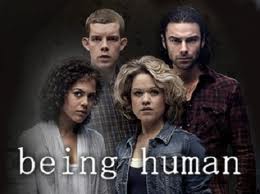
That’s not to say the Brits don’t share the American weakness for fantasizing and glamorizing each and every facet of life, but it’s pretty clear that it’s nowhere near on the scale we have here in the US. Here- take a look at the leading characters of the American version of Being Human.

The guy on the left is decently attractive, as is the girl, and the guy on the right looks more or less like a life-sized Ken doll. Idealized people- no question about it. Now look at the same characters in the British original:

There’s not a huge difference between the girl (the blonde girl is another character- ignore her), and the dark haired guy certainly isn’t his American counterpart and stop looking at that guy’s ears! Yes, they’re huge- they’re gargantuan– and no, this isn’t just an unflattering photo- they actually are trying to escape his head in the first three seasons.

The point is, when it comes to their actors, the British are- well, appear to be- considerably less shallow. They don’t need a couple of supermodels to tell a compelling story of murder, secrecy, and perversion- and speaking of which…

Raunch Codes

Watch this clip- but before you do, get all children and Weslyans out of the room.

Pretty nasty stuff, right? Don’t say we didn’t warn you!

People complain that American media is nothing but sex and violence, but believe me- those Axe commercials are prudish compared to the Brits (and indeed- most of Europe). We may give the Brits a run for their money when it comes to blood and gore but never will we compete with them when it comes to explicitness of this degree. It’s almost to the point where it’s not even repulsive- you’re just impressed at how logic-deafeningly far they take it.

But only almost.

The Dying and the Dead

It’s been said that the difference between British comedies and American comedies is that American comedies begin with everything going wrong and end with everything being fixed, while British comedies begin with everything going right and end with everything falling apart. I wouldn’t call a story where everyone dies of scurvy at the end a comedy, but then again, I don’t whittle my life away on a miserable island full of alcoholics and skinheads.

I can say that because the only people who hate the British more than the Irish, the Kenyans, the Indians, the Chinese, the Australians, the New Zealanders, Iranians, and the Egyptians are the British themselves.

The simple fact of the matter is that there is this viciously self-deprecating mentality that pervades every element of British culture (barring fox hunts, which are just weird) that couldn’t be further removed from the general sense of optimism that you tend to find in America. Just take a look at British crime series.

Now I’ve seen quite a few, and while this certainly isn’t universally true, what I’ve typically found is that British murder mysteries focus on the whole “Whodunnit?” element, whereas American murder mysteries either have a “How’d he do it?” or a drive to keep the murderer from murdering again. Gross over-generalizations, I know, but it does seem to be true that American crime series episodes end with the detectives patting each other on the back for having done justice, while British crime series episodes end with the detective giving some despairing monologue about the tragic depravity of all mankind.

Because that’s a very depressing (and therefore, British) way to end the post- allow me offer this:

To say I’ve been ragging a bit on the British would be an understatement, and no- despite our attempts to be unbiased, we here at Culture War Reporters don’t care much for contemporary English culture. That established, there may very well be something to be said for the Brit’s here. Is it pretty? Not remotely, but for all the weirdness (from our perspective) that British TV has to offer, it can’t be denied that it’s simply more “real” than American TV. The sets aren’t shiny, the people aren’t (exclusively) gorgeous, and a stories of sin and murder actually recognize human suffering. There’s certainly a lot from British TV that merits imitation here in America.

Except for sexually explicit sausage commercials. **** that.

Evan and Gordon Talk: Affirmative Action

EVAN: So last week I asked people on Facebook what they wanted us to talk about, and the answer that got the most votes was affirmative action. This is a pretty broad topic, but thinking about it in the past couple of days I have at least a few possible directions to go with it. But before we do that, a definition-

GORDON: Well, that eternal fount of knowledge that is Wikipedia sets affirmative action down as:

“policies that take factors including ‘race, color, religion, gender, sexual orientation, or national origin’ into consideration in order to benefit an underrepresented group ‘in areas of employment, education, and business’, usually justified as countering the effects of a history of discrimination.”

Though of course, we’re probably more familiar with it in regards to racial or gender quotas for certain businesses.

EVAN: Right, like hiring a minority to make some sort of company quota-

GORDON: Ironically, despite the outcry against this particular aspect of affirmative action, it isn’t actually legal in the US to set quotas for any race.

EVAN: Which I did not know. But it happens, of course.

GORDON: That it does. That quota being typically “100% white.”

EVAN: I meant more along the lines of the executive minority training program featured in Season 6 of The Office.

GORDON: That too. “Token” minority hiring.

EVAN: And Gabe’s childish delight at pulling in someone who wasn’t black [Kelly], like all of the other entries were.

GORDON: It’s been a while since I’ve seen it.

EVAN: It’s all good.

GORDON: Let’s get right down to it here- affirmative action is still a contentious practice, but let’s face it, now more than ever it’s demonstrative of inherent bias in the system.

EVAN: As someone who doesn’t keep up with the news as often as he should, the most recent event I can recall that featured this was the rioting that was happening in Paris.

GORDON: Go on…

EVAN: Oh man, I was really hoping you’d remember. But it was a minority group rioting, and the way they solved it all was that employers had to hire people from this group, and pay them regardless of how well/hard they worked.

GORDON: Ergh- it’s France. These are the same people who nearly elected a neo-Nazi to be prime minister, and and have massive racial bigotry issues- just look at their expulsion of the Roma.

I’d hesitate before using them as an example- let’s bring the issue a little closer to home. Take America, for example.

EVAN: Well, your home.

GORDON: We have a workforce completely and utter disproportionate to the population. Even as the white population diminishes, the vast majority of administrative jobs are held by white males.

It’s like what I brought up in my article on TLC.

EVAN: Misrepresentation of an entire population, yeah?

GORDON: Absolutely.

EVAN: So that’s America, but where does affirmative action come into it, are you saying it’s needed?

GORDON: I’m saying that it isn’t working. If affirmative action was meant to end hiring and promotional discrimination on the basis of race and gender, it’s utterly failed, and the proof of that is everywhere around us.

EVAN: Well, you know more about the States than I do, especially with you saying that it’s illegal. Are there any affirmative action movements than you can bring up at all?

GORDON: The only major issue I can recall in the past couple years was a lawsuit brought against Walmart.

EVAN: Go on.

GORDON: Back in 2007, a gender discrimination lawsuit (Walmart v. Dukes) was filed, with a massive number of women citing that despite nearly two-thirds of Walmart employees being women, only a third of management was female- and that’s to say nothing of other charges against Walmart’s routine exploitation of its female employees.

A court (tragically) ruled that the various individuals suing didn’t have quite enough in common to constitute being a “class”, so the case was more or less thrown out.

EVAN: Their sharing a gender not withstanding?

GORDON: Welcome to America.

vv

EVAN: Moving on to something I may know a little more about, affirmative action is a term that comes up quite a lot in regards to Native Americans, or what we in Canada refer to as “First Nations.”

GORDON: Shoot-

EVAN: There’re reservations, of course, land that belongs [is given] to said people. I’ve heard many times friends saying that they were 1/16 such and such, and would be able to “claim land.” Also the fact that gambling is legal on such properties, which I still don’t fully understand.

GORDON: The issue of native rights is an entirely different topic- something we oughta cover, but not quite in this post.

EVAN: I’m just saying that I think it ties directly into what we’re discussing. This is all stuff that’s “usually justified as countering the effects of a history of discrimination.”

GORDON: Granted. One could make an argument for lumping together reparations and affirmative action, but affirmative action is really strictly defined as pertaining to admissions- into either a university or the workplace.

How IS that in Canada, anyways? You got management proportionate to your population makeup?

EVAN: I am not sure. Let me check.

Well, I can confidently say that our minority population is 16%, though this excludes First Nations. Taking them into account, they add 4%, making a solid 20% of our population being nonwhite.

GORDON: Okay. So in your experience, is one in five Canadian manages/execs/bosses/administrators/etc. from a minority group?

EVAN: I’d say that in Toronto, at least, you’re as likely to see a white person as a non-white person. Depending on the neighborhood, you may find it difficult to see more than a handful of Caucasians.

GORDON: But in management…

EVAN: Right. I’m not exactly in a lot of offices… So I don’t know if I can comment on that.

GORDON: Gun to your head…

EVAN: I want to say 1/5 are probably minorities. Which matches up with the statistics I mentioned.

GORDON: Ah, good.

I love how useful this GIF is...

EVAN: I’m a little perturbed that you put a gun to my head in this post.

GORDON: Heh…

Before any of the readers jump down my throat, I know am I’m looking at the problem from a white-liberal viewpoint. Simple fact of the matter is, college is expensive (don’t I know it… **** you Evan, and your ridiculously great government benefits), and the small, wealthy majority in US is (overwhelmingly) white. Someone might make an argument for qualifications being required over race, but that’s exactly where affirmative action is SUPPOSED to come in.

It’s meant to help even the playing field, but it just doesn’t- again, look around.

EVAN: Qualifications required over race and affirmative action. Could you explain that further?

GORDON: Imagine you’re an employer. And imagine this we’re not living some depression-era-hellscape where you’re asking that an entry level employee have five to ten years of experience.

EVAN: . . . I’m listening. This is a dreamworld you’re painting.

GORDON: You have to fill a position, and there are two candidates- a white guy with a college degree, and a black guy without one (again, college is ****ing expensive). Who do you give the job to?

EVAN: The qualified one. The white guy.

GORDON: And imagine you need this position filled again the next year. And the next and the next, and you keep getting the same basic candidates. Who do you pick?

EVAN: Obviously whoever can do the job better. But where is affirmative action, like you said, supposed to come in?

GORDON: The people with jobs get money, the people with money send their kids to college, and so on. Affirmative action is meant to make sure that people aren’t discriminated against on the basis of their race, so that two equally qualified people stand an equal chance of getting in.

It’s like trying to back-paddle in the middle of a maelstrom.

EVAN: Ah, I see what you’re getting at. But what about minority scholarships?

GORDON: Even there, there’s an issue. Poor schools don’t get good funding, they tend to produce students who aren’t as prepared as their wealthier peers, and even bright ones who would otherwise school their peers wind up doing worse on tests. Unless you’re exceptionally gifted…

Again, it’s trying to apply a band-aid to an open wound.

EVAN: One more simile, for the road. Our time’s just about wrapped up.

GORDON: It all boils down to this- there is a need for equity and equality in the workplace- a desperate need. But affirmative action is like using a toothpick to fight dragons [emphasis added]- its the wrong tool of the job, and even if it was appropriate for the situation, it’s still not very effective…

EVAN: Join us next week, where hopefully I know more about what we’re talking about, when we discuss-

Fascists, Skinheads, and Nazis (Oh My!)

As you all doubtlessly know, two days ago, a gunman entered a Sikh temple in the little town of Oak Creek, Wisconsin, killing six and injuring four more before being shot dead by police. The killer, one Wade Michael Page, was connected to a number of vicious white-supremacist groups, most notably the “Hammerskins”, a white-supremacist group that focuses on dispersing racist messages and propaganda through music- Page being the founder of one band and a member in another.

Why is this even being brought up here? As strange as it may seem, there’s an argument to be made for the Oak Creek massacre having its origins in culture. Now many of you might be thinking of the Aurora massacre, and no, this isn’t some discussion about our attitudes towards guns, violence in media, or anything of the kind. There’s certainly a good discussion to be had on that subject as well, but it’s not what I’ll be addressing here.

No, what I’m going to be talking about is this:

Fascism.

It’s coming back.

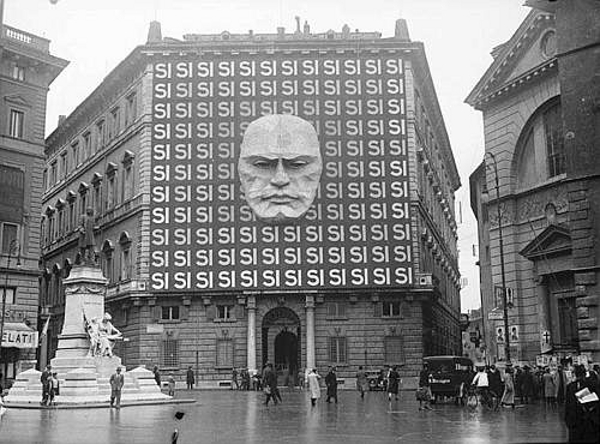
See, the idea that the culture, traditions, and history of specific people group are superior to those of all others and should be promoted and maintained through brute force didn’t die when Hitler blew his bigoted brains all over an underground bunker in Berlin, or when Communist freedom fighters gunned down Mussolini in a picturesque Italian village. It’s been dormant for a long time, but in recent years, it has again shown its ugly face.

Nope- uglier than that…

While there have been plenty of racially motivated murders over the years since Nazism fell (to say nothing of countless lesser hate crimes), what we’re seeing now is a resurgence in full-fledged Fascist ideology- but before we get into that, just a side note.

For many of you, the term “Fascism” probably conjures up images of generic authoritarianism. Obama’s a Fascist. Rush Limbaugh’s a Fascist. That one really strict teacher is a Fascist.

I’ve struggled for a while to come up with a good, succinct definition for what Fascism is all really about, so I’m going to offer this illustration. To a Fascist, his people (often, race) are inherently great and good, and they are inherently great and good because of their traditions, values, and culture, which are all also inherent to them. The greatness of the nation is lost when evil, conniving undesirables start pushing their own cultures, values, and traditions, which are subversive and degenerative to the nation. Therefore, these degenerates who threaten the nation must be stomped out (often quite literally), and the “original” culture/traditions/values must be restored, enforced, and maintained through an all-powerful government, police force, military, etc.

There’s more to it, of course. I could talk about the concepts of autocracy, corporatism, use of ancient Roman symbolism, and the like, but for now, let this all above be the definition we work with.

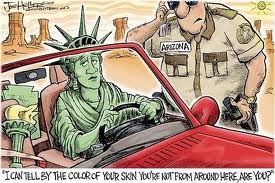
Now why do I say it’s coming back? Certainly if we disregard the recent massacre and the occasional race-related attack, there doesn’t seem to be any major Fascist threat in the US. The KKK isn’t roaming with impudence in the South. Gangs of Nazis aren’t attacking Jewish stores and businesses. Self-proclaimed defenders of the nation aren’t roaming the boarders trying to-

Oh yeah…

Ok, but it’s not like there’s been any major attack on people for having different skin or heritage or religio-

Ok, fine, but it’s not like any of this bigotry has been legislated or-

…Yeah…

See, that’s how it works. It’s subtle, discreet. The great Sinclair Lewis perhaps said it best:

And this is just America. In Europe, Fascism is even more prevalent and less shameless, simply take a look at France, where the government has instituted laws banning certain forms of Muslim garb, or forcibly expelling the Roma Gypsies.

I recall another guy who took actions to get rid of gypsies…

Over in Germany, Chancellor Angela Merkel declared that “Multiculturalism has failed”

Kinda forgetting about the last time a German chancellor declared the failure of multiculturalism…

…And in Britain, holocaust-denier Nick Griffin, leader of the white-supremacist British Nationalist Party (BNP) was elected to the European Parliament. That’s about the equivalent of the Grand Wizard of the KKK getting elected to congress.

I’d show you an actual picture of Nick Griffin but **** that guy…

And this is to say nothing of the escalating attacks on immigrants across Europe. Why? Because many Europeans and Americans are buying into the idea that the values, traditions, culture, and beliefs of other people are a direct threat to them. I recall in college on particularly nasty student who asserted that “All immigrants should go home”. Interesting, considering he had an Italian last name. Does he mean that he too will leave America? Of course not. Does he mean the Canadians who attended that school? Not at all. “Immigrants” was simply code for those “undesirable brown people”. But don’t take the words of one bigoted student as evidence of this ugly trend- just look at Congressman Steve King’s attempt to make English the “Official Language” of the US!

Now why on earth would you try to make English the official language of the US? It’s not like the vast majority doesn’t already speak it. And what if we did speak Spanish? How would it make a difference to anyone what we speak… unless English was somehow viewed as “inherent” to America!

There’s really part of the problem. It’s a perspective on society. Back in College, I had a conservative friend whose opposition to gay marriage was that “the traditional family is the building block of society, and changing the family weakens society”. I’m not saying he’s a fascist- not at all, but this view of society as a solid, unchanging thing is what really serves to create so much of the general bigotry and outright fascism that we see today. When society’s well-being is linked to culture, to maintain society is to maintain culture, and while there’s a certain logic there, all too often it’s taken to mean that every aspect of culture, right down to traditional gender roles, religion, and racial demographics, must be controlled. It’s the reason why you see Muslims, immigrants, homosexuals, or as the past couple days have shown us, Sikhs, targeted. And don’t for a minute imagine that it’s just Aryans who take up this line of thought. I recently had an encounter with an Asian immigrant who cited that his country was once upon a time a “Christian country”, and that he was concerned at Hindus, Buddhists, and the like building places of worship in his community.

Only where does it end? Suppose you argue that non-Christians should be excluded from a country because their cultures threaten the stability of the nation- what the minority groups? I always want to bring this up when I hear someone make the argument that America is a “Christian Country”- does that include the Mormons and Jehovah’s witnesses? What about Unitarians? Episcopalians? Catholics? Mennonites?

That’s the crux of the matter. The Fascists- both the self-declared and the self-deluded- would have us believe that we’re all hopelessly divided. That we cannot respectfully disagree with each other. That you can’t speak Mandarin and I can’t speak Arabic and the two of us get along. That multiculturalism is a fantasy. That we can’t have our own practices and perspectives while all agreeing, to some degree, on how to live together. We’re meant to live in constant fear that if we tolerate anyone who doesn’t fit in, there goes our way of life.

So let it go.

This will be harder for some than others…

The title of this blog is the Culture War Reporters, and perhaps what needs to be understood is that the culture war isn’t something that can (or should) be won. There’s always going to be divergence in opinion and in behavior. There’s always going to be new things coming in, and old things struggling to stay on. There’s always going to be good stuff and bad, so at the end of the day, why worry? Don’t buy the idea that culture can be maintained, or that one group has found all the answers. For all the dark content about murders, genocide, and the like, strange a line from Disney’s Ratatouille should fit so appropriately. Defending his lifestyle against the accusation that it’s “against nature”, Remy the rat declares that “Change is nature”.

In Defense of This Generation

Don’t get me wrong, there’s a lot- a lot– to criticize about the millennial generation. There’s creative bankruptcy (see Evan’s post), “slacktivism” and general laziness, ever-shortening attention spans, and of course, loud, obnoxious repetitive music without any discernible beginning, end, or climax.

I cannot state enough how much I hate techno…

Now with all that stated, I do want to address some of the criticisms thrown at Generation Y by our elders and (as they see it, anyways) betters.

Late last year, I came across this article, titled “5 Ways We Ruined the Occupy Wall Street Generation“. In his defense, the author emphatically states at the beginning of the piece that “This is not a sarcastic apology, I’m not a big enough dick to write all of this as a backhanded insult about how lazy and entitled you are. Because you’re not…”. Even so, it’s tough to read the article and not feel frustrated at some of the more glaring errors, or condescended to by false conclusions drawn from them. Despite the author’s best intentions, you can’t really walk away from the piece without imagining him to look something like this:

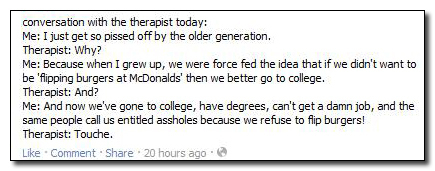
I’ll get right into things here with his first point “#5. Making You Ashamed to Take Manual Labor Jobs“. The author opens by offering the example of a piece of dialogue that went viral about a year ago.

It’s a great little bit, but I still have to stop things right there. We’re not ashamed to take manual labor jobs. We never have been. In this economy more than ever, there are college graduates willing, ready, and even eager to take jobs sweeping floors, unloading crates, answering phones, or stocking shelves. We’re not ashamed of flipping burgers, we just can’t afford to flip burgers. See, we have this funky little thing called “debt”, and not just any debt, the one kind of debt we, by law, cannot have discharged. To clarify- if I went bankrupt, if fire burned down my house and destroyed each and every last earthly possession I had, the only thing I would have left would be tens of thousands of dollars of debt I still need to pay.

The appropriate reaction…

All that’s to say we can’t take jobs flipping burgers because the $7.25 an hour you get for being abused by the customers and/or inhaling carcinogenic fumes just isn’t enough us to live independently and pay off our various mountains of inescapable debt.  Even if we move back in with our parents (more on that in a minute) things will still be tight- and God forbid we should even think about getting married or having kids until we’re in our mid-30’s. Which brings us to our next point- “extension of adolescence”.

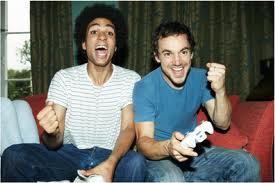
This is a psychologically documented phenomena, and something that’s rather throwing the combined worlds of sociology and psychology. Ever since the line between childhood and manhood ceased to be set at bringing down an elk and bathing in its blood, figuring out exactly when a person ceases to become a kid and becomes an adult is tough. It’s certainly not something new, but it is currently far more pronounced than with previous generations. Take that picture up there for example. Two guys, looking to be in their mid or even late twenties, playing X-Box. There’s the clincher there- the X-Box. The older generations, having had really nothing quite on the level of video games (pac-man doesn’t really count), labeled them as “kids’ stuff” from their inception, and the fact that we still play video games well into our twenties is seen as us extending our teen years, rather than shifting over to being an adult. The author of the article has this as his third point “Adding Seven More Years to Being a Teenager”.

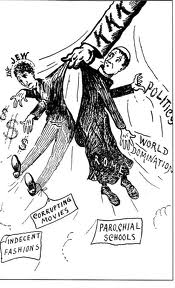
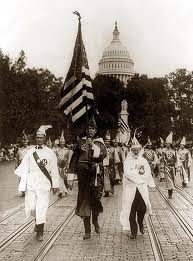
Of course, it’s absolute nonsense once you think about it. What did our grandparents or even our parents do for fun when they were kids? They played cards, board games, hunted, fished, went to the movies, and beat up minorities.

KKK Rally, or as they called it in the 30s, “Wednesday”…

And what do our grandparents and parents do today when they want to have fun? They play cards, board games, go hunting, fishing, and go to the movies (hopefully they’ll have dropped “Harassing Pollacks” from the daily planner by this point). You never hear anyone accuse them of extending their teen years. My grandfather and his friend have been playing cribbage together for over half a century, does anyone tell them that they need to start acting like adults? Let’s face it, when it comes to what this generation does for fun, we really don’t differ from anyone in a previous generation, it’s just that what we do is so radically different, we have the appearance of being immature.

And what about responsibility? Is this generation really lazy and wussy compared to the generation who worked in the mill, took a break to fight Hitler, and went back to working in the mill and raising a family? Last time I checked, we’re in the worst depression since the 1930s (a crisis which we, incidentally, had nothing to do with but still have to pay for) and on top of this we’ve been locked in the longest war in American history- nearly twice as long as the entirety of WWII, just for some perspective. You can say a lot of things about this generation, but you can’t try to claim that we’re somehow just a bunch of young adults still trying to drag out our years as kids.

“Just look at that entitled, lazy kid. No concept of hard work or adult responsibility.”

Of course, we do tend to party, and while I could point to this being true of pretty much every young generation since a Cro-Magnon named Thruk invented partying roughly 43,000 years ago, I’m going to take a different approach.

This might come as a shock to some, but young people don’t want to spend their twenties partying because they’re afraid of turning into soulless corporate drones- it’s because we’re enjoying, often for the first time, full independence. Believe it or not, we don’t want to move back in with our parents and spend our youth still under their watchful gaze. We want our own place, our own job, our own car. We want responsibility, and as strange as it sounds, the partying is simply an extension of our attempts to explore our new found freedom.

As for us being entitled, there is something to be said for that. I recall once riding the subway with this blog’s regular contributor Evan and overhearing two youths snivel that the computer they were getting wasn’t quite as advanced as it could be. That said, there’s plenty of so-called “entitlement” that get’s unfairly pinned on us. The Occupy Movement, for example, was criticized by some as being a bunch of lazy kids that expected everything to be handed to them. I mentioned above that the current economic crises responsible for so many of our problems was- and this is key here- not started by us. What was I doing when the economy started to tank? Nothing. I was consuming the food put before me, buying as much stuff as could be expected from a teenager, and working summer jobs when I could. What did I do wrong? Why am I getting stuck with the economic crises I had nothing to do with? If you want to talk about entitlement, let’s talk about the generation who gambled with our collective futures and expects us to clean up the mess. Same goes for the wars we’re currently locked into.

As for our “armchair-activism”, again, there’s plenty wrong with this, and you could spend plenty of time going through what makes it such a pointless endeavor. Nevertheless, I can’t help but feel irked when someone from an older generation- specifically my parent’s generation (who would’ve been my age in the 80s and early 90s). Say what you will about people who mass-forward e-mails about signing petitions or demanding you like a cause on Facebook, there’s at least a level of interest. Barring the grossly simplistic anti-drug movement of the 80s, I can’t exactly recall the major moral movements of that generation. In short, the whole that this generation might be shallow isn’t without merit, but the people who point the finger ought to be awful careful that they pick the log out of their own eye first.

“What do we want?”
“Fluffy hair!”
“When do we want it?”
“After we’re done snorting crack!”

I’m going to finish up here with this last point- addressing the author of the article’s claim that the number one reason “We’ve ruined the occupy wall street generation” is that “we’ve taken away every reason to go outside”.
Am I the only one here who sees a staggering paradox? Am I the only one struggling to resolve how the “Occupy Wall Street People” need to “Get Outside More”? Last time I checked, the protestors at Occupy Wall Street were literally occupying Wall Street.

“Look at how pale you are! When’s the last time you went outside? Besides yesterday, and the day before that, and the day before that, and the day before that, and…”

Now do we get outside as much as previous generations. Not really no. But then again, I don’t really see masses of the elderly roaming the streets either. Look, the reason we don’t “go out” is because many of us (who would, by the way, love to go out) are living in cities or urbanized areas. Short of just “walking around”, any major outdoor activity costs us money, which in case you haven’t picked up on by now, isn’t something we have just lying around. Between gas, food, entry fees, and other costs, I’d have to spend nearly a monthly payment to my college debt getting forty-eight hours in the great outdoors. That’s the reason we don’t like paying for entertainment (the author’s fourth point), only it’s not because we expect our entertainment to be free (just ask anyone who’s paid upwards of 60 bucks for a new X-Box game), it’s because we’re trying to be thrifty. If we want to get our own car and our own house to avoid the sneers of our elders, we have to pinch every penny until it slaps us with a sexual harassment lawsuit- entertainment is simply a major way we can save money and not go postal.

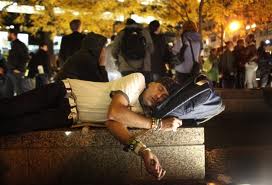
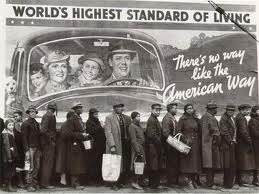
Look at those people trying to get food for free instead of paying for it! Lazy, entitled bunch of bums expecting everything to be handed to ’em, that’s what they are!

So in sum total, that’s my defense of my generation. It’s not a great generation- certainly not yet, anyways. It’s not the worst generation either, though, and before anyone- anyone– wants to label us as lazy or entitled or juvenile; please, look at us in the bigger scheme of things, and better still, look at yourselves. Would you want the standards you place on us applied to you?

An American Invasion

Attending college in the States means that I’ve missed a lot of goings-on in Canada. Apparently Toronto Mayor Rob Ford is a terrible mayor. I did not know this. On May 1st came to another realization, but one that filled me with far more trepidation than a mayor who has given up on his diet.

Driving through an old neighbourhood, my family and I saw that Canadian superstore Zellers was having a 50-80% off liquidation sale. A well-known chain in the country, the chain is a subsidiary of the Hudson’s Bay Company (HBC). After trying on a few jeans my brother asked the woman in charge of the change room what was happening, and she told us that this branch was becoming a Target.

Fastforward to me doing research on Wikipedia, and it turns out that in January of last year the Target Corporation purchased lease agreements for 220 Zellers stores for almost 2 billion dollars. The end result was 189 stores for the company, and of these 39 were resold to Walmart Canada. I was shocked by the idea of a prominent Canadian chain being bought out by an American company, but it doesn’t stop there.

The HBC is currently owned ( as of 2008) by New York-based company NRDC Equity Partners. This is a company that has its roots in the Canadian fur trade, the foundation of this country. Grade school children all over Canada learn from a very early age in history classes that it was the fur trade that brought people to this country, and that The Bay is the oldest commercial corporation in North America and one of the oldest in the world.

What bothers me is the knowledge that this country faces a sort of invasion coming from south of the 49th parallel. It’s no mystery that American companies have more money and sway than those in Canada, but it’s terrifying that they’re establishing themselves so firmly here. Just walking around in the heart of downtown yesterday and I saw a Panera Bread, yet another company that has spread into the north within the past five years.

Canada isn’t a world power in terms of military, but our impact on popular culture has been steadily increasing. I may be blowing this whole thing out of proportion, but I just don’t see a world that takes us seriously when all of our businesses are run by America.