Category Archives: film

Archetypes: Why Wizardry Triumphed Over Mythology

Harry Potter and the Philosopher’s Stone [marketed that way everywhere but in the States and India] was released in 2001. Nine years later Percy Jackson & the Olympians: The Lightning Thief, the first film adaptation of Rick Riordan’s series of young adult novels, hit the big screen. One went on to spawn a sequel the following year, while the other is taking as long as three. One of the reasons for this, I think, lies in the studio’s portrayals of the characters in their respective works.

I’m not going to go into a great deal about the Harry Potter franchise. The first book was released in 1997, and since then the films have swept up Western culture [and others] up into a wonderful world of witchcraft and wizardry. This post is written under the assumption that you have at least some familiarity with the works.
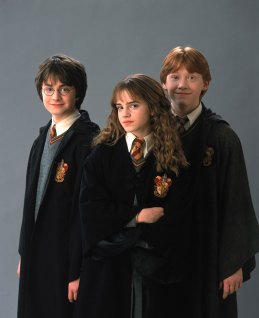
I opted for an image of them really young, since the majority appear to be just shots of good-looking young people staring somewhat broodily at the camera.

At their foundation, Rowling’s novels are built on a trio. Harry Potter is the chosen one, the courageous hero, the primary protagonist. Second is Ron Weasley, redhead, best friend, basically a wimp [for a lot of the series]. Last, but certainly not least, is Hermione Granger, the girl, the genius, the level-headed one. Clearly this is a team with some kind of equilibrium to it and a formula that works, and this is definitely evidenced in Riordan’s pentalogy.

The Lightning Thief, the book the film was based on, stars Percy Jackson, son of Poseidon, talented swordsman, fearless warrior, and new to being a halfblood. Second is his best friend, Grover Underwood, a satyr, kind of a cowardly kid [goat jokes, everyone]. Topping this all off is Annabeth Chase, Athena’s daughter, meaning that she’s definitely got the wisdom thing going on. Clearly if it ain’t broke, don’t fix it. Before you go to assuming that Riordan’s books are a cheap knock-off, don’t; the series is a well-written take on both Greek mythology and the young adult genre as a whole.
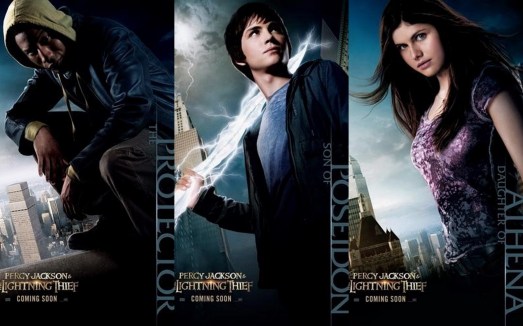
From left to right: Grover, Percy, and Annabeth.

The problem isn’t that the characters appear to mirror those in the Harry Potter books. If anything, this is a strength of sorts, as they’re both familiar and effective. The issue is that the film adaptation of the novel takes these archetypes and throws them out the window. The result is this: three badasses.

In Percy Jackson & the Olympians: The Lightning Thief, Percy, Grover, and Annabeth are all depicted as being a) brave, and b) proficient at fighting, making them essentially slightly different facets of the same archetype. Yes, Annabeth is the one knows more about mythology and magic, et cetera, but she still wields a sword along with the best of them, transforming her from a cold, sharp-tongued girl to an athletic tomboy.

The irony is that Chris Columbus directed both films [as well as Academy Award winning The Help], choosing to faithfully adapt one and tailor the other for a specific audience, going so far as to significantly age the characters. Percy Jackson & the Olympians: The Lightning Thief has all the signs of a movie meant to catch the world’s attention with action, special effects, and good-looking teenagers. Three traditionally heroic characters are three times as entertaining, or at least that’s what a certain type of logic would dictate.

The film did well regardless, pulling in $225 million and with the sequel supposedly [I reserve the right to express some doubts] dropping sometime next year. Fans of the book, however, are hoping that Sea of Monsters is a much better installment than the first. Full character rewrites are rare, so the best they can expect is a film that respects the narrative of the series, and strives to fit their characters into that.

American Heroes and the British Men Who Play Them

Everyone’s talking about this “Asian Invasion” of basketball, but general interest due to someone of my ethnicity garnering fame aside that’s not what I want to write about today. I’m writing about a British Invasion. And no, I don’t mean the influx of musician from the UK that occurred during the mid-sixties. I mean the fact that this summer the British are coming. To the big screen. As superheroes.

There’s no solid argument when it comes down to naming the three most well-known superheroes out there. From a purely global standpoint, SupermanBatman, and Spider-Man top the list. Two have feature films that will be hitting theatres this summer, with the third being released next year. As coincidence would have it, all three films have their headlining roles cast with British actors.

Coming out this July 3rd, The Amazing Spider-Man stars Andrew Garfield in the Marc Webb-directed reboot of the franchise. Garfield made an international name for himself starring opposite Jesse Eisenberg in The Social Network. In it he portrays Brazilian Harvard student Eduardo Saverin, though with a clean-cut American accent. The other side of the mask he will be putting on is Peter Parker, teenage outcast and all-around grittier-looking-than-Tobey-Maguire.

The next month brings us The Dark Knight Rises, the third and final piece in Christopher Nolan’s Batman Trilogy. Christian Bale is not new to the big screen or American roles, playing one in American Psycho, The Machinist, 3:10 to Yuma, and many others. His command of his accent is such that when he freaked out while filming Terminator Salvation, he actually switched back and forth between American and British. When not growling underneath the cowl he portrays seemingly mild-mannered billionaire Bruce Wayne.


In 2013 we finally get that Superman movie we’ve been waiting for, which takes the form of Zack Snyder’s Man of Steel. Suiting up in the red and blue tights is relative newcomer Henry Cavill, who exercised both his muscles and his British accent in Immortals, which came out last year. For the most part he hasn’t done much in the way of portraying Americans, which may be a challenge when asked to take on the mantle of a hero as American as apple pie. When not rocking the spit curl Cavill will be Kansan journalist Clark Kent, a character who may be a little more mild-mannered than Bruce.

With those summaries out of the way, what exactly does this mean? I’m no expert on the trends in Hollywood, but I can’t imagine that casting British actors in American roles is anything new or something to be strongly desired. If casting directors are doing their jobs correctly, then they’re accepting whoever is most qualified for the role, regardless of nationality. As a Canadian and someone who believes that the most talented actors deserve the spotlight this is something I cannot disagree with.

In regards to culturally American icons being portrayed by actors of other nationalities, well, why not? If they bring the energy and commitment to a role and portray it as best they can, then they will do a better job than, say, George Clooney, who portrayed the Caped Crusader as a homosexual. If any actor respects the character they’re given than they will do as much as they can to ensure that he or she is depicted well.

It is an interesting coincidence, but hopefully one that can, in its own way, push forward the idea that superheroes don’t always have to be White Americans. That if Spider-Man can be black in the comics then maybe it can happen on the big screen as well.

Product Placement, and/or Wouldn’t an Ice Cold Pepsi Really Hit The Spot Right Now?

After a long day, I plan on sitting back and finally watching the last episode of CBC’s Being Erica, a show I began last summer and have yet to finish. While skimming its Wikipedia page I was reminded of Season 4 Episode 8, and the product placement that the video below accurately describes  as “egregious.”


It’s difficult to be immersed in a show that shoves advertising down your throat, and I definitely remember being disturbed by it. A car that can park itself is impressive, but watching two characters you’ve grown familiar with ooh and aah as a car salesman lists its features is not. As I watch the clip again and hear the back and forth of “No way” and “Way” it’s hard not to feel a little sick inside.

As was to be expected, the Canadian press was far from thrilled by this. An article on the National Post titled “How Being Erica took product integration too far” cites this episode as the one that caused the author to “break up with Erica.” She also referenced a the following point I had already been planning on making:

Is there anything 30 Rock can’t get away with? The clip above features product placement that is far more in-your-face than what was found in Being Erica, yet manages to pull it off. It’s both meta and very funny, and as a result as viewers we can laugh it off and even respect what the show is doing.

How much, then, can we put up with? I fully recognize that Dr. Pepper plays a fairly prominent role in the first three Spider-man films, and the ridiculous amount of BMWs in Mission Impossible: Ghost Protocol was impossible to ignore. Phones, more than ever have gotten a good amount of screen time in music videos, with so many examples out there I’m not even going to link to one.

Product placement [or integration, which definitely has more positive connotations] has, and will continue to be around, but is this something that we should take for granted and accept? That particular episode of Being Erica sparked an uproar of sorts, with audience members feeling offended that the network would think so little of them. The message behind their complaints seems to be: You can advertise to us, but be subtle about it.

The economy’s not in great shape, and TV shows and movies and music videos can only be made if there’s money to fund them. Since we’re going to keep getting logos flashed in our faces, what should we do? Can we do anything about it? As consumers of the media we should all have standards we expect to be met, but the question now is when do we draw the line?

The Movies Always Come Back, the Actors Don’t

Sequels are popular. I know I shouldn’t have to spell that out for anyone, but really, they are. The top 7 movies of 2011 were sequels. The ninth film on that list was too, if that helps prove my point at all.

What also isn’t new are sequels [or prequels] to feature  different actors for the same characters. The earliest example that comes to mind is Christopher Showerman, who played the titular character in George of the Jungle 2, and who also broke the 4th wall by telling the audience that the studio is “too cheap to pay Brendan Fraser.” Another example is a franchise that nobody cares about, with The Scorpion King 3: Battle for Redemption featuring the third actor thus far to portray Mathayus.

A more up-to-date illustration is Rachel Dawes in Christopher Nolan’s first two
Batman films. Katie Holmes was initially to reprise the role in The Dark Knight, but turned it down to be in Mad Money. Maggie Gyllenhaal took over, a choice that did not affect audiences’ enjoyment of the film [it’s currently the tenth highest-grossing film of all time].

In even more recent news, E! Online reported this morning that a Bridesmaids sequel could happen with or without star and writer Kristin Wiig. Co-star Melissa McCarthy is quoted as saying “I think it’s a terrible idea,” coupled with the assertions that she wouldn’t want to be a part of a film without Wiig.

A sequel that has actually been given the green light is The Bourne Legacy, which will not be featuring Matt Damon as Jason Bourne. The film will instead star Jeremy Renner as Aaron Cross, with the narrative acting as a “sidequel” to the original trilogy. The current director has not completely ruled out the chance of Damon returning for future films.

What do these choices say about the audiences viewing these films? Is a franchise, a movie title, all that’s needed to draw us back to theatres? If sequels are going to continue to dominate the big screen then we will watch them, but what are our standards for them? How important is continuity to the average media consumer?

TV Tropes has a term “Chuck Cunningham Syndrome,” which refers to characters who simply disappear into thin air. The following trailer for G.I. Joe: Retaliation appears to have all of the cast from the original film die, which I think is definitely one way to justify an entirely new cast.

Lisbeth, the Sexualized Autist: What The Girl with the Dragon Tattoo says about American Culture

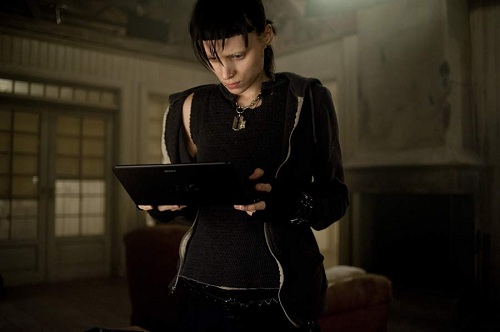
Let’s just be clear: I know that The Girl with the Dragon Tattoo is Swedish. My comment is on its popularity in American culture: its best-seller status in the NYT for 18 months, triggering a Hollywood remake of the original Swedish film. The heroine, Lisbeth, is whom I’m most interested in.

Rooney Mara in Girl with the Dragon Tattoo

Noomi Rapace as Lisbeth in the 2009 Swedish film and Rooney Mara in the 2011 American version

Lisbeth is the poster child of counter-culture: mowhawk, dyed hair, androgenous, facial piercings – what attracts people to her is that she manages to pull all of these things off (the reason being she is astoundingly beautiful) and references to her terrible experiences conveniently switch her label from “irresponsible” to “misunderstood”. Lisbeth, I think, represents two key memes in contemporary culture, the subtle prevalance of which interest me: the sexualized autist and the competent social outcast.

The Autist

Rooney Mara in Girl with the Dragon TattooLet me be clear: I’m not talking about a classified DSM-IV disorder when I talk about Lisbeth’s autistic traits – I’m just talking about the word autist as it derives from the root autos (self), which refers to a lack of empathetic sensitivity. Classic autists in fiction include: Spock, Data, Sherlock Holmes, C3PO, Sheldon from The Big Bang Theory, Monk, and (often) children. Autists serve the purpose of deconstructing society: they often involve humorous responses to or dissections of modes of relating that come natural to most humans. Here is Sheldon’s deconstruction of the social idea of dating:

I present to you the Relationship Agreement. A binding covenant that in its 31 pages enumerates, illuminates and codifies the responsibilities of Sheldon Lee Cooper (hereinafter referred to as the “Boyfriend”) and Amy Farrah Fowler (hereinafter referred to as the “Girlfriend”)

In TGWTDT, Lisbeth interacts autistically: one of the first things said about her report is that though it is thorough, it lacks her personal opinion. She, stonefacedly, refuses to acknowledge that she understands any reason why her opinion would be useful. Throughout the movie, Lisbeth is expertly and unthinkingly wholly dedicated to performing her obsessive tasks with excellence: autists almost always are (Monk, River Tam).

The Competent Social Outcast

Rooney Mara in Girl with the Dragon TattooLisbeth’s upbringing and fringe placement in society should, according to social evolution, render her unable to support herself. On the contrary, she achieves competency without the support of society, and spends much of her time defending herself from the flaws of the establishment (every scene with the social worker, his eventual blackmail). She joins Julia Roberts in Pretty Woman, the woman from The 5th Element, and Jane Eyre as the neglected gamines who nonetheless flourish and become experts at fending for themselves.

Sexualized

The essence of Lisbeth’s character is a common one that seems to be increasingly attractive to American audiences: the sexualized, independent autist. This is River Tam from Firefly, the woman from The 5th Element, and is echoed in Edward Cullen from Twilight, Dexter, and Dr. House. These characters reveal society’s increasing fetish of self-efficacy – they exude strength, independence, and provide an expression of rage at the more subtle social injustices and inhibitions of social norms. They do not respond to social patterns and expectations, like Sheldon Cooper or or C3PO, but unlike those humorous characters, the sexualized competent autist provides a violent and hypersexual (almost gnostically sexual – oftentimes, like with Julia Roberts in Pretty Woman and Lisbeth, the characters detach themselves from their sexuality and use it as a tool) successful escape. They offer a character who does not succumb to illogical non-verbal communication and oppressive social codes: they interact logically, not heatedly (Lisbeth asking Mikael for permission to kill a serial killer), and ultimately succeed, and achieve a sexualized, center-character status at that, as opposed to the comic relief status of the typical autist.

What does this say about American culture? I’d say that it indicates a reaction against the stress of social niceties. These movies could be called counter-culture, but a very thinly veiled counter-culture – no, sexualized autistic characters are not appearing in chick flicks with Owen Wilson, but The Girl with the Dragon Tattoo was by no means an obscure movie. The characters precede what I think is going to become a more prevalent theme in American culture: a fetish of successful social rejection.

Rooney Mara in Girl with the Dragon Tattoo

Media in 2011

This past year I had a resolution, of sorts. It was to log, day by day, the amount of media that I experienced. For the sake of convenience, music, YouTube videos, and comic books were all exempt from being logged. TV shows, movies, and books were the main focus here.

In picking a month to show you, I chose September in that it was a month entirely spent at school, without any breaks. All media was experienced in the free time I had outside of classes and schoolwork. Breaks tend to severely skew the average amount; an example of this is my watching five seasons of 30 Rock in January during the Christmas break.

Media in September

Television

  • 8 episodes of Deadliest Warrior [40 minutes each]
  • 1 episode of Futurama [20 minutes]
  • 1 episode of The IT Crowd [20 minutes]
  • 5 episodes of Cromartie High School [10 minutes each]
  • 2 episodes of Regular Show [10 minutes each]
  • 2 episode of Adventure Time [10 minutes each]
  • 7 episodes of Breaking Bad [45 minutes each]
  • 4 episodes of How I Met Your Mother [20 minutes each]
  • 1 episode of The Office [20 minutes]
  • 1 episode of Community [20 minutes]
  • 2 episodes of The Big Bang Theory [20 minutes each]
  • 2 episodes of New Girl [20 minutes each]

Film

  • Scott Pilgrim vs. The World [112 minutes]
  • Helvetica [80 minutes]
  • Paul [104 minutes]
  • Batman & Robin [125 minutes]
  • Hot Rod [88 minutes]
  • Ironclad [121 minutes]
  • Terminator Salvation [115 minutes]

Books

  • Part of The Odyssey
  • Most of The Aeneid
Totaled, that’s (if Google didn’t fail me on the math part), 965 minutes of television, 745 minutes of television, and about 3 or four hours of reading. After some fancy addition, that’s 28.5 hours spent watching in the month of September. A month I also partially picked because it had significantly less than others.
As an English/Writing Major, this is very unsettling to think about. Over a day of September was spent staring at a screen [not including YouTube or daily browsing], and even though comics were omitted my reading total still pales greatly in comparison. I justify my excessive viewing in a way, citing the study of plots and character progression in both television and film as a way of improving myself as a writer. Apart from this blog, however, I did little to no personal writing whatsoever in that time period.

The average American [which I am not, being neither] watches more than 151 hours of TV a month. With that in mind, I feel strangely validated. We don’t have a television in our house, and instead hook our laptops up to a monitor in the living room. This means that there is no casual turning on of the TV, no languid channel surfing. Apparently this has contributed greatly to my watching 80% less than most people.

I began this blog post with the intent to depict exactly how much media I consume in a given month, and hold that up as a shocking example of a 21-year old’s usage of his time. Contrary to that, I’ve discovered that I’m not doing too badly compared to America. At 28.5 hours per month, I’m actually doing really great.

Does this mean that I should continue to do what I’ve been doing? My answer is no. As I’ve mentioned, September was actually a low month in regards to media viewed. The month after I watched easily twice as many shows. The fact that this still ranks me as watching 40% as much as most has inspired me not to watch the same amount, but less. I’m doing better than average, but better doesn’t equal good. As someone who says he cares for literature, I need to at least pretend that that’s true in my actions. And that’s as good a resolution as any.