Category Archives: Islam

2015’s Cultural Battleground – Kat’s Account

EDITOR’S NOTE: We end this year by each taking a look back and picking our five best posts, explaining both their importance to us and to the world we currently live in.  Clicking the banner images will link you to each post, so as 2014 comes to a close join us in remembering how far we’ve come, but also how far we still have to go.

RachelBrown

After the recent acts of Daesh terrorism in Paris I returned to this interview with PhD Candidate Rachel Brown to get some perspective. While Brown’s work was focused on food and religious identity in French and Quebecois Muslim immigrant communities, it also highlights how isolation and religious persecution can push young people towards accepting religious extremism. In the interview, Brown explains,

“I’m not really an expert in ISIS or Jihadist fighters or any of the topics that relate to this. I can say that when people, especially youth, feel alienated, when they don’t feel at home anywhere, this can lead to finding identity in extreme forms of religion. If the religious identity is the only identity that one feels they can claim, he/she is going to place a huge amount of importance on that identity.”

nestle

This year, a petition began circulating that condemned Nestlé’s operations here in British Columbia. While Nestlé has been operating here in B.C. for 15 years, residents became particularly concerned during the drought this past summer.  As Gordon has pointed out in his previous Shame Day post, Nestlé doesn’t have the greatest track record when it comes to respecting other countries and their water needs. In this post we take a closer look at the relationship between Canadian water and the American corporations that would like to bottle it up. Continue reading

What Wouldn’t Jesus Do?

“Would Jesus have carried a gun?”

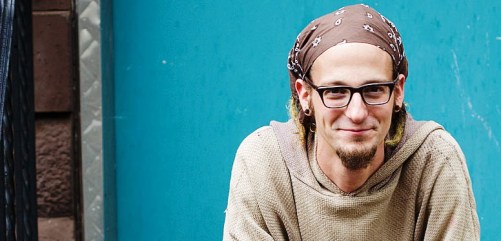
That was the question Christian activist Shane Claiborne posed in an article this Saturday.

The Jesus I worship did not carry a gun. He carried a cross.  Jesus did not tell us to kill our enemies. He told us to love them.”

These words come as a response to the shocking and repulsive comments by Liberty University’s president Jerry Falwell Jr. who, in a speech to his institution’s students, sneering declared that “if more good people had concealed-carry permits […] we could end those Muslims before they walked in and killed them.”

I shouldn’t have to explain how despicable those words are. And readers- I’m not going to.

If you’re reading this blog, I’m going to assume (to hope) that you have an iota of humanity in you. A speck of morality. A single shred of basic decency. I don’t think I need to describe what vile, bigoted, demonic filth that statement is. I don’t think I could even begin to. The heinous, cancerous insanity that Falwell spouts doesn’t merit a response.

Shane Claiborne, on the other hand, does.

shane-claiborne-believes-the-gospel-is-about-being-close-to-those-who Continue reading

Save Refugees, Save America

I believe in America.

I believe that the defining characteristic of this nation was its unerring sense of moral conviction- that all we did was in the advancement of some great work set into motion by ages past. That every undertaking stemmed from the deepest confidence in the simple rightness of our cause.

This faith led us, countless times, to commit terrible acts that damn the conscious of the nation. Slavery and Wounded Knee. Manzanar and Kandahar. McDonald’s and McCarthy. It’s led to the popular image abroad of Americans as fundamentally arrogant; loudly voicing their opinions without being asked, demanding where they have no right, interfering where they have no business.

And it was this same faith that has pulled this nation back every time. Yosemite and Normandy. Harlem and Harper’s Ferry. John Muir and Eugene Debs. The faith that sent millions to these shores from every corner of the world and the same unabashed confidence that sent American music, art, film, and literature back.

In spite of our divisions and our failings- and they are neither minor nor few- we are united by the common belief that our cause is not merely just but justice itself, and that its triumph needs only ingenuity, passion, and will to be secured.

For good or ill, it is this value that made America. Continue reading

Post Incoming

Readers, I’m sick.

Sick of the repellent terror attacks in France, sick of the vile reaction many have had to it, sick of the endless cycle of violence, misinformation, and Islamophobia.

I’m also literally sick.

tumblr_inline_nl0ltkklyu1r43rfd

There will never, in the history of man, exist a better encapsulation of what it feels like to be sick.

And it is for that reason and that reason alone that you will be spared my inevitable torrent of righteous/self-righteous indignation- for this week, anyways. Buckle up, kids- next Monday we’re going to be ripping apart the following individuals with the kind of viciousness not typically seen outside of a Gareth Evans movie.

tumblr_nieylsyu2f1s9o3c8o1_400

Our punching bags will be as follows:

Donald Trump, Ben Carson, Rick Snyder, and the spineless, xenophobic, dirtbag governors of Alabama, Arizona, Arkansas, Florida, Georgia, Illinois, Indiana, Iowa, Louisiana, Massachusetts, Mississippi, New Hampshire, North Carolina, Ohio, Texas, and Wisconsin- all of whom have issued refusals over the past 48-hours to allow the settlement Syrian refugees within their borders.

There will be blood.

Pro-Israel vs Pro-Palestine: Can There Be a Third Option?

About a year ago I wrote a paper on media bias in coverage of the Israel-Palestine conflict. In her feedback, my professor accused me of being a Palestinian sympathizer and in the same breath called me pro-Israel. This conversation, in my mind, highlights the fact that no matter how careful I am, neutrality on this issue has become nearly impossible.

bethlehemwestbank

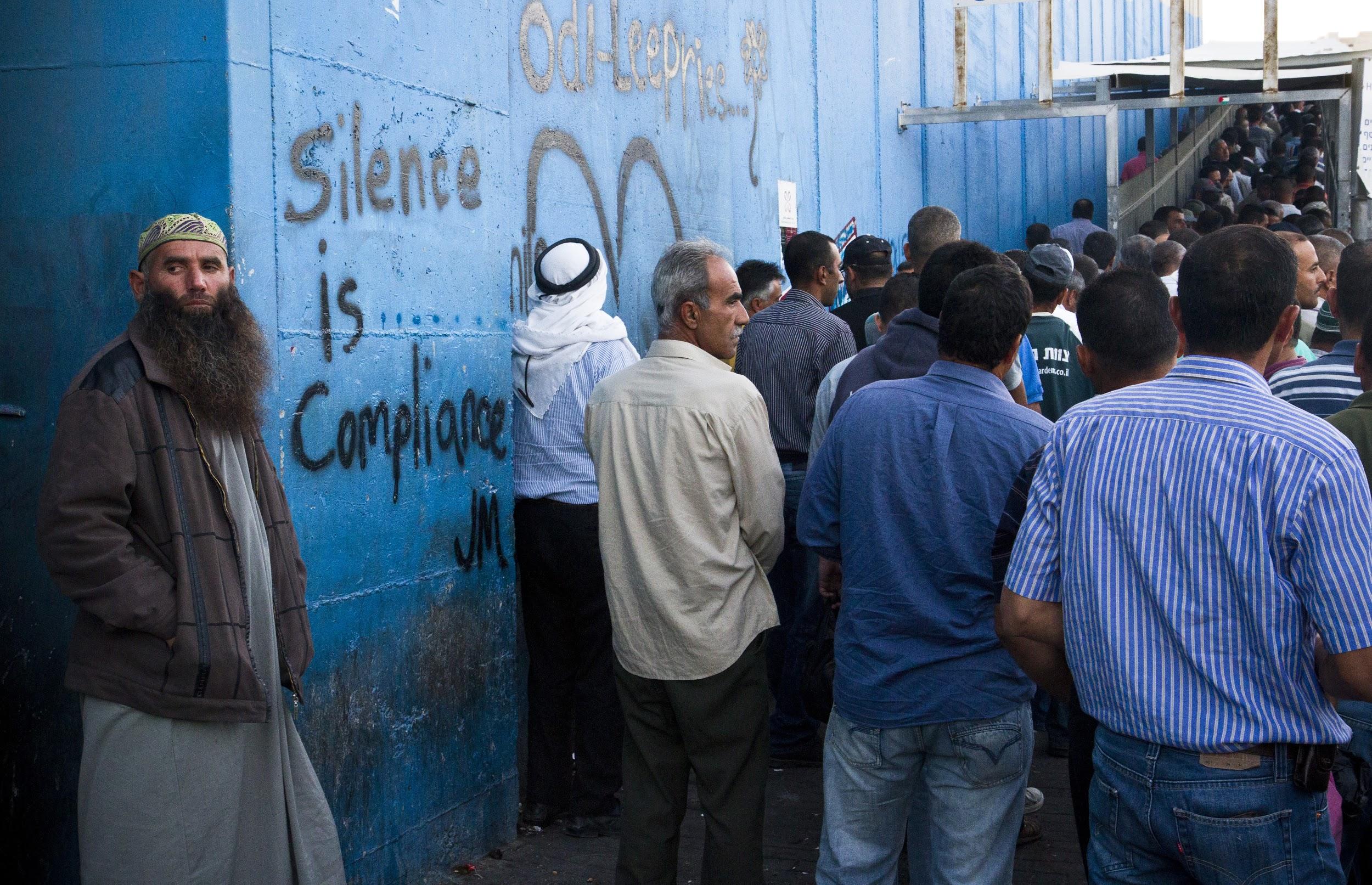
Bethlehem, The West Bank: Every morning hundreds of Palestinians line up at the barrier to make it through the checkpoint in time for work in Jerusalem. It often takes 3+ hours to make it through.

Let’s face it, no one wants to talk about the Israel-Palestine conflict. No matter what stance you take, you’re going to offend someone. Since violence and tensions have somewhat lessened since last year, or at least have become overrun by other more flashy news stories, there hasn’t been a whole lot of coverage on the conflict. Though governments may be in a constant process of peace talks and negotiation the situation for most Israeli and Palestinian citizens remains unchanged.

westernwall

The Western Wall, Jerusalem

About three years ago I spent some time living in both Israel and the West Bank. As a writer and photographer I naturally blogged about my experience, and the response I got was both shocking and highly predictable. This conflict touches on so many aspects of history and culture that it has become absolutely polarizing on the fronts of ethnicity and religion. Like the situation with my professor I managed to piss off people on both sides as I desperately clung to what I liked to think was middle ground, searching for a “pro-peace” option.

propeace Continue reading

Rachel Brown on Food, Religious Identity, and the Appeal of Muslim Extremists

A few months ago, I had the opportunity to hear PhD candidate Rachel Brown speak about her research on food and religious identity in French and Quebecois Muslim immigrant communities. I found Brown’s talk fascinating and contacted her soon afterwards; I wanted to find out if her work was publicly available so I could write about it here on the blog. While Brown has written a chapter on her work for an academic publication it hasn’t been published quite yet. Lucky for me, Brown was willing to share a draft with me. Throughout this interview I will be referring to, and occasionally quoting, that draft in order to give you context for the questions I ask Brown.

According to Brown, her “primary research interest lies in the study of immigrant religious experience and how members of immigrant communities negotiate their religious identities through food and food practices in their host countries.” In order to write on this topic, Brown conducted fieldwork and semi-structured interviews in both Paris, France and Montreal, Quebec.
This was the most French gif I could find.

Kat: Hi Rachel, thanks again for being willing to share your research with me and our readers. Before I dive into the questions I have from reading your draft, can I ask, what drew you to this area of study?

Brown: I came to the project out of a love of all things food and all things France. On one of my many visits, I noticed that how and what the Muslim community in France ate was a point of interest for media, politics, and everyday conversation on the street between friends and neighbours. There was clearly a subject to be addressed. I figured if I was going to be in the field for a year I might as well be somewhere I love and studying something I am passionate about, and so I set out to study the topic of food and religion. As I got further and further into the topic I realized just how essential food practice is to identity, especially religious identity and my research has grown exponentially ever since. The importance of food in religious identity negotiation for immigrants can be seen across a variety of locations and traditions.

Kat: I’m also curious about the technical side of things. Did you intentionally limit your case studies to individuals from the Maghreb? If yes, then why? Also, how did you go about arranging these interviews, or even making these connections in the first place?

Brown: I definitely limited my study to individuals from the Maghreb. I did this because the largest Muslim community in both France and Quebec comes from the countries of the Maghreb. This is not only because of proximity, of the Maghreb to France, but also because of a colonial history between France and the countries of the Maghreb. When one thinks of Muslims in France, this is most often the community that comes to mind.

In terms of arranging the interviews, this was a tough process. I started by going to the Grand Mosque of Paris and just getting to know people there. I had to build up trust, and spent many hours just helping out at the mosque in order to show that I was not a journalist (a profession folks are very hesitant of in France) and that I meant well with my research. After people got to know me, some started to agree to do personal interviews with me. Once I conducted the first interviews the people I interviewed then put me in contact with friends or family members to interview. So I followed a snowball methodology. It was not easy to get people to talk to me, but because my topic is such an approachable one (who doesn’t want to talk about food?), it made it a little bit easier to get people to agree to interviews. Having the personal connection, and a validation from friends or family members that had already done the interview was also key. Continue reading