Category Archives: zombies

Internet Disgusted By Video Game Promotion [Also: Zombie Breasts]

Way back in the February of 2011 the following trailer was released for the video game Dead Island:


It was so impressive that last I heard, Lionsgate was going to make a Dead Island film based on the trailer. Not the game, the trailer for the game. A feature-length film based on the trailer for a video game. Think on that for a bit.

What it does is speak volumes for the game’s publisher, Deep Silver, and those it hired to advertise the game. There was an emphasis placed on the feelings of terror and loss and the need to protect one’s family; it sought to set itself apart from other zombie games [of which there are so many]. Unfortunately the game turned out to be your fairly standard run-of-the-mill zombie hack and slash, but that’s not the point here.

The point is that this trend was actually continued in the promotion of the game’s sequel, Dead Island: Riptide, the trailer of which can be viewed here. The tone is once again consistent with that of the first, highlighting the terrors of a vacation gone horribly, horribly wrong. Which is great. And which is why the following seems so shockingly out of place.

The image you see above is a promo image for the European “Zombie Bait Edition” of the game, the crowning glory of which is the statuette at the centre. This was, earlier this week, described as being “Dead Island’s grotesque take on an iconic Roman marble torso sculpture.” This was met with understandable outrage and disgust from the internet, which prompted those at Deep Silver to scramble wildly and release the following apology:

“We deeply apologize for any offense caused by the Dead Island Riptide “Zombie Bait Edition”, the collector’s edition announced for Europe and Australia. Like many gaming companies, Deep Silver has many offices in different countries, which is why sometimes different versions of Collector’s Editions come into being for North America, Europe, Australia, and Asia.

For the limited run of the Zombie Bait Edition for Europe and Australia, a decision was made to include a gruesome statue of a zombie torso, which was cut up like many of our fans had done to the undead enemies in the original Dead Island.

We sincerely regret this choice. We are collecting feedback continuously from the Dead Island community, as well as the international gaming community at large, for ongoing internal meetings with Deep Silver’s entire international team today. For now, we want to reiterate to the community, fans and industry how deeply sorry we are, and that we are committed to making sure this will never happen again.”

 So no harm now foul, right? Dead Silver took back their horrible statuette and we can chalk another victory up for the internet! But why exactly were people upset? An article on Rock, Paper, Shotgun which I linked to but will link to again said this about it:

This is beyond disgusting. It’s as if someone were attempting to demonstrate the most misogynist idea that could possibly be conceived, in an attempt to satirise the ghastly trend. A text book example of the most extreme ends of misogynist fantasy, a woman reduced to nothing but her tits, her wounds hideously depicted in gore, jutting bones, and of course barely a mark covering her globular breasts.

It’s very prevalent in a lot of zombie imagery you can find nowadays, and it’s certainly present in this picture of a zombified Snow White on the left. Her body is mutilated [appropriately so, for a zombie] but her breasts remain completely untouched. There’s this sense of the grotesque from the image as a whole, but her chest remains an object of potential titillation.

I don’t think I have to say too much about how grossly sexist this is, and how prevalent it is in the society we live in. What I am going to say is thank God that on some level we can make enough of a public outcry to stop stuff like this before it happens. The bottom line is this: if we as a community [on the internet or otherwise] care enough about something, we really can do something about it.  Even if it’s just stopping the production and sales of a tasteless statue.

———

A rebuttal to essentially everything I’ve written can be read in an article by Daav Valentaten on Venture Beat entitled “The Dead Island: Riptide reaction was an equality fail.” I present it as a counterpoint to my own post.

The Horror, The Horror

Today, I’m going to talk about horror.

Not “frightening stuff,” mind you- horror. There’s a distinction, you see.

Fright is the simple biological jolt you get when something startles or surprises you- a door being slammed, a discordant note blaring out of nowhere, and so on. Tragically, the title of “horror” gets slapped on things (typically movies) that merely have “jump-scares.” Horror on the other hand, is anticipation and dread at the perception of something threatening on a fundamental level.

So why talk about this? Because despite the outcry of some, horror- especially horror movies- holds a special place in our culture. Indeed, horror holds a special place in all cultures, and has since the first Cro-Magnons huddled around some arctic fire and whispered about strange and terrible things lurking just outside the circle of light. What we’re afraid of tells just as much about us as what we admire; a perfect example being Evan’s post on the remake Red Dawn. Evan cites that one of the reasons the new version doesn’t work is because the concept of the US being invaded is today laughable (especially by North Korea, whose entire population could fit into LA county with room to spare), whereas in the 1980s, the fear was far more realistic, or at least, believable.

Now I’m not here to analyze the past decade’s better horror movies and tell you what it is that we seem to be afraid of (not right now, anyways). In this post I’ll just be breaking down the three basic kinds of horror we seem to be responding to.

Fear For Self

First, we have the fear that attacks our egos- not “egos” as in pride, but “egos” as in the psychological term for you. This fits into the greater psychological element of “external anxiety,” meaning the stress we feel as a result of outside factors, such as school, our jobs, hunger, pain, and so on. When we’re afraid for our safety, or empathizing with characters in a movie or TV series who are fearing for their physical safety, we’re looking at this “fear for self” kind of horror. A good example would be any serial killer or monster movie- Psycho or Jaws being the best examples. Now usually we tend to botch this kind of horror, because the protagonists in movies or stories do things we would never do (blonde female college camper running through the woods at night, I’m talking about you). However, when it’s pulled off well, it leaves a noticeable mark on us. It has been said that Jaws created a significant drop in beach-goers after it was released, and you are a dirty liar if you say you’ve never once looked behind the curtain when you go into the bathroom.

Fear Of Self

Just as we have anxieties that stem from external factors, we have stresses and fears that come from within us: “Internal anxiety.” It was theorized by early psychologists, Freud in particular, that our mental issues were a result of us denying or repressing elements within us, most notably the “id”- that part of our mind with all the bloody, vicious, sexual animalistic drives that typically didn’t mesh well with Victorian (or any) society. As with the ego, horror works on this pathway as well- our fear of ourselves. All that madness and evil that we, for the most part, pretend isn’t there. The most obvious examples of this would be werewolf movies and vampire movies (obligatory “**** you, Twilight“) and most any film depicting a change or evolution the protagonist- see Dr. Jekyll and Mr. Hyde, The Wolfman, Dorian Grey, etc.

Fear Of No Self

Lastly we have stress and anxiety attacking (or coming from, depending on how you look at it) the “superego”- that element of our mind consisting of our real or imagined nobility, propriety, decency, etc. Here we encounter “existential horror,” more often called “cosmic horror.” This particular form of horror can be found in movies where the protagonists are fighting a losing battle against some massive, all powerful being- typically otherworldly in nature. Alien invasions and zombie uprisings are both good examples. Here we’re confronted with the fear that we are, in spite of all of our strength, morality, charity; in spite of our humanity, we are actually inconceivably small and insignificant. Ants who have just become aware that there are beings in the universe of incomprehensible magnitude whose simple existence negates everything about them. That unique feeling of powerlessness is separated from “ego fear” in that this form has a distinct hopelessness, rather than helplessness, attached to it.

Of course, every horror story has all three of these elements in it, but what kind of horror story it winds up being depends entirely on what is emphasized. Take AMC’s The Walking Dead– you’ve got your physical fear of the zombies, your id-based fear at what this new world is bringing out in you, and the general horrific despair at the absolute hopelessness of your situation, both in the face of zombies and the truth of human nature. What you wind up being afraid of depends on which element really gets pushed (survival, rationality, hope) and of course, what you individually, and we as a society, find most terrifying.

So what do we fear as a society right now?

Well, with the rampant popularity of zombie stories, and “disaster” films such as Cloverfield, Skyline, and even the whole “Slenderman” craze; it seems to me that we’re torn between physical and existential horror. And perhaps in an economic depression, that’s understandable- after all, we’re confronted with the physical job of keeping afloat in a rough time, and as the crisis drags on and on, the general feeling of hopelessness with regards to our general situation. We respond to characters whose immediate needs are threatened and characters who are struggling to maintain themselves in the face of cosmic nothingness.

At least, that’s my take on it. Feel free to debate me in the comments, and stop by tomorrow for another Shame Day installment.

Evan and Gordon Talk: The Walking Dead

GORDON: Ladies and gentlemen  devoted readers and people who found our blog by googling “dokata fanning playboy.” We’re were to have a frank and open discussion about “The Walking Dead,” both the critically acclaimed television series and Robert Kirkman comic books of the same name.

EVAN: I’d like to issue a fair warning to those who haven’t read the comic series or caught up on the show that there will be SPOILERS. You have been duly warned.

GORDON: Indeed. I’d like to kick things off by talking a bit about how the books and the television series differ, and whether or not that’s a good thing.

EVAN: I think there’s a firm answer there. The show differs a lot from the books, and that’s definitely a good thing.

GORDON: How so?

EVAN: Sticking to the book means that there aren’t any surprises for loyal fans of the series, and keeps them guessing. Furthermore, it allows AMC and others involved to play a little bit more loosely with the way the show is going, without feeling too tied down.

GORDON: I thought about that.

EVAN: And?

GORDON: At the same time, I feel there’s definitely a lot lacking from the series as a result of their pretty strong (and ever increasing) departure from the source material. Take some of the deaths, like Dale’s and Shane’s, for example. It’s like knowing you’re gonna go get Chinese food versus being surprised that you get some potato chips with your nasty sandwich.

EVAN: I agree. Both deaths were undeniably very well-written and powerful moments. I just think there’s something to be said for not being slavishly dedicated to one vision of the show.

And as far as Dale’s death is concerned, I can easily see his key line being spoken by some other character some ways down the road.

GORDON: I guess my point is that while the show does keep you on your toes, the changes it makes are typically just less impressive than the story itself. I think loyal fans of the series would be just as cool seeing a faithful show as one that goes its own way.

I mean, look at it this way: The books are dark. Really dark. I’m talking Laurie’s comic-book ending dark. It pushed the envelope in ways I just have yet to see the show do. That was a lot of the charm of the books- how unflinching it was. I’m just not getting that same power with the show’s spin.

EVAN: It’s obvious that fans are going to want a show that is as close to what they originally experienced in the comics as possible. I also agree that the comics are undeniably better than the show.

My point is that I think the deviation is good and realistic. Having the Governor both physically and sexually assault Michonne is probably not something we’re going to see. Neither did I think we were going to be witness to a woman and her baby being brutally gunned down.

The writing is weaker, but I don’t think that faults the direction to not stick to the book, it faults the current writers.

GORDON: Interesting, but it seems that the logical solution to that is to try to get closer to the hard-hitting story the books gave us. Here’s what I’m hearing from you:

“The books are objectively better, but the fault is with the show’s poor writing.”

Seems like you either just start trying to write a better zombie story while trying to stay within sight of the original material and characters (which kind of kills the point), or just stick to the material to begin with.

EVAN: I don’t think they’re not trying to write better stories. I’m saying they’re not succeeding. I don’t think they set out to do a bad job.

GORDON: Fair enough. So what needs to be done then?

EVAN: As with most forms of media taking into account constant feedback from fans and acknowledging their mistakes. Season 2 at the farm really dragged on, and was low on the zombie killing. At the very least, this season has given us plenty of “walker”-eviscerating action.

GORDON: No argument there . . . no complaint either. But I don’t think it’s a solution; just something to help ease the need for something more.

EVAN: You do get that not everything in the comics can make it on TV, though, right?

GORDON: Of course. And I wasn’t going to say that. I mean, ever since the season began, I’ve been like: “How the **** are they going to show a baby being shot on national television?”

The rest I could imagine, but not that.

EVAN: Okay, how about we move on to something most fans of the AMC show can relate to: How horrible Andrea is all the time always.

GORDON: That bugs me. I like Andrea. Andrea gets it.

EVAN: Andrea is horrible. Andrea almost shot Daryl in the face. Because she couldn’t listen to people telling her to hold the **** up.

GORDON: That was messed up. But otherwise, I think the criticism of her is all just BS.

I mean, everyone’s like, “Gah- I hate Andrea! Why can’t she see that the Governor is evil?”

And I’m like: “Please. If you had survived as long as she had, which you wouldn’t, you would be groveling at the man’s feet for a bowl of warm soup, let alone a flippin’ suburban paradise free from living corpses.”

Relatively, anyways.

EVAN: She only survived because of Michonne, who I don’t like all that much at the moment. And for the most part, I agree with you about the Governor not being a bad dude.

GORDON: Let’s not turn this into my twisted/completely reasonable sense of morality. What I think the show is really lacking is the eeriness. You got that in the first season, when Rick was on his own, that feeling of isolation. Upping the action doesn’t solve that problem, especially as more an more characters come in.

EVAN: What I really want to see is the whole idea, which has been communicated but could be better, that it’s not the zombies you’re afraid of, it’s the people. Two kids die, and everyone things it’s the huge black dude who did it. Turns out it’s the mild-mannered white guy who decapitated these two little girls.

GORDON: Very unexpected. Dang, there was so much good stuff there that we’ll never get to see. . .

EVAN: The theme of the books, if I could sum it up in three words, is “People Are Monsters.” I think that’s really what needs to come out of AMC’s Sunday evenings.

GORDON: I agree completely.

EVAN: We’ve got a little bit of time, do you want to share with the nice people why, barring slaughtering a few US Army men, the Governor’s not such a mustachio-twirling villain?

GORDON: In their defense, that version was pretty over-the-top; like a living Snidely Whiplash.

EVAN: In the books, you mean?

GORDON: Yeah.

EVAN: What I meant, though, is that as you said people are yelling at their screens, crying “Andrea you dumb blonde, can’t you see you’re making out with the devil?”

GORDON: They are, and without cause (barring knowledge from the book). I mean, people suspect because they’re the audience and can see the big picture. But if we’re talking realistically, they would be more eager than Andrea. I’m just saying the criticism of Andrea as being blind is utter nonsense.

EVAN: And furthermore, what has he done to have anyone assume he’s a bad dude? Taken away their weapons in a peaceful town. Shown them tons of hospitality. If anything, we’d all be telling Michonne to chill the eff out and stop glaring at everyone/thing.

GORDON: Exactly. People need to chill out.

EVAN: And, even though I’m sure we could’ve gone on for another hour, that just about concludes our time. Any topics you have in mind for next week? Probably not something television-related, to avoid the hat trick.

GORDON: True. Let’s talk about food. Let’s hypothesize the greatest food show of all time.

EVAN: Yes. Agreed. EVAN AND GORDON OUT.

Shame Day: Black Friday

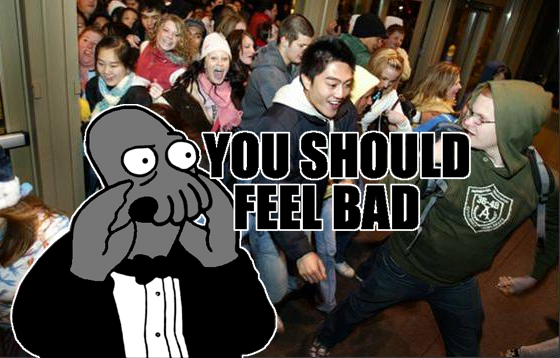
I almost don’t feel like I should have to explain this post. Look at that image on the right, look at that wave of flesh and hunger, which I can only compare to the somewhat recently released World War Z trailer. They move like an organism, a living being that flows into each store, ravenously grabbing at whatever they can.

For the non-Americans among you, Black Friday is the day after American Thanksgiving, which sets off the Christmas shopping season. Last year at this time a few pretty significant events happened, none of which I can say are positive.

The first recorded death from the event happened in 2008, when an employee, once again at Walmart, was literally trampled to death by a wave of shoppers. The stampede could not be halted when other employees tried to help their coworker, and even police who arrived at the scene were shoved and pushed back.

Honestly, I don’t even know what else to say.

Every year the sale begins earlier and earlier, and for a while it was normal for shops to open at 6:00 am. Last year many retailers opened at midnight for the first time. Now, on Black Friday 2012, Walmart [again] and several other superstores have announced that they will be opening their stores at 8:00 pm Thanksgiving Day. This has prompted a very understandable call for a walkout among workers.

If the trend continues this image won’t even make sense anymore.

As a Canadian I’ve celebrated American Thanksgiving only once. It was a time that I spent with a loving family, where copious amounts of food was served and the itis was experienced by many. It was a time of relaxation and enjoying each other’s company, not camping outside superstores in the freezing cold or trampling the meek and lowly [see: Walmart employees] underneath our feet.

All I can say is Happy Thanksgiving, Americans. If you care about at least one retailer [Target] respecting a national holiday, you can sign a petition here. Enjoy your turkey.

Fame Day: George Romero

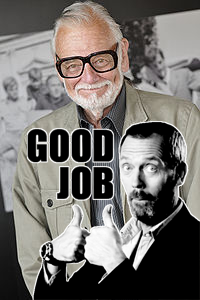
Who invented Rock-and-Roll? Who should be credited as the inventor of the video game? Who’s responsible for the Zoidberg meme? Who is responsible for the way we celebrate Halloween?

Simple truth of the matter is, we can trace plenty of elements of culture to the general time period or people group where they originated, but never just who first came up with the idea of shoelaces, or “push it somewhere else Patrick.”

There’s plenty of our culture that we just accept without being able to credit the inventor, however, this Fame Day we’ll be shining the spotlight on someone we can.

The one and only George Romero, whose influence on our culture arguable is on par with Rock-and-Roll.

Romero, for those few of you who might not recognize the name, is the creator of such films as Night of the Living Dead, Dawn of the Dead, and Day of the Dead, and according to many the father of all zombies.

Now while that affectionate title has been attached to him, the fact of the matter is, Romero did not invent the concept of the living dead. What he did do, however, was bring the concept out of obscurity, and do it so well that his work has become the basis for all subsequent zombie-horror. Zombieland, The Walking Dead, Shaun of the Dead, Resident Evil, Left for Dead, World War Z, Plants Vs. Zombies, Stephen King’s Cell, “Thriller,” I am Legend, you name it. There’s hardly an aspect of our culture that hasn’t had some zombie influence or spin-off (even before our recent craze), and there’s hardly an aspect of the zombie mythos that hasn’t been cemented and popularized by Romero. The man has simply hit it out of the park.

Now I’m not saying you have to like zombies- you don’t. I’m not saying that you have to like the films of George Romero- I don’t. But you have got to respect a man who has had such a profound influence on not only American, but world culture over the past half century (that’s right, half-century).

So, George Romero, in this last minute before midnight on Halloween 2012, we here at Culture War Reporters are tipping our hats to you.

Manly Culture

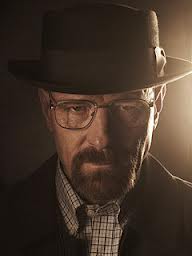
Even if you haven’t recognized it for what it is, chances are, you’ve seen elements of it. The resurgence of beards, comments on period piece clips like “Why don’t we wear hats anymore?” or “Dang- they knew how to dress back then.” Or perhaps you’ve stumbled across The Art of Manliness or are (like me) a faithful apostle of Ron Swanson.

Now whether you’re aware of it or not, there is a growing culture based around this general perspective of “manliness” that supposedly existed from 5,000 BC to 1974 AD. The resurgence in the popularity of the beard, the wave of internet memes centered around being “classy,” our love affair with period pieces- all of this compounded has created the beginnings of a whole new subculture.

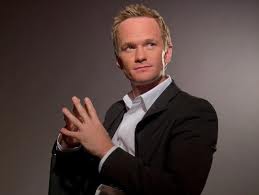
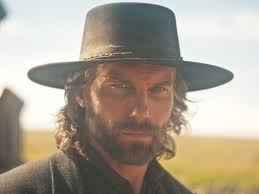
Don’t believe me? Just take a look at some of our favorite TV characters.

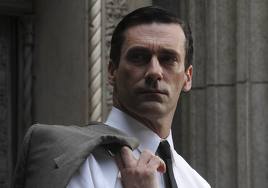
Don “F***-You, Liver!” Draper

Jack “Even Ayn Rand Thinks I’m Egotistical” Donaghy

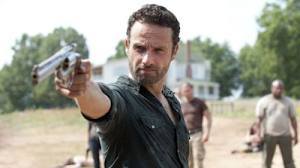
Rick “Bad Decisions” Grimes

Walter “Tied with Draper for Making People Love Fedoras” White

Barney “Legen- wait for it… -DARY!” Stinson

Cullen “I Will Punch You For No Particular Reason” Bohannon

Comedy, Drama, Action/Horror, Westerns- this is a pretty broad range, and we’ve got the same strong, dour antihero type in all of them. Men who remind us of our fathers and grandfathers. Tough as nails bastards who came to this country with only a dollar in their pockets- who took a break from their honest 8 to 8 jobs of hitting metal with other pieces of metal to kill Nazis and look dapper doing it.

So what’s this culture all about? As with any group, we can talk about the superfluous or cosmetic elements- in the case of the “manly” group, handshake etiquette, strait-razor whetting, and driving stick- but to really understand ’em, we’re going to need to look at the underlying values in play here.

Independence:

What do all the men shown above have in common? A degree of independence. They’re DIY guys. Men who aren’t reliant on the help or charity of others- in short, dudes who can take care of themselves in most any situation, from car repair to providing for the family to killing the undead. And on that note…

Initiative:

These are all men who don’t allow themselves to be victims. They’re proactive moment-seizing leaders who don’t wait idly by for someone to step up. Good or bad, they’re leading the way- and speaking of bad…

Stoic:

These are guys who tend to lend credence to the stereotype of the unspeaking, unfeeling male. At best, the strong, silent type- at worse, the uncommunicative lout. One way or another, they don’t let the situation get the better of them. That’d be undignified, and if there’s one thing that they’re about, it’s…

Dignity/Pride:

It’s in the way they dress, the way they speak, the way they expected to be treated. A kind of code that prohibits some things and makes others compulsory. You can’t hold your head high, then what’s the point in having one?

Moral Ambiguity:

These men are all, to varying degrees, antiheroes. Guys with their own agendas and a certain degree of moral ambiguity that keeps you on your toes. There’s a level of egotism, self-centeredness, and disregard for others that makes them pretty good at what they do, but what they do not all that good- certainly they don’t fit the traditional mold of the selfless, self-sacrificial hero.

Wealth:

And while it’s not true for all of them, money tends to be a major element of their stories. A drive to be successful, prosperous, and (again) independent. It’s the age-old dream of being your own boss.

So what does all of this boil down to?

Power.

It’s about power. These guys represent everything we, as a generation, aren’t. Independent, wealthy, self-assured, proud. Does that sound like us? Not at all. We’re the casual dressed, globally conscious masses struggling to make it by, and taking whatever miserable, degrading soulless job we can find. We’re not strong like these glamorized images of our grandparents are (having conveniently erased the racism, bigotry, and misogyny).

But we want to be.

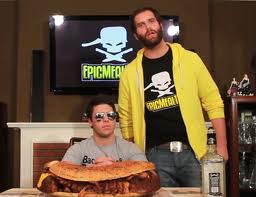
And so begins the perpetual motion machine of life-imitating-art and art-imitating-life. Epic Meal Time, Memes, Period Pieces- the list goes on.

So is this a good thing or a bad thing?

Well, there are good and bad elements to every culture (some more bad than good, and vice versa), but let’s list out the positives and negatives.

The positives have been wrapped in bacon

Positive:

  • We can stand to toughen up a bit a lot as a generation. We don’t need to be bending horseshoes with our teeth, but some basic survival skills and a thicker skin when it comes to discomfort and hardship would be nice (battery running out on your phone doesn’t count as suffering).
  • In these tough economic times, be able to do basic repairs to your house and car aren’t just good- they’re necessary. Same goes for any of the thrifty elements of the culture.
  • Even if we don’t have it quite yet, demanding a certain level of dignity in our work and our day to day lives isn’t just good for you as an individual- it improves society on the whole.
  • While we probably shouldn’t worship the fedora or declare the suit to be the only appropriate clothing for a man over the age of twelve, it certainly doesn’t hurt to know how to dress ourselves, or conduct ourselves well in any given situation.

Negatives:

  • The glorification of the past can, as I jokingly mentioned above, lead to the uglier elements of it being glossed over. We hail our grandfathers as being great men, forgetting how easy it is to make a name for yourself when none of the good or prestigious jobs can be given to equally qualified women or non-white men.
  • The culture really doesn’t leave a whole lot of room for women at all, other than the kitchen. This is not to say that all adherents of the culture see it this way, but when you’re trying to espouse 1950s society, that includes 50s traditional gender roles as well.
  • It can’t be denied that there’s a strong conservative appeal in this culture, as well as hints of Ayn Rand’s Objectivism. Glorifying wealth and success, especially when coupled with a “do whatever you need to do” mentality, can lead to the twisted perspective that poor people are poor because they are lazy.
  • This culture, despite the intentions of its adherents, does give a home for sexism. The uglier elements of the masculinity movement, those who view women as belonging in the home and nowhere else will doubtlessly find it a lot easier to fly under the radar in a culture that’s utterly dominated by males.

So what’s the final verdict?


“Manly” culture doesn’t appear to be either helpful or harmful- at least, not yet. The underlying issue being power, it’s going to be faced with the task of walking the thin line between empowerment and megalomania. So long as self-control is kept in mind, they oughta be fine.

Be sure to look for next week’s installment: “Science” Culture.