Product Placement, and/or Wouldn’t an Ice Cold Pepsi Really Hit The Spot Right Now?

After a long day, I plan on sitting back and finally watching the last episode of CBC’s Being Erica, a show I began last summer and have yet to finish. While skimming its Wikipedia page I was reminded of Season 4 Episode 8, and the product placement that the video below accurately describes  as “egregious.”


It’s difficult to be immersed in a show that shoves advertising down your throat, and I definitely remember being disturbed by it. A car that can park itself is impressive, but watching two characters you’ve grown familiar with ooh and aah as a car salesman lists its features is not. As I watch the clip again and hear the back and forth of “No way” and “Way” it’s hard not to feel a little sick inside.

As was to be expected, the Canadian press was far from thrilled by this. An article on the National Post titled “How Being Erica took product integration too far” cites this episode as the one that caused the author to “break up with Erica.” She also referenced a the following point I had already been planning on making:

Is there anything 30 Rock can’t get away with? The clip above features product placement that is far more in-your-face than what was found in Being Erica, yet manages to pull it off. It’s both meta and very funny, and as a result as viewers we can laugh it off and even respect what the show is doing.

How much, then, can we put up with? I fully recognize that Dr. Pepper plays a fairly prominent role in the first three Spider-man films, and the ridiculous amount of BMWs in Mission Impossible: Ghost Protocol was impossible to ignore. Phones, more than ever have gotten a good amount of screen time in music videos, with so many examples out there I’m not even going to link to one.

Product placement [or integration, which definitely has more positive connotations] has, and will continue to be around, but is this something that we should take for granted and accept? That particular episode of Being Erica sparked an uproar of sorts, with audience members feeling offended that the network would think so little of them. The message behind their complaints seems to be: You can advertise to us, but be subtle about it.

The economy’s not in great shape, and TV shows and movies and music videos can only be made if there’s money to fund them. Since we’re going to keep getting logos flashed in our faces, what should we do? Can we do anything about it? As consumers of the media we should all have standards we expect to be met, but the question now is when do we draw the line?
Sweden Recognizes Kopimism as a Religion: What on Earth does ‘Religion’ Mean?

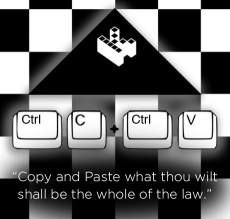
Sweden’s pretty liberal when it comes to copyright laws, as a government and as a culture – it’s the home of the thepiratebay.org and there’s a healthy anti-anti-piracy-movement movement in Sweden that’s been active since 2001. Further proof of piracy as culture in Sweden is the fact that the Swedish government just officially recognized the Church of Kopimism.

Kopimism’s central dogma centers around the idea that information is a holy thing, and copying information a sacrament. CTRL+C and CTRL+V are considered holy symbols. The English page of the church’s website says:

We challenge all copyright believers – most of which have a great deal of influence in politics, and who derive their power by limiting people’s lives and freedom.

Isak Gerson’s personal website (translated by Google) says that a Kopimist a “person who has the philosophical belief that all information should be freely distributed and unrestricted. This philosophy opposes copyrights in all forms and encourages piracy of all types of media including music, movies, TV shows, and software.”

So Gerson (who, weirdly, is also a member of the Christian Student Movement in Sweden) took this philosophy and pasted some “ritual” labels on everything and got a religion (after petitioning to the government 3 times, to his credit). The result is both a straight-faced mockery of the difficulty governments face w/r/t defining ‘religion’ (on the Kopimist website, the first line of one of the definitions of Kopimism is the defense “A religion is a belief system with rituals.”) and a strange manifestation of a strongly held belief.

Religions rooted in the internet are not a new thing. With all those people registering as “Jedi” in the 2001 census, Pastafarianism, and the prevalence of Cthulu worship, the appearance of a semi-ironic religious movement started by otherwise apathetic 20 year old males is becoming a pattern.
Maybe it’s just another irony-soaked fad, like speaking with ridiculous grammar or posting hilarious misquotes – or maybe the semi-ironic religions created will garner more earnestness and lose some irony and become, weirdly, a real way that people define their philosophies. The definition of the word “religion”, in the context of recent events and the influence of internet culture, is changing, and it’ll be interesting to see what happens to it.

The Virgin Diaries: A Book Review

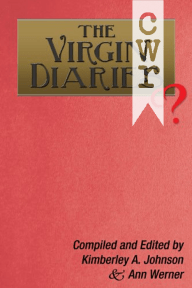
“What does it feel like to lose your virginity?” This is a question asked in red font, all-caps, at the top of the back cover. This is also a question that I can confidently say The Virgin Diaries answers. With the  stories of 72 men and women and their respective first-time sexual experiences, this is a book that provides several dozen responses.

Edited and compiled by mother/daughter writing team Kimberly A. Johnson and Ann Werner, The Virgin Diaries is made up of stories that span a number of decades. To gather this information anonymous questionnaires were sent out, with the expectation that they be answered in a story format. While the authors of these stories make themselves distinct from one another through their voices, the way in which questions were asked definitely has an impact on how narratives were told and, consequently, how they read. Continue reading

World War Z and other Incidences of the Undead

I read World War Z by Max Brooks over break – I tend to stay away from zombie media,1 but the book was interesting enough to win over my zombie-avoiding tendencies and now I can’t stop noticing the huge and recent (I’d say – recent as in like, the last decade) zombie focus almost everywhere in culture.

Did everyone else but me know about this? Did you know how many zombie poetry websites there are? You can even buy a zombie-themed magnetic poetry set. You know, so you can compose some verses about decaying flesh-eating people on the fridge while waiting for your ramen to heat up.

This guy published his work online in 2005 – excerpt:

Making
love with
zombies can
never be
without consequence.

There’s Aim for the Head, an anthology of 50 poets.

There’s Z-Composition, which is a recent start-up with sections slated for poetry, recipes, and flash fiction, and grand ideas of “a bi-monthly literary e-zine with a yearly print anthology slated to launch in 2012”.

The Zombie Nation (the tagline of which is “Begin the Zombpocalypse”) also has zombie poetry posts.

The Zombie Hunter: A Survivalist’s Journal [“A family man’s guide to surviving the zombie apocalypse”] isn’t poetry but is impressive: it’s been going pretty steadily since 2010, complete with pictures, coconuts, and a thorough knowledge of firearms.

Why are zombies so freaking popular? (or: Elisa thinks too much)
The prevalence of a smaller genre like poetry dedicated to the zombie wave is just a piece of the fascinating trend. The prevailing attraction of zombie/zombie-fighting culture, I think, is the focus on vivacity and resourcefulness amidst the breakdown of society. You have to rob the grocery store to eat and you have to destroy the staircase of a building to secure it from zombies, but the stealing and destruction are by themselves also pretty exciting. And in this generation, one of the first to grow up in such a (generally) stable and structured society, craves some sense of rule-breaking and the ability to use their imagined Crusoe/Macguyver-esque survival skills.

Zombies are also about death, but not because they’re dead. Zombies as a villain are extremely basic (I’m talking about slow-moving zombies, here, generally): in World War Z Brooks pointed out that you have no hope of discouraging zombies; there is no leader to go after and you cannot, like humans, make them uncomfortable or fearful. We fear zombies not because they’ll go after us quickly and suprisingly, but because they’re slow and, as much as we ignore or outrun them, we know that they’re still coming. A scenario in which we lose to zombies wouldn’t be large and violent and exciting – it would be, simply, slow and inevitable.

Our fear of zombies precisely mimics our fear of death, which I think is a sort of manifestation of a denial of death in contemporary culture for the past century.

The Movies Always Come Back, the Actors Don’t

Sequels are popular. I know I shouldn’t have to spell that out for anyone, but really, they are. The top 7 movies of 2011 were sequels. The ninth film on that list was too, if that helps prove my point at all.

What also isn’t new are sequels [or prequels] to feature  different actors for the same characters. The earliest example that comes to mind is Christopher Showerman, who played the titular character in George of the Jungle 2, and who also broke the 4th wall by telling the audience that the studio is “too cheap to pay Brendan Fraser.” Another example is a franchise that nobody cares about, with The Scorpion King 3: Battle for Redemption featuring the third actor thus far to portray Mathayus.

A more up-to-date illustration is Rachel Dawes in Christopher Nolan’s first two
Batman films. Katie Holmes was initially to reprise the role in The Dark Knight, but turned it down to be in Mad Money. Maggie Gyllenhaal took over, a choice that did not affect audiences’ enjoyment of the film [it’s currently the tenth highest-grossing film of all time].

In even more recent news, E! Online reported this morning that a Bridesmaids sequel could happen with or without star and writer Kristin Wiig. Co-star Melissa McCarthy is quoted as saying “I think it’s a terrible idea,” coupled with the assertions that she wouldn’t want to be a part of a film without Wiig.

A sequel that has actually been given the green light is The Bourne Legacy, which will not be featuring Matt Damon as Jason Bourne. The film will instead star Jeremy Renner as Aaron Cross, with the narrative acting as a “sidequel” to the original trilogy. The current director has not completely ruled out the chance of Damon returning for future films.

What do these choices say about the audiences viewing these films? Is a franchise, a movie title, all that’s needed to draw us back to theatres? If sequels are going to continue to dominate the big screen then we will watch them, but what are our standards for them? How important is continuity to the average media consumer?

TV Tropes has a term “Chuck Cunningham Syndrome,” which refers to characters who simply disappear into thin air. The following trailer for G.I. Joe: Retaliation appears to have all of the cast from the original film die, which I think is definitely one way to justify an entirely new cast.

Lisbeth, the Sexualized Autist: What The Girl with the Dragon Tattoo says about American Culture

Let’s just be clear: I know that The Girl with the Dragon Tattoo is Swedish. My comment is on its popularity in American culture: its best-seller status in the NYT for 18 months, triggering a Hollywood remake of the original Swedish film. The heroine, Lisbeth, is whom I’m most interested in.

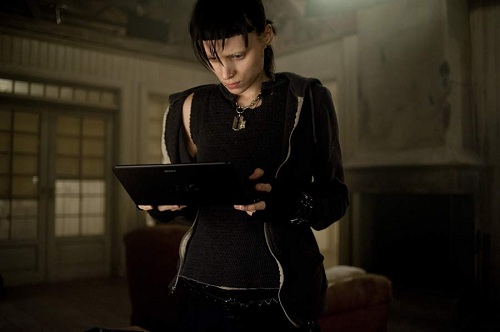
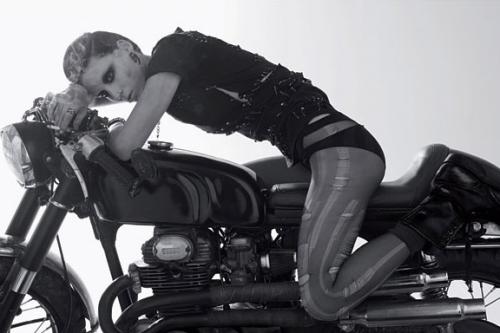
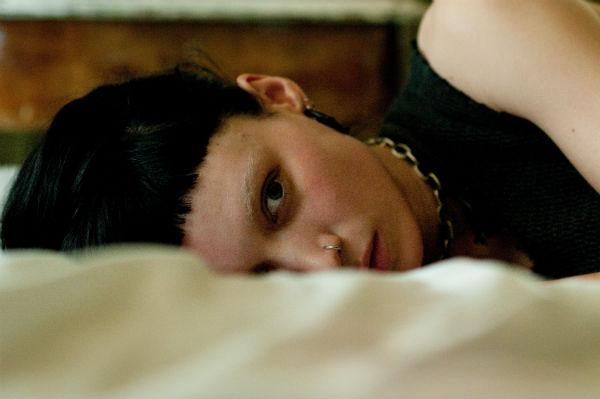
Rooney Mara in Girl with the Dragon Tattoo

Noomi Rapace as Lisbeth in the 2009 Swedish film and Rooney Mara in the 2011 American version

Lisbeth is the poster child of counter-culture: mowhawk, dyed hair, androgenous, facial piercings – what attracts people to her is that she manages to pull all of these things off (the reason being she is astoundingly beautiful) and references to her terrible experiences conveniently switch her label from “irresponsible” to “misunderstood”. Lisbeth, I think, represents two key memes in contemporary culture, the subtle prevalance of which interest me: the sexualized autist and the competent social outcast.

The Autist

Rooney Mara in Girl with the Dragon TattooLet me be clear: I’m not talking about a classified DSM-IV disorder when I talk about Lisbeth’s autistic traits – I’m just talking about the word autist as it derives from the root autos (self), which refers to a lack of empathetic sensitivity. Classic autists in fiction include: Spock, Data, Sherlock Holmes, C3PO, Sheldon from The Big Bang Theory, Monk, and (often) children. Autists serve the purpose of deconstructing society: they often involve humorous responses to or dissections of modes of relating that come natural to most humans. Here is Sheldon’s deconstruction of the social idea of dating:

I present to you the Relationship Agreement. A binding covenant that in its 31 pages enumerates, illuminates and codifies the responsibilities of Sheldon Lee Cooper (hereinafter referred to as the “Boyfriend”) and Amy Farrah Fowler (hereinafter referred to as the “Girlfriend”)

In TGWTDT, Lisbeth interacts autistically: one of the first things said about her report is that though it is thorough, it lacks her personal opinion. She, stonefacedly, refuses to acknowledge that she understands any reason why her opinion would be useful. Throughout the movie, Lisbeth is expertly and unthinkingly wholly dedicated to performing her obsessive tasks with excellence: autists almost always are (Monk, River Tam).

The Competent Social Outcast

Rooney Mara in Girl with the Dragon TattooLisbeth’s upbringing and fringe placement in society should, according to social evolution, render her unable to support herself. On the contrary, she achieves competency without the support of society, and spends much of her time defending herself from the flaws of the establishment (every scene with the social worker, his eventual blackmail). She joins Julia Roberts in Pretty Woman, the woman from The 5th Element, and Jane Eyre as the neglected gamines who nonetheless flourish and become experts at fending for themselves.

Sexualized

The essence of Lisbeth’s character is a common one that seems to be increasingly attractive to American audiences: the sexualized, independent autist. This is River Tam from Firefly, the woman from The 5th Element, and is echoed in Edward Cullen from Twilight, Dexter, and Dr. House. These characters reveal society’s increasing fetish of self-efficacy – they exude strength, independence, and provide an expression of rage at the more subtle social injustices and inhibitions of social norms. They do not respond to social patterns and expectations, like Sheldon Cooper or or C3PO, but unlike those humorous characters, the sexualized competent autist provides a violent and hypersexual (almost gnostically sexual – oftentimes, like with Julia Roberts in Pretty Woman and Lisbeth, the characters detach themselves from their sexuality and use it as a tool) successful escape. They offer a character who does not succumb to illogical non-verbal communication and oppressive social codes: they interact logically, not heatedly (Lisbeth asking Mikael for permission to kill a serial killer), and ultimately succeed, and achieve a sexualized, center-character status at that, as opposed to the comic relief status of the typical autist.

What does this say about American culture? I’d say that it indicates a reaction against the stress of social niceties. These movies could be called counter-culture, but a very thinly veiled counter-culture – no, sexualized autistic characters are not appearing in chick flicks with Owen Wilson, but The Girl with the Dragon Tattoo was by no means an obscure movie. The characters precede what I think is going to become a more prevalent theme in American culture: a fetish of successful social rejection.

Rooney Mara in Girl with the Dragon Tattoo