Tag Archives: College

Evan and Gordon Talk: The Purpose of College

EVAN: This week on E&GT we take a break from scrutinizing film to look back about seven or so months to a different time of our lives: college. Now that we’ve both graduated we find ourselves in a different stage of life, and it begs the question of what those four years did for us, and whether or not that’s what we wanted or expected.

GORDON: Throughout my college career, especially towards the end, I heard a recurring argument:

“College is a scam,” they said, “It’s a trap or, at very best, a waste of money. You don’t learn anything you can actually translate into a job, so either drop out while you can or don’t sweat the grades and party your buns off.”

EVAN: Wait, who is the “they” that was saying this?

GORDON: I’ve read it in various Cracked articles, I’ve seen it covered in webcomics and in comments, I’ve heard it on the radio. Not always the same tone,  but it always boiled down to that essential idea. “College doesn’t teach you what you really need to know, it just puts you in debt and wastes your time.”

EVAN: Well, I guess that really begs the question of “What is it that we’re really supposed to know?” If college is the great institution to prepare us for our lives, what should it have taught us?

GORDON: Some would argue that technical and vocational skills are what we really need. Stuff that’s meant to train us for jobs. Wrenches, not Whitman.

EVAN: Which is the sort of thing you see advertised on television late at night or in the middle of the day; schools for electricians and dental assistants and plumbers and what have you.

GORDON: Which always come across as propaganda films from a dystopic alternate timeline. They can claim to be breaking the mold all they want- I’ll still always just see Orwellian Factory-Schools designed train the subservient masses for laboring in name of supreme leader and glorious fatherland.

EVAN: Heh heh.

The contrast to this idea you brought up when first introducing this topic, that the two sides could be seen as college prepping us for our careers or making us more well-rounded individuals.

There’s obviously more to it than that, but how would you boil the latter option down to its essence?

GORDON: I’d probably cite our own alma mater’s (for me more just “mater”) slogan of “global mindedness.” The idea is to create people who are, first and foremost, thinkers. Logical and critically minded thinkers with strong creative abilities and appreciation for art and wonder. A noble enough sentiment to be sure.

EVAN: To really engage with this topic I feel like we should have equal footing, and I’ll have to give our readers a little bit of context-

I’m currently unemployed, and chose to live the latter part of 2012 living with and taking care of my grandfather, whose wife [my grandmother] passed away in September. My job hunt has only very recently started up again.

I say that because as it stands one of us is currently working and knows how his education has aided him and the other is not.

GORDON: I, unlike my Canadian counter-part, am currently employed, having worked two jobs simultaneously for a while there. Having vainly searched for a job the entire summer and most of the fall, I am now working a job helping unemployed people find work, the irony of which is not lost on me.

EVAN: And did you, my Employed-American friend, find that a degree helped you in your search for work?

GORDON: In all honesty, I’m not sure.

On one hand, I can say that certain classes I brought definitely assisted me in securing a job, but those classes really more on the whole “applied” spectrum of education. I definitely didn’t need to go to a top 3% college. People, it turns out, don’t give a crap about where you went.

EVAN: Again, I can’t comment from experience, but I’d like to say that it depends on the job.

GORDON: This is probably true. However, if you were looking for a job, which is gonna look better on a resume? Four years of college, or four years of experience in that field? From everything that I’ve seen, I’d take experience every time.

EVAN: And I agree with that entirely. I can’t count the number of want ads I’ve seen [and this is for stuff like janitorial work, and dishwasher] that require “minimum 2 years work experience.”

It’s like, heck, what was I doing in school when I could’ve been out working this whole time?

GORDON: But of course, that brings up the first question: what’s the point of college? Are we expected to choose a career path and be trained like the mindless, dehumanized proles that we are?

EVAN: Well, for me personally my career goals were more tailored to an academic setting. My personal interest in writing and editing is definitely something that can and is fostered in that environment.

That being said, if I had skipped my four years of college to simply freelance as hard as I could out there in the real world, would I be a better writer today? I honestly couldn’t tell you.

GORDON: The problem is that both sides have really, really big flaws.

On the one hand, turning college into a simple vocational training course does truly rip the soul right out of academia. It makes it just the place you go to get a desk job instead of a manual one.

On the other hand, college as it is now, while fostering intellect and creativity, is as unhelpful as it is expensive. Why put yourself over a hundred thousand dollars in debt to not get employment?

EVAN: I guess in the bigger picture, what is it that we want to do with our lives?

There are plenty of jobs out there that don’t require a college education, and that certainly benefit from hard work at an early stage.

On the flip-side, there are jobs that you simply can’t get without a degree.

GORDON: We also can’t imagine that we can simply get any job we want to begin with. It’s all a gamble. I can get a degree in biology, but that doesn’t at all mean I’m gonna get a job in biology- heck, I’d probably be lucky if I got something even close!

EVAN: Like a janitor in a pharmaceutical company. Or the guy who delivers mail to a biology professor’s house.

GORDON: Exactly. So is that it, then? It’s the whole dang system?

EVAN: I mean, yeah. I feel like more often than not that’s all it really boils down to.

GORDON: So let’s talk about an ideal universe. Or at least one that ain’t quite so screwed up. What’s college look like? Give me your take.

This does not count as an ideal college…

EVAN: It’s tricky, man- Because I would like everyone to be well-read individuals who think about the media that they access and have a fuller understanding of what makes us who and what we are as a culture, I mean, that’s the dream-

But at the same time I acknowledge that there are people who don’t care a whit about any or all of that.

And with so many people who enjoy poetry and the arts, while those are debatably important parts of society, what happens when they need to find work? How many playwrights can any single country sustain?

GORDON: My response would be “how many playwrights are there actually out there?”

EVAN: I think there’s a difference between the actual number, and how many individuals would actually like to be a part of that number.

GORDON: Touché, but we can blame certain jobs being glorified and others suffering from unwarranted contempt.

But let’s move on. College. Your college- what’s it look like?

EVAN: A thorough exploration of the ideas that created Western civilization, the one most of us live in today, because it’s extremely important to observe our origins before we can look at our present and then ahead, after that.

A strong emphasis on writing with the reason that without the ability to properly communicate our thoughts how can we even really fully think them to begin with.

GORDON: Sounds to me that you’re still leaning more towards the side of academia.

EVAN: Well, like we’ve discussed, I have a slight bias. And I suppose we haven’t really defined the question as far as the purpose of college.

GORDON: My take would a combination of both sides, with the end goal being application. We’re talking about the study of English for the purposes of applying the principles in same, either in writing or screenplays or entertainment or communication of some kind.

I feel this would allow for all the creative and academic elements while keeping the whole process grounded. No ivory towers.

EVAN: I don’t think my take discounts the possibility of lining up with what you said, but that’s a really good description of how college could and maybe should be.

That being said, we are actually overtime.

GORDON: You wanna talk about drugs and culture next time?

EVAN: I think at some point we could hand this back to the viewers, actually. We’ve really gotten a handle on this whole E&GT. I’m just not sure when or how to do so.

GORDON: The readers are slack-jawed cattle who would eat their own shoes if we told them to.

EVAN: I should probably edit that out of the final post.

GORDON: Nah, we can let ’em vote. My subject would be Drugs and Culture.

EVAN: Mine would be . . . um . . . huh. About SNL. How to fix SNL.

GORDON: Nice. Let it be so.

EVAN: Tell the nice people to have a good Wednesday, Gordon.

GORDON: Have a good Wednesday, Gordon.

EVAN: And don’t forget to vote, readers! Thanks for putting up with my co-writer!

Evan and Gordon Talk: Greatest Food Show of All Time

EVAN: Last week you suggested we talk about food, something that I am always, always down with, and-

GORDON: ME WANT FOOD. Shows.

EVAN: You said we should talk about food shows. Namely, the greatest food show of all time. Ever. In existence.

GORDON: Well, if we’re going to come up with the greatest food show in existence, we obviously have to take into account everything: from the high-class Iron Chef (and Iron Chef spin-off[s]) competition shows to the most rough and tumble [namely, Epic Meal Time].

EVAN: Ooh, dang, I hadn’t even thought of that last one. To be fair, though, thinking about it this week I came up with what I thought the basic structure of the ultimate food show would be.

GORDON: Shoot.

EVAN: I’m a man who loves his cooking shows, so my ultimate cooking show would involve, ideally, Top Chef Masters, MasterChef, and something like Surivorman.

GORDON: Survivorman?

EVAN: It’s like a Bear Grylls-esque show.

GORDON: The chefs have to hunt and skin their ingredients?

EVAN: I’m getting there-

It would have the insane challenges of Top Chef Masters, which calls for ridiculousness such as a gourmet dish made of licorice and sardines or something like that, coupled with the ability to appeal to different a wide range of different palates, a la the challenges of MasterChef, with a sprinkle of Survivorman for that added kick which, as you said, would be along the lines of hunting, skinning, etc.

GORDON: As much as I enjoy the concept of Mario Batali going mano-a-mano with a Yukon bull moose, I feel that there’s only so much you can cram into a cooking show- and it should be focused on the food itself.

EVAN: Well, let’s focus on my first two points then- some seriously difficult [and devious] challenges, as well as the added element of having to appeal to different palates.

GORDON: I can agree with that, only I would obviously like to see the show also grounded in some reality. Like dropping the chefs off in a college cafeteria somewhere and forcing them to work with what precious little is offered there, or an episode exclusively about ramen . . .

EVAN: A ramen episode would be awesome. I actually had the most amazing instant noodles this morning. It was Indonesian “mi goreng,” and it comes with sweet soy sauce, chili sauce, seasoning oil, seasoning powder, and fried onions.

GORDON: YOU HAD INDOMIE? THAT IS THE BEST RAMEN IN EXISTENCE! I WOULD KILL AN ORPHANAGE FOR A PACKET OF THAT STUFF!

EVAN: WE ONLY HAD TWO PACKS AND I ATE THE LAST ONE THIS MORNING. I NEED TO FIND MORE.

GORDON: But yeah, I think it’s important that the show not get too fancy.

EVAN: So we’ve gotta keep it pretty grounded, that makes sense. What I think would be really interesting, though, is kind of turning the whole thing over.

Because in gourmet restaurants, it’s never ever “the customer is always right.” It’s “the chef is always right.” So if we had a show where the chefs had to specifically cater to what people wanted, instead of them being all “I went to school for this I know what you want.”

GORDON: That would be cool- I recall us watching a cooking show episode where the contestants were judged by a whole bunch of kids. Vox populi; I like it

EVAN: Yep, that would be MasterChef. I loved how one guy kept saying he was a dad, and he knew what kids liked and didn’t like.

GORDON: I do think we need to cut something out.

EVAN: Yeah?

GORDON: That’s the judges screwing with the cooks:

EVAN: Really? I kind of love that.

GORDON: It doesn’t build tension- it’s just annoying.

I also feel that there should always be a judge from crazy far away. so there’s always a really different perspective.

EVAN: That’d be cool.

I know something we definitely need to remove.

GORDON: Yeah?

EVAN: Product placement.

GORDON: THANK YOU!

Yes- that crap gets chucked out. Unless. Unless it’s a genuine moment of the chef expressing that a certain thing has really helped him. I think that kind of endorsement is fair.

EVAN: Yeah, I mean, that’s valid.Like, there’s this guy, on MasterChef, who would say things like, “Let’s see what you cooked on your MasterChef TM Frying Pan.” It was painfully blatant.

GORDON: It was.

You good with three chefs?

EVAN: For a show? I don’t see why not.

GORDON: How many contestants? Two, à la Iron Chef, or elimination style, à la MasterChef?

EVAN: Wait, did you mean three judges?

GORDON: I did.

EVAN: I think two chefs, three judges.

GORDON: Are the judges all chefs, or do we include food critics and celebrities? I don’t care for the food critics too much. Too . . . exclusionary?

EVAN: I think food critics have their place. I think that celebrities can be . . . stretched. Like one time on Iron Chef: America one of the celebs was the guy who played Gunther on Friends. The guy who owned Central Perk.

GORDON: Bill Murray was on there, wasn’t he? Called Batali a princess?

EVAN: I think he was in the audience, haha. Which is hilarious.

GORDON: It was. I demand Bill Murray always be in the audience.

EVAN: You would torture the poor man.

GORDON: All in the name of the perfect cooking show, yes. But moving on . . . Secret ingredients?

EVAN: So are we going for more of an Iron Chef approach here?

GORDON: Yeah, but bear with me. I think we should include bonus points for making the food really, really big, à la Epic Meal Time. Decadence combined with technique, which is I believe how we first came up with Turduckens.

EVAN: See, I think we can have decadence and technique by having different rounds, each one hugely different from the one before it. Maybe you can create a Turbaconepic, but can you then create a tower . . . out of soup!?

GORDON: That sounds like an awesome idea.

So let’s see what we got here: two chefs face off, surprised by secret ingredients as they work in different rounds that require ingenuity on their part bordering on genius.

EVAN: Yep. Challenges that force them to keep on their toes.

GORDON: They are judged by three qualified individuals, always including one from a culture whose cuisine is extremely different from that being served. Judgement is quick and of course, accessible to the audience. The only thing we’re missing is the prize . . . I say a golden cauldron.

EVAN: How very Asterix of you.


GORDON:
 FULL OF THEIR FAVORITE FOOD!

EVAN: Haha, what?

GORDON: Think about it: You just won, you get food. What could make you happier? [That can be shown on national television.]

EVAN: I feel like chefs are pretty snobby about what they eat. Like whatever it is would have to be exactly to their liking.

GORDON: What would you fill it with then?

EVAN: I dunno, something expensive, but food related. Like truffles, or caviar. It’s so expensive it’s basically gold.

GORDON: Fair enough. But they have to eat it with their hands; that’s what the credits fade to.

EVAN: Sounds good to me.

GORDON: Theme song? Opening music?

EVAN: Oh man, uh. . . Something really epic . . .

GORDON: O Fortuna?

EVAN: Something scored by that one guy, Hans Zimmer.

GORDON: Works for me.

EVAN: So with that pretty much taken care of, what shall we turn our attention to next week? I do believe we’ve hit four TV-related E&GTs in a row.

GORDON: Let’s talk about literature.

EVAN: Alright. In what regard?

GORDON: Books that are coming out, or not coming out. I don’t rightly know. You wanna invent a new genre?

EVAN: Okay, that’s our new topic. That’s all for now, folks! Thanks for tuning in, and we’ll see you next week for Evan and Gordon Talk!

GORDON: Vote if you’d like, of course-

Evan and Gordon Talk: The Greatest Flaw of This Generation

GORDON: Ladies and gentlemen- this is your captain speaking. After some unavoidable delays we will finally be taking off into our mid-week discussion. Our topic for today is “What’s the greatest flaw of this generation?”(This generation being those born in the late 80s to mid 90s: “The Millennials,” “Generation I”, “Gen Y”- call us what you will).

EVAN: As I mentioned in the news update, we scrapped our conversation last night, largely because it became cyclical. To be more specific, we ended up going back and forth between apathy and cowardice, with one leading back to the other and so on.

GORDON: But let’s widen the picture a bit. While apathy is the go-to criticism many have, also up there for our generation’s flaws is our alleged “sense of entitlement.” Thoughts?

EVAN: If we’re still going with your incredibly broad age range, then yes, I definitely think that a lot of kids these days feel a sense of entitlement. It’s just the norm now to have wireless internet, a phone, the latest iGadget, etc. They’re just expected, the new given.

GORDON: Is that fair, though? I mean- haven’t we assumed that phones, indoor toilets, and electricity are “the norm” since they were first invented?

EVAN: To a point, though, some of what you listed are basic necessities. I’d argue that indoor plumbing is considered much more standard than an iPad.

GORDON: This is true, but I don’t think our generation- barring the handful of people who actually do feel entitled- views the iPad or any specific item as being “standard”- it’s the interconnection that’s the norm, as well as the expectations for new technology.

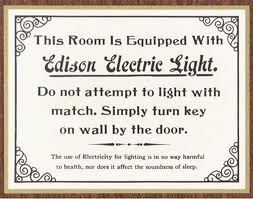
I mean, back in the day you didn’t need light bulbs. But if they’re mass produced, and safer than gas-lamps, then it just stands to reason that we’d eventually come to expect them.

But of course technology’s only one element. what about the idea that this generation is “entitled” in the sense that they get to “find themselves” or “focus on their art” or whatever hipster euphemism is being used to say “part-time employed”?

EVAN: Do I think that people feel they deserve the right to do more than just hit the ground running after college, get right down to the ol’ nine-to-five? I mean, yeah.

But I think this brings up a point I made yesterday about the “where” of our question. In France the age of retirement is 62 and that’s just expected. There are different standards depending on where you live in the world.

GORDON: This is true. I mean, each and every one of us would be considered spoiled brats if we jumped back a hundred years or so.

EVAN: Oh, no doubt. Especially you with your freakishly smooth hands.

GORDON: So would YOU say that the whole “entitlement” criticism stands?

And I use gloves. I refuse to be put down because I take better care of myself.

EVAN: You say that every time, but they’re still as smooth as a baby’s bottom.

GORDON: That means they’re working, and I’ll further have you know that I have a big ol’ scar in my right hand in the shape of a number “7.” But back to the issue-

It doesn’t seem like the “entitlement” bit sticks. Could we be classified as “lazy,” perhaps? The warped and stunted half-humans resulting from government dependence and the welfare state?

EVAN: Well, we discussed “laziness” last night specifically in the context of wanting to change what is clearly a broken system, but is what we’re talking about a general laziness? People just expecting to be spoon-fed?

GORDON: That’s the question. I recall a Cracked.com article in which the author kicked things off by apologizing for helping perpetuate the myth that a college education was a guarantee for a good job. Are we “lazy” in having had the expectation- as most of us had?

EVAN: Well, depending on who you ask, college is hard. In a way, I guess we expect that the hard work we put into maintaining a good GPA, et cetera, will result in finding employment once we’re out in the real world. Which, as I can attest to, is clearly not the case.

GORDON: So is that laziness then? Entitlement mentality?

EVAN: I don’t think that doing hard work and expecting a reward is laziness. That’s like someone working the fields and then being called a layabout because he expected crops to grow. A shaky comparison, I realize.

GORDON: Works for me. And I agree.

Now you yourself have accused us all of being creatively bankrupt. Could that be our major flaw? That we don’t make- we remix?

EVAN: I guess it depends on how we’re working this whole “greatest flaw of our generation” angle. The trend to rehash, remix, et cetera came about recently, but I’m not sure it’s because of us. Or is the question in regards to this day and age we’re in, and not those growing up in it?

GORDON: No, I mean us as an age-group, and that does pretty much answer the question right there. We are, for the most part, not the ones who are making the films and TV shows and music (give or take) of our time- that’s those who came before us.

EVAN: Exactly. Which is why we’re getting stuff like He-Man and Thundercats reboots, because those who were kids in the 80’s have a crippling nostalgia. Music is different, of course, but TV and movies are definitely controlled by the generation before us.

Okay, how about this. Maybe the flaw is our hellish appetite to be entertained.

GORDON: Ooh- interesting take. Expound, by all means.

EVAN: I mean, you’ve talked about the bilge that’s on television countless times. Do you know what we’ve been reduced to? A musical chairs gameshow called “Oh Sit!”

Are we so bored that we’ll watch people play “extreme musical chairs” for an hour?

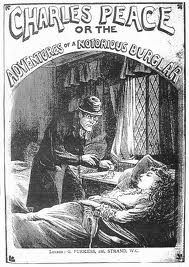
GORDON: I had no idea that existed. But surely this isn’t the first time in history that TV’s been crap. Or radio, or books, or music, or anything. Think of the “Penny Dreadfuls” back in the Victorian era- little, cheap trashy pulp-fiction novels made for mass consumption. Is that any worse than what we have today? Seems like the bilge is the same- it’s just the media that’ve changed.

EVAN: It may be the same, but it’s being produced at a frantic pace. That change, at least, has to be important.

GORDON: That speaks less to our appetites and more to our efficiency.

EVAN: I’d say that it has just as much to do with our appetites, judging by the content of what’s put out.

GORDON: We’re almost out of time, so let’s hit up some other key issues:

Apathy. As we said before, apathy tends to be the go-to criticism, at least, one of the major ones when it comes to our generation, and I think this is one of the easiest to put to rest. The Occupy Movement, environmentalism, increasing number of social movements, increasing global awareness- you name it. We’re strides ahead of the past couple generations. Heck, I’d go so far as to say we’re the most involved generation since the 60s and early 70s.

Well we’re out of time, and still of plenty of ground to cover- so rather than sloppily close up, we’ll be continuing our discussion next week with a question about hipster morality: “Do we want to be good, or do we just want to look good?” If you have any suggestions or recommendations for topics, don’t hesitate to shoot us a comment.

EVAN: Thanks for reading, and remember that CWR now updates every single weekday. I’ll see you tomorrow in our first ever “Fame Day” post!

Evan and Gordon Talk: Community, Season 4

GORDON: GOOOOOOOOOOOOD MORNING VIETNAM!!!! Gordon and Evan here again to delight, entertain, and edify! Today’s topic: the upcoming season of Community– sans creator Dan Harmon.

EVAN: Well, we’re here to talk about the new season in general, but yes. Showrunner/creator Dan Harmon has left us, and the show’s slavishly devoted fans, wondering what Friday evening holds.

GORDON: As much as I’d like to think otherwise- my money’s on the continued spin-out that last season gave us. Your bets?

EVAN: Well, let’s look at what we know- This upcoming season will only have 13 episodes, which, let’s face it, is definitely more in the vein of a beginning sitcom, not one four seasons in.

GORDON: You’re thinking creative reboot?

EVAN: I’m hoping for a creative reboot. I mean, don’t get me wrong, Harmon knows how to write. He has a formula and man, it works.

GORDON: But?

EVAN: But the third season did indeed “spin-out.”

I actually blogged about this about a year ago, and brought up a lot of points we actually talked about. Want to go over it?

GORDON: Sure thing.

EVAN: The points of the post were as follows:

1) Bring Them Back to School
2) Have a Little Class
3) Have Mercy on Ben Chang
4) Where Are We Going?
5) We Should See Other People

If you want to elaborate on them ever so slightly-

GORDON: Alright. While Evan and I do differ slightly on what we’d like to see the show bring back, these ARE the fundamentals here.

The whole reason we first started watching was because we, like the target demographic, were either in college, about to go to college, or just graduated from college and were looking back with fond memories- forgetting the ulcers that Statistics classes gave you.

EVAN: I loathed Stats.

GORDON:  Point is- it’s all about the college- put the characters back in classes, and back on campus.

Chang, of course, was one of the most mesmerizing characters in there; mysterious, inscrutable. The fact that he’s been reduced to a punching-bag who makes cameos every once in a while is just wrong. It’s like using the Venus de Milo as a door-stopper.

And of course, if we could actually see the characters progress, that’d be nice.
Troy, if I recall correctly, was dealing with the loss of his jock status.

EVAN: Way back in Season 1, though. They haven’t touched on his and Annie’s high school statuses in ages.

GORDON: Not at all.

And last but not least, it’d be cool to see some other characters. There’re only so many Starburns jokes out there. Remember that one teacher that Jeff was into?
That gal actually added to the show- she wasn’t some prop to set up jokes.

EVAN: As we talked about, way back, the show requires direction. What happened in Season 3, exactly?

GORDON: …stuff?

EVAN: All the characters started moving out of their dorms and such, and there was this big outward push. Something which, I think it’s fair to say, we didn’t expect to see until Season 4. They started to remove themselves from Greendale, which again we mentioned weakened the show.

GORDON: Exactly what year are these people, anyways? They finished freshman year, but after that I don’t think I ever saw ’em in class again.

EVAN: Heh. Seriously, though, this final thirteen-episode season is their final year. They’re going to be graduating, finally on that thirteenth episode.

GORDON: Really? Dang. It’s a shame so much was just… wasted.

EVAN: How about this: Let’s talk about what they did right in Season 3, and what we hope to see in Season 4. Just because, well, there were some solid episodes in there somewhere.

GORDON: Such as?

EVAN: “Remedial Chaos Theory.” Third episode of the season.

GORDON: I’m gonna have to disagree with you on that one. Solid writing- but not good writing for the show.

EVAN: “Studies in Modern Movement,” seventh, and “Regional Holiday Music,” the episode right before their hiatus.

GORDON: I hated the musical one- but that’s no surprise. And what was “Modern Movement,” again?

EVAN: The one where Annie moves in with Abed and Troy. It ends with a weird medley of Seal’s “Kiss From A Rose” as it pans between every character.

GORDON: I think you’re forgetting what a scatter-brained episode that was. Great individual jokes- but really poorly stitched together.

EVAN: I’m going to have to disagree with you. I’ve rewatched it a few times, and it holds up. It’s pretty good throughout.

GORDON: Well, we’ll have to settle on that.

But even if those all were as good as you recall- that is one freaking shoddy record. Plus, they barely even touched on Greendale Community College. That’s like…  “Hey, that’s a great story about food- but this is a murder mystery show.” It just doesn’t fit.

EVAN: And for those who might argue that-

GORDON: Let’s not do this, dude. The Community fans, they’re rabid, “ALL GLORY TO THE HYPNOTOAD” kind of people.

EVAN: Looking forward to that gif.

GORDON: I don’t think I’ve seen this much undeserved adoration since Taylor Swift started her campaign to destroy feminism.

EVAN: Whoa, I love “We Are Never Ever Getting Back Together.”

GORDON: Every time you play that song, a feminist gets cancer.

EVAN: It’ll be your turn eventually.

Anyway. In terms of Community, there’s no better place to gauge the show’s popularity than my favourite [heh- Canadians spell weird, -G] place for TV reviews, the AV Club. The lowest grade the show got last season was a B.

GORDON: Which shows what lousy reviewers they have for that show (that’s right, come get me). Look- the show’s bad. It’s been bad for a while now, and the occasional bit of unrelated humor isn’t enough to redeem it. Back when the show supposedly got axed, I was happy. For once- just once- I saw it happen to a series that (I thought) deserved it.

EVAN: Speaking of which, I need to remind you that 2 Broke Girls is the nation’s top-rated comedy.

GORDON: AAAARGH! It’s so wrong!

[takes a moment to compose himself]

Ok, we’ll do this- what would you want to see in the upcoming season?

EVAN: I would like to see . . . huh. That’s a good question.

 I’d like to see a kickin’ [that’s what the cool kids are saying thse days] prof for History 101, their final class together. I want to see closure as they graduate and are forced to move on with their lives. I mean, man, we graduated like what, four months ago? People have to move on. Even if it does suck.

GORDON: With the debacle of the past couple seasons, simple truth of the matter is that what made the characters compelling in the first place can’t be resurrected- if the show’s gonna go out with a bang, new motives need to be brought in.

Specifically- I want Chang to get his job back. And I want Tina Fey as the history prof.

EVAN: Ooh. Impossible, but good.

GORDON: Well- perfect world, here.

EVAN: I think Troy actually working towards a career is good. I mean, his whole air con repairman thing from last season; he knows where he could be headed. Jeff wants to become a lawyer again. What about everyone else?

GORDON: Shirley and her financial independence.

EVAN:  There’s a lot of potential here as far as what they want, where they want to go.

GORDON: I was actually surprised that her story was the only one that really lasted.

Abed? Poor guy doesn’t have much left in him.

EVAN: Abed could- I don’t know. Write for TV?

GORDON: Become a film prof?

EVAN: It’s hard to tell, considering the manchildren him and Troy have been reduced to.

GORDON: True dat.

EVAN: Ohhhhhh, that one episode where the TV prof got told. I remember, that’s a good point.

GORDON: And as we like ending on high notes that’ll be it for us here at the CWR.

EVAN: We talked a little about what we liked about Community in the past, and what we hope to see in the future, and in spite of anything we said we’ll be watching “History 101” alongside all of you in two more days.

GORDON: As usual, be sure to vote for next week’s discussion topic below.

EVAN: And thanks for reading.

EDIT: We were way off with this, and apparently the first episode lands Friday, October 19th. Our bad.

Recent Graduates Face a Molasses-Like Economy

About a year ago I wrote about education inflation. A year later, I’ve graduated undergrad, started two jobs, and found an apartment. I’ve also watched a number of my friends in the same “fling-yourself-out-into-the-world” circuit, and so my viewpoint has definitely refined.
source: sodahead.com
A year ago, I was thinking about the nature of my education, and now I’m really just worried about getting a job, and so is everybody else I know – I’m finding that one thing that demonstrates the inflation of higher education is the fact that young graduates right now are facing 50% un- or under-employment.

We (collective college graduates, that is) are presented, upon getting off the bus singing “NYC” from that one Broadway show, with a dismal job market for recent grads. We are also presented with loan payments, apartments that require us to earn triple their rent to even apply there, and “entry level” job lists full of positions that require 5 years of experience.

Bachelors’ degrees mean less to employers, and there are two possible reasons for this: either their prevalence simply means that BAs and BSs are less of a distinction than they used to be, or employers find that Bachelors’ degrees don’t really ensure quality work. This second reason explains why employers are requiring more and more experience for “entry-level” jobs; bachelor’s degrees used to be enough to indicate an applicant’s competency; now, employers don’t want to risk hiring any new college grad who hasn’t proven him/herself in the workforce first.

source: weeatfilms.com

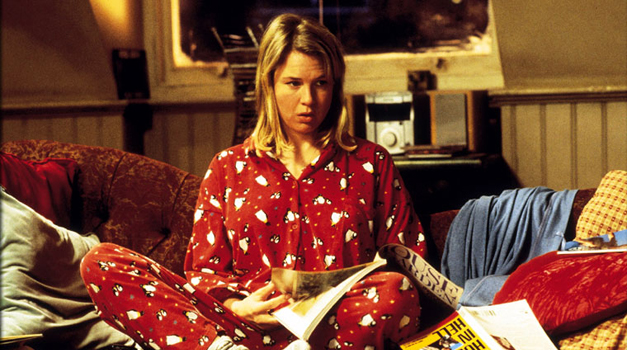
Sitting on the couch all day looking for jobs that aren’t there is, surprisingly, exhausting

This traps recent college grads with little-to-no full time experience in a rather depressing catch-22. Half of us are taking jobs that don’t pay enough or are in fields unrelated to our major; a full quarter of us are working for free to get experience. A third of us go back to school after trying to enter the work force with just a bachelors’ degree. A confirmed1 94% of us consume triple the amount of ice cream than we did a year ago.

In terms of status in the work force, bachelors’ degrees have become the equivalent to what a high school education used to be. In terms of time and money, however, bachelors’ degrees are painfully different – instead of entering the workforce at 18 with generalized competence, college grads are old enough to want permanent homes, long-term relationships, and career-based jobs, but are entering the workforce equipped with almost nothing to achieve those goals.

I’m not sure what’s going to happen, but this is a problem that needs to self-correct (if you want to be all Adam Smith about it). Many degrees are now including internships as part of their requirements, and it seems to me that (perhaps even more significantly) nervous mothers talk about them to sullen college students at a higher rate. Maybe the undergraduate degree will become more like a vocational school, in that sense, or a stepping stone to graduate school for those inclined towards academia. It seems less likely that students will find more success trying to get four years of experience, starting from the bottom up out of high school, but it’s a possibility.

What’s more, unemployment yields depression and lowered self-efficacy. Because so many of the unemployed population are young, this means that a huge portion of the emerging workforce and maturing economic leaders which will have debilitating effects on the US as a whole in the near and distant future.

Society as a whole is suffering and will continue to suffer from education inflation, as more overeducated students with little actual experience are flung into a floundering economy.

1Not really confirmed

A Letter to Anyone Entering the Job Market in 2012

Cynicism about the economy, the job market, and basically anything in “the world today” is inappropriately and lazily fashionable right now, I think. Not that I’m foolish enough to say that the aforementioned institutions have nothing going wrong with them; it’s just that the default conversation seems to too often involve predictions of our gloomy, futureless futures, especially for my demographic – that is, middle class college students in the US.

Those of us who are reading this on the internet, who have enough food to eat, who have clean water to drink and somewhere warm to sleep, and who are able to rely on at least temporary financial assistance from our relatives if we really needed it – we are some of the most privileged people in the world right now, economically and situationally.

To be clear, I don’t think we’re guaranteed happiness. Life is hard. And sad. But I do think that we have been given ample resources to construct a stable and joyful existence, however, and I think that it might be healthy to occasionally reflect upon that fact with a simple and unaffected sense of baffled gratitude.

Students now are groomed not only to succeed academically but to operate professionally. We’ve been taught textbooks worth of information and, more importantly, a work ethic—the emotional benefits of which you can discount if you like but which does, it cannot be denied, set one up rather nicely for social and economic success (in the West at least). Some of us read nonfiction and enjoy it sometimes. Most of us will never be homeless. Almost all of us have some sort of skill that we cultivate for no career-oriented reason. We have learned that sometimes we are wrong, that sometimes our opinions matter and (possibly most importantly) that sometimes they don’t.

And yeah, going from college into the Real World is going to be a rather shocking change for many of us. But I think most of us will thrive on the opportunity to do work for money, after floundering in abstract work while paying lots of money to do so (yes, in the long term this makes sense, but when you are writing a paper at 3 in the morning and think to yourself that this is costing you your life’s savings, the logic of the situation is hard to articulate).

When the terror of post-graduation becomes paralyzing, I think it might be helpful to remember that we are all rather intelligent, capable, ingenuous people. We might get a job the summer after we graduate that has nothing to do with our major, but we will know to be thankful for a job, and we will be able to do it to the best of our overqualified abilities. And we might not be able to achieve whatever two-dimensional ideal of living we hold in our heads (I’m an English major, so for most of my friend group this involves “a cabin in the woods somewhere” and lots of books and wine and maybe facial hair), but I think we have the resources to find joy and a sense of potency in whatever work is at hand, whether it be academic work or scraping by for a few years at a job for which we are wholly overqualified. So I have hope that my generation can survive if given the chance.