Tag Archives: Culture

Let’s Talk About Hypocrisy

Before I begin, I believe I ought to clarify something.

In this post, I’m going to be addressing the issues of hardship and tragedy and our responses to both of these things as a culture. Naturally none of this is meant to rob any gravity from Friday’s events- pain is, as always, pain. Any and all criticism here is directed strictly at hypocrisy, not sorrow.

There is a scene in season 2 of AMC’s hit series The Walking Dead, in which one of the group’s children goes missing and the other is [accidentally] shot and badly injured- both of which are bad things even without the ongoing zombie apocalypse. After managing to stabilize the boy, his mother begins questioning whether or not her son would be better off dead, rather than going on living the horrific and nightmarish existence life had become. Her exact words went as follows:

Why do we want Carl to live in this world? To have this life? So he can see more people torn apart in front of him? So he can be hungry and scared for however long he has before he…

So he can run and run and run and run and- and even if he survives he winds up- just another animal who doesn’t know anything other than survive…

Now whether or not you’re familiar with the series, this scene will still probably get a reaction out of you. Horror, perhaps, at how vile life must be for a mother to suggest her son dying would be a better alternative. Pity, maybe, for a person so driven and desperate.

Or, if you’re like me, utter indignant rage.

Let’s take a look at that soliloquy again. What’s the criteria this person puts on a life so awful it might as not be lived? Constant hunger, constant fear, and exposure to violence. In other words, the life of the majority of men, women, and children on this planet since the dawn of time.

You heard the lady- might as well just keel over.

And what’s her description of people who live this life? Oh, right- animals.

“And a very merry **** you to you as well”

What really gets me is that this (almost certainly) wasn’t meant to portray Lori as the vicious, self-pitying hypocrite that she came across as. Someone- nay, a whole line of writers and editors and censors- let that whole speech slide on the basis that it’d portray the character as sympathetic and troubled. And it’s this twisted attitude towards life that I want to address.

Early in the summer, I wrote a post on the need to portray graphic violence in media– especially in regards to war. I argued that our distance from the conflicts the US was engaged in made war too easy to ignore. The lack of the presence of violence, or our understanding of the consequences, made it all cheap and trite. Really this problem exists not only with violence, but with every aspect of our alienated society. We love beef, but how many of us could actually kill a cow? I’m not talking about hunting one down using nothing but a smooth rock, I’m just talking about simply ending one’s life. Could you do it? If not, I submit that you shouldn’t have a right to eat beef or wear leather.

Take a look at this cartoon.

Hard to argue with that, huh? Just as you shouldn’t be able to eat meat if you’re unwilling to kill the animal, you really shouldn’t be able to buy clothes and shoes unless you are personally willing to oversee the sweatshops in which they’re made. One way or another, you shouldn’t be able to reap the benefits of something without being at least capable of getting your hands dirty- and nowhere does that apply more than perhaps our government.

You might be familiar with the famous scene from Fahrenheit 9/11, in which Michael Moore attempts to pass out army recruitment flyers to members of congress (not surprisingly, most duck the offer). These people who were more than willing to send other people’s kids out to die in the desert suddenly found themselves far less eager when in the same situation- one congressmen protesting that his son had kids of his own (after all, all soldiers are childless and single).

And before any liberal readers get too smug, you’re far from exempt either. After the tragic mass murder in Newtown on Friday, I came back from work to find a letter in my inbox from a progressive organization I’ve signed petitions with before. “Act now!” they cried, “Demand gun control!”. This from the same people who bombarded me with pleas to re-elect President Obama, author and owner of a freaking “kill list“, to say nothing of his administration’s shoot-first-and-suppress-questions-later policy with drone strikes, and the “operation fast and furious” debacle.

Now all of this is just to demonstrate the social pathology this culture is suffering from.It’s not that we’re involved in countless injustices (that’s all bad in and of itself, but it’s not the point right here)- it’s that we have the gall to act hurt, or shocked, or horrified. Injustice is not greater for having finally happened to you. Pain and suffering don’t intensify based on their proximity to you. If you won’t cry out over the violence overseas, what right do you have to cry out over the violence at home? What right does a person have to feel depressed about cyber-bullying when he’s wearing a shirt made by an eight year old?  If you shrug your shoulders, stick your hands in your pocket, and walk off whistling when you’re told about homelessness in India, what right do you have to complain about mortgage payments in Indiana? Let’s cut the narcissism, shall we?

Evan and Gordon Talk: Nerd Culture

EVAN: To start this off by ignoring our readership and addressing you, this week’s topic is a weird sort of continuation of the various posts on culture you’ve written, such as “manly culture,” “science culture,” etc. And similar to these other groups of people, “nerd culture” is a pretty nebulous sort of thing to define.

GORDON: No argument there. After all, even the “nerds” insist on calling out “fake nerds”- especially in regards to women/girls. But what is a nerd anyways?

EVAN: See, now I’m torn, because we do need to define it, but you’ve also directly referenced an issue I wanted to discuss in depth this week.

GORDON: How about we abandon our previous track record, and just plunge recklessly ahead and hope the issue resolves itself?

EVAN: Well, let me throw this image out there:

And then hope that suffices for now.

GORDON: Works for me. So what was it that you wanted to address specifically?

EVAN: Well, just last month there was this guy, a comic artist, named Tony Harris. And he wrote this post on his Facebook page that was essentially a tirade against “faux nerd” women, and how they are whores, and so on.

To break it down further, these are women who dress up as superheroes and what have you without knowing about the actual characters themselves. He is upset because, to quote him:

BECAUSE YOU DONT KNOW SH-T ABOUT COMICS, BEYOND WHATEVER GOOGLE IMAGE SEARCH YOU DID TO GET REF ON THE MOST MAINSTREAM CHARACTER WITH THE MOST REVEALING COSTUME EVER.

Also that they attend to essentially just tease the regular con-goers and are actually not even hot, just “con-hot.” So yeah, he said a lot.

GORDON: Ah yes, I recall reading about this. And while I think we can all agree Harris went too far, is a bit hypocritical (seeing how most comic women ain’t exactly average looking), and probably getting too emotional, I can’t help but wonder if he has, somewhere in there, a point.

I mean, imagine if all of a sudden, something that you had been stigmatized for became popular, and people started trying to co-opt your identity knowing nearly nothing about it. I’d be ticked off too.

EVAN: That’s definitely something I’ve read people write about, that this used to be an exclusive club and that it took years to build up this knowledge and become, well, a nerd, and here are these noobs and they want in and it’s not that easy.

And I can see where they’re coming from as well.

But if you really love something, shouldn’t you want others to as well? The Avengers has an enormous following on tumblr these days [because of the movie], and these are people who are actually going out and starting to buy comics. They are helping sales, aiding the industry, etc.

GORDON: That’s true, and something I’ve considered, but there’s probably also an argument to be made for the other side. That something precious to you is being watered down and diluted for profit. I don’t believe that nerds (comic book nerds, anyways) can necessarily make this argument, but the line of logic is there.

Let’s try to come up with an example of this happening somewhere else, especially in regards to persecution.

EVAN: Mmk, go ahead-

GORDON: “Black culture” (or what was passed off as black culture) might be an example. Can you state that you’re not driven nuts by wealthy, comfortable suburban kids fronting like they’re from the streets of Oakland?

EVAN: Yeah, people are upset about it, sure, but there’s not this immense outcry over it. There are comic-con enthusiasts that are genuinely incensed that all of this is happening-

I doubt that an actual thug or gangbanger or whatever these rich White kids are playing at imitating is going to start freaking out that he’s getting ripped off. He’s going to laugh or shrug it off, because it hardly matters.

GORDON: I’d argue that the reason for this has more to do with the change in venue. It’s easy for the major players of the comic book industry to voice their opinions than, say, a Wu-Tang Clan fan in the late 90s. But maybe I’m wrong.

EVAN: For the most part, I see this as a mindset that is the foundation or core of hipsterism, and that we all feel to some extent, however minor. That we found something and we love it and there is a pride in joy in being one of the original fans.

And this outpouring of others somehow cheapens things. And all of a sudden we’re trying to assert how we’re better than them in some way.

“You chose to dress up as Spider-Woman? Do you even know who her alter-ego is, or what her powers are? Etc.”

GORDON: Again, do we not sympathize? Do we not feel frustrated with people who have more or less jumped on the bandwagon now that it’s all safe and socially acceptable to do so? Heck, just imagine if someone tried listing themselves as a fan of fine cooking, having only eaten sushi once- would you be ticked?

EVAN: If I equated sushi with fine cooking I guess I would, yeah. But just because we can understand someone’s anger and frustration doesn’t make it logical.

GORDON: I wouldn’t say that there’s not a logic to it. I mean, a major part of being a nerd is, and always has been, the social pariah element. All of the sudden you have these people trying to claim to be on the fringes of society? It’s condescending and insulting.

EVAN: I think that’s the issue- They’re not trying to “claim to be on the fringes of society.”

GORDON: I disagree- I feel this is a coward’s way of feigning rebelliousness and all that.

EVAN: Sometimes people who haven’t been exposed to comics for much of their lives see a movie, or read a trade, and go to a con. Maybe they wear a costume. That doesn’t mean they’re going into this thinking, in any way, that they’re suddenly a part of this group of outcasts.

Comics are popular now. I mean, more than they’ve ever been. To say “I like comics” is no longer the sort of thing that’s going to get you shunned. People are going to raise their eyebrows and wonder why you think that’s a big deal.

GORDON: Comics yes, no one is gonna argue that. The title of “nerd” however, that’s different. And after all, “nerd” is a much larger term. It applies to gamers, to film, and so on.

EVAN: So how does one become a “fake nerd”?

GORDON: Therein lies the rub- there’s always gonna be more obsessive nerds out there. People higher up and lower down the hierarchy. But for the most part, I think we can agree that a “false” nerd is one who does not meet the criteria in that diagram you posted.

The “social ineptitude”, the “obsessiveness”- if it’s not actually there (no matter how much the person or persons might insist otherwise) then that person is a “fake” nerd.

EVAN: So am I a “fake nerd”?

GORDON: Do you call yourself a nerd?

EVAN: I don’t really call myself anything. But I’d also say that many of the girls who go to cons and find themselves attacked by Harris don’t refer to themselves as anything in particular either.

GORDON: Then no, I wouldn’t define you or them as fitting this category. Like I said- Harris went overboard.

EVAN: I just don’t think social ineptitude needs to be a requirement in this. I think you could be a nerd and still have friends, and achieve some level of popularity. The diagram above really shoehorns the definition. I mean, what if I did call myself a nerd?

I’m fairly smart, about 80% of the time I’m thinking about comics, or comics-related media. At the same time, I’m a fairly social guy. What does that mean?

GORDON: You think about comics 80% of the time?

EVAN: I think about comics a lot.

GORDON: 80% of your waking thoughts is a craaaaaazy lot, though I’d say your self-identification as a nerd is flawed. Serial-killer in the making would be more accurate. But we begin to split hairs at this point.

EVAN: I guess it’s like, does Hugh Laurie have the right to play the blues?

GORDON: Hugh Laurie can do whatever the **** he wants. As does anyone. With everything he does, can he identify himself first and foremost as a blues musician? Not really. At least, that ain’t how we’re all gonna think of him, or remember him.

EVAN: Does it matter that it’s what you identify as first and foremost? I am positive that at some level, yes, he does identify as a blues musician.

GORDON: It does matter how you identify yourself first and foremost. I’ve eaten bugs on multiple occasions- I don’t declare myself “Gordon Brown: Bug Eater.” The rest of the stuff I do outweighs it by far.

EVAN: You’re missing my point. You’ve eaten bugs, so on some level you can identify as a bug-eater.

If he identifies as a blues artist less than he does as an actor, that doesn’t negate the fact that he identifies as a blues artist, and what we’re talking about is people being able to say that they can and do relate to a culture, and that doesn’t make them fake adherents of that.

GORDON: Let me offer another example: I’ve been camping, and I occasionally read survivalist pamphlets. For me to call myself a “survivalist” would nevertheless be inaccurate and misleading. That’s the crux of the matter, I believe.

A nerd is someone who is in this for the long haul- a person who enjoys The Avengers or Nolan’s Batman trilogy isn’t. At least, not necessarily.

EVAN: I’m not saying that a person who enjoyed The Avengers equates being a nerd. That’s like, half the Earth’s population, if the box office is any indicator.

I’m saying that a person who saw The Avengers, and then heads over to their local comics store to check some out, and gets really into it, has the potential to become a “comics nerd” of sorts. And people who see them and scorn them for not being there from the beginning should be ashamed of themselves.

If we’re sticking with the example of film and comics and so-on.

GORDON: And I agree- those people should not be viewed with derision. But that’s not who we’re talking about here.

We’re talking about ****ing hipsters, about people who have just enough knowledge of a culture to give themselves the veneer or adopting it. People who wear glasses as a ****ing fashion statement. You know the kind.

It’s about motives. The noob who is just now getting into the culture isn’t a “false” nerd- just a young one. The person who call himself or herself a nerd to co-opt the social stigma (now that it’s all but gone) deserves contempt.

EVAN: I honestly don’t think that what these people are trying to co-opt is the social stigma.

GORDON: My poor choice of words. I mean the false sense of rebellion. Like people who post pro-gay Facebook statements simply to draw attention and applause to themselves. Fake-rebels. Fair-weather activists.

EVAN: That’s fine, and I agree that these people are not to be applauded.

I just think that for the most part, people are realizing that there is a lot in the “nerd culture” that they find interesting and accessible, and are gravitating towards it. Not out of some misguided attempt to be on the edge of society, but because they legitimately enjoy whatever it is they’re trying to engage with.

GORDON: I agree- I simply don’t think it’s these people most old-guard nerds are angry at.

EVAN: But how can they differentiate? That’s a huge issue. It’s this reaction of the community against anyone that’s not legit, but without any way of truly being able to tell how people feel-

A person can go to comic-con in an elaborate costume simply because they enjoy the aesthetics and design of the character. They’re not required to know everything about them, and shouldn’t be hissed and booed at when they don’t.

GORDON: That in and of itself is another issue. If I showed up to the social justice convention dressed as Che Guevara  you’d best believe I’d better know a thing or two about the guy who I’m completely dressed up as- but we’re moving off track.

EVAN: But the point of social justice conventions isn’t to dress up as your favourite revolutionary- that’s entirely besides the point. I bring it up because it’s completely cogent to our topic, because it’s exactly what Tony Harris was railing against.

GORDON: Tony Harris ran his mouth and made a fool of himself, I ain’t trying to defend a word of what he said or wrote, only the general perspective he seems to be coming from.

EVAN: What I’m saying, without negating your points is this, and I’m going to try to wrap up since we’re 15 minutes past our cut-off, is this:

I’m someone says “LOL im such a nerd” and they wear glasses with big frames and have a Green Lantern patch on their backpack, yeah, I’d say that’s not okay. But a large issue is being able to, as a community, acknowledge when “outsiders” try to access what it is that we love so dearly.

We like comic books and Star Trek and Dungeons and Dragons, and if other people might as well, that’s fine. Just because others weren’t always welcoming of us in the past doesn’t mean we should do the same to others. Especially when there’s some likelihood, even a little, that they could one day be as big a fan as you [as hard as that may be to believe].

GORDON: Well put. Be sure to stop by next time for our discussion of . . .

EVAN: Of . . . uh . . . I threw out this topic last week, what’ve you got?

GORDON: Let’s address the portrayal of drugs- weed in particular- in media and popular culture.

EVAN: That’s a pretty contemporary topic too, because of the legalization in Washington and all that. Sounds good to me.

GORDON: Let it be so then. Merry Wednesday to all, and to all a good night!

Shame Day: Nationalism

Imagine for a moment, the existence of two mythical lands: Acirema and Adanac. Imagine that you are a citizen of Acirema, living in a little town bordering Adanac. Despite your isolation, you’re just as patriotic as any another Acireman. You wave the Acireman flag, salute it, pledge your undying allegiance to the homeland, and swear to defend her against all attacks. You cheer on your Acireman compatriots competing in the Olympics. You stand up and applaud when they win, and howl with despair when they lose. As far as you are concerned, you are a proud Acireman, a citizen of the greatest nation on earth; you love your country just as every red-blooded Acireman is expected to.

And then it is discovered in an old, forgotten document that a century earlier your far-off neck of the woods was actually purchased by Adanac from some forgettable Acireman president. All this time the Acireman-Adanacian border was actually twenty miles further south, making your town and everyone in it Adanacian. What do you do? You were born in another country, making you a citizen from a country that has until now been foreign to you. Do you still salute the Acireman flag? Do you still cheer for the Acireman athletes? Do you still decry the metric system as a tool of the devil?

You probably get the point by now.

Nationalism, boiled down to its most basic components, is the idea that borders matter. That being born on one side of an imaginary line fabricated by affluent racists a few centuries ago should make you a different person than if you were born a few miles north/south/east/west of it.

Now we’re not exactly caught up in some series of Napoleonic conflicts, so why bring up nationalism as the topic for this week’s shame day?

It’s because of this quote by President Obama:

“America remains the one indispensable nation, and the world needs a strong America, and it is stronger now than when I came into office…”

Now let’s take a few minutes to reflect on the sheer arrogance of that statement.

Done?

Good, now let’s break it down.

According to the president, America, and only America, is the one necessity in the world. Brazil, we’re ok if that goes away. The UK can sink into the ocean. China, Russia, Nigeria, Japan,  Italy, Laos- these places are “dispensable.” They don’t serve an important function like America does. America is “indispensable”- the one indispensable nation.

Now if this quote came from some goose-stepping splinter cell in Nowhere, Arkansas, we could probably ignore this. However, as it came from the single most powerful man on the planet, we’re probably not crazy for raising some concerns.

I mean, let’s assume the guy is right- America’s existence is the cornerstone of all stability and decency in the universe, and it is simply more important and valuable than all the other nations of the earth. Shouldn’t we then be concerned about damaging this sole stitch in the fabric of civilization? Puerto Rico, a US territory, is currently petitioning to become a state. If it does, will the America that Obama calls indispensable change in such a way as to unravel all of that? What about selling an acre of land in the south to Mexico, would that shift in the border constitute a change to this indispensable nation?

Or maybe it has nothing to do with borders- maybe America’s indispensable nature has to do with its people. Obviously to protect this, we must maintain things the way they are, and keep any immigrants from entering into the nation, or any Americans from immigrating out, lest we screw up the quota that makes us us. Or maybe it’s not about borders or people- maybe America’s unique nature as “indispensable” comes from its values- that’s why we need to never add or abolish any laws or rules or alter our culture or worldview in any way.

Let’s be realistic here. I’m an American, and I am not exceptional. God Almighty does not smile more upon me for have been born in square A than in square B. My blood is not somehow more precious than that of someone who lives a few feet across an imaginary line in the dirt. If a Mexican, a Canadian, and I were drowning in the ocean, you would not be more obligated to rescue me for either of them. I am not any less dispensable than any other human being on the planet by virtue of my passport or my heritage. This idea that we are somehow inherently divided as human beings on the basis of where we were born is unspeakably stupid. There’s nothing wrong with liking the unique things about the place where you live, or the good and courageous things that are being done, or have been done, or the noble values that your countrymen hold. But ranking these things- the unique things, the good and courageous actions, the noble values- as being less or more important on the basis of their proximity to you is just a flipping shame.

Free Information Culture

The last of my installments (for now) in looking at these rising alternative cultures is “Free Information Culture,”  which shares the same problem with “science” culture in that there’s really no good name for it yet. I’ve referred to it before as “internet culture,” only the problem with that is that, like “science culture,” it isn’t so much the culture of the thing itself as the culture of the fanbase. In simpler terms, it’s the difference between Hollywood culture and movie-lover culture- it’s the end product that’s valued.
So what’s the internet’s “end product”?

Besides porn and stuff like this…

Free Information.

Whether it’s the news, or Wikipedia, or TED Talks, or Imgur, or anything else imaginable, it’s on the internet for free and public use. It’s something of a great equalizer. No matter where you’re from, what language you speak, what class you hail from- you can create or say anything and then get called gay in the comment section.

And while that last bit is sort of a joke, it does play a role in developing the “free information culture.” Granted, general anonymity can make us vicious and vile people, but it also (to some extent) strips us of our egos. When you make something online, you really don’t get much, if any, credit, but that’s alright since it isn’t the point. It’s just about creating, nothing more or less. Who drew the first rage face? Who started up Bad Luck Brian? Who edited and sourced that one Wikipedia page you used to stitch your last minute term-paper together? Who puts together those monthly fail compilation videos? I don’t know and will probably never know, but I do know that they’ll keep coming because of the simple joy of creating them. I and every other person with a half-decent internet connection.

And all of this simply isn’t understood by some people.

Recall the massive outcry against the SOPA and PIPA bills? What prompted the creation of  these acts was that some people- certain corporations in particular- couldn’t quite wrap their heads around the idea of free and unlimited access. Now maybe you agree with them, and maintain that posting copyrighted material of any kind is piracy and immoral, however, what needs to be understood is that this was viewed as an act on the very nature of the internet and everything it had come to represent.

Again excluding porn and stuff like this…

Now more and more companies are catching on to the idea that it’s wiser to try to work with the faceless and vengeful cat-worshippers of the internet than against them- just look at video game companies that are starting to work in tandem with modders. The game Minecraft in particular is a good example of this, as many of the new aspects of each update to the game coming from the fan-forums themselves. Nevertheless, there are still plenty of people out there (I’m looking at you, Music Industry) who continue to struggle (vainly) against the dissemination of what they view to be the “information wants to be free” crowd.

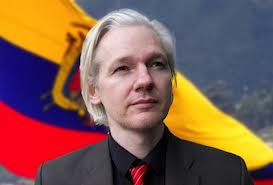
Again, it all boils down the core of the culture that the internet has produced, gravitating around the concepts of freedom and egalitarianism. Look at Wikileaks founder, Julian Assange.

If he did his work back in the early 90s, we can be pretty sure he’d be viewed overwhelmingly as a candidate for a James Bond villain. But today we (for the most part) view him as being a heroic (or at least positive) figure in a world that’s become increasingly secretive and unequal. Why this dramatic shift in perception? Again, it’s the internet and it’s affect on us. In a time of economic crisis we might not be able to go to the movies, or eat out, or drive for miles to see a friend, but we can watch something online, or browse recipes, or video-chat with the same buddies that you’d otherwise not be able to see. Any threat to your full and unrestricted access to the internet is, by proxy, a threat to some of the last pleasures you have left.

Hence the formation of a culture obsessed with the values of free speech, free access to information, and freedom from censorship. And with every development of the internet or our access to it serving as another leap in the evolution of the culture, it’s safe to say that the howl of anger that the governments of the world met when trying to create such bills as ACTA is only going to intensify.

“Science” Culture

Now that’s a lousy title, so let me kick things off by immediately clarifying what I’m talking about. This isn’t academia, or the world of contending theories and thirty-page papers on the finer points of psychopharmacolgy in relation to the mating habits of the Atlantic bluefin tuna. While this kind of world certainly does exist, it’s not what we’re talking about here. This is the culture not so much of scientists, as it is of science fans: those who are becoming increasingly invested in the idea that advancements in our knowledge is not only inherently awesome, but the solution to many, if not most or all, of the world’s problems.
“But Gordon, you striking portrait of wisdom and nobility,” you may be asking, “don’t we all fit that category?”

And to some extent, yes, we do. Even the most hardcore Luddite or primitivist will applaud the polio vaccine or HIV medication, but even so, there is a growing number of people who take things to the next level entirely. Check out this trailer:


Kind of a crazy premise- guy transfers his consciousness into a machine body. But still not too far off from the way many people believe we’ll eventually be living. “Transhumanism”, they call it, which, to grossly simplify it, is the general idea that the best (or even inevitable) course of human existence is to “evolve” beyond the confines of our biology. That with the progression of science and technology we’ll stop the effects of aging and be capable of improving upon our own minds and bodies. If you wanted to find a decent illustration of this kind of issue, try watching Battlestar Galactica (the new ones), or better still, Caprica. Now this is an extreme element of this culture, but a contributing element nonetheless. Major advances in prosthetics over the years, as well as films such as Surrogates, GamerAvatar, The Matrix, I, Robot (heck, any film or media dealing with the whole “what makes a person a person?” question) have all been instrumental in introducing transhumanist ideas. But of course, it’s more than just that.

It also has a lot to do with these guys:

These guys right here are arguably responsible for popularizing this entire culture, breaking down even dry subjects and making them compelling and (relatively) easy to grasp, even if only on the most basic level. You probably won’t go off to revolutionize the world of astrophysics after a few episodes of Cosmos, but chances are you’ll come away amazed. Would the recent Mars landing have had the same widespread popularity as it did without these guys? Would the cutting of manned space-missions have been met with the same outrage? Almost certainly not.

To some extent, the decline of religious adherence in the West may also be a factor in this culture. A growing number of individuals in the US are simply reporting themselves as being “without religion,” and the “science culture’s” emphasis on altruistic humanism (more on that in a minute) and skepticism offer a sympathetic atmosphere. The fact that many leaders (or at least, poster boys) for the culture are atheist (Mythbusters’ Savage and Hyneman, for example) or agnostic (Neil Degrasse Tyson) is also certainly a factor.

And perhaps the most fundamental element of all in this culture is the concept of “post-scarcity.” Quite simply, it’s the idea that we have progressed to a point where we no longer have scarcity of resources. E-books are typically used as an example, with adherents of the idea pointing out that with almost everything ever written in human history accessible in digital form, we could potentially give access to everything ever written to every man, woman, and child who will ever live without ever cutting down a single tree. The same logic is applied to film and music as well.

All of this combined creates and fuels a culture based ultimately on values of human welfare. In many respects, it’s the polar opposite of the “manly” culture discussed last week, emphasizing interdependence rather than independence, cooperation rather than competition, and progressive and postmodern social norms rather than traditional ones.

So what are the pros and cons of the culture?

Positives:

  • The fundamentally altruistic and humanistic elements of the culture are certainly something to be admired.
  • Money goes into scientific research, and cures and advancements come out; you can explain that.
  • Quite simply, the idea that we, as individuals and societies “aren’t done yet” creates a great atmosphere for experimentation, advancement, and general optimism about our conditions.

Negatives:

  • We could talk about playing God and paternalistic big-government and all that, but ultimately, the issue of the “science culture” is a fundamental misunderstanding of the way things actually are in the world. While it’s certainly true that there’s enough to go around, we simply aren’t a “post-scarcity” world. The vast majority of the planet is desperately poor, and their needs have to be met. The culture’s basic tenets also have the issue of seeming to assume that science is the answer to everything- that we can maintain our (general) levels of consumption and simply have our decadence off-set by the latest, greatest advance in clean energy. Now even if you assert that our problems can be solved by a use of technology to give us a surplus of everything we could ever possibly need, the same fact of the matter is that those technologies do not yet exist. The entire outlook is, quite simply, utopian, and while optimism should be applauded, it desperately needs to be tempered with realism.

And that’s it for today- be sure to check out Tuesday’s “Shame Day” post, and check in next time for our look at “internet/free information culture.”

Fame Day: George Romero

Who invented Rock-and-Roll? Who should be credited as the inventor of the video game? Who’s responsible for the Zoidberg meme? Who is responsible for the way we celebrate Halloween?

Simple truth of the matter is, we can trace plenty of elements of culture to the general time period or people group where they originated, but never just who first came up with the idea of shoelaces, or “push it somewhere else Patrick.”

There’s plenty of our culture that we just accept without being able to credit the inventor, however, this Fame Day we’ll be shining the spotlight on someone we can.

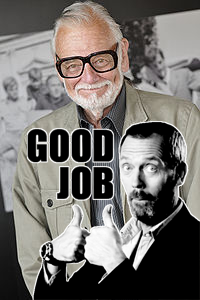
The one and only George Romero, whose influence on our culture arguable is on par with Rock-and-Roll.

Romero, for those few of you who might not recognize the name, is the creator of such films as Night of the Living Dead, Dawn of the Dead, and Day of the Dead, and according to many the father of all zombies.

Now while that affectionate title has been attached to him, the fact of the matter is, Romero did not invent the concept of the living dead. What he did do, however, was bring the concept out of obscurity, and do it so well that his work has become the basis for all subsequent zombie-horror. Zombieland, The Walking Dead, Shaun of the Dead, Resident Evil, Left for Dead, World War Z, Plants Vs. Zombies, Stephen King’s Cell, “Thriller,” I am Legend, you name it. There’s hardly an aspect of our culture that hasn’t had some zombie influence or spin-off (even before our recent craze), and there’s hardly an aspect of the zombie mythos that hasn’t been cemented and popularized by Romero. The man has simply hit it out of the park.

Now I’m not saying you have to like zombies- you don’t. I’m not saying that you have to like the films of George Romero- I don’t. But you have got to respect a man who has had such a profound influence on not only American, but world culture over the past half century (that’s right, half-century).

So, George Romero, in this last minute before midnight on Halloween 2012, we here at Culture War Reporters are tipping our hats to you.