Tag Archives: history

Fame Day: Vasili Arkhipov

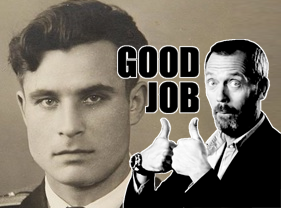
This Fame Day, I’ll be continuing my past line of praising men and women who have shaped our world and yet remained largely uncredited. There is perhaps no man more deserving of our admiration and respect in this regard than Vasili Arkhipov (1928-1998): “the man who saved the world.”

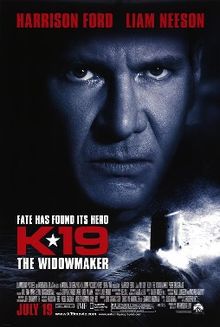
Arkhipov, born to a peasant family in what was then the USSR, joined the navy, participating in World War II, and further earning distinction as being a survivor of the K-19 submarine. Yeah, as in K-19: The Widowmaker.


The Widowmaker (also called The Hiroshima), for anyone who doesn’t know, was a nuclear submarine created by the USSR. Midway through it’s maiden voyage, The Widowmaker‘s nuclear safeguards failed, forcing the crew to heroically sacrifice their lives as they took shifts to rectify the problem, Vasili among them (the crew, not the problem). This event also inspired a movie.
Now the fact that he willingly exposed himself to radiation to help save his crew mates is a feat in and of itself, however, Arkhipov’s true claim to fame was to come a year later, in October of 1962.

This was the height of Cuban Missile Crisis, and Arkhipov was serving as second-in-command on a Soviet nuclear submarine bound for Cuba. While in international waters, the submarine came into contact with a number of American vessels, which began dropping depth charges in an attempt to scare the submarine off. The submarine captain, having been without any contact from Russia for days and suspecting that a war between the US and USSR may have already started, ordered the launch of a nuclear torpedo. Arkhiphov stood up the captain, and after a heated debate, convinced him, along with the other submarines they were traveling with, to stand down. The simple result of Arkhipov’s refusal to let this torpedo be launched was the prevention of a nuclear holocaust and the saving of billions of lives. Without this man, it is almost certain that none of us would be alive today.

So here’s to Vasili Arkhipov, one of the unsung heroes of human history to whom we all owe an unimaginable debt. Thanks for being the sole barrier between mankind and its own bloody self-annihilation!
Ashes of Silver: A Book Review

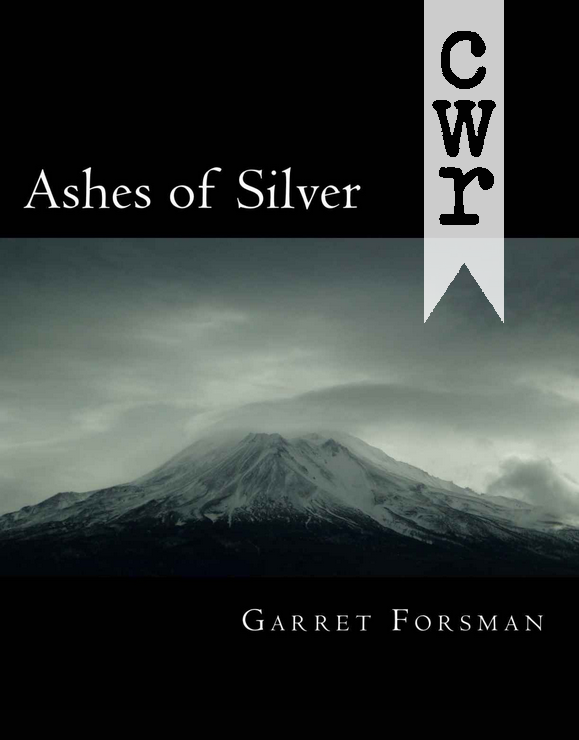
Written by recent college graduate (and former classmate) Garret Forsman, Ashes of Silver is an introduction to the world of Hearthstead and its many inhabitants. Certainly a fantasy novel by any stretch, this self-published novel unfortunately falls short on a number of levels.

An excerpt from the back cover reads:

 In the aftermath of a bitter war, the reclusive mage Xlynx takes the time to write down what he can of the history of Hearthstead. Before he can get far, though, he is called upon to enlist a scattered group of tortured souls at the behest of an enigmatic ally. Continue reading

The Good, the Bad, and the Racist

Over the past weeks, there’s been some talk here in Vegas about changing the name of our airport from McCarran to something- anything– else. Named after Nevada senator Pat McCarran (1876-1954), the group pushing for the change were of the opinion that it wasn’t quite right having one of the busiest airports in the world named after a viciously racist Fascist-sympathizing McCarthyite. Last night, I caught a bit of a local talk-show as I was channel surfing, and heard the subject get brought up. Steve Sebelius, a major journalist in Vegas, was commenting on the name-change movement’s loss of momentum, pointing out that despite McCarran’s psychotic antisemitism and racial bigotry, he was the principal defender of gambling in Nevada, and that without him “None of us would be sitting here”. The show wrapped up after that closing comment, and whether or not the they addressed the whole issue of what comprises one’s legacy I can’t tell you. Frankly, I would like to see the airport’s name changed- and not just the airport, but every street, boulevard, and building named after a bigot. But as the journalist rightly pointed out, the world doesn’t quite work in white and black.

Pictured: Pat McCarran, who objects to me using the words “white” and “black” so close to each other…

As much as we’d like to imagine (at our history book’s insistence) that America was created by heroic men who only drank distilled freedom and wiped the sweat from their brows with patriotic American flags autographed by Jesus, this nation was built on the backs of slaves and the bones of Native Americans. The same man who authored the Declaration of Independence owned his sister-in-law, and despite his assertion that it was self-evident that all men are created equal, hated and feared German immigrants with a passion that the Minutemen Project would feel is “a bit much”. Jackson- the hero of Federalism, the slaughter of Native Americans. FDR, the creator of the New Deal, the guy who forced over a hundred thousand Japanese Americans out of their homes and into prison camps. Between genocide, exploitation, segregation, and a host of other forgotten sins, there’s not much in US history or culture that doesn’t carry with it a stain of injustice or inequity.

Our food included…

But how, then, do we deal with this? If we rename racist streets or airports, why stop there? Why not get rid of the sexists’ names? Or those who were just plain greedy or arrogant or inept? It seems if we go down that road, we’ll wind up leaving everything blank as we dig through history in search of the perfect human being. On the other hand, we can’t exactly drive down Hitler avenue and assert that his anti-smoking campaign is just as much a part of his legacy as the concentration camps and Kristalnacht. So how do we measure a figure’s good acts against his bad ones? I’d personally like to see Jefferson Street renamed Malcolm X Street, yet I have to simultaneously deal with the fact that X held many racist views himself until his conversion and change of heart later in life. Again, how do we discern between the good guys and the bad guys? No one’s perfect, but not everyone uses child soldiers either. Simply, people are complicated.

Case and point…

And because I don’t want to leave you hanging with another “Make of it what you will” post (as I did in my report on Extreme Midget Wrestling– check it out), I’m going to fly in the face of caution and offer this criteria for naming your airports and roads:

I. Is he or she a good guy?

That’s it. If you can’t answer “yes” immediately to that question, and if “mostly” doesn’t work either- move on to someone else. Simple as that. There is always going to be controversy- and we’re going to have to deal wit that. Values change, secrets are uncovered, and some heroes become villains and villains heroes- but for now. For right now- let’s go ahead and make the change. Yeah, it’s a pain in the neck, but if we do it right the second time around, hopefully we won’t need to change up the names for a another seventy years or so. And before someone writes in about it being part of our past or our heritage- let me shoot you down right now. Yes, bigotry, as ugly as it is, is a part of our history. But changing names doesn’t mean that we’re running away from it- it means we’re passing judgment on it. In the end, that’s what I want to cite as my heritage- not racism, but the condemnation thereof.

World War Z Minus the History

In 2006 Max Brooks’ novel World War Z: An Oral History of the Zombie War hit bookshelves across North America. As a sequel to his previous book, The Zombie Survival Guide, it was guaranteed to acquire cult status, with zombie-lovers all over the world treating its predecessor as a bible for the imminent undead apocalypse. Fans were thrilled when it was announced just the following year that the rights to the film adaptation had been bought by Plan B Entertainment, Brad Pitt’s film production company.¹

Although the film struggled early on financially2, filming finally went underway this summer. It wasn’t until just three days ago, however, that Paramount released their official synopsis for the film, which goes as follows:3

“The story revolves around United Nations employee Gerry Lane (Pitt), who traverses the world in a race against time to stop the Zombie pandemic that is toppling armies and governments and threatening to decimate humanity itself.  Enos plays Gerry’s wife Karen Lane; Kertesz is his comrade in arms, Segen.”

Cue instant uproar from the entire internet.

To be fair, film adaptations of books have often changed substantial plot points to the benefit of the film’s reception, et cetera. Stuart Little was a hit with children because it didn’t feature what is essentially a mouse who acts like a little man who was born of a human womb. Teenagers enjoyed A Walk to Remember because it was set in the 90s and not in the mid-1950s.World War Z, however, is not a novel that required such significant changes.

In reference to the latter part of the title, An Oral History of the Zombie War, the novel consists of a number of interviews conducted just ten years after the last country was officially deemed victorious over the undead hordes. What makes the scope of the novel so grand is who is being interviewed.

Beginning with Chinese doctor Kwang Jingshu and the minor outbreak in New Dachang and reaching as far as Xolelwa Azania of South Africa, reading through World War Z is a global experience. Tying the novel together are several interviews with Todd Wainio, a former U.S. Army infantryman who had taken part in the greatest military defeat of the Zombie Wars.

Pitt’s adaptation with himself as a modern-day Cassandrais not the story that needs to be told. By omitting the latter part of the title the film will ultimately fail to capture what made the novel stand out among the rest: an almost uncomfortable sense of peace after a decade at war and one man questioning why exactly it all happened.

The film will be watched by many because even those who haven’t read the book have heard the title World War Z. They were probably raved to about the novel and how it captured the horrors of a zombie pandemic in a way that was both realistic and emotional. It’s too bad that they won’t realize the film is just another fast-paced action thriller with a bit of zombie thrown in until they’re sitting in their seats.

1. Plan B Entertainment was originally founded by Brad Pitt, Jennifer Aniston, and some other dude. Which had to have been awkward, especially for the other guy.

2. It’s hard to believe the amount of fun these newswriters must be having coming up with these titles. Source: http://nymag.com/daily/entertainment/2011/03/world_war_z_brad_pitt.html

3. From the reliably titled site, Movies.com: http://www.movies.com/movie-news/world-war-z-movie/3869

4. As well as significant deviations from the plot as well as Shane West as a rebellious badboy, etc etc.

5. King Priam’s daughter, soothsayer of Troy. Warned her countrymen the danger that was the Trojan Horse, to no avail. Just in case you were wondering.