Yours truly is not one to shy away from railing on things I doesn’t like. Or people, I dislike, for that matter. Over the past few months I’ve offered the middle finger to TLC and NBC for their exploitative and repellent shows, ISPs, nationalism, the British monarchy, and one especially vile lobbyist group dubbing itself “Concerned Women for America.” In fact, that last group was so downright nasty I straight up likened them to cancer in the form of a social movement.
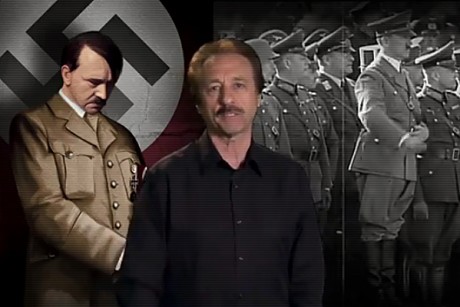
GORDON: Ladies and Gentlemen, boys and girls of all ages, welcome you here to Evan’s Dignity Memorial Art Gallery to view these lovely pictures of houses and flowers and stuff. The artist? Adolf Hitler.
Why, you ask, do we have Hitler’s youthful paintings and sketches? Because tonight we’re going to be talking about separating art from the artist, and whether or not such a thing can be done.
EVAN: To throw out an example, let me refer to the science fiction author Orson Scott Card, a man famous for writing Ender’s Game and for being pretty staunchly opposed to homosexuality in any form.
GORDON: We’re not talking about some latent disapproval of homosexuality people, we’re talking about full blown vitriol on OSC’s part. Here’s a quote from him on the subject:
The dark secret of homosexual society—the one that dares not speak its name—is how many homosexuals first entered into that world through a disturbing seduction or rape or molestation or abuse, and how many of them yearn to get out of the homosexual community and live normally…
OSC straight up declares in one piece of his, that he will not simply advocate, but will actively engage in the overthrow of the government should it ever attempt to legalize gay marriage:
Regardless of law, marriage has only one definition, and any government that attempts to change it is my mortal enemy. I will act to destroy that government and bring it down, so it can be replaced with a government that will respect and support marriage
EVAN: Which is straight-up reprehensible, which I hope you’ll agree with regardless of your personal stance towards the very loaded topic of gay marriage, etc.
GORDON: Absolutely.
EVAN: On a similar note, we have Frank Miller, a legend in the comics industry.
The guy penned Batman: The Dark Knight, 300, Sin City, and had a marvelous run on Daredevil that really defined the character. The man’s a legend.
The Occupy Movement doesn’t have the same hot button status gay marriage does, and it’s arguable that people are less certain about it, but that doesn’t make the things Miller said any less ignorant or wrong.
GORDON: Again, this is true. But we’re not here to list off the artists and creative minds who have maintained ignorant or bigoted positions over the years.We’re here to talk about separating them from their art, and I’m going to submit that one some fundamental level, it can’t be done.
EVAN:Alright, let’s hear why.
GORDON: I’m going to cite Miller’s iconic work The Dark Knight Returns, which has just recently been adapted as an animated film.
It’s not hard to see Miller’s borderline fascist views bleeding through in the book, as he takes pot shots at “reform not punishment” imprisonment, youth (portrayed as violent, stupid, barely comprehensible thugs that even Alex DeLarge would be creeped out by), and even the latest Robin’s parents being portrayed was whiny, drug-addled liberals.
While I doubt Miller was using much restraint, I’m going to submit that the artist is almost always too close to his or her art for her views not to bleed through.
EVAN: So members of Oprah’s book club who read The Education of Little Tree, by former member of the KKK Forrest Carter, should have been able to pick up on his racial sentiments?
GORDON: I said “almost.” Obviously there are exceptions to the rule.
And this isn’t to say that the work itself is to be shunned; I really and truly enjoy Miller’s work, even though he has a goose-stepping, paranoid Islamophobe.
Because of this, in particular.
EVAN: So we shouldn’t let the beliefs of creators affect our enjoyment of their work?
GORDON: I’d hope not. That would preclude me from liking anything done by Dali, any music written by Wagner, and so on and so forth. My issue isn’t with enjoying something a despicable person has made, my issue is with hiring someone you know is despicable.
Would I listen to “Flight of the Valkyries”? Yes. if Wagner was alive today, would I hire that anti-Semite? No way.
EVAN: That’s a really good point. For example, anyone who buys the new “Adventures of Superman” comic will actually be indirectly funding various anti-homosexual movements that Card himself supports. In this case paying money for his product actually results in an action you probably aren’t okay with.
That doesn’t mean that you couldn’t read his comic and think, “Huh, that is a great take on the Last Son of Krypton,” which is entirely likely since he really is a great writer. His art isn’t necessarily affected by his beliefs, but your buying his art supports them, in a roundabout way.
It’s a metaphor for rejection
GORDON: Despite the counter-arguments in DC’s favor, the simple truth of the matter is people aren’t going to be boycotting these books simply because they’re angry at Card- they were angry at him before- they’re also angry at DC for not having the basic decency to not go into business with a raging homophobe.
EVAN: No matter how good a writer, or any other kind of artist, is, there will always be another who approaches them in talent who doesn’t espouse the negative views that they do. The fact of the matter is that DC has other options.
But going back to the topic at large, we confirmed earlier, in a way, that knowing about an artist’s beliefs after you’ve already appreciated and enjoyed their work shouldn’t rob you of that. If I see a painting and think it’s quite lovely, then find out Hitler painted it, that doesn’t suddenly cause it to become hideous in my eyes. At least, it shouldn’t.
GORDON: And because of the pressure we the audience can put on companies to ensure that bigots and nutcases aren’t given a platform, we should try to keep the artist and their work tied together.
EVAN: Voting with our wallets, which should really be done in every area of our lives [buying ethically produced products, high quality entertainment, etc.].
GORDON: Kinda thrown off by the fact that some wallets are thicker than others. But such is Capitalism. Overthrow the bourgeois. Down with the system.
EVAN: But that is a topic for another day. One that I may or not be hopping on, simply due to a lack of knowledge on the matter.
And it’s also about time we wrapped things up.
GORDON: I submit that next week we discuss poverty, as more and more of the nation (and world) slips into it.
Ha! Just kidding. We could maybe talk about . . . eh . . . yeah, I got nothing. I’m gonna open up my spot to be viewer submitted, just to see what ideas you have in mind.
GORDON: How gracious of you. Perhaps you’ll even close us out here?
EVAN: Thanks, as usual, for tuning in. If you have anything you want to tell us in general, feel free to email us at culturewarreporters@gmail.com, we’re always happy to hear from you.
In an early Shame Day post I called a particularly reprehensible political lobby “what cancer would look like if it were a social movement.” While I continue to stand by that statement (this group was pulling the exact same ploy against Muslims that Middle Ages Christians used against Jews), a commenter did assert that I had gone too far, stating “as wicked or wrong as you think these people are, they remain human beings.”
It’s got me back to thinking on a subject that’s long held my interest- namely the issue of evil. You’d think it’d be pretty straight forward- right is right and wrong is wrong- but let me get right into an example.
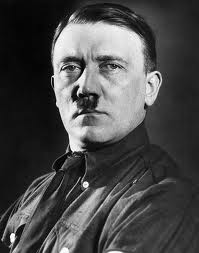
Was this guy evil?
No question. Hitler and his followers aren’t simply evil- they’re the go-to example of evil. They’re our baseline for evil. Everything vile and nefarious is measured against either Hitler or the Nazis.
So what about this guy?
Columbus’s long-list of achievements (discovering America not being one of them) read more or less as a chronicle of genocide, slavery, and theft. It’s well known, certainly at this point, that Columbus was a greedy, narcissistic, tyrannical, and corrupt man. Even with streets, cities, a holiday, and even an asteroid commemorating him, surely we can all agree that this guy was evil. Not on the level of Nazi Germany, but still indisputably evil.
But what about him?
Yep, that’s Thomas Jefferson. President. Founding Father. Author of the Declaration of Independence.
Slave owner.
Not just a slave owner, but an abusive one- carrying on an affair with one of his slaves (that slave also being his wife’s half-sister), getting her pregnant multiple times, and then promptly allowing his own children to spend the rest of their lives as slaves.
Pretty depraved, eh? If I did any one of these things, I’d be called out as a first-rate ******* (and rightly so). I’d be called evil, and that would be telling it like it is.
But let’s move on.
Is this guy evil?
That’s J. Edgar Hoover, founder of the FBI, which he oversaw with about the same leadership you’d expect from some Stone Age self-proclaimed god-king. Hoover was an egoistical, jealous, paranoid man who used the FBI to advance his own political agenda. In addition to all of this, Hoover was a rabid racist, and struggled long and hard against the Civil Rights movement, targeting MLK Jr. in particular, as well as spearheading a campaign to undermine the Black Power movement of the 1960s. Would you call this guy evil?
Ok, what about them?
Yes, the average American family (not pictured above), or heck, even just the average American? Our money goes to supporting companies that use sweatshop labor. Our money goes to supporting companies that recklessly destroy the environment. Our money goes to supporting corporations that push objectifying ads (especially, but not exclusively, in regards to women).
Our taxes go to supporting dictatorial regimes (such as former Egyptian president Mubarak), racist and apartheid states (such as Israel), and even states that utilize child soldiers.
Where does that put us?
Now all of that is simply to illustrate the apparent complexity of the issue. Evil is evil, yes, but pinning down exactly who is and isn’t evil becomes a little more complex once we look at someone other than the Nazis. Jefferson was instrumental not only to the founding of this nation, but to the establishment and perpetuation of the core concepts of democracy and human rights- even to the point where Martin Luther King Jr., a man whose ancestors Jefferson owned– wound up quoting him in his iconic I Have a Dream speech.
Likewise, there’s the issue with the average American. Almost none of us would actually be able to manage a sweatshop, or put an assault rifle in a twelve-year old’s hands, at least, not in person. Despite this, our economy is built on the backs of Bangladeshi kids working for twenty-five cents an our. Our security (we are told) is predicated on us coordinated with nations whose human rights records are drenched in blood (*Cough*China*Cough*Saudi Arabia*Cough*Columbia*Cough*). The vast majority of us either don’t know or don’t care; not enough to raise a voice in protest, anyhow. Again, what does that make us? We might not be ourselves actively implementing imperialism and violence and despotism, but we still do rake in the rewards and howl for more.
We could try arguing innocence by virtue of not being the ones pulling the trigger on any of this, but the truth that history has taught us over and over is that simple knowledge of an injustice creates moral culpability. To ignore injustice equates with committing injustice. We simply can’t escape it.
Not without risk of being hunted down by zealously religious Irishmen…
And maybe that’s the answer. Maybe we can’t be so picky about where we draw the line between right and wrong. Maybe the answer is sweeping judgment. That’s not meant to be some fire and brimstone-esque statement, that’s simply a fact of the matter. You’re not good and evil only when you embark on a mission of genocide- you’re a participant in a viciously evil system until such a time as you act otherwise. You’re part of the problem until you’re part of the solution.
That’s not to say that you have to be flawless. You’re not going to be able to do that (neither am I, for that matter)- in part because we’re human, and in part because the world we live in simply isn’t going to cooperate. But people, we can at least try. I don’t think making an effort to not totally **** up the planet and all that’s in it is really all that much to ask, do you?
As you all doubtlessly know, two days ago, a gunman entered a Sikh temple in the little town of Oak Creek, Wisconsin, killing six and injuring four more before being shot dead by police. The killer, one Wade Michael Page, was connected to a number of vicious white-supremacist groups, most notably the “Hammerskins”, a white-supremacist group that focuses on dispersing racist messages and propaganda through music- Page being the founder of one band and a member in another.
Why is this even being brought up here? As strange as it may seem, there’s an argument to be made for the Oak Creek massacre having its origins in culture. Now many of you might be thinking of the Aurora massacre, and no, this isn’t some discussion about our attitudes towards guns, violence in media, or anything of the kind. There’s certainly a good discussion to be had on that subject as well, but it’s not what I’ll be addressing here.
No, what I’m going to be talking about is this:
Fascism.
It’s coming back.
See, the idea that the culture, traditions, and history of specific people group are superior to those of all others and should be promoted and maintained through brute force didn’t die when Hitler blew his bigoted brains all over an underground bunker in Berlin, or when Communist freedom fighters gunned down Mussolini in a picturesque Italian village. It’s been dormant for a long time, but in recent years, it has again shown its ugly face.
Nope- uglier than that…
While there have been plenty of racially motivated murders over the years since Nazism fell (to say nothing of countless lesser hate crimes), what we’re seeing now is a resurgence in full-fledged Fascist ideology- but before we get into that, just a side note.
For many of you, the term “Fascism” probably conjures up images of generic authoritarianism. Obama’s a Fascist. Rush Limbaugh’s a Fascist. That one really strict teacher is a Fascist.
I’ve struggled for a while to come up with a good, succinct definition for what Fascism is all really about, so I’m going to offer this illustration. To a Fascist, his people (often, race) are inherently great and good, and they are inherently great and good because of their traditions, values, and culture, which are all also inherent to them. The greatness of the nation is lost when evil, conniving undesirables start pushing their own cultures, values, and traditions, which are subversive and degenerative to the nation. Therefore, these degenerates who threaten the nation must be stomped out (often quite literally), and the “original” culture/traditions/values must be restored, enforced, and maintained through an all-powerful government, police force, military, etc.
There’s more to it, of course. I could talk about the concepts of autocracy, corporatism, use of ancient Roman symbolism, and the like, but for now, let this all above be the definition we work with.
Now why do I say it’s coming back? Certainly if we disregard the recent massacre and the occasional race-related attack, there doesn’t seem to be any major Fascist threat in the US. The KKK isn’t roaming with impudence in the South. Gangs of Nazis aren’t attacking Jewish stores and businesses. Self-proclaimed defenders of the nation aren’t roaming the boarders trying to-
Oh yeah…
Ok, but it’s not like there’s been any major attack on people for having different skin or heritage or religio-
Ok, fine, but it’s not like any of this bigotry has been legislated or-
…Yeah…
See, that’s how it works. It’s subtle, discreet. The great Sinclair Lewis perhaps said it best:
Kinda forgetting about the last time a German chancellor declared the failure of multiculturalism…
…And in Britain, holocaust-denier Nick Griffin, leader of the white-supremacist British Nationalist Party (BNP) was elected to the European Parliament. That’s about the equivalent of the Grand Wizard of the KKK getting elected to congress.
I’d show you an actual picture of Nick Griffin but **** that guy…
And this is to say nothing of the escalating attacks on immigrants across Europe. Why? Because many Europeans and Americans are buying into the idea that the values, traditions, culture, and beliefs of other people are a direct threat to them. I recall in college on particularly nasty student who asserted that “All immigrants should go home”. Interesting, considering he had an Italian last name. Does he mean that he too will leave America? Of course not. Does he mean the Canadians who attended that school? Not at all. “Immigrants” was simply code for those “undesirable brown people”. But don’t take the words of one bigoted student as evidence of this ugly trend- just look at Congressman Steve King’s attempt to make English the “Official Language” of the US!
Now why on earth would you try to make English the official language of the US? It’s not like the vast majority doesn’t already speak it. And what if we did speak Spanish? How would it make a difference to anyone what we speak… unless English was somehow viewed as “inherent” to America!
There’s really part of the problem. It’s a perspective on society. Back in College, I had a conservative friend whose opposition to gay marriage was that “the traditional family is the building block of society, and changing the family weakens society”. I’m not saying he’s a fascist- not at all, but this view of society as a solid, unchanging thing is what really serves to create so much of the general bigotry and outright fascism that we see today. When society’s well-being is linked to culture, to maintain society is to maintain culture, and while there’s a certain logic there, all too often it’s taken to mean that every aspect of culture, right down to traditional gender roles, religion, and racial demographics, must be controlled. It’s the reason why you see Muslims, immigrants, homosexuals, or as the past couple days have shown us, Sikhs, targeted. And don’t for a minute imagine that it’s just Aryans who take up this line of thought. I recently had an encounter with an Asian immigrant who cited that his country was once upon a time a “Christian country”, and that he was concerned at Hindus, Buddhists, and the like building places of worship in his community.
Only where does it end? Suppose you argue that non-Christians should be excluded from a country because their cultures threaten the stability of the nation- what the minority groups? I always want to bring this up when I hear someone make the argument that America is a “Christian Country”- does that include the Mormons and Jehovah’s witnesses? What about Unitarians? Episcopalians? Catholics? Mennonites?
That’s the crux of the matter. The Fascists- both the self-declared and the self-deluded- would have us believe that we’re all hopelessly divided. That we cannot respectfully disagree with each other. That you can’t speak Mandarin and I can’t speak Arabic and the two of us get along. That multiculturalism is a fantasy. That we can’t have our own practices and perspectives while all agreeing, to some degree, on how to live together. We’re meant to live in constant fear that if we tolerate anyone who doesn’t fit in, there goes our way of life.
So let it go.
This will be harder for some than others…
The title of this blog is the Culture War Reporters, and perhaps what needs to be understood is that the culture war isn’t something that can (or should) be won. There’s always going to be divergence in opinion and in behavior. There’s always going to be new things coming in, and old things struggling to stay on. There’s always going to be good stuff and bad, so at the end of the day, why worry? Don’t buy the idea that culture can be maintained, or that one group has found all the answers. For all the dark content about murders, genocide, and the like, strange a line from Disney’s Ratatouille should fit so appropriately. Defending his lifestyle against the accusation that it’s “against nature”, Remy the rat declares that “Change is nature”.
I did something bad for my health that I do not recommend. I watched “180”, a half-hour documentary made by Ray Comfort.
It is a bastardization of discourse from all sides. In an interview with Steve, a neo-Nazi punk type of young man, Steve says that he’s certain of his opinions about the falsehood of the Holocaust and other offensive things. To combat this, Comfort asks Steve to spell shop (Steve does) and then asks: “what do you do at a green light?” The question is a trick to get the mind to quickly respond “stop”, which is semi-associated with green lights and rhymes with “shop”, and the person answering looks silly. Sure enough, Steve responded “Stop” and looked silly. And then – well, then Comfort treated that like an actual argument for something.
The documentary was dipped in dramatic music, photos of piles of dead bodies, and use of gratuitously violent photographs. What is most interesting to me, however, is the use of what seems to be the universal argument-ender: comparisons of things to Hitler.
Hitler, the Nazis, and Lazy Discussion
Hitler and the Holocaust have become mythic elements of American culture, I think, and to the detriment of the truth of the actual historical events. I was recently visiting a small church where the members, after the service, started (sort of randomly) to wax poetic about the horrors of Hitler and the Nazis. They weren’t saying anything new – everyone was just affirming that Hitler was inhuman and the Nazis were too. It was the fervent insistence that “real humans could never do that sort of thing” that struck me – I thought of all of the other genocides and massacres of the past century alone, of the killing of civilians in wars by troops of every nationality, of atomic bombs. But even in light of all of these things, current conversation about Hitler seems to serve contrast to our new, very human, very un-barbaric society. We talk about Hitler basically like Satan – an ultimate evil; a rhetorical catch-all.
Ray Comfort and 180: Unethical Discourse
Steve, in the movie "180" by Ray Comfort
Comfort’s specific use of the Hitler argument is reductive and tired. It is, if anything, an exploration of how charged and empty rhetoric in the realm of politics is being mirrored in general culture. His interviewees are inconsistent, and seem to know very little about philosophy, theology, or basic logic. Comfort’s questions are also always precisely and pseudo-cleverly leading, and it doesn’t seem that he wants to engage with the interviewees at all: “Does this mean you’ve changed your mind about abortion?”, he asks. “Are you going to vote differently in the future?” It is not a conversation, is the point: it is a poorly executed set of rhetorical acrobatics. Is this the way to foster discourse and an informed public? Probably not. Arguments depending on rhetorical cleverness are insulting to both parties.
Comfort’s series of interviews are not only annoyingly inconsistent and poorly constructed, however: the movie is also a manipulative presentation of complex issues and events, presented crassly and with a smugly triumphant attitude. One of the less graceful moments was when Comfort asked a woman if she’d had an abortion; she said that she had. He then immediately asked: “Do you feel guilty about it?”
As the big finish, Comfort sets up a game-show setup of moral responsibility and the afterlife, and awkwards them into admissions of fright and death anxiety:
Comfort asks people if they have lied/stolen/been lustful: most of them say that they have.
Comfort then gets them to admit that this makes them liars/thieves/adulterers.
Comfort gets them to admit that liars/thieves/adulterers go to hell.
Comfort elicits from the interviewees an understandable anxiety about the prospect of hell.
Comfort asks them if they are going to go read their Bibles.
Some of them say yes.
Alesia, from Ray Comfort's movie "180"
Theologically, morally, rhetorically, and logically, this is one of the most horrible things ever. Comfort’s quick-talking way of “tricking” people into professing a fright of punishment does very little for the moral health of humanity or the search for truth within rhetoric and theology. The triumphant music and photos of bloody sheets are no help for the legitimacy of the movie.
There are also 40 thousand comments. I do not recommend those either. They are not a happy picture of humanity.
It makes sense to protest the legalization of abortion and to be horrified at the amount of deaths occurring if one believes that life begins before birth. Comfort’s smugness and “gotcha” questions, however, lack earnestness, humility. The whole thing turns a serious situation into an awkward and unproductive onslaught of unhelpful rhetorical inconsistencies, devoid of integrity and, therefore, real efficacy.
In sum, the movie is a disjointed account of unproductive discussions with unproductive people with vague and uninformed opinions. It’s a disheartening representation of the state of discourse on American sidewalks.



















 Culture War Reporters