Tag Archives: music

Free Information Culture

The last of my installments (for now) in looking at these rising alternative cultures is “Free Information Culture,”  which shares the same problem with “science” culture in that there’s really no good name for it yet. I’ve referred to it before as “internet culture,” only the problem with that is that, like “science culture,” it isn’t so much the culture of the thing itself as the culture of the fanbase. In simpler terms, it’s the difference between Hollywood culture and movie-lover culture- it’s the end product that’s valued.
So what’s the internet’s “end product”?

Besides porn and stuff like this…

Free Information.

Whether it’s the news, or Wikipedia, or TED Talks, or Imgur, or anything else imaginable, it’s on the internet for free and public use. It’s something of a great equalizer. No matter where you’re from, what language you speak, what class you hail from- you can create or say anything and then get called gay in the comment section.

And while that last bit is sort of a joke, it does play a role in developing the “free information culture.” Granted, general anonymity can make us vicious and vile people, but it also (to some extent) strips us of our egos. When you make something online, you really don’t get much, if any, credit, but that’s alright since it isn’t the point. It’s just about creating, nothing more or less. Who drew the first rage face? Who started up Bad Luck Brian? Who edited and sourced that one Wikipedia page you used to stitch your last minute term-paper together? Who puts together those monthly fail compilation videos? I don’t know and will probably never know, but I do know that they’ll keep coming because of the simple joy of creating them. I and every other person with a half-decent internet connection.

And all of this simply isn’t understood by some people.

Recall the massive outcry against the SOPA and PIPA bills? What prompted the creation of  these acts was that some people- certain corporations in particular- couldn’t quite wrap their heads around the idea of free and unlimited access. Now maybe you agree with them, and maintain that posting copyrighted material of any kind is piracy and immoral, however, what needs to be understood is that this was viewed as an act on the very nature of the internet and everything it had come to represent.

Again excluding porn and stuff like this…

Now more and more companies are catching on to the idea that it’s wiser to try to work with the faceless and vengeful cat-worshippers of the internet than against them- just look at video game companies that are starting to work in tandem with modders. The game Minecraft in particular is a good example of this, as many of the new aspects of each update to the game coming from the fan-forums themselves. Nevertheless, there are still plenty of people out there (I’m looking at you, Music Industry) who continue to struggle (vainly) against the dissemination of what they view to be the “information wants to be free” crowd.

Again, it all boils down the core of the culture that the internet has produced, gravitating around the concepts of freedom and egalitarianism. Look at Wikileaks founder, Julian Assange.
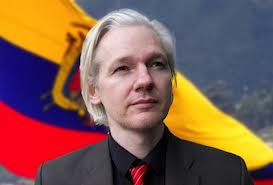
If he did his work back in the early 90s, we can be pretty sure he’d be viewed overwhelmingly as a candidate for a James Bond villain. But today we (for the most part) view him as being a heroic (or at least positive) figure in a world that’s become increasingly secretive and unequal. Why this dramatic shift in perception? Again, it’s the internet and it’s affect on us. In a time of economic crisis we might not be able to go to the movies, or eat out, or drive for miles to see a friend, but we can watch something online, or browse recipes, or video-chat with the same buddies that you’d otherwise not be able to see. Any threat to your full and unrestricted access to the internet is, by proxy, a threat to some of the last pleasures you have left.

Hence the formation of a culture obsessed with the values of free speech, free access to information, and freedom from censorship. And with every development of the internet or our access to it serving as another leap in the evolution of the culture, it’s safe to say that the howl of anger that the governments of the world met when trying to create such bills as ACTA is only going to intensify.

Violence (Not) In Media

In the wake of the Aurora Shooting, the Sikh Temple Massacre, and a recent spate of gun violence across the country, the debate of the violence in media has once again reared its head. On one side, those who cite the saturation of film, music, and video games with violence and the glorification of violence as responsible for creating these monsters, or at the very least, pushing them over the edge. On the other side, the ranks of apologists, who declare that it’s ridiculous to blame movies and music for mass-murder.  I’m not here to analyze the claims of either point, or to make an argument for one side or the other- that’s already been done better by The Escapist’s Robert Chipman (check it out here).

No, I’m here to address the subject of violence and its possible contributing factors outside of film and music.

When I touched on a complaints I had with movies like Brideshead Revisited and I Love You Man a few weeks ago, I briefly mentioned goth-rock-star Marilyn Manson, whose music was accused by many of being responsible for having influenced the Columbine shooters in committing the massacre. Interviewed by Michael Moore in his documentary Bowling for Columbine, Manson had this to say regarding violent influences:

And therein really lies the crux of the issue- when tragedies like this happen, the scope of our outrage is usually so small that we fail to take into account all the other possible factors. We can cite GTA or rock or rap or cartoons as being responsible and maybe- just maybe- there’s something to that. But what about everything else? If violence in media causes violence, surely violence itself should be cited here!

You remember this?

That’s Marine Corps veteran Scott Olsen, moments after he was shot in the head with a gas canister from close range. Part of the brutal crackdown by police on the Occupy Oakland protests last year- back when Mayor Jean Quan decided the best way to deal with a peaceful protest was by turning her town into a war zone.

But why talk about Oakland and countless other cities being turned into war zones when we can just talk about actual war?

As I’ve mentioned in previous posts, this is the single longest war in American history. Year after year after year, it goes on, and with no end in sight. That’s got to be the single largest and publicized campaign advocating violence, yet where is the outrage against it?

And what about hunting? That’s all about guns and the glorification of killing things…

What about Civil War Reenactors?

What about the national anthem? That thing is full of references to bombs. What about the 4th of July? A day when we celebrate our victory in a war by setting off explosives!

What about the very way we talk about violence? Should the Mob Museum here in Las Vegas be shut down? Should we do away with anything related to pirates? Should we stop teaching about the war of 1812 in schools?

And so on…

You get the idea. Ours is a culture and history built on violence. It’s in everything–  not just our media. While I’ve got my own views on what does and doesn’t cause or promote violence, my purpose here isn’t to take a side. I’m simply trying to demonstrate that if you do want to try to get into the causes of violence, you don’t get to be selective about who you put on trial.You want to find out if there was something in our world beyond the killer’s diseased mind responsible for death and destruction, you have to look at everything- anything less is just a witch hunt, pure and simple.

Let’s face it, half the time, tragedies like these are the platform from which we get to lynch things we didn’t like to begin with…

…I wonder if that kind of vicious and petty mentality might contribute to violence at all…

Bad Influence

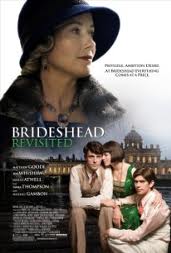
Last night, I watched Brideshead Revisited, and let me tell you, it is one festering pile of garbage.

Seriously, **** this movie…

Now before anyone launches into a tirade- yes, I am aware that Brideshead was originally a novel and, from what a lot of critics have said, one that was infinitely better than the movie, the later of which reduced all of the author’s points on culture, religion, and relationships to a couple hours of pretty set design and not much else. Simple fact of the matter is Everyone Poops could have been adapted for the big screen and still have been better than this confusing mess.

Michael Bay was going to, but the book was too cerebral for him…

Look- I can’t speak to either the novel or the author. People who have read the book say it was better than the film, and while I have difficulty believing that, I’m willing to give them the benefit of the doubt. I’m not hear to address that- I’m here to address the fact that someone at some point did actually think that what they presented in the movie was somehow not only worth watching, but worth paying for.

It aint- in case you haven’t gotten that message yet…

I’m not a fan of British period-pieces; if I wanted to see eloquent people with miserable lives, I’d talk to English majors.

What we have in this movie is a group of extremely rich youngsters lounging about an elegant mansion, downing enough alcohol to make newyears in Vegas look like a Baptist ice-cream social, and whine and wail for over half an hour about how miserable their lives are. Not in any existentialist sense, mind you- these characters aren’t disillusioned with luxury, they’re just frustrated that they can’t have everything that they want when they want it the way they want it. This is essentially Walden without any redeeming qualities- just pasty, entitled brats with delusions of insight, giving trailing speeches about their long “suffering”.

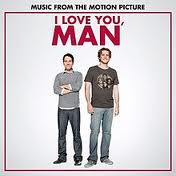
And I’m not bringing this up just because one movie sucked- this seems to be part of a greater problem in our culture. I’ve seen the same kind of problem in the film I Love You, Man.

Back in college, my housemates loved this movie. Suggested it every movie night just to see me shiver with horror and disgust. In case you’re not familiar with the plot line, let me break it down for you:

Peter’s getting married. Peter simply doesn’t have any guy friends outside of his brother (played by Andy Samberg, who was the only good part of the movie), and he one night overhears his fiancee’s vile, harpy collection of friends gossiping that it’s weird Peter’s not going to have a best man at his wedding. Peter, who apparently bases his self-esteem on the idle chatter of obnoxious strangers is filled with self-doubt and embarks on a quest to get himself a male friend- because, you know, what will his future wife’s evil friends think of him if he doesn’t?

If you’re trying to jump through the screen, grab this guy, and slap him across the face while screaming quotes from Nietzsche- don’t worry, that was my first reaction too. How we’re supposed to sympathize with this self-pitying sadsack is beyond me- the guy makes Ted from Scrubs look like Teddy Roosevelt by comparison.

I’m not trying to say that every character in a movie- or even every main character- has to be someone admirable. Just look at American Psycho. I’m not saying that these characters have to be ultimately successful. Just look at Goodfellas or The Godfather trilogy. I’m not saying that the characters have fit a classic/stereotypical form of “manliness” (in the case of male characters, anyways)- just look at Zombieland, Superbad, Napoleon Dynamite, or Scott Pilgrim vs the World.

Between movies like Brideshead Revisited, I Love You, Man, and pretty much every romance movie that ever has or ever will be made, there’s this common attitude of entitlement, self-pity, and melodrama.

Ok, you could kill yourself or- OR– spend some time working at a homeless shelter, petition on behalf of political prisoners, overthrow corrupt dictatorships since you are, y’know, immortal…
Just say’n…

Now I know you must all be saying “But Gordon, you charming devil- what’s the big deal? So what if a section of film is dominated by this lousy message of egocentricity, ignorance, and impotence?”

Let me show what the big deal is.

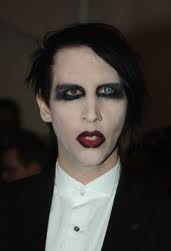
See this guy here? This is goth shock-rocker Marilyn Manson. If you’re not a fan, chances are you’ve still heard of him- in the days that followed the Columbine Shootings, Manson was argued by many conservative and religious critics as having been responsible for influencing the shooters. And obviously, that’s just a single example- whether it’s true or not, we’re all familiar with the outcry against violence in the media- be it anything from video games (see any GTA game) to music (Wu-Tang Clan aint nothin’ to fornicate with) to movies (just take your pick).

Let’s assume, just for a minute, that this is all true. I’m going to discuss the whole “does-violence-in-media-cause-more-violence?” question later in the week, but for now, let’s just say that the answer is “yes”. If these things have a serious negative effect on the views- especially young viewers- and deserve to be censored or even banned on that logic, surely the same can be said for the equally detrimental attitudes and actions (or lack thereof) found in movies like Brideshead Revisited and the like. What do these things teach us?

I was going to say “Stalking and manipulative relationships are romantic”, but I really didn’t have the stomach to slog through countless Twilight posters looking for Edward crouched in the window- enjoy this picture instead…

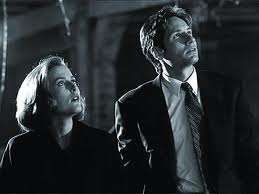
Again- the problem isn’t with romance as a concept or a plot device or anything like that. I’m not a sensitive guy in even the loosest use of the word, but despite my callousness, I really don’t have a problem with romance- it’s just that romance, as a genre, tends to produce these awful, reprehensibly selfish attitudes, and at the same time make the actual relationships pretty dumb as well. Though no one is ever going to admit it, couples like House and Cuddy or Scully and Mulder are both more believable, moving, and inspiring at their worst moments than any Romance film couple at their best.

Obligatory “Still a Better Love Story Than Twilight”…

What else can I say? Romance movies, and indeed, all media that promotes this whiny, entitled message seems to be just as harmful- if not more- than the bloodiest action flick or the most violent rap or rock. I’d be just as worried about the effects of such media on young minds as I am about the most car-stealing-liest-prostitute-beating-iest video game ever made. Allow me to leave you with this brilliant tweet from comedian Dave Chapelle to drive my point home.

Holly Brook is Skylar Grey

At the age of 18 Holly Brook Hafferman, going by her first and middle names, was signed to Machine Shop Recordings, Linkin Park’s vanity label. Two years later she made it big by being featured and singing the chorus on Fort Minor’s fourth single, “Where’d You Go.” Holly Brook’s debut album, Like Blood Like Honey, dropped two months later, on June 6th 2006.

The above video is one of the only music videos I could find of her on YouTube, and it’s a live recording and not a professionally filmed one. While nothing flashy, it manages to sum up pretty well where she came from musically, “heartache and self-discovery over heavy piano chords.”1 Like Blood Like Honey managed to hit number 35 on Billboard’s Heatseekers Albums chart, but soon after she faded into obscurity.

This year Holly Brook reentered the music scene under the new stage name Skylar Grey, and went on to do big things. She helped write sections of Eminem and Rihanna’s hit “Love the Way You Lie” and was featured on tracks by both Diddy-Dirty Money and Lupe Fiasco. Her debut live performance as Skylar Grey was at the 53rd Grammy Awards where she performed “I Need A Doctor” alongside Eminem and Dr. Dre.

Already having accomplished so much this year Grey is currently working on her solo studio album, titled Invinsible. Below is the only video currently on her VEVO YouTube channel, a music video for the song “Dance Without You.”

Although it’s never directly stated who it is Skylar Grey would like to “dance without” it seems apparent that the person is Holly Brook, and the video drips with (unsubtle) symbolism. Evidence can be found in her black clad character’s actions bordering on murderous [the neck-snapping action at 1:35] towards her hospital gowned alter-ego and her dismissively stepping over the latter’s prone body at the video’s conclusion. The message is clear: It’s time to change and move on.

It’s impossible for anyone to judge Skylar Grey’s decision to change her image and genre of music, especially taking into account her past with the music industry.The chorus of “Wanted,” a song from Like Blood Like Honey, begins with the words “I will be wanted / I will not fall from grace.” Maybe this was just her way of making those words ring true.

1. AllMusic’s review of Like Blood Like Honey. Source: http://www.allmusic.com/album/like-blood-like-honey-r836849/review

2. In reference to her fall out of fame she’s quoted as saying “[s]uddenly I was chewed up and spit out,” admitting a lot of confusion over what had happened in the past. Source: http://www.latimesmagazine.com/2011/06/hooked.html