Tag Archives: Spider-Man

DC Is Terrible, But They’re Not Homophobes

Look, let’s be clear, I’m not a fan of DC. To be a little more specific, I am not a fan of DC’s business practices and editorial decisions. All of that being said, yesterday the internet perpetuated one of my least favourite of its trends: snap judgement from journalists fishing for hits.

Late Wednesday night W. Haden Blackman and J.H. Williams III, the writer and artist of Batwoman, respectively, posted  a message on the former’s blog that they would be leaving the title. Here’s the section of that post that has received the most attention [emphasis added]:

Unfortunately, in recent months, DC has asked us to alter or completely discard many long-standing storylines in ways that we feel compromise the character and the series. We were told to ditch plans for Killer Croc’s origins; forced to drastically alter the original ending of our current arc, which would have defined Batwoman’s heroic future in bold new ways; and, most crushingly, prohibited from ever showing Kate and Maggie actually getting married. All of these editorial decisions came at the last minute, and always after a year or more of planning and plotting on our end.

From what I can tell, the news was first broken by The Outhouse, and was soon followed by all the other major comic book news outlets. ComicsAlliance and Newsarama both likewise delivered the news straight, but elsewhere this wasn’t the case. Continue reading

Homosexuality In Comics As Of July 26th

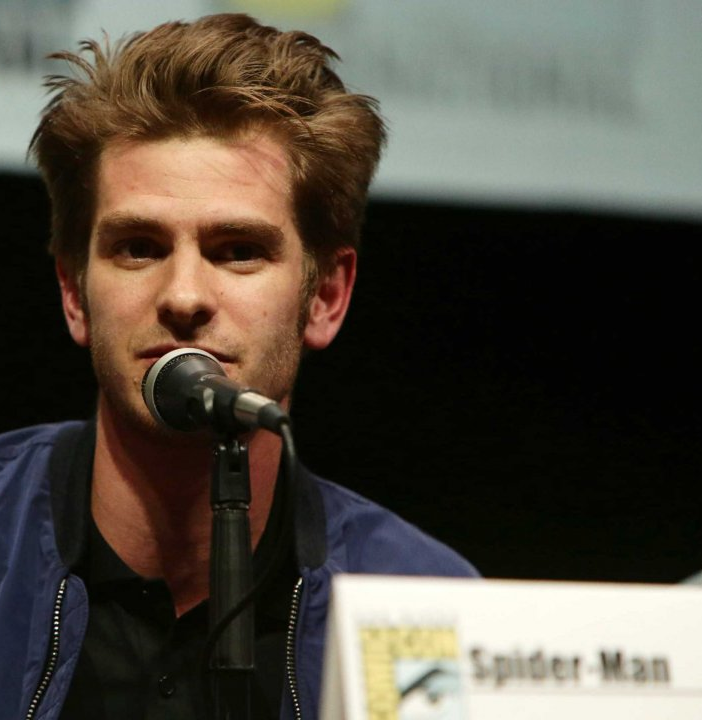
andrewgarfieldspidermancomicconwhatever

At Comic-Con this year Peter Parker/Spider-Man actor Andrew Garfield announced that the character would not, in fact, be gay in the upcoming films. 

Now if you didn’t know, and if you don’t frequent the same news sites I do it may have completely passed you, Garfield actually expressed some interest earlier this month in portraying a flexible aspect of Peter Parker’s sexuality. I’ll let him speak for himself, of course:

“What if MJ is a dude? Why can’t we discover that Peter is exploring his sexuality?  It’s hardly even groundbreaking!…So why can’t he be gay? Why can’t he be into boys?”

While at Comic-Con he  was also able to follow-up these comments with the following statement: 

“It would be illogical for me in the third movie to be like, “You know what? I’m kind of attracted to guys.” That’s just not going to work. It’s clear. It was just more a philosophical question.” Continue reading

A Few More Thoughts on Fan Fiction

Gordon and I only just talked about fan fiction two days ago, but in debating its merits managed to avoid much conversation about its place in our world today. To begin with, the topic was first brought up by Marilyn in her comment on our reactions to easy-money shows, and she specifically mentioned Anne Rice.

For those of you who don’t know, Anne Rice became famous for writing vampire novels decades before the Twilight books came out [and a few centuries after Bram Stoker’s most well-known work]. She also had a very particular stance on fan fiction, which I have pulled from an old archived version of her site:

“I do not allow fan fiction.

The characters are copyrighted. It upsets me terribly to even think about fan fiction with my characters. I advise my readers to write your own original stories with your own characters.

It is absolutely essential that you respect my wishes.” Continue reading

Fame Day: Alex Alonso

alonsoGordon’s absence has forced me to dedicate yet another Fame Day to a man in the comic book industry [a post on a woman is in the near future] to join the ranks of Anka, McDuffie, and Fraction.

Introducing the Editor in Chief of Marvel Comics, Axel Alonso. Interviewed by FOX News Latino [which I didn’t even know was a thing], he was asked the question: “Is that a new initiative at Marvel Comics is doing? We’re going with the Latinos now?”

This question was in response to a few “new” characters appearing in the publisher’s titles, with Miss America being one of them. First featured in Marvel Mystery Comics #49 in November 1943, Miss America was originally another embodiment of the United States in World War II, a star-spangled powerhouse punching out Nazis. Now, in 2013, Miss America is the moniker for America Chavez, a Latina teenager and new member of the Young Avengers [one of Marvel’s bestselling new titles]. Also mentioned was the new Blatino Ultimate Spider-Man, who has already been covered on this site.

From left to right: Miss America Chavez, Miles Morales [Ultimate Spider-Man]

From left to right: Miss America Chavez, Miles Morales [Ultimate Spider-Man]

Alonso, a Mexican-American himself, replied:

“I’d be lying if I said I wasn’t motivated, on a personal level, to have Hispanic characters represented in comic books, but this isn’t some PC initiative, [this is] capitalism.”

He acknowledged that a growing range of people read comics, and that as a publishing company it is their “responsibility to make them feel included.” Going back to his comment about “capitalism,” the fact of the matter is that as a company it’s in their best interest to create a product that appeals to the fastest growing demographic in America.

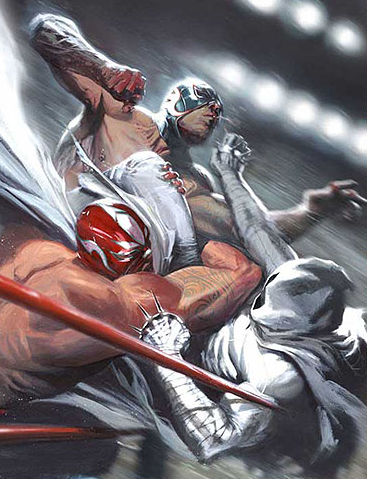
While Alonso agrees that comic books have not always treated minorities with due respect, he also acknowledges that stereotypes are more complex then they might first appear. He took part in helping to create Mexican heroes the Zapata Brothers, who were based on his cousins in Mexico. The two wear full luchador regalia, and while this may be perceived by some as racist, Alonso would argue otherwise. “Is that a little stereotypical?” he says, “Yeah,  but it’s also fun and a part of our culture.” Growing up watching these wrestling matches growing up they struck him as being an important part of his culture.

When asked why Latino characters haven’t achieved the same status and notoriety of heroes like Batman and Wolverine, his response was “Why haven’t they become that yet?” His opinion is that, with America’s ever-shifting cultural landscape, it’s an inevitability. You can’t force an audience, or simply make a character big, it just evolves and happens naturally.

Unfortunately, fellow member of “The Big 2” DC declined to be interviewed for this piece. While Marvel has its fair share of seemingly racist characters [Mexican villain/anti-hero Armadillo] DC has a large mark of shame in Extraño, a “gay Latino magician who had HIV and referred to himself as ‘Auntie.’” That being said, it’s a shame that they didn’t offer a means of looking forward through heroes such as Blue Beetle [Jamie Reyes] and Vibe [Paco Ramone] who has his own new title.

Alonso is a man who realizes that comic books are a business, and one that needs to make money and that has an impact on its readers. His joy that Miles Morales exists as a character is in “knowing that there would be a child out there who would see Spider-Man peel back that mask to see a different face and a face that resembled their own.” He understands that, and that’s worth giving him credit for.

American Heroes and the British Men Who Play Them

Everyone’s talking about this “Asian Invasion” of basketball, but general interest due to someone of my ethnicity garnering fame aside that’s not what I want to write about today. I’m writing about a British Invasion. And no, I don’t mean the influx of musician from the UK that occurred during the mid-sixties. I mean the fact that this summer the British are coming. To the big screen. As superheroes.

There’s no solid argument when it comes down to naming the three most well-known superheroes out there. From a purely global standpoint, SupermanBatman, and Spider-Man top the list. Two have feature films that will be hitting theatres this summer, with the third being released next year. As coincidence would have it, all three films have their headlining roles cast with British actors.

Coming out this July 3rd, The Amazing Spider-Man stars Andrew Garfield in the Marc Webb-directed reboot of the franchise. Garfield made an international name for himself starring opposite Jesse Eisenberg in The Social Network. In it he portrays Brazilian Harvard student Eduardo Saverin, though with a clean-cut American accent. The other side of the mask he will be putting on is Peter Parker, teenage outcast and all-around grittier-looking-than-Tobey-Maguire.

The next month brings us The Dark Knight Rises, the third and final piece in Christopher Nolan’s Batman Trilogy. Christian Bale is not new to the big screen or American roles, playing one in American Psycho, The Machinist, 3:10 to Yuma, and many others. His command of his accent is such that when he freaked out while filming Terminator Salvation, he actually switched back and forth between American and British. When not growling underneath the cowl he portrays seemingly mild-mannered billionaire Bruce Wayne.


In 2013 we finally get that Superman movie we’ve been waiting for, which takes the form of Zack Snyder’s Man of Steel. Suiting up in the red and blue tights is relative newcomer Henry Cavill, who exercised both his muscles and his British accent in Immortals, which came out last year. For the most part he hasn’t done much in the way of portraying Americans, which may be a challenge when asked to take on the mantle of a hero as American as apple pie. When not rocking the spit curl Cavill will be Kansan journalist Clark Kent, a character who may be a little more mild-mannered than Bruce.

With those summaries out of the way, what exactly does this mean? I’m no expert on the trends in Hollywood, but I can’t imagine that casting British actors in American roles is anything new or something to be strongly desired. If casting directors are doing their jobs correctly, then they’re accepting whoever is most qualified for the role, regardless of nationality. As a Canadian and someone who believes that the most talented actors deserve the spotlight this is something I cannot disagree with.

In regards to culturally American icons being portrayed by actors of other nationalities, well, why not? If they bring the energy and commitment to a role and portray it as best they can, then they will do a better job than, say, George Clooney, who portrayed the Caped Crusader as a homosexual. If any actor respects the character they’re given than they will do as much as they can to ensure that he or she is depicted well.

It is an interesting coincidence, but hopefully one that can, in its own way, push forward the idea that superheroes don’t always have to be White Americans. That if Spider-Man can be black in the comics then maybe it can happen on the big screen as well.

Product Placement, and/or Wouldn’t an Ice Cold Pepsi Really Hit The Spot Right Now?

After a long day, I plan on sitting back and finally watching the last episode of CBC’s Being Erica, a show I began last summer and have yet to finish. While skimming its Wikipedia page I was reminded of Season 4 Episode 8, and the product placement that the video below accurately describes  as “egregious.”


It’s difficult to be immersed in a show that shoves advertising down your throat, and I definitely remember being disturbed by it. A car that can park itself is impressive, but watching two characters you’ve grown familiar with ooh and aah as a car salesman lists its features is not. As I watch the clip again and hear the back and forth of “No way” and “Way” it’s hard not to feel a little sick inside.

As was to be expected, the Canadian press was far from thrilled by this. An article on the National Post titled “How Being Erica took product integration too far” cites this episode as the one that caused the author to “break up with Erica.” She also referenced a the following point I had already been planning on making:

Is there anything 30 Rock can’t get away with? The clip above features product placement that is far more in-your-face than what was found in Being Erica, yet manages to pull it off. It’s both meta and very funny, and as a result as viewers we can laugh it off and even respect what the show is doing.

How much, then, can we put up with? I fully recognize that Dr. Pepper plays a fairly prominent role in the first three Spider-man films, and the ridiculous amount of BMWs in Mission Impossible: Ghost Protocol was impossible to ignore. Phones, more than ever have gotten a good amount of screen time in music videos, with so many examples out there I’m not even going to link to one.

Product placement [or integration, which definitely has more positive connotations] has, and will continue to be around, but is this something that we should take for granted and accept? That particular episode of Being Erica sparked an uproar of sorts, with audience members feeling offended that the network would think so little of them. The message behind their complaints seems to be: You can advertise to us, but be subtle about it.

The economy’s not in great shape, and TV shows and movies and music videos can only be made if there’s money to fund them. Since we’re going to keep getting logos flashed in our faces, what should we do? Can we do anything about it? As consumers of the media we should all have standards we expect to be met, but the question now is when do we draw the line?