Tag Archives: Syria

Boycott Russia

2014 will see the XXII Winter Olympics held in Sochi, Russia. Or at least, such is the current proposal of the Russian state and the Olympic committee. Personally, I’d like to keep that from happening.

Here’s why:

Russia isn’t exactly a beacon of freedom and human rights today (or since 1929, for that matter). In spite of having the basic decency to offer former-NSA whistleblower Edward Snowden something of a safe haven, the modern Russian Federation has more than a few dents in its reputation.

And its cars…

While massive corruption has been an issue for a long time, and while Russia is no more free from the ugly face of white supremacism than any of its fellow European nations, a few recent events stand out as especially damning. Continue reading

Let’s Talk About The Hijab

We make no pretension of being unbiased here at the CWR. We have our particular axes to grind and banners to wave. Evan, you’ll notice, often covers the place of Asians in culture- in no small part because Evan is a combo of a few Asian peoples himself, and more directly affected by that issue. I, alternatively, grew up in the Middle East, and after having spent pretty much the entirety of my life with Arabs and Muslims (not the same thing, shouldn’t have to explain that), I’m more sensitive to Middle Eastern issues- Islamophobia in particular.

I could spend all day railing on the treatment of the Middle East/Arabs/Occupied Palestine/Muslims/etc. The way Arabs/Muslims are singled out for scrutiny and criticism. Casting Indian actors to play Arabs, since Arabs don’t match their own stereotype. The lack of appreciation for the key role the Middle East played in preserving and advancing science and philosophy.

You get the idea.

So rather than trying to tackle a single issue that could be (should be, and has been) covered by an entire academic book, I’m going to hit up super-specific issue.

The hijab. Continue reading

Fame Day: The Young Turks Arabs

A few days ago, a client at the nonprofit where I work heard that I was from the Middle East.

The conversation went as it usually does, beginning with some surprise, followed by a few questions like “why on earth were over there?” and “How did you learn to speak English?”

You get used to questions like that.

Then came the inevitable comments on the ongoing violence in my adopted homeland of Syria. Those comments are always pretty vague- existing as a result of having to say something so as to not appear ignorant while being ambiguous enough to avoid proving that you are ignorant. In this case it was a theatrical, sad shake of the head, followed by the statement “Well that’s a shame. But y’know? There always has been fighting over there and there probably will be to the end of time.”

I’ve always hated that statement.

In all fairness, that’s true as well…

First and foremost, it’s a complete lie: “There’s always been war in the Middle East?”

No, there hasn’t. For centuries, the Arab world was the shinning pinnacle of human civilization. Even in its decline, the Middle East was still a relatively peaceful place- especially when compared with the rest of the world. Look at European History in the 19th and 20th centuries and compare its body count with that of the Middle East in the same time period.

Secondly, there’s a deeply racist implication in the statement that “there will always be war in the Middle East.”

Why?

Because of the way the borders are drawn? Because there’s oil in certain parts of the desert?

Or is it because the Arabs are simply and inherently angry, violent people?

That statement is on par with saying “Africa will always be poor.” Why?

Because, you know… Africans?

This is some ol’ bull. “Africans are capable of nothing but starving, as they always have done and always will do, and Arabs are capable of nothing but fighting- always have and always will”?

Nevertheless, that was the line (and often still is) that was fed to the public over the past couple decades. Recently however, the events of The Arab Spring have completely and utterly turned that picture on its head.

Starting with the self-immolation of 26-year-old street vendor in Tunisia, ripples of protest spread out across the Arab world, building in power and momentum until they evolved into revolutions against some of the most brutal and dictators and entrenched bureaucracies in modern history. Egypt, in particular, stands out as a shining example, with thousands of young, unarmed Egyptians doing in 18 days what the US and all her allies couldn’t do for Iraq in nearly 10 years.

And no, in case you’re wondering, that had nothing to do with either Facebook or Twitter. I recall during the weeks following the victory of the Egyptian revolutionaries, pundits in the West were desperately fishing for some way to co-opt the accomplishments of the young Arabs and paint them as somehow being ultimately rooted in the bounty and decency of America. Facebook and Twitter were cited as essential tools, without which there would surely be no free Egypt. Again, any sane person is going to call bull on this. Twitter never set itself on fire. Facebook didn’t dodge gas canisters or face-off with riot police and tanks. Again, as a result of the American media’s desire to scare you without actually showing you any blood or gore, grasping the full scope of what many of these young protesters were up against is difficult, if not impossible.

You’ve got to see the casualties of battle to really and truly understand the courage and sacrifice of those going into the maw. Perhaps its for that reason that westerners often look to social media to take a slice of a glory (though my bet is still on jealousy).

And what’s even more impressive isn’t simply that the Arab people have faced off with their governments in the past, it’s that they’re still doing it.

You might think “Hey- we came, we saw, we conquered. Insert-dictator-here is dead and/or gone, let’s all go home and take a much deserved and well earned break.”

That’d certainly be a temptation for me.

But instead of resting on their laurels, the Arab people (again, the Egyptians serving as a prime example) continue to stand on the front line and demand nothing short of total freedom and complete justice. Yesterday, another young Tunisian vendor set himself ablaze in protest. In the occupied West Bank, Palestinians continue to hold hunger strikes. In spite of recently reaching over one million refugees, the rebels in Syria continue fight on against the Assad regime.

Across the Arab world, in the face of vicious repression, the Arab people are fighting on. Through their perseverance and valor, this generation of Arabs is changing the image of the Middle East from a place that “always has been violent and always will be” to something soon to be synonymous with democratic revolution, collaboration, and freedom. There’s certainly still a long way to go, but time and time again the young Arabs have proven that they’re on the right path and they’re not taking one step backwards.

What did you do today?

Evan and Gordon Talk: Facebook and Privacy

EVAN: So in spite of the fact that I voted for my topic of preference on last week’s poll, Facebook and privacy and whatnot won. Having bitterly admitted that, Gordon?

GORDON: While the topic of Facebook (or all social networking) and privacy certainly isn’t a new debate, it’s not one that’s lost its relevance either.

As we rely on the internet more and more as our primary means of communication and entertainment, how do we address the issue of having every little element of our lives dissected and sold to the highest bidder?-

EVAN: I mean, really, everyone has been the target more or less of having their information used by Facebook. Log on and check out those sidebar ads; every one has been tailored using the cookies of sites you’ve visited. Which is why mine are always StarCraft related, etc.

GORDON: First thing we gotta ask is- “Is this really a problem? Aint it better to have ads that are actually relevant to you, rather than yet another ****ing insurance commercial courtesy of Geico?”

EVAN: Ugh, Geico. How many ad campaigns can a single company have?

EVAN: Moving disgustedly along, that’s a very relevant point. I’m interested in video games, so to have sidebar ads about such things is not something I can really complain about.

GORDON: I’ve got a pretty aggressive adblock, so I’m fortunate enough not to have to deal with that; but the underlying assumption with that kind of thought is that ads are inevitable. That you can’t get away from ’em, so you might as well try to get ones you like…

EVAN: Which is why, as you well know, I only thumbs up a select number of ad types on Hulu. Food, alcohol, video games, and certain movies.

GORDON: But with Hulu- you are the person in control. I mean, think of it this way: would you tolerate a guy going through your garbage so he can send you junk mail tailored to you?

EVAN: I’ve gotta think about that for a second . . . I mean, not getting junk mail about window/door services would be nice.

The whole “going through your garbage” thing definitely carries some different associations then simply tracking cookies. Maybe it’d be more like- a TV guy who follows you around when you shop, noting what you are and aren’t interested in.

GORDON: But that’s also flawed- in that scenario, you’re actually looking for stuff to buy….

EVAN: Well, you window shop, I mean- browsing, etc. Looking at what you look at, that sort of thing.

GORDON: So I’ve got this obnoxious guy following me wherever I go, listening in on my every word, and trying to sell me his wares without rest. Isn’t that one of the ironic punishments in Dante’s Inferno?

EVAN: Bringing this back to Facebook and whatnot, do we in general have a problem with the ads? I mean, they’re not the most obtrusive to begin with.

GORDON: Well, ads are only one example. What about your location?

EVAN: People want that stuff, though. It’s part of this new generation, tweeting where you are, statuses that read “I just had lunch with ______ at ______.”

GORDON: I’m not talking about when you state your location, I’m talking about when your location is pinpointed and used regardless of your awareness. Sexy Singles in Houghton being a prime example.

EVAN: Heh.

For context, Houghton is where we both attended college. It is so small it is not considered a town. It is a hamlet.

GORDON: The majority of the population- vast majority- is made up of the student body.

EVAN: Vast majority.

GORDON: Meaning that the town decreases by about 80% each summer.

EVAN: But those ads are all the same- they’re just slapping a different town [or hamlet] name onto whatever’s being advertised.

GORDON: But are you really okay with that? That not only your interests are out there, but your location as well? Regardless of your consent?

EVAN: As far as I can tell, it’s more eerie than anything else. And it goes from creepy to laughable when something like “Sexy Singles in Houghton” comes up.

GORDON: Now, as you are in Canada, this might not sound as relevant to your situation- but what about the gummint’ commin’ t’get’ ya?

I mean, there have been issues here in the States,  huge issues, with companies turning over personal information- including conversations- to law enforcement and security agencies without much (if any) process.

EVAN: Heh. “Gummint.” But yeah, that stuff has definitely happened. And seriously, what Facebook does with our personal information is very important.

GORDON: I guess it’s more or less the same for me- though I was a bit older, and having grown up in Syria (where they eventually blocked Facebook)- I never put anything on there I didn’t assume everyone could and would read.

Still do. Or don’t, rather.

EVAN: It’s interesting in that privacy settings are so much more advanced now though, in a way. If you don’t want people looking at even your profile pictures you can do that. Meaning that potential employers can’t use it as a legitimate check on future employees anymore.

GORDON: Now that  is messed up. We can all agree on that.

EVAN: Hm?

GORDON: Employers attempting to maintain control over their workers by monitoring their FB profiles, citing “character” as a reason or justification.

EVAN: Ah, that’s what you were getting at. So to some extent we’re in control of an aspect of our privacy on Facebook.

GORDON: No question. But speaking in a more general sense, what does that do to us as a people? As a society?

EVAN: Well, I for one am incensed when I want to look at a pretty girl’s profile pictures, and even though she clearly has them, I’m told that “there are no pictures in this album.” Bold-faced lies.

GORDON: You’re a pervert.

EVAN: My point stands.

GORDON: So we’re more dishonest with each other? We’re still ironing out the wrinkles in our old-world/cyber-world blend?

EVAN: Are we more dishonest with each other? I mean, if we’re really deconstructing this, the internet has made us more dishonest than we’ve ever been ever.

GORDON: Explain.

EVAN: Nothing we put online is necessarily true. Dating website profiles back me up on this.

GORDON: This is true. Are we then actually more skeptical and guarded despite the critics’ claims?

EVAN: Which are-

GORDON: The general spiel- the internet (social networking especially) is playing on our trust and making us more and more exposed for those who would make money off of us.

EVAN: Ah. Vulnerable, etc. I gotcha.

I’d say people in general are still naive enough to fall for obviously stupid ads [if they didn’t work they wouldn’t still be around]. But we are more skeptical as a generation, so really both are true.

GORDON: Fair enough.

EVAN: And we are exactly out of time.

GORDON: Remember to stop by next week for our discussion on the upcoming season of Community.

EVAN: Yes. It’s gonna be good. And I already know you’re going to end this with that Troy/Abed gif.

GORDON: I am indeed.

Why We Need Graphic Violence

Once upon a time, a lion was sent to the king of Sweden. After it died, its skin and bones were sent to a taxidermist so that the animal could be stuffed and preserved- the only problem was that this was the eighteenth century, and the taxidermist had never seen a lion before. His resulting work was this:

With only the most cursory knowledge of what a lion was, the work turned-out something that looks like it was pulled straight from a Looney-Tunes episode.

I’d suggest laughing at that picture for as long as you can- the rest of this post is going to be pretty unpleasant.

Most people’s Facebook news feeds are made up of snippets of conservations between friends, invitations to apps you’ll never use, the occasional rant, and baby pictures. Most people, but not so much me- only I do get to see pictures of babies, but more on that in a minute.

See, I grew up in the Middle East, specifically in Syria. For those of you who don’t keep up with the news (at all), my adopted homeland is currently in the grips of a brutal civil war. One of the ways the rebels and dissidents spread news is through social media- especially Facebook, and having “liked” such pages as “Syrian Days of Rage” and “Syrian Revolution 2011”, my news feed is mostly comprised of grainy YouTube videos of soldiers declaring their defection to the Free Syrian Army (FSA), or pictures of mass protests, or of a solitary Republic flag tied to a streetlight. Or a baby.

I warned you before that things were going to become unpleasant- again, if you’re sensitive, stop reading now.

This picture was of a baby who was killed in Gaza during the short-lived but brutal Gaza war in the early weeks of 2009. It was a bombing that killed the child. It was burned so badly the skin still on it had been turned soot-black, and was tight and shiny. You might mistake it for one of those life-sized baby dolls if two broken femurs hadn’t been sticking out where the legs should have been, or if the flesh around the left arm hadn’t melted off the bone.

It was frozen like that. Eyes closed and head rolled back so that against all reason, it looks like her or she could have been sleeping. The body’s held up by a Red Crescent paramedic, and there are no words in any language that will ever describe the look that’s on his face.

There are more of them. A young man on a hospital bed, the right side of his jaw ripped open and hanging against his neck, smiling as best as he still can and gesturing the peace sign. A man killed in a shelling bombardment, held together with white gauze and bedsheets.  A little boy, dead on the floor, drenched in blood and the right side of his body blown off.

That last one was from earlier today.

Last week, I mentioned how this generation is living in the longest war in American history, three times as long as WWII. I want to underscore this. I’m twenty one, and more than half of my existence has been during a period of uninterrupted conflict. I was eleven years old when the US went to war in Afghanistan, and today I could join up to fight in that exact same war. In a couple years, we’ll have kids going to high school who have never had a day of peace.

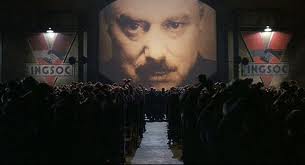
But this isn’t about that. I’m not here to rage against war, or take a stand for it. I’m not going to throw up my hands and declare that we’ve always been at war with Eastasia.

Though it wouldn’t too far from the truth…

I’m not going to talk about what war does to us so much as I’m going to discuss what we do to war.

Let’s face it, for many of us, the current wars the US (and other nations) are involved in don’t affect us much. We’re not on rations, or ducking into bomb shelters, or being told that if we don’t carpool the Axis wins.

Not in so many words, anyways…

Whether a village in some valley in central Afghanistan is controlled by American or Taliban forces really doesn’t change our plans for the day. A harsh as it sounds, whether or not people are killed in Afghanistan doesn’t have much bearing on anyone but the families of the deceased, and it’s there that the problem lies.

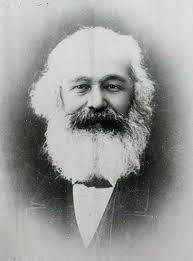
See, we have had a problem in our society for a long time, but with the advent of the internet and similar technologies, it’s becoming worse and worse. Alienation. If you’ve heard it, it was probably in relation to Karl Marx, talking about the separation of workers from the ability to control their lives.

Because we’re dealing with some rough stuff, here’s a picture of Marx smiling…

In a more general sense, it’s simply it’s the separation of things that should naturally go together. Profit shouldn’t be separated from work, and work shouldn’t be separated from profit. Merit shouldn’t be separated from recognition, and recognition shouldn’t be separated from merit. Above all else, actions shouldn’t be separated from consequences- only that’s exactly what we have today.

Most of us are more than willing to wolf down a juicy hamburger, but how many of us would be willing to watch the cow be killed, let alone kill it ourselves? How many of us who wear shirts and shoes made in sweatshops would be willing to stand in the sweatshop hurling profanities and threats at the twelve year-olds hunched over the machinery? How many of us enjoy the advances of the civil rights movement would, back in the 60s and 70s, face off police dogs, hoses, and fire-bombs?

See, we’re a nation that enjoys the hard work of other people. We’re a nation that doesn’t like getting its hands dirty. We’re a nation that has no problem sending kids off to fight, kill, and die on some windswept ridge in Afghanistan because we don’t have anything to do with them afterwards. War is cheap for us. The men and women of our armed forces are expendable to us. Again, I’m not trying to condemn or vindicate the wars we’re in, but what I am saying is that we can’t make reasonable decisions about war until we’re actually confronted with the ugly, bloody, gritty consequences of it. We need pictures of the dead. We need them shoved in our faces on a daily basis. We shouldn’t be able to turn on the news without seeing rubble, the smoke, the wounded, or the dying in graphic detail. For all the outcry against violence in our media, the truth of the matter isn’t that the problem is with violence, but with violence that has been tailored to give us satisfaction and strip away all meaning to it. War, for good or ill, is all for nothing unless we actually understand it. Can we honestly say that we’re acting in the same way now we would be if we actually had to witness the consequences of our actions?

Until then, we’re just the same Swedish taxidermist, making ridiculous travesties out of things we don’t understand. We need graphic violence.