There’s a common misconception that Communism is about an all-powerful government controlling the economy. In reality, nothing could be further from the truth. Despite our railing against Ayn Rand and laissez-faire economics, the end-boss that Marx actually described was the inevitable merger of big business and big government into one inbred monster. The whole point of the glorious people’s revolution was to get rid of both the plutocrat and the politician, though obviously between Stalin, Pol Pot, and Joe McCarthy, things all went terribly wrong. “Marxism” became a buzz-word for the very things it was opposed to, and the whole movement got set back a century. It’s not easy being red.
Even so, every once in a while, we manage to chalk up a point for the good guys.
This particular victory comes to us from Fort Collins, Colorado, where it was announced yesterday that the New Belgium Brewing Company has become 100% worker owned!
ARISE YE WORKERS FROM YOUR SLUMBER! ARISE YE PRISONERS OF WANT!
That’s right- owned and democratically run by the people who actually do the work. Behold the nefarious Communist agenda for America!
Now in case you’re wondering exactly who these guys are, there’s a chance you might be more familiar with some of their products- such as Blue Paddle, Snow Day (seasonal), and their most famous, Fat Tire.
This is a really, really good beer…
Now in addition to being a much needed triumph for the proletariat, New Belgium has plenty more commendable points worth mentioning.
For example:
These guys are as green as they are red, using a combination wind-power, methane, and ingenious energy-efficiency techniques to reduce power consumption.
All workers receive a free bike after one year of service.
We live in a world full of vile contemptible companies who do vile contemptible things and never get the derision and disgust that they so richly deserve (cough, Nestle, Coca-Cola, Monsanto, Nike, Caterpillar, Unilever, Marks & Spencer, cough). If those evil dirtbags can’t be publicly condemned, then perhaps we can at least swing to the other side, and offer some well-earned praise to people doing it right.
EVAN: This week on E> we take a break from scrutinizing film to look back about seven or so months to a different time of our lives: college. Now that we’ve both graduated we find ourselves in a different stage of life, and it begs the question of what those four years did for us, and whether or not that’s what we wanted or expected.
GORDON: Throughout my college career, especially towards the end, I heard a recurring argument:
“College is a scam,” they said, “It’s a trap or, at very best, a waste of money. You don’t learn anything you can actually translate into a job, so either drop out while you can or don’t sweat the grades and party your buns off.”
EVAN: Wait, who is the “they” that was saying this?
GORDON: I’ve read it in various Cracked articles, I’ve seen it covered in webcomics and in comments, I’ve heard it on the radio. Not always the same tone, but it always boiled down to that essential idea. “College doesn’t teach you what you really need to know, it just puts you in debt and wastes your time.”
EVAN: Well, I guess that really begs the question of “What is it that we’re really supposed to know?” If college is the great institution to prepare us for our lives, what should it have taught us?
GORDON: Some would argue that technical and vocational skills are what we really need. Stuff that’s meant to train us for jobs. Wrenches, not Whitman.
EVAN: Which is the sort of thing you see advertised on television late at night or in the middle of the day; schools for electricians and dental assistants and plumbers and what have you.
GORDON: Which always come across as propaganda films from a dystopic alternate timeline. They can claim to be breaking the mold all they want- I’ll still always just see Orwellian Factory-Schools designed train the subservient masses for laboring in name of supreme leader and glorious fatherland.
EVAN: Heh heh.
The contrast to this idea you brought up when first introducing this topic, that the two sides could be seen as college prepping us for our careers or making us more well-rounded individuals.
There’s obviously more to it than that, but how would you boil the latter option down to its essence?
GORDON: I’d probably cite our own alma mater’s (for me more just “mater”) slogan of “global mindedness.” The idea is to create people who are, first and foremost, thinkers. Logical and critically minded thinkers with strong creative abilities and appreciation for art and wonder. A noble enough sentiment to be sure.
EVAN: To really engage with this topic I feel like we should have equal footing, and I’ll have to give our readers a little bit of context-
I’m currently unemployed, and chose to live the latter part of 2012 living with and taking care of my grandfather, whose wife [my grandmother] passed away in September. My job hunt has only very recently started up again.
I say that because as it stands one of us is currently working and knows how his education has aided him and the other is not.
GORDON: I, unlike my Canadian counter-part, am currently employed, having worked two jobs simultaneously for a while there. Having vainly searched for a job the entire summer and most of the fall, I am now working a job helping unemployed people find work, the irony of which is not lost on me.
EVAN: And did you, my Employed-American friend, find that a degree helped you in your search for work?
GORDON: In all honesty, I’m not sure.
On one hand, I can say that certain classes I brought definitely assisted me in securing a job, but those classes really more on the whole “applied” spectrum of education. I definitely didn’t need to go to a top 3% college. People, it turns out, don’t give a crap about where you went.
EVAN: Again, I can’t comment from experience, but I’d like to say that it depends on the job.
GORDON: This is probably true. However, if you were looking for a job, which is gonna look better on a resume? Four years of college, or four years of experience in that field? From everything that I’ve seen, I’d take experience every time.
EVAN: And I agree with that entirely. I can’t count the number of want ads I’ve seen [and this is for stuff like janitorial work, and dishwasher] that require “minimum 2 years work experience.”
It’s like, heck, what was I doing in school when I could’ve been out working this whole time?
GORDON: But of course, that brings up the first question: what’s the point of college? Are we expected to choose a career path and be trained like the mindless, dehumanized proles that we are?
EVAN: Well, for me personally my career goals were more tailored to an academic setting. My personal interest in writing and editing is definitely something that can and is fostered in that environment.
That being said, if I had skipped my four years of college to simply freelance as hard as I could out there in the real world, would I be a better writer today? I honestly couldn’t tell you.
GORDON: The problem is that both sides have really, really big flaws.
On the one hand, turning college into a simple vocational training course does truly rip the soul right out of academia. It makes it just the place you go to get a desk job instead of a manual one.
On the other hand, college as it is now, while fostering intellect and creativity, is as unhelpful as it is expensive. Why put yourself over a hundred thousand dollars in debt to not get employment?
EVAN: I guess in the bigger picture, what is it that we want to do with our lives?
There are plenty of jobs out there that don’t require a college education, and that certainly benefit from hard work at an early stage.
On the flip-side, there are jobs that you simply can’t get without a degree.
GORDON: We also can’t imagine that we can simply get any job we want to begin with. It’s all a gamble. I can get a degree in biology, but that doesn’t at all mean I’m gonna get a job in biology- heck, I’d probably be lucky if I got something even close!
EVAN: Like a janitor in a pharmaceutical company. Or the guy who delivers mail to a biology professor’s house.
GORDON: Exactly. So is that it, then? It’s the whole dang system?
EVAN: I mean, yeah. I feel like more often than not that’s all it really boils down to.
GORDON: So let’s talk about an ideal universe. Or at least one that ain’t quite so screwed up. What’s college look like? Give me your take.
This does not count as an ideal college…
EVAN: It’s tricky, man- Because I would like everyone to be well-read individuals who think about the media that they access and have a fuller understanding of what makes us who and what we are as a culture, I mean, that’s the dream-
But at the same time I acknowledge that there are people who don’t care a whit about any or all of that.
And with so many people who enjoy poetry and the arts, while those are debatably important parts of society, what happens when they need to find work? How many playwrights can any single country sustain?
GORDON: My response would be “how many playwrights are there actually out there?”
EVAN: I think there’s a difference between the actual number, and how many individuals would actually like to be a part of that number.
GORDON: Touché, but we can blame certain jobs being glorified and others suffering from unwarranted contempt.
But let’s move on. College. Your college- what’s it look like?
EVAN: A thorough exploration of the ideas that created Western civilization, the one most of us live in today, because it’s extremely important to observe our origins before we can look at our present and then ahead, after that.
A strong emphasis on writing with the reason that without the ability to properly communicate our thoughts how can we even really fully think them to begin with.
GORDON: Sounds to me that you’re still leaning more towards the side of academia.
EVAN: Well, like we’ve discussed, I have a slight bias. And I suppose we haven’t really defined the question as far as the purpose of college.
GORDON: My take would a combination of both sides, with the end goal being application. We’re talking about the study of English for the purposes of applying the principles in same, either in writing or screenplays or entertainment or communication of some kind.
I feel this would allow for all the creative and academic elements while keeping the whole process grounded. No ivory towers.
EVAN: I don’t think my take discounts the possibility of lining up with what you said, but that’s a really good description of how college could and maybe should be.
That being said, we are actually overtime.
GORDON: You wanna talk about drugs and culture next time?
EVAN: I think at some point we could hand this back to the viewers, actually. We’ve really gotten a handle on this whole E>. I’m just not sure when or how to do so.
GORDON: The readers are slack-jawed cattle who would eat their own shoes if we told them to.
EVAN: I should probably edit that out of the final post.
GORDON: Nah, we can let ’em vote. My subject would be Drugs and Culture.
EVAN: Mine would be . . . um . . . huh. About SNL. How to fix SNL.
GORDON: Nice. Let it be so.
EVAN: Tell the nice people to have a good Wednesday, Gordon.
GORDON: Have a good Wednesday, Gordon.
EVAN: And don’t forget to vote, readers! Thanks for putting up with my co-writer!
GORDON: Ladies and gentlemen- this is your captain speaking. After some unavoidable delays we will finally be taking off into our mid-week discussion. Our topic for today is “What’s the greatest flaw of this generation?”(This generation being those born in the late 80s to mid 90s: “The Millennials,” “Generation I”, “Gen Y”- call us what you will).
EVAN: As I mentioned in the news update, we scrapped our conversation last night, largely because it became cyclical. To be more specific, we ended up going back and forth between apathy and cowardice, with one leading back to the other and so on.
GORDON: But let’s widen the picture a bit. While apathy is the go-to criticism many have, also up there for our generation’s flaws is our alleged “sense of entitlement.” Thoughts?
EVAN: If we’re still going with your incredibly broad age range, then yes, I definitely think that a lot of kids these days feel a sense of entitlement. It’s just the norm now to have wireless internet, a phone, the latest iGadget, etc. They’re just expected, the new given.
GORDON: Is that fair, though? I mean- haven’t we assumed that phones, indoor toilets, and electricity are “the norm” since they were first invented?
EVAN: To a point, though, some of what you listed are basic necessities. I’d argue that indoor plumbing is considered much more standard than an iPad.
GORDON: This is true, but I don’t think our generation- barring the handful of people who actually do feel entitled- views the iPad or any specific item as being “standard”- it’s the interconnection that’s the norm, as well as the expectations for new technology.
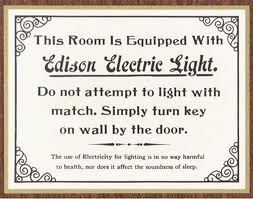
I mean, back in the day you didn’t need light bulbs. But if they’re mass produced, and safer than gas-lamps, then it just stands to reason that we’d eventually come to expect them.
But of course technology’s only one element. what about the idea that this generation is “entitled” in the sense that they get to “find themselves” or “focus on their art” or whatever hipster euphemism is being used to say “part-time employed”?
EVAN: Do I think that people feel they deserve the right to do more than just hit the ground running after college, get right down to the ol’ nine-to-five? I mean, yeah.
But I think this brings up a point I made yesterday about the “where” of our question. In France the age of retirement is 62 and that’s just expected. There are different standards depending on where you live in the world.
GORDON: This is true. I mean, each and every one of us would be considered spoiled brats if we jumped back a hundred years or so.
EVAN: Oh, no doubt. Especially you with your freakishly smooth hands.
GORDON: So would YOU say that the whole “entitlement” criticism stands?
And I use gloves. I refuse to be put down because I take better care of myself.
EVAN: You say that every time, but they’re still as smooth as a baby’s bottom.
GORDON: That means they’re working, and I’ll further have you know that I have a big ol’ scar in my right hand in the shape of a number “7.” But back to the issue-
It doesn’t seem like the “entitlement” bit sticks. Could we be classified as “lazy,” perhaps? The warped and stunted half-humans resulting from government dependence and the welfare state?
EVAN: Well, we discussed “laziness” last night specifically in the context of wanting to change what is clearly a broken system, but is what we’re talking about a general laziness? People just expecting to be spoon-fed?
GORDON: That’s the question. I recall a Cracked.com article in which the author kicked things off by apologizing for helping perpetuate the myth that a college education was a guarantee for a good job. Are we “lazy” in having had the expectation- as most of us had?
EVAN: Well, depending on who you ask, college is hard. In a way, I guess we expect that the hard work we put into maintaining a good GPA, et cetera, will result in finding employment once we’re out in the real world. Which, as I can attest to, is clearly not the case.
GORDON: So is that laziness then? Entitlement mentality?
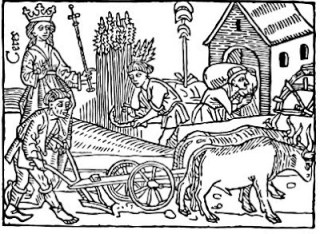
EVAN: I don’t think that doing hard work and expecting a reward is laziness. That’s like someone working the fields and then being called a layabout because he expected crops to grow. A shaky comparison, I realize.
GORDON: Works for me. And I agree.
Now you yourself have accused us all of being creatively bankrupt. Could that be our major flaw? That we don’t make- we remix?
EVAN: I guess it depends on how we’re working this whole “greatest flaw of our generation” angle. The trend to rehash, remix, et cetera came about recently, but I’m not sure it’s because of us. Or is the question in regards to this day and age we’re in, and not those growing up in it?
GORDON: No, I mean us as an age-group, and that does pretty much answer the question right there. We are, for the most part, not the ones who are making the films and TV shows and music (give or take) of our time- that’s those who came before us.
EVAN: Exactly. Which is why we’re getting stuff like He-Man and Thundercats reboots, because those who were kids in the 80’s have a crippling nostalgia. Music is different, of course, but TV and movies are definitely controlled by the generation before us.
Okay, how about this. Maybe the flaw is our hellish appetite to be entertained.
GORDON: Ooh- interesting take. Expound, by all means.
EVAN: I mean, you’ve talked about the bilge that’s on television countless times. Do you know what we’ve been reduced to? A musical chairs gameshow called “Oh Sit!”
Are we so bored that we’ll watch people play “extreme musical chairs” for an hour?
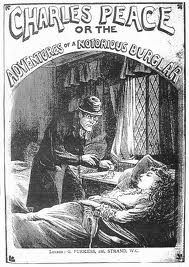
GORDON: I had no idea that existed. But surely this isn’t the first time in history that TV’s been crap. Or radio, or books, or music, or anything. Think of the “Penny Dreadfuls” back in the Victorian era- little, cheap trashy pulp-fiction novels made for mass consumption. Is that any worse than what we have today? Seems like the bilge is the same- it’s just the media that’ve changed.
EVAN: It may be the same, but it’s being produced at a frantic pace. That change, at least, has to be important.
GORDON: That speaks less to our appetites and more to our efficiency.
EVAN: I’d say that it has just as much to do with our appetites, judging by the content of what’s put out.
GORDON: We’re almost out of time, so let’s hit up some other key issues:
Apathy. As we said before, apathy tends to be the go-to criticism, at least, one of the major ones when it comes to our generation, and I think this is one of the easiest to put to rest. The Occupy Movement, environmentalism, increasing number of social movements, increasing global awareness- you name it. We’re strides ahead of the past couple generations. Heck, I’d go so far as to say we’re the most involved generation since the 60s and early 70s.
Well we’re out of time, and still of plenty of ground to cover- so rather than sloppily close up, we’ll be continuing our discussion next week with a question about hipster morality: “Do we want to be good, or do we just want to look good?” If you have any suggestions or recommendations for topics, don’t hesitate to shoot us a comment.
EVAN: Thanks for reading, and remember that CWR now updates every single weekday. I’ll see you tomorrow in our first ever “Fame Day” post!
EVAN: So last week I asked people on Facebook what they wanted us to talk about, and the answer that got the most votes was affirmative action. This is a pretty broad topic, but thinking about it in the past couple of days I have at least a few possible directions to go with it. But before we do that, a definition-
“policies that take factors including ‘race, color, religion, gender, sexual orientation, or national origin’ into consideration in order to benefit an underrepresented group ‘in areas of employment, education, and business’, usually justified as countering the effects of a history of discrimination.”
Though of course, we’re probably more familiar with it in regards to racial or gender quotas for certain businesses.
EVAN: Right, like hiring a minority to make some sort of company quota-
GORDON: Ironically, despite the outcry against this particular aspect of affirmative action, it isn’t actually legal in the US to set quotas for any race.
EVAN: Which I did not know. But it happens, of course.
GORDON: That it does. That quota being typically “100% white.”
EVAN: And Gabe’s childish delight at pulling in someone who wasn’t black [Kelly], like all of the other entries were.
GORDON: It’s been a while since I’ve seen it.
EVAN: It’s all good.
GORDON: Let’s get right down to it here- affirmative action is still a contentious practice, but let’s face it, now more than ever it’s demonstrative of inherent bias in the system.
EVAN: As someone who doesn’t keep up with the news as often as he should, the most recent event I can recall that featured this was the rioting that was happening in Paris.
GORDON: Go on…
EVAN: Oh man, I was really hoping you’d remember. But it was a minority group rioting, and the way they solved it all was that employers had to hire people from this group, and pay them regardless of how well/hard they worked.
GORDON: Ergh- it’s France. These are the same people who nearly elected a neo-Nazi to be prime minister, and and have massive racial bigotry issues- just look at their expulsion of the Roma.
I’d hesitate before using them as an example- let’s bring the issue a little closer to home. Take America, for example.
EVAN: Well, your home.
GORDON: We have a workforce completely and utter disproportionate to the population. Even as the white population diminishes, the vast majority of administrative jobs are held by white males.
EVAN: Misrepresentation of an entire population, yeah?
GORDON: Absolutely.
EVAN: So that’s America, but where does affirmative action come into it, are you saying it’s needed?
GORDON: I’m saying that it isn’t working. If affirmative action was meant to end hiring and promotional discrimination on the basis of race and gender, it’s utterly failed, and the proof of that is everywhere around us.
EVAN: Well, you know more about the States than I do, especially with you saying that it’s illegal. Are there any affirmative action movements than you can bring up at all?
GORDON: The only major issue I can recall in the past couple years was a lawsuit brought against Walmart.
EVAN: Go on.
GORDON: Back in 2007, a gender discrimination lawsuit (Walmart v. Dukes) was filed, with a massive number of women citing that despite nearly two-thirds of Walmart employees being women, only a third of management was female- and that’s to say nothing of other charges against Walmart’s routine exploitation of its female employees.
A court (tragically) ruled that the various individuals suing didn’t have quite enough in common to constitute being a “class”, so the case was more or less thrown out.
EVAN: Their sharing a gender not withstanding?
GORDON: Welcome to America.
EVAN: Moving on to something I may know a little more about, affirmative action is a term that comes up quite a lot in regards to Native Americans, or what we in Canada refer to as “First Nations.”
GORDON: Shoot-
EVAN: There’re reservations, of course, land that belongs [is given] to said people. I’ve heard many times friends saying that they were 1/16 such and such, and would be able to “claim land.” Also the fact that gambling is legal on such properties, which I still don’t fully understand.
GORDON: The issue of native rights is an entirely different topic- something we oughta cover, but not quite in this post.
EVAN: I’m just saying that I think it ties directly into what we’re discussing. This is all stuff that’s “usually justified as countering the effects of a history of discrimination.”
GORDON: Granted. One could make an argument for lumping together reparations and affirmative action, but affirmative action is really strictly defined as pertaining to admissions- into either a university or the workplace.
How IS that in Canada, anyways? You got management proportionate to your population makeup?
EVAN: I am not sure. Let me check.
Well, I can confidently say that our minority population is 16%, though this excludes First Nations. Taking them into account, they add 4%, making a solid 20% of our population being nonwhite.
GORDON: Okay. So in your experience, is one in five Canadian manages/execs/bosses/administrators/etc. from a minority group?
EVAN: I’d say that in Toronto, at least, you’re as likely to see a white person as a non-white person. Depending on the neighborhood, you may find it difficult to see more than a handful of Caucasians.
GORDON: But in management…
EVAN: Right. I’m not exactly in a lot of offices… So I don’t know if I can comment on that.
GORDON: Gun to your head…
EVAN: I want to say 1/5 are probably minorities. Which matches up with the statistics I mentioned.
GORDON: Ah, good.
EVAN: I’m a little perturbed that you put a gun to my head in this post.
GORDON: Heh…
Before any of the readers jump down my throat, I know am I’m looking at the problem from a white-liberal viewpoint. Simple fact of the matter is, college is expensive (don’t I know it… **** you Evan, and your ridiculously great government benefits), and the small, wealthy majority in US is (overwhelmingly) white. Someone might make an argument for qualifications being required over race, but that’s exactly where affirmative action is SUPPOSED to come in.
It’s meant to help even the playing field, but it just doesn’t- again, look around.
EVAN: Qualifications required over race and affirmative action. Could you explain that further?
GORDON: Imagine you’re an employer. And imagine this we’re not living some depression-era-hellscape where you’re asking that an entry level employee have five to ten years of experience.
EVAN: . . . I’m listening. This is a dreamworld you’re painting.
GORDON: You have to fill a position, and there are two candidates- a white guy with a college degree, and a black guy without one (again, college is ****ing expensive). Who do you give the job to?
EVAN: The qualified one. The white guy.
GORDON: And imagine you need this position filled again the next year. And the next and the next, and you keep getting the same basic candidates. Who do you pick?
EVAN: Obviously whoever can do the job better. But where is affirmative action, like you said, supposed to come in?
GORDON: The people with jobs get money, the people with money send their kids to college, and so on. Affirmative action is meant to make sure that people aren’t discriminated against on the basis of their race, so that two equally qualified people stand an equal chance of getting in.
It’s like trying to back-paddle in the middle of a maelstrom.
EVAN: Ah, I see what you’re getting at. But what about minority scholarships?
GORDON: Even there, there’s an issue. Poor schools don’t get good funding, they tend to produce students who aren’t as prepared as their wealthier peers, and even bright ones who would otherwise school their peers wind up doing worse on tests. Unless you’re exceptionally gifted…
Again, it’s trying to apply a band-aid to an open wound.
EVAN: One more simile, for the road. Our time’s just about wrapped up.
GORDON: It all boils down to this- there is a need for equity and equality in the workplace- a desperate need. But affirmative action is like using a toothpick to fight dragons [emphasis added]- its the wrong tool of the job, and even if it was appropriate for the situation, it’s still not very effective…
EVAN: Join us next week, where hopefully I know more about what we’re talking about, when we discuss-

 There’s a common misconception that Communism is about an all-powerful government controlling the economy. In reality, nothing could be further from the truth. Despite our railing against Ayn Rand and laissez-faire economics, the end-boss that Marx actually described was the inevitable merger of big business and big government into one inbred monster. The whole point of the glorious people’s revolution was to get rid of both the plutocrat and the politician, though obviously between Stalin, Pol Pot, and Joe McCarthy, things all went terribly wrong. “Marxism” became a buzz-word for the very things it was opposed to, and the whole movement got set back a century. It’s not easy being red.


 EVAN: This week on E> we take a break from scrutinizing film to look back about seven or so months to a different time of our lives: college. Now that we’ve both graduated we find ourselves in a different stage of life, and it begs the question of what those four years did for us, and whether or not that’s what we wanted or expected.







 Culture War Reporters