A long, long time ago, back before it was announced that Bane would be the “big bad” in this summer’s The Dark Knight Rises, Bat-Fans everywhere were talking villains. Who would square off against the Caped Crusader next, and who would play him or her?
The most popular pick was The Riddler, as he was deemed the one most suited to Nolan’s gritty, realistic world. It didn’t take long after that for people to settle on the actor most qualified to take on the role: Neil Patrick Harris.
This was popular enough to warrant at least twoseparate Facebook petitions, fan-made posters [see above], and even a fake movie trailer. A month before the actual film hit theatres everywhere the people at ScreenCrush decided to announce that they too thought that NPH looks like the Riddler. He was even the picked for the role in a post on this blog that I did not write; just a reminder that my fellow writers and I will (and do) not always agree.
Even more recently, I read a post on reddit titled “My personal pick for the flash.” The accompanying image was a photo of Neil Patrick Harris. I disagreed, and, before you fly into some/any sort of rage, let me defend myself.
I love How I Met Your Mother. That being said, I really, really enjoy the character of Barney and the nonstop energy and enthusiasm the actor brings to the role. It’s how most people know the guy, and I can see why most people are struck with how, well, awesome he is. But after I saw the aforementioned post on reddit and composed a reasonably put response, I knew what I had to do:
To start with, let me list the last few movies in NPH’s filmography, in descending order:
American Reunion [2012]
The Muppets [2011]
A Very Harold & Kumar 3D Christmas [2011]
The Smurfs [2011]
Beastly [2011]
Comedies and children’s films. To be fair, Beastly appeals to more of a younger, Twilight-loving crowd, and it’s also where Harris plays his most serious role: a blind, wacky, wisecracking tutor.
That’s not to say that he can’t pull off emotional depth. HIMYM‘s Barney doesn’t go through every relationship like it’s nothing, and more than a few times has to face the fact that maybe he does want love, or at least stability. Dr. Horrible’s Sing-Along Blog, which you should all watch if you haven’t, is a really enjoyable musical about a supervillain, but also has some deeply heart-wrenching moments.
In spite of all that, I just don’t think Neil Patrick Harris has what it takes to take on the role of a member of Batman’s rogues gallery, or don the cowl of the Fastest Man Alive. Just because he voiced Nightwing in the very well-done animated film Batman: Under the Red Hood doesn’t make him qualified to do anything similar live-action. The headlining role in an independently done musical is not the same as a film in a huge franchise.
If his HIMYM co-star Cobie Smulders’ performance as Maria Hill in The Avengers is any indication, he won’t do a terrible job, he just won’t do great. Neil Patrick Harris is an immensely talented actor, singer, and dancer, but I don’t believe he’s not the next big thing in comic book movies. Feel free to disagree.
I don’t normally review books in soft-copy. It’s difficult to read from a computer screen for that amount of time, and I find it easier to relate to a book’s solid permanence; if I can pick it up to hold and read, maybe you can [and should] too. That aside, I agreed to review something a friend had written, so here it is in all its candidness.
Monsters: a collection of short stories is exactly that, seven tales penned by Caleb Bollenbacher, a 2011 graduate from Baylor University. Only available on Amazon for the Kindle, an excerpt of the book’s description is as follows:
Nobody yearns to be a monster. But sometimes it works out that way.
Sometimes you merely find yourself looking into the face of one.
Sometimes that face is your own. Continue reading →
DISCLAIMER: This week we kind of dropped the ball, so our discussion on the topic is short and then turns to how WE can write this feature a little better. Our apologies.
And now back to the subject of the night: Is there artistic merit in Adventure Time?
EVAN: Whoa. You’re gonna shameless-plug your friend and then let me discuss the topic? Say something about it, haha.
GORDON: Is there artistic merit in beloved Cartoon Network show Adventure Time? Well, let’s break down what we mean by “artistic merit.” Evan?
EVAN: Is it worthy or deserving of being called art? Alternatively, does the show have the admirable qualities or attribute that art has? I guess a question to answer your question is: What is art?
GORDON: Well, let’s not try defining “art”. We’ve been trying to do that ever since we first started scratching pictures of fat ponies onto cave walls, and I doubt we’re gonna solve it in the next half hour or so. Let’s instead focus on the “merit”- what is it that makes ANY show good?
EVAN: Here’s a factor that relates directly to Adventure Time: Accessibility. How accessible does a show have to be to be good? Does it have to be accessible to be good?
GORDON: Are we talking about mass appeal here?
EVAN: Eh, sure, why not.
GORDON: Well, we gotta address that then. I mean, Twilight and the work of Michael Bay are popular, but they aren’t good. At the same time, you can’t just have a show that only you find funny, and then still call it good, right?
EVAN: You’re right. So is there a magic number of people we have to reach when it comes to a show being good? I shudder to remember Tim and Eric Awesome Show, Great Job! and how much our one friend used to love it.
GORDON: What’s worse is that my dad is into that show for some unfathomable reason. But the point is, a good thing ought to be popular to some degree, but popularity can’t be the sole element.
EVAN: Okay, so how about execution? How well the show pulls off whatever it’s supposed to be doing. Adventure Time is a show about a boy and his magical dog that is also his brother adventuring in a colourful post-apocalyptic fantasy world, but it works. They pull it off. I personally think this has a little something to do with its easy-to-digest ten minute segments.
GORDON: And there’s really no way of arguing with that- the story-telling is spot-on, but there’s gotta be more than that. The same can be said (and this is gonna give Evan an aneurysm), to some degree, of the copy-paste work of Seth McFarlane.
GORDON: What I’m saying is that McFarlane’s shows are both popular and (for what they are) well-executed, and yet we can both agree that his shows aren’t really “good,” at least, not anymore than a bag of chips is “good” food.
Therefore, there’s got to be another element at play, right?
EVAN: Ugh. I can’t even look at the chat window I’m so offended you would say something like that. I wish he would be “well-executed.” Share your other element if you must.
GORDON: Uniqueness. The show has to be unique. It’s not enough to go through the motions (as McFarlane’s shows do), you have to actually be able to make your show something that can’t be seen anywhere else.
EVAN: Something to make your stuff stand out of the crowd, okay, that’s fair. So I guess we can see how Adventure Time stands up to the criteria we’ve come up with.
Accessible? Eh, I’d say so, for its demographic and older.
Popular? Yeah, again for who I’ve stated.
You want to let these nice people know if it’s unique?
GORDON: Soooo Unique. If you can find anything remotely similar to it made in the past decade, I will slap Evan on the ears and vote for taxing the homeless.
EVAN: I mean, like I said: Boy. Magical Dog. Colourful fantasy world that is also post-apocalyptic.
EVAN: What more could you want?
GORDON: Vampire rocker girls?
EVAN: I would not mind.
GORDON: Oh wait, we’ve got that too.
You want D&D references spliced in with Science Fiction and elements of Gothic Horror?
EVAN: I think we could go for some.
GORDON: WELL WE’VE GOT IT!
EVAN: I think it’s clear that we think Adventure Time is a good show, but one thing that’s been painfully clear with this entry of E> is how much trouble it’s been doing this. Might I suggest a little something?
GORDON: Go for it.
EVAN: Let’s just choose our own topics for a little while, just to really get back into the swing of things. Keep things casual, going back and forth, avoid the heavy questions. And then we can ease our way back into all this.
GORDON: I am inclined to agree with you on this one.
EVAN: Yeah? Awesome. Anything in particular you wanted to casually discourse about next time?
GORDON: Well, I don’t think my suggestion about the Disney takeover of the Star Wars franchise was all that bad, even if Adventure Time did win by a landslide…
EVAN: I kinda wanted to talk about Deadliest Warrior.
GORDON: That would be likewise awesome. Let’s do that.
EVAN: Yes. Awesome. I’m going to post this because we are men true to our word and we promise an E> every Wednesday. We shall discuss Deadliest Warrior in a week. Or this weekend, maybe, just to get ahead. I mean, whatever.
GORDON: Good night, everyone.
EVAN: Yep, sorry this wasn’t as awesome or decent as usual. But we will be back! With a vengeance. And remember:
Today is Election Day for the United States of America, so I suppose this is just as good a time to write about this as any. While the embedded video below “stars” Mitt Romney, he is in no part the focal point of this post.
Mitt Romney has some things to say about ways to help those affected by Hurricane Sandy.
A man yells at around 00:22, and says “What about climate? What about climate, that’s what caused this monster storm!”
He holds up a sign that says “End Climate Silence.”
This is almost instantly met with boos.
The boos turn into a rousing cheer of “USA! USA!”
At around 36 seconds in his sign is violently yanked down.
Seemingly unperturbed, the man tries in vain to yell above the crowd; he does not succeed.
00:54 has the camera zoom in nice and close on Romney’s awkward grinning face.
Thirty seconds after the man’s outburst, Romney continues his speech where he left off as if nothing happened.
Even watching that video for a third and fourth time to write this I’m still both shocked and angry. This man was raising a legitimate point about the source of the storm, and he was shouted down. What’s more, he was shouted down by dozens of people yelling the name of their country over and over and over.
Why did this happen? Sure, the guy may have been interrupting what was ultimately supposed to be a way for Gov. Romney to raise support, but is that a reason to boo him? Is it a reason to yank his sign down? You can see the man struggle to keep it up and then decide it’s not worth the trouble.
As a presidential candidate, can you stop Americans from crying “USA! USA! USA!”? Yes. You can. When what is typically a patriotic cheer is used to instead bully someone and invalidate their opinion. It is disgusting what happened, and anyone involved should feel disgraced by their behaviour.
A reply to Beaton’s tweet put it well when he said:
There’s a stark difference between what’s on children’s programming now and what there was when I was younger. I’m not here to critique the quality of the shows, because stuff like The Regular Show and The Amazing World of Gumball are really good; I’m here to comment on the content.
Cartoons used to be about kids. At the youngest end of the scale you had Rugrats, which was literally about babies. Moving up you went through Hey Arnold!, The Weekenders, all the way up to the aptly named 6teen. These were kids who went to school, who had sleepovers, who hung out with their friends. They were relatable.
The following is the opening theme from The Weekenders [1999-2004]:
This is the opening theme from Sidekick [2010-present]:
Both of these shows are, at their core, about the same thing. The difference is the gimmick present in the latter. Sidekick is about kids, sure, but it’s about kids who are training at the Academy for Aspiring Sidekicks. To contrast, The Weekenders is about kids who enjoy hanging out with each other on weekends.
That’s not to say genre-mixing in kids’ shows hasn’t been around for ages, and that I don’t enjoy them. Programs about kids who are also spies have been around since Kim Possible and Totally Spies. One of my all-time favourite shows, Fillmore!, is a shameless parody of hard-boiled police dramas, with its characters often acting more like tiny adults than children.
The fact is, I miss shows without gimmicks. When all you have to deal with is a football-headed kid and his pals, that forces you as a writer to be creative, to make the ordinary extraordinary but still relatable. Stuff can get weird, like the barbarically tribal kindergarteners in Recess, but for the most part you’re sticking to real life stuff. Honestly, being a kid is a bizarre enough experience as it is.
I love Adventure Time and its protagonist, Finn the Human. He’s a fourteen-year-old kid, and his escapades are all kinds of awesome. The thing is, I’m never going to be best friends/brothers with a magical talking dog, or date a girl who is literally on fire. I get escapism, I know why it’s important, but I also can’t feel the same way about Adventure Time as I do The Weekenders. I could have been Tino or Carver, but there’s no way I can ever be Finn.
EVAN: Today’s topic is something that I hold very near and dear to my heart. Years of research on the topic has made me witness to all of the arguments that can be used against needing to have racially accurate casting, and because of this I’m going to propose something a little different
GORDON: Namely?
EVAN: That I switch sides for this conversation, and speak out against it.
GORDON: Intriguing. Mind starting us off with the first salvo?
EVAN: Statement: Racially accurate casting is not important. The most talented actor should be the one who gets the role.
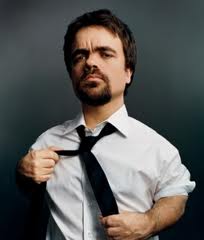
GORDON: Doesn’t appearance play a key role in what makes an actor good? Peter Dinklage is good, but you wouldn’t really find him believable playing Abraham Lincoln or Kareem Abdul Jabbar.
EVAN: In this case his stature, not his race, is what would keep him from playing either role in a convincing manner.
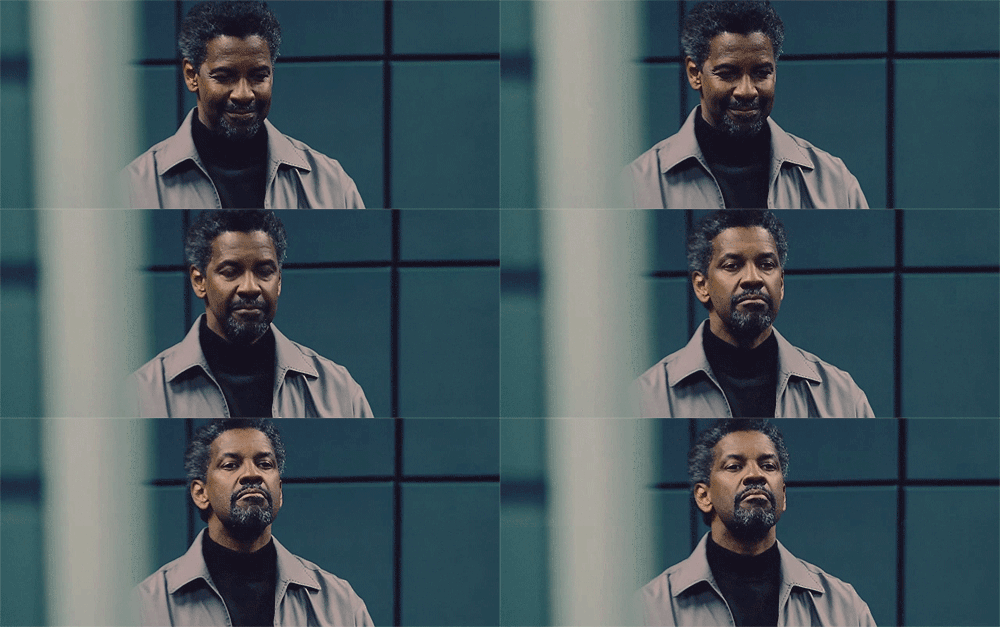
GORDON: But isn’t that essentially the same issue? Imagine the great Denzel Washington playing Lincoln- you’d be sitting there the entire time, no matter how much of a powerhouse Washington would be, taken out of the film because you have to deal with a black guy playing a white guy during the height of the civil war.
In any piece of film where you’re expecting realism, you’re going to expect the actors to conform to the styles and facts of the time. If you portray Georgia in the 1960s, you’re obviously not going to have a largely black cast portraying the upper class or if you were to set the scene in early 1900s Ghana you wouldn’t have a cast comprised of Caucasians. It wouldn’t make sense, no matter how good they are.
EVAN: If anything, Cloud Atlas at least proves that a talented actor can portray whoever they like, given an adequate amount of makeup. Halle Berry plays a Korean Man in the film, and does so in a convincing fashion that doesn’t at all take viewers out of the film in the least.
GORDON: I haven’t seen that film, so I can’t speak to the use of the actors for the parts they play. From my understanding that was a work of fantasy (or science fiction, I’m only going off what I can gather from the trailers). And in one or two movies, it’s probably not a big deal. After all, Cate Blanchett played Bob Dylan.
But imagine this applied to each and every movie, it simply wouldn’t work. Realism would deteriorate- and this would be especially detrimental in a film trying to deal directly with race relations.
EVAN: I personally feel that allowing any race to play any other speaks much more in terms of race relations. That’s a world where colour is a non-issue because it shouldn’t be.
EVAN:I’m dying, Gordon. My life force is seeping out of me.
GORDON: Try to stick with it…
GORDON: And while it’s true that race ought to be a non-issue, that’s simply not how things are or have been in the past. Using black actors to play black characters and white actors to play white characters is fundamental to demonstrating past inequity and injustice with American racism and segregation. And that’s just one element.
Let’s talk about Indians playing Arabs. It happened in Lost and it happened in Community (with multiple actors), but Arabs look nothing like Indians. Indian actors are used simply because they fit the stereotype of what most people think an Arab looks like. It perpetuates an inaccuracy.
EVAN: Isn’t the fact that the role is an Arab important a large enough step? This is a minority with a major role on a TV show, and an opportunity for minority actors to step up, which they have in both cases.
GORDON: Barring Monk and Arrested Development, when’s the last time you saw an Arab actor? I’m not trying to argue against Indian actors, or actors of Indian heritage getting roles, but for the purpose of portraying the world as it is (or at least with some realism) we should have actors with some vague resemblance to the people they’re portraying on film.
After all, would you not be thrown off by guys with German accents playing French resistance fighters during WWII?
EVAN: If they had German accents then they simply wouldn’t be right for the role, which brings me back to my first point.
GORDON: Which, by proxy, brings us back to my first response. Ethnicity (depending on the situation) is just as valid an element of a guy’s candidacy for a role dealing directly with ethnicity as accents, or height, or any other factor (actual talent, of course, being the most important).
Vincent Cassel should probably not play Malcolm X. Adrien Brody should probably not play the Queen of England, though that would be pretty funny.
EVAN: If we’re going to stick with believability, than why is it so important that Indians not play Arabs? No one has ever made a big deal out of this, so clearly people believe that they are what their role calls them to be-
Likewise a Korean can to play a Chinese person can play a Japanese person. Audiences can’t tell the difference and believe that they are whatever the role is, and that’s okay.
GORDON: But Koreans do not look Chinese, Chinese people don’t look Japanese, and Arabs and Indians certainly don’t look like each other. The only reason this happens is because most people either don’t know (partly due to this inaccurate casting) or don’t care (in other words, all non-whites are basically one homogenous mass.
If all your life, you had seen black men and been told “these are Uzbekistanis,” then you’d go your whole life simply assuming that Uzbekistanis are, in fact, indiscernible from guys from Benin.
Your ignorance should not dictate which actors get which parts. Further, no Uzbekistan could really ever get a chance to play and Uzbekistani because of the years of misinformation.
EVAN: But there is a huge difference between a black person and an Uzbekistani. The examples I made have similarities that the example you used clearly does not.
To be such a stickler for accuracy is the other extreme, and just as wrong. You wouldn’t get someone with mental problems to accurately portray a character with mental problems, that just doesn’t make sense. Race should matter if it is noticeable, and like I said in the case of shows like Lost it is not.
EVAN: The logic above was used against me by someone in a thread on Reddit You can check out our exchange here.
GORDON: Granted, my example was extreme, but that doesn’t change the point. Even though a Thai guy and a Japanese guy share more similarities than a Beninese guy and an Uzbekistani guy, there are still distinct differences between people from Thailand and people from Japan.
With regards to being a stickler- I admit, as I have previously, that you don’t have to have an exact replica of the character you’re trying to portray. Jet Li, I imagine, is doing pretty well for himself, and I still wouldn’t doubt his ability to portray a poor man very well. However, while you don’t need to be point for point, you do need to have some general similarity. That’s why we don’t have Emma Stone portraying Fidel Castro.
EVAN: I feel like the extremeness of your examples is damaging your point. If we’re sticking with race we should do that, and not bring in gender.
GORDON: It’s to demonstrate the underlying point in all of this: Verisimilitude. Realism. Accuracy.
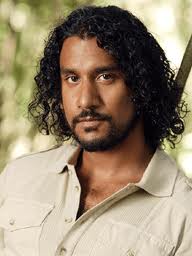
EVAN: And since you said “you don’t have to have an exact replica of the character you’re trying to portray” why isn’t it okay to have Naveen Andrews play Sayid Jarrah on Lost?
GORDON: But the distinction is great enough. The accent is Indian, not Iraqi. Naveen does not look Iraqi. When an actor neither looks nor sounds like the character he is meant to portray, we have a problem.
EVAN: So if Jarrah had managed to sound Iraqi, would that have helped?
GORDON: It would’ve added to the realism and accuracy, yes. But that doesn’t change the fact that he’s very clearly Indian, not Arab.
EVAN: Clear to a very select few. As mentioned, people didn’t seem to notice for the most part.
GORDON: Clear to a very select few. As mentioned, people didn’t seem to notice for the most part.
Most people don’t know what an Arab looks like. Do they know that Monk is Lebanese? That Cousin Maeby is Iraqi? Most do not. Ignorance is not an excuse for inaccurate casting.
EVAN: And that brings our exhausting exchange to an end. Trying to argue for something I so strongly disagree was one of the more difficult things I’ve ever done. I hope that in reading this you were able to see the holes in my argument and the truth in Gordon’s.
GORDON: Booyah.
The past few paragraphs alone have had the same effect on Evan as that life-sucking device in the Princess Bride. Commend him for biting the bullet.
And as for our discussion next time, your options are: What do we make of the upcoming Star Wars sequel?
EVAN: And. . . how about . . . How much artistic merit is there in a show like Adventure Time?
GORDON: I like it.
And to our beloved and devoted followers (who would organize into a vicious and unholy army of darkness if we ever were to ask it of ’em), feel free to suggest your own topic down in the comments section.

 A long, long time ago, back before it was announced that Bane would be the “big bad” in this summer’s The Dark Knight Rises, Bat-Fans everywhere were talking villains. Who would square off against the Caped Crusader next, and who would play him or her?
 That’s not to say that he can’t pull off emotional depth. HIMYM‘s Barney doesn’t go through every relationship like it’s nothing, and more than a few times has to face the fact that maybe he does want love, or at least stability. Dr. Horrible’s Sing-Along Blog, which you should all watch if you haven’t, is a really enjoyable musical about a supervillain, but also has some deeply heart-wrenching moments.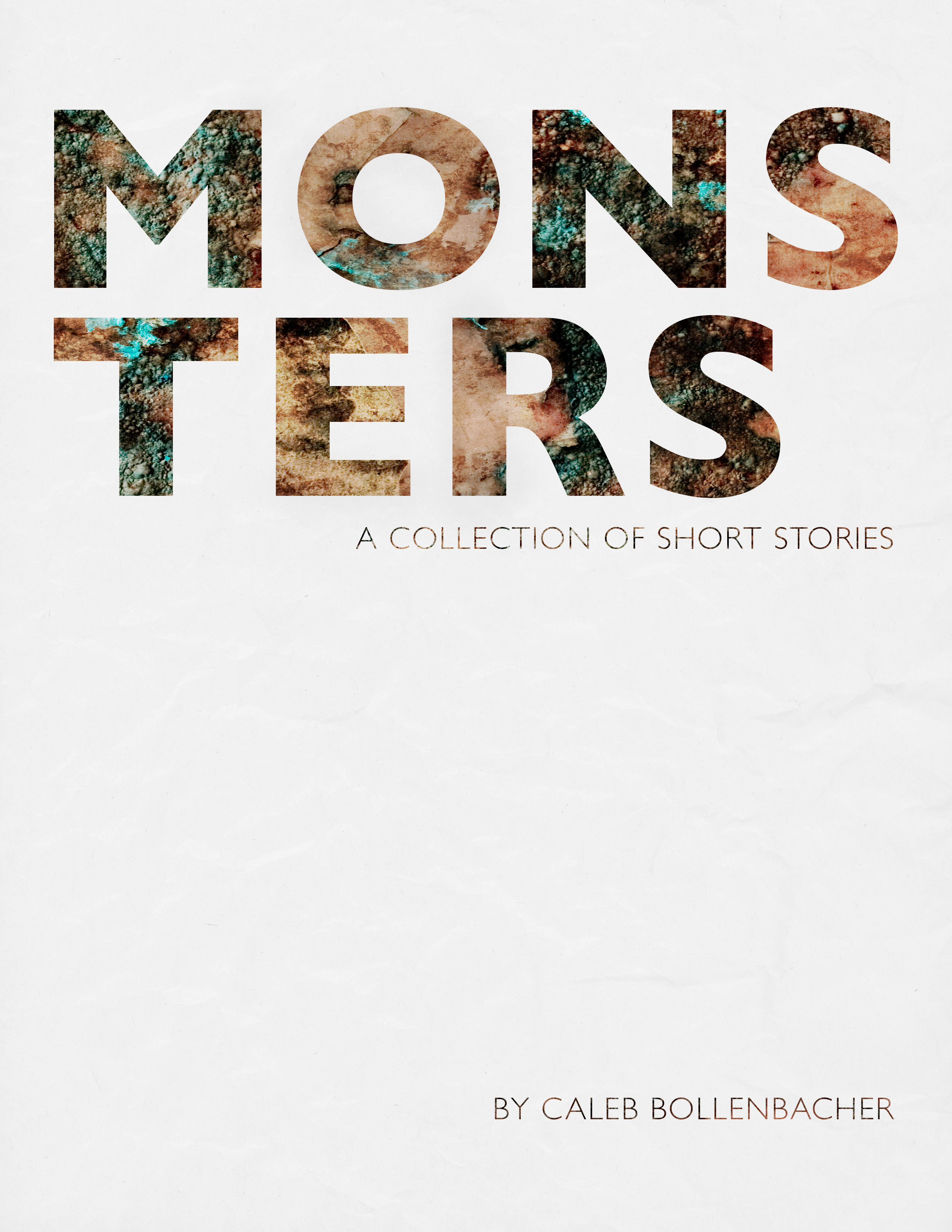
 DISCLAIMER: This week we kind of dropped the ball, so our discussion on the topic is short and then turns to how WE can write this feature a little better. Our apologies.