Author Archives: Evan

Product Placement, and/or Wouldn’t an Ice Cold Pepsi Really Hit The Spot Right Now?

After a long day, I plan on sitting back and finally watching the last episode of CBC’s Being Erica, a show I began last summer and have yet to finish. While skimming its Wikipedia page I was reminded of Season 4 Episode 8, and the product placement that the video below accurately describes  as “egregious.”


It’s difficult to be immersed in a show that shoves advertising down your throat, and I definitely remember being disturbed by it. A car that can park itself is impressive, but watching two characters you’ve grown familiar with ooh and aah as a car salesman lists its features is not. As I watch the clip again and hear the back and forth of “No way” and “Way” it’s hard not to feel a little sick inside.

As was to be expected, the Canadian press was far from thrilled by this. An article on the National Post titled “How Being Erica took product integration too far” cites this episode as the one that caused the author to “break up with Erica.” She also referenced a the following point I had already been planning on making:

Is there anything 30 Rock can’t get away with? The clip above features product placement that is far more in-your-face than what was found in Being Erica, yet manages to pull it off. It’s both meta and very funny, and as a result as viewers we can laugh it off and even respect what the show is doing.

How much, then, can we put up with? I fully recognize that Dr. Pepper plays a fairly prominent role in the first three Spider-man films, and the ridiculous amount of BMWs in Mission Impossible: Ghost Protocol was impossible to ignore. Phones, more than ever have gotten a good amount of screen time in music videos, with so many examples out there I’m not even going to link to one.

Product placement [or integration, which definitely has more positive connotations] has, and will continue to be around, but is this something that we should take for granted and accept? That particular episode of Being Erica sparked an uproar of sorts, with audience members feeling offended that the network would think so little of them. The message behind their complaints seems to be: You can advertise to us, but be subtle about it.

The economy’s not in great shape, and TV shows and movies and music videos can only be made if there’s money to fund them. Since we’re going to keep getting logos flashed in our faces, what should we do? Can we do anything about it? As consumers of the media we should all have standards we expect to be met, but the question now is when do we draw the line?
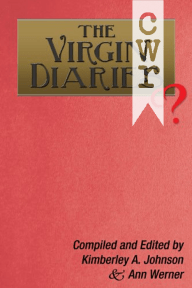
The Virgin Diaries: A Book Review

“What does it feel like to lose your virginity?” This is a question asked in red font, all-caps, at the top of the back cover. This is also a question that I can confidently say The Virgin Diaries answers. With the  stories of 72 men and women and their respective first-time sexual experiences, this is a book that provides several dozen responses.

Edited and compiled by mother/daughter writing team Kimberly A. Johnson and Ann Werner, The Virgin Diaries is made up of stories that span a number of decades. To gather this information anonymous questionnaires were sent out, with the expectation that they be answered in a story format. While the authors of these stories make themselves distinct from one another through their voices, the way in which questions were asked definitely has an impact on how narratives were told and, consequently, how they read. Continue reading

The Movies Always Come Back, the Actors Don’t

Sequels are popular. I know I shouldn’t have to spell that out for anyone, but really, they are. The top 7 movies of 2011 were sequels. The ninth film on that list was too, if that helps prove my point at all.

What also isn’t new are sequels [or prequels] to feature  different actors for the same characters. The earliest example that comes to mind is Christopher Showerman, who played the titular character in George of the Jungle 2, and who also broke the 4th wall by telling the audience that the studio is “too cheap to pay Brendan Fraser.” Another example is a franchise that nobody cares about, with The Scorpion King 3: Battle for Redemption featuring the third actor thus far to portray Mathayus.

A more up-to-date illustration is Rachel Dawes in Christopher Nolan’s first two
Batman films. Katie Holmes was initially to reprise the role in The Dark Knight, but turned it down to be in Mad Money. Maggie Gyllenhaal took over, a choice that did not affect audiences’ enjoyment of the film [it’s currently the tenth highest-grossing film of all time].

In even more recent news, E! Online reported this morning that a Bridesmaids sequel could happen with or without star and writer Kristin Wiig. Co-star Melissa McCarthy is quoted as saying “I think it’s a terrible idea,” coupled with the assertions that she wouldn’t want to be a part of a film without Wiig.

A sequel that has actually been given the green light is The Bourne Legacy, which will not be featuring Matt Damon as Jason Bourne. The film will instead star Jeremy Renner as Aaron Cross, with the narrative acting as a “sidequel” to the original trilogy. The current director has not completely ruled out the chance of Damon returning for future films.

What do these choices say about the audiences viewing these films? Is a franchise, a movie title, all that’s needed to draw us back to theatres? If sequels are going to continue to dominate the big screen then we will watch them, but what are our standards for them? How important is continuity to the average media consumer?

TV Tropes has a term “Chuck Cunningham Syndrome,” which refers to characters who simply disappear into thin air. The following trailer for G.I. Joe: Retaliation appears to have all of the cast from the original film die, which I think is definitely one way to justify an entirely new cast.

Media in 2011

This past year I had a resolution, of sorts. It was to log, day by day, the amount of media that I experienced. For the sake of convenience, music, YouTube videos, and comic books were all exempt from being logged. TV shows, movies, and books were the main focus here.

In picking a month to show you, I chose September in that it was a month entirely spent at school, without any breaks. All media was experienced in the free time I had outside of classes and schoolwork. Breaks tend to severely skew the average amount; an example of this is my watching five seasons of 30 Rock in January during the Christmas break.

Media in September

Television

  • 8 episodes of Deadliest Warrior [40 minutes each]
  • 1 episode of Futurama [20 minutes]
  • 1 episode of The IT Crowd [20 minutes]
  • 5 episodes of Cromartie High School [10 minutes each]
  • 2 episodes of Regular Show [10 minutes each]
  • 2 episode of Adventure Time [10 minutes each]
  • 7 episodes of Breaking Bad [45 minutes each]
  • 4 episodes of How I Met Your Mother [20 minutes each]
  • 1 episode of The Office [20 minutes]
  • 1 episode of Community [20 minutes]
  • 2 episodes of The Big Bang Theory [20 minutes each]
  • 2 episodes of New Girl [20 minutes each]

Film

  • Scott Pilgrim vs. The World [112 minutes]
  • Helvetica [80 minutes]
  • Paul [104 minutes]
  • Batman & Robin [125 minutes]
  • Hot Rod [88 minutes]
  • Ironclad [121 minutes]
  • Terminator Salvation [115 minutes]

Books

  • Part of The Odyssey
  • Most of The Aeneid
Totaled, that’s (if Google didn’t fail me on the math part), 965 minutes of television, 745 minutes of television, and about 3 or four hours of reading. After some fancy addition, that’s 28.5 hours spent watching in the month of September. A month I also partially picked because it had significantly less than others.
As an English/Writing Major, this is very unsettling to think about. Over a day of September was spent staring at a screen [not including YouTube or daily browsing], and even though comics were omitted my reading total still pales greatly in comparison. I justify my excessive viewing in a way, citing the study of plots and character progression in both television and film as a way of improving myself as a writer. Apart from this blog, however, I did little to no personal writing whatsoever in that time period.

The average American [which I am not, being neither] watches more than 151 hours of TV a month. With that in mind, I feel strangely validated. We don’t have a television in our house, and instead hook our laptops up to a monitor in the living room. This means that there is no casual turning on of the TV, no languid channel surfing. Apparently this has contributed greatly to my watching 80% less than most people.

I began this blog post with the intent to depict exactly how much media I consume in a given month, and hold that up as a shocking example of a 21-year old’s usage of his time. Contrary to that, I’ve discovered that I’m not doing too badly compared to America. At 28.5 hours per month, I’m actually doing really great.

Does this mean that I should continue to do what I’ve been doing? My answer is no. As I’ve mentioned, September was actually a low month in regards to media viewed. The month after I watched easily twice as many shows. The fact that this still ranks me as watching 40% as much as most has inspired me not to watch the same amount, but less. I’m doing better than average, but better doesn’t equal good. As someone who says he cares for literature, I need to at least pretend that that’s true in my actions. And that’s as good a resolution as any.

Virgin Comments on TLC Depiction

It’s been a recent development, but I’m beginning to love TLC. No, I don’t mean the band, though their song Waterfalls will always have a special place in my heart, I mean the TV network. The best comparison I can make to watching the channel is driving past a car crash; it’s horrible, but you can’t bring yourself to look away.

It’s not all tragic scenes of humanity, though. The faux fallout bunkers that the people on Extreme Couponing are building are fascinating, as well as the fact that I have watched people buy $400 worth of stuff for under 50 cents. In a similar vein, Extreme Cheapskates teaches a wide variety of ways to save money, such as cutting an “empty” tube of toothpaste in half to get at a week’s supply.

Then, on the other hand, we have the same show featuring Roy Haynes, a man willing to ask for other people’s leftovers while eating dinner with his wife on their 25th anniversary. We also have  Toddlers & Tiaras, where the world of child beauty pageants makes images like this feel like a breath of fresh air.

Premiering at the beginning of this month, The Virgin Diaries is a program that will be easier for me to show, then write an introduction for.


I must confess, I have not seen the show. This extended clip was being thrown around on Facebook on December first, and I later read about it again on one of my favourite blogs. What little I have to say about it has been garnered from clips and reviews I found online.

To follow up that last confession with another, I am also still a virgin. A 21-year-old college senior et cetera, and without any apparent physical deformities or social disabilities that come to mind. I had briefly mentioned this before, and I can summarize my reason for not having premarital sex again now as being primarily based on my faith and my knowledge of relational intimacy.

My question for the show is this: What does TLC, a program I learned today stands for The Learning Channel, want us to think about this? We’re meant to root for the savers on Extreme Couponing, evidenced by the show’s eager chronicle of how much they can accomplish given a deadline. My Strange Addiction is there to evoke an awkward catharsis, a purging of emotions as we see how far others have fallen as well as a strange sense of justification in whatever odd practices we may engage in.

What I take from the teaser above is, at least in that couple’s particular case, that  the light the show is shining on adult virgins is much closer to What Not to Wear then it is to The Little Couple. Program-title-specific jargon aside, everything about the clip speaks poorly about members of this particular life style. Not only does the husband seem completely oblivious to why his wife “want to kiss so much,” her description of their wedding night is painful to behold. Couple with that the fact that a good portion takes place in a playground, furthering their descent into the immature. The kiss, of course, rises above all else as the preview’s crowning glory.

Shelby Fero, of aforementioned favourite blog fame, recounted hours of her life that were taken up by television, Brussels sprouts, and veggie bacon. In closing, she described what she thought of the first episode of The Virgin Diaries.

A way more interesting show would be to watch these people go through therapy and work through their issues. Instead we just laugh at the guy who can barely smooch his wife and ignore how depressing it is when he asks her “Why do you want to kiss so much?”

Entertainment Weekly said the exact same thing in their review of the program’s premiere, the penultimate paragraph of the article ‘Virgin Diaries’ react: Most uncomfortable TV hour ever? going as follows:

Oprah had an episode of her show this past season dealing with a few women in their late 20s who were virgins. With all of them, there was some kind of anxiety/intimacy issue. I can’t help but think if TLC is really interested in being the learning channel, a better idea might be to follow these people around for several episodes, employ a therapist and help them get over some of their hang-ups so they can have fulfilling adult relationships — and yes, those include sex.

The fact that TLC now has a show that is all about adult virgins is only mildly comforting to me. On one hand, there’s now an example on television of people like me, something that others can mentally turn to when they find out where I stand. On the other hand, there’s now an example on television of people like me, something that others can mentally turn to when they find out where I stand.

A Sinterklaas Celebration and Sensitivity

This blog is called “Culture War Reporters,” and by and large I think that my co-writer and I manage to cover topics that are about the culture we presently live in, whether it be about why we give or why we put up with watching Family Guy. Today I’m writing about an aspect of North American culture that clashes with a particular European tradition.

Last night a friend and I were talking about the social work program he’s currently taking, particularly about his fellow students and how seriously they take their course of study. The same friend I debated the usage of the word “rape” with, he stressed the importance of finding humour in everything. He recounted, with distaste, being snapped at for telling a racist joke.

Oversensitivity  runs rife in North America, for better or for worse. It’s the reason lines like this one in Modern Family exist, and why we find them so funny and relatable.  Political correctness and striving to not offend are held in high regard, and when comparing it to the opposite end of the spectrum, utter ignorance and obnoxiousness, it appears to be the reasonable choice. Continue reading