Author Archives: trotskyite

October 15: What’s Not Being Talked About In The News

For the most part, I try to keep my politics toned down here at CWR, but every once in a while, something comes along that straddles the line between ideology and culture that’d be wrong not to talk about.

I’m guessing you may have heard of Malala Yousafazi.

Young Pakastani girl known for being a women’s education and peace activist, shot by a reported Taliban assassin just short of a week ago and just today being flown to England to continue her recovery.

You may have seen this picture of her:

But the picture you may not have seen is this one here:

That’s young Malala wearing a hijab, a head-covering worn by many Muslim women as part of their understanding of modesty. Yep, Malala’s a Muslim– but that’s something you’re not gonna hear on the news or read in your paper.If Islam is mentioned at all, chances are, it’s in reference to Malala’s would be assassin- not her (or her friends who were with her). Why is that? How come the same frenzied media attention that is devoted to listing off every attack or offense on the part of “Radical Islam” utterly fails to note the Islamic element when it’s related to something positive. I can understand- maybe even overlook- the fact that the news doesn’t offer any attention to the millions of Muslims (the ones I grew up with) who just go about their day without doing anything to anyone. But the moment  a Muslim man or woman stands up for what he or she believes, even going so far as be nearly murdered for those beliefs and actions, religion disappears from the picture.

And while we’re at it, there’s another thing that’s been bothering me.

You remember Pussy Riot? Feminist Punk Band who got into trouble for playing anti-Putin songs in a historic Russian cathedral?

Why is it that when they got convicted of “hooliganism” and were sentenced to two years in prison (a term waaay disproportionate to the crime) the world united in outrage, and when Leah-Lynne Plante was arrested-

Oh.

Who’s “Leah-Lynne Plante”?

She’s an activist up in Washington State whose apartment was raided by FBI and SWAT Teams. See, back on May 1st, there was some vandalism that occurred in Seattle and Leah-Lynne was a suspect.

How many people who have vandalized walls or billboards actually have the police investigate them, let alone the FBI and the Joint Terrorism Task Force? Of those people, how many have black clothes and books confiscated as “evidence”?

Obviously this has about as much to do with vandalism as Pussy Riot’s sentencing had to do with disturbing the peace. See, Leah-Lynne Plante is a self-proclaimed anarchist, and after refusing for a third time to answer questions before a grand jury. Considering the Grand Jury that’s investigating these and other alleged anarchist criminals was first created in March (two months prior to when she allegedly committed these crimes) doesn’t exactly reflect well on the whole “liberty and justice for all” element of the legal system.

But that’s all beside the point.

The point is, you probably don’t know about it. Your news has almost certainly never reported it, and considering the similarities between the two cases, doesn’t Leah-Lynne Plante’s case deserve your attention just as much as anti-government rockers off in Moscow?

Your media doesn’t think so.

And I think we’re being asked too much. I think we’ve had enough.

See, you can’t pick and choose- if the media want to take the violent or oppressive actions of Muslims as being representative of their faith, they have to apply the same logic to Muslim heroism as well. The same goes for equal air-time. The news can’t report on a bunch of women in brightly colored balaclavas for being broadsided by the state and then whistle Dixie while one in a black shirt has her home raided by men in kevlar.

Consistency- I’m not expecting that the news be factual (and considering it’s the news, that’s a pretty big thing to let slide) but they have got to be fair
or stop calling themselves reporters. If they wanted to pick and choose their battles, they should’ve become bloggers instead.

Shame Day: Here’s Looking At You, Kid

Ladies and gentlemen, boys and girls and weird little kids who you can’t tell what gender they are- we here at CWR have an announcement.

We’re expanding again.

That’s right- we’re going from three days a week to five days a week, cramming in “Shame Day” posts on Tuesday (in which we do a little blurb about stuff we think is terrible) and “Fame Day” posts on Thursday (in which we do a little blurb about stuff we think is awesome).

Before you get too worked up, let me jump right into things and reveal the topic of our first Shame Day.

That’s right, it’s you.

Don’t get us wrong- it’s great that you visit the CWR, and that your ever-increasing adoration has helped us reach our goal of averaging 150 hits a day. We’re cool with that.

What we’re not cool with is some the more common search terms that get you to our blog. Let me recite some for you:

“Cartoon sex”

“Dakota Fanning Playboy Naked”

“Batman having sex”

“Teen titans sex”

“Evan and Gordon Porn”

That’s right- someone actually searched for “Evan and Gordon Porn.”

That’s ****ed up, people. That’s just downright nasty.

Let’s elevate the conversation, shall we?

Go Rewatch The Girl With the Dragon Tattoo

If you’ve heard of this series (in either its film or book form), there’s a good chance it’s because David Fincher of Fight Club/Se7en/The Social Network fame directed the American remake. Even if you’ve heard of it, there’s a also a good chance you haven’t seen it- Fincher’s The Girl with the Dragon Tattoo did only so-so at the box-office, not quite tanking, but also not becoming as popular as many were speculating it would be. And that’s a real tragedy, because the story, in spite of its flaws, is a really good one- you’re just going to have to make a few adjustments in how you see it.

I. Watch the Swedish Version Instead

In my post about the differences between British and American television, I pointed out that American film typically physically glamorizes each and every character- no matter how minor- while the Brits are comfortable with their protagonists actually looking like people you’d meet on the street. While not quite to on the level of the British (from what little I have seen of Swedish film), the Swedes do seem to lean more towards the Brits when it comes to this, and while it doesn’t like it’s all that important, “humanizing” the characters a bit more by making them look like people you’d actually know gives all that more grittiness and clout to the issues the story grapples with.

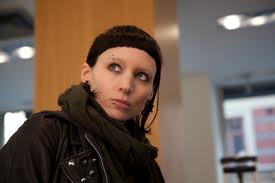
Beyond that, there’s the issue of casting for Lisbeth Salander. Now I’m not going to knock either Noomi Rapace or Rooney Mara, partly because they’re both terrifying…

But I do nevertheless have to address the eyebrows.

More specifically, the fact that Mara’s Lisbeth doesn’t have any.

Ok, that’s not entirely fair- Mara’s version does have eyebrows- they’re just wispy blonde and really hard to see. And that’s something that’s pretty dang unsettling- heck, it’s downright terrifying.

I know it’s probably petty, but Rapace’s Salander, having eyebrows we can actually see, makes it that much easier to watch an already tough movie.

II. Watch the Second Movie First (Then the First, Then the Third)

Not having had any background knowledge of the series, I accidentally wound up watching the second part of the trilogy (The Girl Who Played With Fire) instead of the first segment (The Girl With the Dragon Tattoo). As confusing as it was, I think that this is the best way to do it. While it’s a good movie, The Girl With the Dragon Tattoo really is something of a stand-alone piece, often accused of being pretty linear and slow. The subsequent stories, filled with high stakes of human trafficking and political intrigue, are a lot faster and more action-packed, but really depart from the general style of the first segment. By starting with The Girl Who Played With Fire, you get to be dropped right into the action and have a relaxing “flashback” with TGWTDT that fills in all the blanks and builds up tension and momentum for the final film, The Girl Who Kicked the Hornet’s Nest. Give it a shot- I promise it’ll pay off.

IV. Cut Steig Larsson Some Slack

A lot of critics of both the film and the books have pointed out that the male protagonist in the stories, Mikael Blomkvist, is essentially author Steig Larsson’s literary avatar. As a result, plenty of people blow off the films and books as just being Larsson’s own little fantasy in which he, the last honest journalist teams up with a goth-punk hacker to solve mysteries together. The fact that Fincher chose Daniel Craig (a.k.a. James ****ing Bond) to play Blomkvist probably didn’t do anything to assuage those accusations.

But here’s the thing- Larsson can’t be accused of writing a fantasized version himself into his books because the real Steig Larsson is way more badass!

As a boy, Larsson witnessed the rape of a woman, and so wracked with guilt at not having been able to do anything, wound up dedicating the rest of his life to fighting for justice and equality. In the 70s, he traveled to Eritrea to train an all-female squad in the Eritrean People’s Liberation Front. He returned to Sweden to found a watchdog journalist group and investigate and combat neo-nazism and white supremacy, despite continually receiving death-threats.

Yeah, that’s not so much a biography as it is a superhero origin story. That’s enough right there to make Jack London and Ernest Hemingway look like pansies. If anything, Blomkvist is a version of Larsson nerfed for the sake of believability. Let’s cut the guy some slack.

IV. Understand a Bit About What’s Being Addressed

Part of the issue with the series is that it’s a commentary in no small part on Swedish social and political issues. I only recall it being hinted at in the American version, but the Swedish version of the film spent a bit more time touching on the Wennerstrom family’s (and the entire country’s) shameful flirtation with Nazism in the 30s and 40s, as well as the ongoing issues of xenophobia and racism in contemporary Sweden. Beyond that the series tries to address issues of corruption within the state, as well as the ugly reality of human trafficking (which despite growing awareness, might not quite strike home with American audiences). You don’t need to have a detailed understanding of the intricacies of State-Capitalist governance and Scandinavian history, but knowing a bit about the very real issues of fascism and racism in Europe does add a whole lot.

So what are you waiting for? Go watch ’em!

Wither Feminism?

This isn’t the first time I’ve lamented about the sorry state of feminism in the culture wars, and it certainly won’t be the last- nevertheless, the time has come for me to really lay out exactly what it is that’s killing feminism.


Sure feminism was necessary at one point, but it’s just not relevant anymore
.

You never hear that stated outright, but it seems to be underlying most responses on why feminism isn’t as major an issue was it was in the 70s or the 60s or the 50s or whenever exactly it was that the last wall of patriarchy supposedly fell.

Let’s face it, women can vote, run for and hold public office, be CEOs or workers, and so on and so forth. Really, shy of being able to serve in combat (American women, anyways), one might argue that all doors are now open. This mentality even seems to be affected most contemporary feminists, who though I am sure have the very best intentions, really can’t find much to rail about themselves. I’ve been through blog post after blog post, article after article, and found that overwhelmingly the subjects being discussed are mostly rants against Todd Akin (not to say that idiot doesn’t deserve it) or retrospectives on the battles of the past. Take a look at the contents of the latest Ms. magazine:

With Wonder Woman at the helm, the issue celebrates 40 years of fearless reporting with 40 Ms. and key feminist moments that shaped our history; birthday letters from dozens of life-long readers; and essays from founding editors Gloria Steinem and Letty Pogrebin, and current Executive Editor Kathy Spillar.

In the special 40th anniversary issue, you’ll also read about:

– What’s at stake for women in the 2012 election

– The significant ballot initiatives in your state

– Record numbers of women running for office

That’s their central points for their fall issue.

Now let’s take a look at Jezebel.

I had a rough time sifting through the articles for one that best demonstrates my point (I know Jezebel isn’t so much a “feminist” website as it is a “women’s interest” one- though exactly what that means I can’t rightly say)- for the most part, they seem tangential at best. “What is it with Women and Law and Order: SVU?”  or “Should Women Run? You’re Damn Right They Should.

That last one’s not talking about running for office- it’s literally about jogging. ‘Cuz apparently there was some blog post asserting that women with a certain body type aren’t cut-out to be runners, and that merited a response. Sure, whoever said that was wrong, but is that what feminists have been reduced to? Chasing down solitary quips of (comparatively) benign misinformation in the ugly bowels of the blogosphere? If that’s the standard for a worthwhile target, Evan and I should be beaten to death for mixing up when the premier of Community is going to be shown.

Please don’t beat us to death…

If this is the substance of the contemporary feminist movement, can you really blame people for feeling that all that’s to be done has been done? Can you really blame people for stereotyping self-proclaimed feminists as just angsty or contrarian? Is feminism just going to wither away?

I hope not- there’s still plenty of work to be done.

See this picture?

It’s from Dove’s “True Beauty” campaign. A series of advertisements aimed at combating anorexic and unrealistic standards of beauty. I’m sure the owners of Dove- a corporation by the name of Unilever- would be proud.

You know what other company Unilever owns?

Yep- these guys.

Now as I have family who read this blog, I’ve got embedded for you below the mildest Axe commercial I can find- be assured that it’s prudish and progressive compared to the rest of ’em.

That’s what we’ve got here- a corporation that on one hand is hawking their products by telling you that you’re beautiful just the way you are, and on the other hand depicting women as mindless dolls in low-cut dresses who can be manipulated with aerosol bottles. The latter alone would be a slap in the face, but that fact that the company is two-faced enough to shamelessly operate both utterly discredits their “True-Beauty Campaign” and exposes the fact that they’re ready, willing, and able to use feminism itself as a vehicle for controlling and objectifying women and perceptions about ’em.

This is Paul Polman, Unilever’s CEO, and he can go **** himself.

See, there’s this offshoot of modern feminism called “Sex-positive feminism” (you might know it by other names), which broken down to its most basic elements asserts that women’s use of their sexuality is empowering- and while no one would deny sexuality as an integral part of any human being- more often than not, this line of thought is used to justify strip clubs, prostitution, pornography, etc. as being actually good for women.

Now I’m not going to start accusing the founders of “Sex-positive feminism” of selling out their own movement- I don’t think that’s what their intention was. But then again, such things are what the road to hell is paved with, and even if the goal of this off-shoot was to make sexuality just as empowering as brains or brawn, the simple truth of the matter is that the prostitute isn’t probably viewed by her client as being a more well-rounded person because of her job. Heck- using this logic, I might argue that a twelve year old Honduran girl whose working for 32 cents an hour in a sweatshop is likewise “empowered”.

Strange how “Dead by 26 feminism” isn’t quite as popular…

Feminism isn’t dead- it’s just got a knife at it’s throat, and if saving feminism from becoming a tool of the very system that it was first established to combat isn’t a worthwhile endeavor- I don’t know what is. To anyone who would complain that all the important battles have been won- I present to you this. “Your solution to saving feminism is by saving feminism?” you might ask- and hey, it’s a valid point. But this isn’t just some circular exercise- this is a struggle for what’s really empowering. It’s a fight over messages- will we be told “These shoes are empowering!” or “No- they are shoes– empowerment comes from how far you walk and how much butt you kick.” Isn’t that worth something?

At the very least it beats writing an angry article about how body shape doesn’t exclude you from jogging.

P.S. I know I should also say some stuff about the “Slut Walks” (“Slutwalks”?, “Slut-Walks”?), the issue of rape, the continued problems of worker-manager ratios, etc. but it’s past 1:30 in the morning- please excuse the narrowness of this post.

Evan and Gordon Talk: Community, Season 4

GORDON: GOOOOOOOOOOOOD MORNING VIETNAM!!!! Gordon and Evan here again to delight, entertain, and edify! Today’s topic: the upcoming season of Community– sans creator Dan Harmon.

EVAN: Well, we’re here to talk about the new season in general, but yes. Showrunner/creator Dan Harmon has left us, and the show’s slavishly devoted fans, wondering what Friday evening holds.

GORDON: As much as I’d like to think otherwise- my money’s on the continued spin-out that last season gave us. Your bets?

EVAN: Well, let’s look at what we know- This upcoming season will only have 13 episodes, which, let’s face it, is definitely more in the vein of a beginning sitcom, not one four seasons in.

GORDON: You’re thinking creative reboot?

EVAN: I’m hoping for a creative reboot. I mean, don’t get me wrong, Harmon knows how to write. He has a formula and man, it works.

GORDON: But?

EVAN: But the third season did indeed “spin-out.”

I actually blogged about this about a year ago, and brought up a lot of points we actually talked about. Want to go over it?

GORDON: Sure thing.

EVAN: The points of the post were as follows:

1) Bring Them Back to School
2) Have a Little Class
3) Have Mercy on Ben Chang
4) Where Are We Going?
5) We Should See Other People

If you want to elaborate on them ever so slightly-

GORDON: Alright. While Evan and I do differ slightly on what we’d like to see the show bring back, these ARE the fundamentals here.

The whole reason we first started watching was because we, like the target demographic, were either in college, about to go to college, or just graduated from college and were looking back with fond memories- forgetting the ulcers that Statistics classes gave you.

EVAN: I loathed Stats.

GORDON:  Point is- it’s all about the college- put the characters back in classes, and back on campus.

Chang, of course, was one of the most mesmerizing characters in there; mysterious, inscrutable. The fact that he’s been reduced to a punching-bag who makes cameos every once in a while is just wrong. It’s like using the Venus de Milo as a door-stopper.

And of course, if we could actually see the characters progress, that’d be nice.
Troy, if I recall correctly, was dealing with the loss of his jock status.

EVAN: Way back in Season 1, though. They haven’t touched on his and Annie’s high school statuses in ages.

GORDON: Not at all.

And last but not least, it’d be cool to see some other characters. There’re only so many Starburns jokes out there. Remember that one teacher that Jeff was into?
That gal actually added to the show- she wasn’t some prop to set up jokes.

EVAN: As we talked about, way back, the show requires direction. What happened in Season 3, exactly?

GORDON: …stuff?

EVAN: All the characters started moving out of their dorms and such, and there was this big outward push. Something which, I think it’s fair to say, we didn’t expect to see until Season 4. They started to remove themselves from Greendale, which again we mentioned weakened the show.

GORDON: Exactly what year are these people, anyways? They finished freshman year, but after that I don’t think I ever saw ’em in class again.

EVAN: Heh. Seriously, though, this final thirteen-episode season is their final year. They’re going to be graduating, finally on that thirteenth episode.

GORDON: Really? Dang. It’s a shame so much was just… wasted.

EVAN: How about this: Let’s talk about what they did right in Season 3, and what we hope to see in Season 4. Just because, well, there were some solid episodes in there somewhere.

GORDON: Such as?

EVAN: “Remedial Chaos Theory.” Third episode of the season.

GORDON: I’m gonna have to disagree with you on that one. Solid writing- but not good writing for the show.

EVAN: “Studies in Modern Movement,” seventh, and “Regional Holiday Music,” the episode right before their hiatus.

GORDON: I hated the musical one- but that’s no surprise. And what was “Modern Movement,” again?

EVAN: The one where Annie moves in with Abed and Troy. It ends with a weird medley of Seal’s “Kiss From A Rose” as it pans between every character.

GORDON: I think you’re forgetting what a scatter-brained episode that was. Great individual jokes- but really poorly stitched together.

EVAN: I’m going to have to disagree with you. I’ve rewatched it a few times, and it holds up. It’s pretty good throughout.

GORDON: Well, we’ll have to settle on that.

But even if those all were as good as you recall- that is one freaking shoddy record. Plus, they barely even touched on Greendale Community College. That’s like…  “Hey, that’s a great story about food- but this is a murder mystery show.” It just doesn’t fit.

EVAN: And for those who might argue that-

GORDON: Let’s not do this, dude. The Community fans, they’re rabid, “ALL GLORY TO THE HYPNOTOAD” kind of people.

EVAN: Looking forward to that gif.

GORDON: I don’t think I’ve seen this much undeserved adoration since Taylor Swift started her campaign to destroy feminism.

EVAN: Whoa, I love “We Are Never Ever Getting Back Together.”

GORDON: Every time you play that song, a feminist gets cancer.

EVAN: It’ll be your turn eventually.

Anyway. In terms of Community, there’s no better place to gauge the show’s popularity than my favourite [heh- Canadians spell weird, -G] place for TV reviews, the AV Club. The lowest grade the show got last season was a B.

GORDON: Which shows what lousy reviewers they have for that show (that’s right, come get me). Look- the show’s bad. It’s been bad for a while now, and the occasional bit of unrelated humor isn’t enough to redeem it. Back when the show supposedly got axed, I was happy. For once- just once- I saw it happen to a series that (I thought) deserved it.

EVAN: Speaking of which, I need to remind you that 2 Broke Girls is the nation’s top-rated comedy.

GORDON: AAAARGH! It’s so wrong!

[takes a moment to compose himself]

Ok, we’ll do this- what would you want to see in the upcoming season?

EVAN: I would like to see . . . huh. That’s a good question.

 I’d like to see a kickin’ [that’s what the cool kids are saying thse days] prof for History 101, their final class together. I want to see closure as they graduate and are forced to move on with their lives. I mean, man, we graduated like what, four months ago? People have to move on. Even if it does suck.

GORDON: With the debacle of the past couple seasons, simple truth of the matter is that what made the characters compelling in the first place can’t be resurrected- if the show’s gonna go out with a bang, new motives need to be brought in.

Specifically- I want Chang to get his job back. And I want Tina Fey as the history prof.

EVAN: Ooh. Impossible, but good.

GORDON: Well- perfect world, here.

EVAN: I think Troy actually working towards a career is good. I mean, his whole air con repairman thing from last season; he knows where he could be headed. Jeff wants to become a lawyer again. What about everyone else?

GORDON: Shirley and her financial independence.

EVAN:  There’s a lot of potential here as far as what they want, where they want to go.

GORDON: I was actually surprised that her story was the only one that really lasted.

Abed? Poor guy doesn’t have much left in him.

EVAN: Abed could- I don’t know. Write for TV?

GORDON: Become a film prof?

EVAN: It’s hard to tell, considering the manchildren him and Troy have been reduced to.

GORDON: True dat.

EVAN: Ohhhhhh, that one episode where the TV prof got told. I remember, that’s a good point.

GORDON: And as we like ending on high notes that’ll be it for us here at the CWR.

EVAN: We talked a little about what we liked about Community in the past, and what we hope to see in the future, and in spite of anything we said we’ll be watching “History 101” alongside all of you in two more days.

GORDON: As usual, be sure to vote for next week’s discussion topic below.

EVAN: And thanks for reading.

EDIT: We were way off with this, and apparently the first episode lands Friday, October 19th. Our bad.

British Television VS American Television

Despite our focus on American issues, we here at Culture War Reportersrecognize that in our world of ever-shrinking borders, there’s plenty more out there than just the cloudless skies of Nevada or the homeless-packed streets of Toronto (Evan, seriously- if the healthcare system’s so good, why does Canada have so many crazy people?).

Today we turn our attention to our pasty cousins across the pond, more specifically, their TV,  excuse me, “Telly” (this is why you lost your empire- well, this and genocide), and how it stacks up next to ours.

CGI and Production Values

Now I have to admit- I haven’t extensively researched British and American television financing, nor have I had a chance to compare the two, taking into consideration differences in the economy and advertising fees over the past couple decades.

What I’m saying is- I’m not an expert.

That said, I don’t need to be an architect to tell you that chances are pretty good that a lot less money was put into making a tent than a condo. British TV shows, put bluntly, just seems to be vastly less funded than their American counterparts. Just take a look at this scene from America’s Battlestar Galactica.

Pretty intense, right? If there’s any poor-quality, it’s probably from the YouTube video, rather than the actual series.

Now look at this clip from Britain’s Doctor Who.

Way worse. And oddly enough, Doctor Who has a bigger fanbase than Galactica, and despite it’s ever-increasing popularity, still has to deal with props dug out of someone’s kitchen drawers. I’m not saying Doctor Who is bad- it’s not. It’s really good- only it’s tough to really feel the full effects of a horrific reveal when the monstrous alien that’s been lurking the shadows until now makes your sock-puppets look scary by comparison. I can’t claim to know the reason for it, and I’m not putting the Brits down for it- I’m simply saying that funding- especially in CGI- appears to be a significant difference between the worlds of British and American TV.

Pretty Faces

You’ve probably heard jokes cracked about this. Not the “British are ugly” or the “British have bad teeth” jokes- the fact that the people on British television have the audacity to look like the people you’d see on the street.

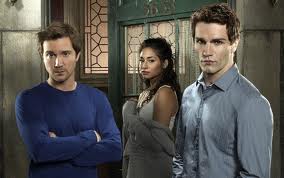
That’s not to say the Brits don’t share the American weakness for fantasizing and glamorizing each and every facet of life, but it’s pretty clear that it’s nowhere near on the scale we have here in the US. Here- take a look at the leading characters of the American version of Being Human.

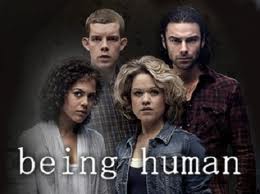
The guy on the left is decently attractive, as is the girl, and the guy on the right looks more or less like a life-sized Ken doll. Idealized people- no question about it. Now look at the same characters in the British original:

There’s not a huge difference between the girl (the blonde girl is another character- ignore her), and the dark haired guy certainly isn’t his American counterpart and stop looking at that guy’s ears! Yes, they’re huge- they’re gargantuan– and no, this isn’t just an unflattering photo- they actually are trying to escape his head in the first three seasons.

The point is, when it comes to their actors, the British are- well, appear to be- considerably less shallow. They don’t need a couple of supermodels to tell a compelling story of murder, secrecy, and perversion- and speaking of which…

Raunch Codes

Watch this clip- but before you do, get all children and Weslyans out of the room.

Pretty nasty stuff, right? Don’t say we didn’t warn you!

People complain that American media is nothing but sex and violence, but believe me- those Axe commercials are prudish compared to the Brits (and indeed- most of Europe). We may give the Brits a run for their money when it comes to blood and gore but never will we compete with them when it comes to explicitness of this degree. It’s almost to the point where it’s not even repulsive- you’re just impressed at how logic-deafeningly far they take it.

But only almost.

The Dying and the Dead

It’s been said that the difference between British comedies and American comedies is that American comedies begin with everything going wrong and end with everything being fixed, while British comedies begin with everything going right and end with everything falling apart. I wouldn’t call a story where everyone dies of scurvy at the end a comedy, but then again, I don’t whittle my life away on a miserable island full of alcoholics and skinheads.

I can say that because the only people who hate the British more than the Irish, the Kenyans, the Indians, the Chinese, the Australians, the New Zealanders, Iranians, and the Egyptians are the British themselves.

The simple fact of the matter is that there is this viciously self-deprecating mentality that pervades every element of British culture (barring fox hunts, which are just weird) that couldn’t be further removed from the general sense of optimism that you tend to find in America. Just take a look at British crime series.

Now I’ve seen quite a few, and while this certainly isn’t universally true, what I’ve typically found is that British murder mysteries focus on the whole “Whodunnit?” element, whereas American murder mysteries either have a “How’d he do it?” or a drive to keep the murderer from murdering again. Gross over-generalizations, I know, but it does seem to be true that American crime series episodes end with the detectives patting each other on the back for having done justice, while British crime series episodes end with the detective giving some despairing monologue about the tragic depravity of all mankind.

Because that’s a very depressing (and therefore, British) way to end the post- allow me offer this:

To say I’ve been ragging a bit on the British would be an understatement, and no- despite our attempts to be unbiased, we here at Culture War Reporters don’t care much for contemporary English culture. That established, there may very well be something to be said for the Brit’s here. Is it pretty? Not remotely, but for all the weirdness (from our perspective) that British TV has to offer, it can’t be denied that it’s simply more “real” than American TV. The sets aren’t shiny, the people aren’t (exclusively) gorgeous, and a stories of sin and murder actually recognize human suffering. There’s certainly a lot from British TV that merits imitation here in America.

Except for sexually explicit sausage commercials. **** that.