Category Archives: film

Nolan, Jefferson, and The Batman

Keep on reading, this’ll make sense.

In the year 1820 Thomas Jefferson shared with a number of his friends a book
he had put together entitled The Life and Morals of Jesus of Nazareth. It was, in essence, the four gospels [Matthew, Mark, Luke, and John] in chronological order. What truly differentiated it from the Bible was the omission of all references to angels, prophecy, references to Jesus divinity and resurrection, and miracles.

In the year 2005 Christopher Nolan’s film Batman Begins made its way into theatres, spawning a trilogy and getting the ball rolling for dozens of “grim and gritty” remakes. In an interview with The Guardian the director said that he “[tried] to do it in a more realistic fashion than anyone had ever tried to [do] a superhero film before.”

The parallel I’m trying to make should be obvious to any Batman fan, either of the comics or the animated series. Having finally seen The Dark Knight Rises this Tuesday and finishing the trilogy, I can finally say this with confidence that Nolan has done to the Batman canon what Jefferson did to the Bible.
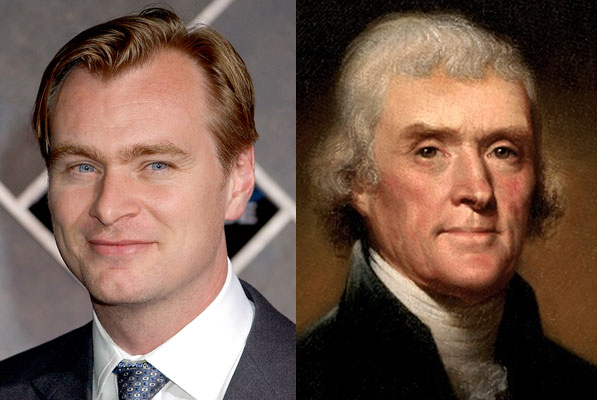
These two men have something against the improbable.

To make things clear, I like Nolan’s Batman movies. He took a concept as seemingly ridiculous as a vigilante crimefighter who dresses up like a bat and somehow grounded it. On top of that he forced us to accept the fact that comic book movies can be more than entertaining, they can be awe-inspiring as well.

An issue that I had with Christopher Nolan and his films was the staunch inability to embrace anything even vaguely fantastical. The problem with that being that the concept is, as I just mentioned, a vigilante crimefighter who dresses up as a bat. With that in mind, maybe the imagination can be stretched just a little more to accommodate a psychopath whose makeup can’t wash off, or a badly scarred man with a deeply split-personality.

Furthermore, by thinning the line between reality [that of the audience] and art [the film being watched] questions are forced to arise. If this is the real world, why didn’t the kidnapping of a Chinese national from his homeland spark an international debacle [The Dark Knight], and <SPOILERS> how is Bruce able to make the jump to escape the prison given the damage in his legs [The Dark Knight Rises]? The films lower our suspension of disbelief, and with our guard down we become quick to ask why.
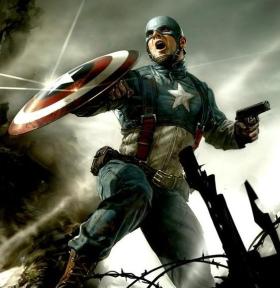
In his film Captain America fought pseudo-Nazis with energy weapons and tanks as large as houses. The audience never questioned this because although the film had some sort of anchor in a real-life event [World War II], we still understood that this was a world with one foot in the fantastic. If we can believe that a scrawny kid from Brooklyn ingesting a “super solider serum” can help the Allies win the war then we can just as easily believe that Hitler’s “deep science division” is led by a man whose face looks like a red skull.

Taking the “magic” out of the Batman mythos was no easy task, and Nolan threw a lot out when he decided what his approach to the canon would be. Scarecrow’s fear gas got the go-ahead, but not the Joker’s laughing gas, or the Venom that Bane uses to grow stronger. Batman could be called by name, but not Catwoman. Batarangs can be seen, and used, but the Batmobile must be free of any visual associations with the character.

Nolan was free to pick and choose what he wanted, and in many ways simply used Batman and his world to tell the stories that he wanted to tell. This is somewhat lost in the third film due to its connections to actual events in the comics [Knightfall and No Man’s Land, though that’s a post for another time], but for the most part he co-wrote the stories and screenplays for all three films. In another interview he states that “I don’t think our Batman, our Gotham, lends itself to that kind of cross-fertilization,” in response to a question about heroes co-existing between films akin to the Marvel Cinematic Universe.

Having stated that, I must admit that I have to view Christopher Nolan’s trilogy of Batman films as- something else. Something not Batman. Batman would never kill purposefully [letting someone die, Batman Begins], accidentally [tackling Harvey Dent, The Dark Knight], or not react to the deaths of others [all throughout The Dark Knight Rises]. I guess I view them as Batman movies about as much as I view the apocrypha part of the Bible. They can be good, and even beneficial, but ultimately miss the mark somehow.

Good Show! (Or, What’s Wrong With The Simpsons)

Over the past couple days, actors Donald Faison and Zach Braff have been campaigning for Obama here in Vegas. While I’m not a fan of their political stance, I freaking love Scrubs and have been re-watching the show for what must now be about the ninety-billionth time.

It got me thinking about a discussion Evan and I had a while back, in which we concluded after some debate that Scrubs is the best show of all time.

Ok, that’s not going to mean anything to you if you haven’t actually seen Scrubs. If you haven’t, go watch it now.

Now think about it- has there been a bad episode of Scrubs? Has there ever been an even sub-par episode of Scrubs?

There really hasn’t. Not every episode is fun to watch (it’s a hospital- you can’t expect them not to deal with mortality and whatnot)- some episodes are downright depressing and tragic. Even so, there show never fails to have some substance to it and (and this is the big thing) never really diminishes in quality despite having been on air for eight seasons (nobody counts the ninth as cannon).

But more on that in a minute…

See, what makes Scrubs so consistently good isn’t that it’s funny- it is funny, but not every episode, and not every joke in the funny episodes will have you on the floor.

Though most will…

It’s that it’s consistent all the way through. The characters develop, certainly, but they never really shift dramatically or break away from who they were a season ago. JD is always JD, Turk is always Turk, and so on. The wacky, exaggerated universe of the show never strays too much into total realism or too far off into surrealism. In short, and episode seen in the last season of Scrubs is about the same (extremely high) quality that the initial episodes are.

Now I know you’re all saying, “But Gordon, you ruggedly handsome bastion of logic and truth, surely consistency isn’t all there is to it!”, and yes, it’s not just consistency that makes a show good. Comedies need to be funny, dramas need to be agonizing, and so on- nevertheless, these things are dwarfed when it comes to consistency- let me give you an example of this done wrong.

Community. I remember seeing ads for it in my first year of college and thinking “Neat- a show about college. Something I and my demographic can all relate to and get a kick out of. This looks like it’s gonna be good”.

And it was.

(Barring that they had an Indian guy playing an Arab kid because apparently all brown people are the same…)

Really good. In fact, the first season of Community is probably one of the funniest things I’ve ever seen in the couple decades I’ve been alive. But what proceeded the glorious first season was one of the fastest and ugliest burnouts in television history.

You remember how Abed was socially-challenged but ultimately human in his attempts to relate to people and make is father (also played by an Indian actor) proud? Remember how Jeff wanted to get his degree and regain control over his life? Remember how Troy was trying to deal with the loss of his status? How Annie was trying to reinvent herself?

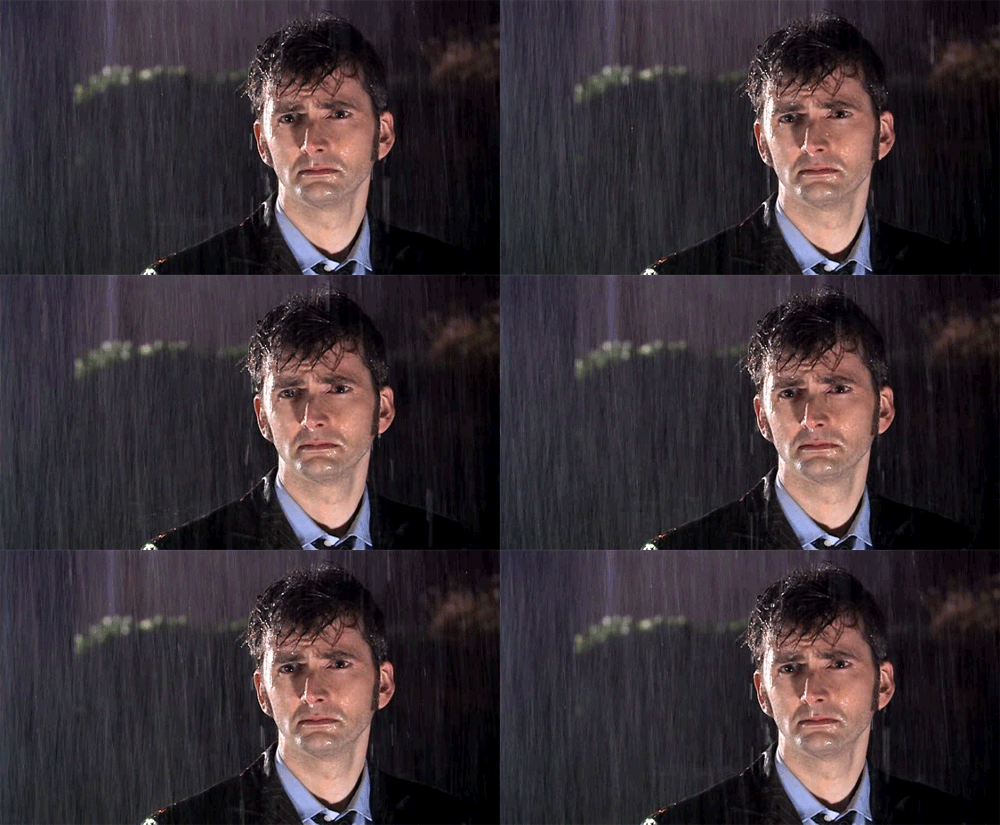
Yeah, all of that went down the toilet in the subsequent season. The motivations that gave the episodes conflict and helped progress the characters and the story as a whole were more or less dropped, and the little quirks that made the characters funny and interested got so blown up that they became the only aspect of the characters. Abed went from movie-geek to schizoid mess, Jeff became charming (and nothing else), Troy became just Abed’s buddy, and Annie was just the sweet naive straight-man (more or less) to the rest of the group. On top of becoming gross caricatures of their former selves, the show stopped dealing with college (which you might recall as being the reason so many people started watching the first place) and became centered entirely on the clownish escapades of the group. Granted, every once in a while you got good episodes, but never on the same level as the first season. Every time I sat down to watch Community the smile faded from my face and I could react in no other way but this:

“But Gordon, you roguish fountain of delight, isn’t this more a warning against being madcap than straying from the characters and story?”

I’d have to concede that, if it weren’t for such shows as South Park and American Dad. Both of these shows have been from their inception pretty surreal, nonsensical, and all-around crazy. Yet both shows have maintained that same level of craziness and remain (more or less) as popular now as when they started.

I admit, these shows are not for everyone…

Again, an excellent example of how shows drifting away from their original material kills them would perhaps the most iconic animated show of all time: The Simpsons.

My old roommate never saw the early Simpsons, and is to this day convinced that the show is side-splitting in its hilarity. And he’s probably right- I stopped watching the Simpsons after my first year of college- I got tired of having my heart broken.

Perhaps it’s best encapsulated in this quote by Lisa Simpson back in Season 2:

I heard you last night, Bart. You prayed for this. Now your prayers have been answered. I’m no theologian. I don’t know who or what God is exactly. All I know is he’s a force more powerful than Mom and Dad put together and you owe him big.

Would you ever hear that from Lisa in one of the later seasons? You would not. Why? Because Lisa has moved from being a brilliantly smart little girl to a pointy-haired midget channeling the whiny liberal indignation of Bill Maher.
Is there anything wrong with Lisa as she is today? Not really, no. If that’s who her character is, then that’s who her character is- only the hitch here is that’s not who Lisa started off as. Had Lisa started off as the yellow counterpart of Brian Griffin, then I wouldn’t have any problem. Had Homer started off as a food-crazed buffoon or Marge as a simple housewife, I’d probably still watch the show. Again, it’s the gradual change from one thing to another that’s responsible for people drifting away from the series. It’s not that shows go stale (not that staleness can’t be a problem- just look at the Gilligan’s Island episode where they’re almost rescued), it’s that they change too much.

And hey, with our ever-shortening attention spans and our rapidly changing culture, maybe that’s not such a bad thing.

Bad Influence

Last night, I watched Brideshead Revisited, and let me tell you, it is one festering pile of garbage.

Seriously, **** this movie…

Now before anyone launches into a tirade- yes, I am aware that Brideshead was originally a novel and, from what a lot of critics have said, one that was infinitely better than the movie, the later of which reduced all of the author’s points on culture, religion, and relationships to a couple hours of pretty set design and not much else. Simple fact of the matter is Everyone Poops could have been adapted for the big screen and still have been better than this confusing mess.

Michael Bay was going to, but the book was too cerebral for him…

Look- I can’t speak to either the novel or the author. People who have read the book say it was better than the film, and while I have difficulty believing that, I’m willing to give them the benefit of the doubt. I’m not hear to address that- I’m here to address the fact that someone at some point did actually think that what they presented in the movie was somehow not only worth watching, but worth paying for.

It aint- in case you haven’t gotten that message yet…

I’m not a fan of British period-pieces; if I wanted to see eloquent people with miserable lives, I’d talk to English majors.

What we have in this movie is a group of extremely rich youngsters lounging about an elegant mansion, downing enough alcohol to make newyears in Vegas look like a Baptist ice-cream social, and whine and wail for over half an hour about how miserable their lives are. Not in any existentialist sense, mind you- these characters aren’t disillusioned with luxury, they’re just frustrated that they can’t have everything that they want when they want it the way they want it. This is essentially Walden without any redeeming qualities- just pasty, entitled brats with delusions of insight, giving trailing speeches about their long “suffering”.

And I’m not bringing this up just because one movie sucked- this seems to be part of a greater problem in our culture. I’ve seen the same kind of problem in the film I Love You, Man.

Back in college, my housemates loved this movie. Suggested it every movie night just to see me shiver with horror and disgust. In case you’re not familiar with the plot line, let me break it down for you:

Peter’s getting married. Peter simply doesn’t have any guy friends outside of his brother (played by Andy Samberg, who was the only good part of the movie), and he one night overhears his fiancee’s vile, harpy collection of friends gossiping that it’s weird Peter’s not going to have a best man at his wedding. Peter, who apparently bases his self-esteem on the idle chatter of obnoxious strangers is filled with self-doubt and embarks on a quest to get himself a male friend- because, you know, what will his future wife’s evil friends think of him if he doesn’t?

If you’re trying to jump through the screen, grab this guy, and slap him across the face while screaming quotes from Nietzsche- don’t worry, that was my first reaction too. How we’re supposed to sympathize with this self-pitying sadsack is beyond me- the guy makes Ted from Scrubs look like Teddy Roosevelt by comparison.

I’m not trying to say that every character in a movie- or even every main character- has to be someone admirable. Just look at American Psycho. I’m not saying that these characters have to be ultimately successful. Just look at Goodfellas or The Godfather trilogy. I’m not saying that the characters have fit a classic/stereotypical form of “manliness” (in the case of male characters, anyways)- just look at Zombieland, Superbad, Napoleon Dynamite, or Scott Pilgrim vs the World.

Between movies like Brideshead Revisited, I Love You, Man, and pretty much every romance movie that ever has or ever will be made, there’s this common attitude of entitlement, self-pity, and melodrama.

Ok, you could kill yourself or- OR– spend some time working at a homeless shelter, petition on behalf of political prisoners, overthrow corrupt dictatorships since you are, y’know, immortal…
Just say’n…

Now I know you must all be saying “But Gordon, you charming devil- what’s the big deal? So what if a section of film is dominated by this lousy message of egocentricity, ignorance, and impotence?”

Let me show what the big deal is.

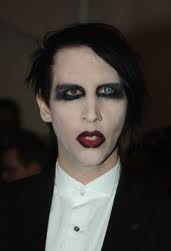
See this guy here? This is goth shock-rocker Marilyn Manson. If you’re not a fan, chances are you’ve still heard of him- in the days that followed the Columbine Shootings, Manson was argued by many conservative and religious critics as having been responsible for influencing the shooters. And obviously, that’s just a single example- whether it’s true or not, we’re all familiar with the outcry against violence in the media- be it anything from video games (see any GTA game) to music (Wu-Tang Clan aint nothin’ to fornicate with) to movies (just take your pick).

Let’s assume, just for a minute, that this is all true. I’m going to discuss the whole “does-violence-in-media-cause-more-violence?” question later in the week, but for now, let’s just say that the answer is “yes”. If these things have a serious negative effect on the views- especially young viewers- and deserve to be censored or even banned on that logic, surely the same can be said for the equally detrimental attitudes and actions (or lack thereof) found in movies like Brideshead Revisited and the like. What do these things teach us?

I was going to say “Stalking and manipulative relationships are romantic”, but I really didn’t have the stomach to slog through countless Twilight posters looking for Edward crouched in the window- enjoy this picture instead…

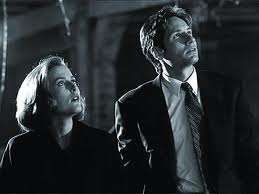
Again- the problem isn’t with romance as a concept or a plot device or anything like that. I’m not a sensitive guy in even the loosest use of the word, but despite my callousness, I really don’t have a problem with romance- it’s just that romance, as a genre, tends to produce these awful, reprehensibly selfish attitudes, and at the same time make the actual relationships pretty dumb as well. Though no one is ever going to admit it, couples like House and Cuddy or Scully and Mulder are both more believable, moving, and inspiring at their worst moments than any Romance film couple at their best.

Obligatory “Still a Better Love Story Than Twilight”…

What else can I say? Romance movies, and indeed, all media that promotes this whiny, entitled message seems to be just as harmful- if not more- than the bloodiest action flick or the most violent rap or rock. I’d be just as worried about the effects of such media on young minds as I am about the most car-stealing-liest-prostitute-beating-iest video game ever made. Allow me to leave you with this brilliant tweet from comedian Dave Chapelle to drive my point home.

Game of Thrones translates better to the screen than Lord of the Rings


I read Game of Thrones back when it was a relatively nerdy thing to do (I’m not bragging; the geekiness of it at the time cancels out any hipster cred I could claim now) – back when I had to tell people that it was “fantasy, but also good”. So seeing the books translated into an HBO series (insert shout-out to the casting directors for being awesome) is pretty exciting, and seeing it done well is even more exciting.

During the (EDIT: second-to-last episode) of Season 2 – specifically, the siege scene – there was this shot of Stannis’ army lifting up ladders to the walls of King’s Landing, and one of my friends said that it looked like the Two Towers. Upon further thought, I realized that I liked the film representation of the King’s Landing siege – and the Game of Thrones books in general – better than I liked the Lord of the Rings adaptations. As the LotR movies were the most significant and noticeable film event in my life so far, this was a pretty strange realization. So I tried to figure out why I thought that Game of Thrones was doing a better job on screen.

I do love extravagant battle scenes, and the LotR movies delivers, but I always feel kind of jerked around by the battle scenes in LotR. I was watching The Two Towers and noticed how formulaic the Helm’s Deep battle sequence is. The tactics are interesting enough, but the camera just focuses on giving us series of tantalizing deaths to push my hopes one way or another – we’ll see a handful of individual “good team” deaths accompanied by tragic music, only to then be fed a series of orcs getting killed by archers to keep us hopeful and interested. Tactically, Helm’s Deep isn’t a very interesting battle – good team is losing/bad team is scary, Gandalf comes back with Eomer, good team is winning again.

EDIT: I have been informed that I am woefully underinformed, and this giant scary battering ram’s name is Grond and is NOT from the battle of Helm’s deep. I’m keeping this picture up, though.

In terms of effects and extravagance, the LotR team did an incredible job. The scenes are beautiful. But the use of repeated grisly deaths and cruelly interesting kills just to jerk around the viewers’ emotions started to feel like a cheap tactic.

A quote you wouldn’t hear in Lord of the Rings: “Those are brave men knocking at our door. Let’s go kill them!”

In Game of Thrones, however, I noticed the battle in the Season 2 finale was different. For one thing, there wasn’t a specific side to cheer for – I mean, everybody likes Tyrion and Sansa, but it probably wouldn’t be a terrible thing if Joffrey were kicked off the throne, and what’shisface’s (the Stag guy’s) bitterness is relateable, and not necessarily borne of some intransigent evil. The scene also depicted more of the tactics and the actual progression of the battle, I thought, than dragging the viewers along by alternately dashing and keeping up their hopes.

The whole story of Game of Thrones, I think, falls short of the story of LotR. Martin relies too much (like Ayn Rand in We the Living) on making us disappointed – true, the events are appropriately random and unexpected, but (is it ridiculous to say this?) random and unexpected for 1200 pages gets sort of predictable. Or at least, rhythmic. But the honesty of the characters and the anti-gloriousness of their predicaments makes it more suited to visual media than LotR. The broad, mythic scope of LotR made for beautiful movies that would never quite live up to the epicness of the books. In the end, even after all of the stunning shots of New Zealand, the story was too big to be sold.

In LotR, we know , essentially, that the good team is going to win. In Game of Thrones, while the Stark family is pretty unabashedly Good, the rest of the characters are up for grabs. Villanous actions in LotR are generally due to some inherent evil (orcs, Uruk-Hai, Sauron), but villainous actions in Game of Thrones are usually the product of a relateable motivation (love, fear, greed) and aren’t generally limited to specific characters. Game of Thrones is morally messier, and while LotR calls upon values like honor and steadfastness, the characters in Game of Thrones are constantly questioning the actual merits of those values

Questioning the merits of virtue
Jaqen: “A girl has no honor!” Arya: *shrug*

LotR is a myth. Grittiness of character is not its thing – it excercises a style of storytelling that requires suspension of disbelief and an appreciation value of behavioral archetypes. In LotR, Aragorn becomes king and is reunited with Eowyn – in Game of Thrones, Eddard Stark dies in the middle of the first book. LotR’s plots make for fabulous books, and the prose and the world Tolkien created is LotR’s real strength. Game of Thrones by no means compares to Tolkien’s prose, but it makes for interesting characters, engaging dialogue, and non-predictable battles. Because of this, Game of Thrones is way, way better for visual media.

In Game of Thrones, Robert says of killing people: “They never tell you how they all sh** them selves, They don’t put that part in the songs.” Lord of the Rings was the song, and Game of Thrones is showing us the parts the songs leave out. Each type of story is legitimate in its own right – but Game of Thrones seems to translate better to the screen.

Porn Is Not Poltergeists

So last Friday I came across the following trailer for a movie called Harmless. Here it is:

In the spring semester of last year I took a writing class called Literary Nonfiction. One of the required reading pieces was Culture Making: Recovering Our Creative Calling, by Andy Crouch. The general gist of the book was that as Christians we have the ability to create our own culture. We live in the world, but we don’t need to be of it. If we can’t find anything out there that we can agree to be part of than we can make our own.

That being said, I’m not sure that I can necessarily support this film. I understand why they did it, though. I’ve seen Paranormal Activity; I understand the way fear is exacerbated by the intimacy of the  mockumentary format. I get that if you want to talk to people about your faith movies are a great way to do it, and the horror genre is an extremely popular one. The problem is that it’s ridiculous.

I won’t lie and say that pornography is all well and good. I do believe that it is degrading to women and can be extremely harmful to relationships and families. I will even go so far as to say that there is a dangerous spiritual component involved, but this is not the time or place to discuss that. I can also tell you what porn is not, though. Porn is not poltergeists.

I can’t agree with a film that could potentially be more ridiculous than the 2006 film Facing the Giants. Trailer seen here:

This was a film that just dripped with cheese.  It’s difficult for me to put into words how awful it was. The messages were certainly positive, but weren’t delivered in a way that was well-written or even believable. If Christian media wants to be taken seriously by those outside of its target audience it has to at least be a decent example of its art form.

I’m all for Christian media, or at least media with a Christian message of sorts. Ted Dekker’s novels Blink and Thr3e are well-written and actually very good. What I wish is that this would spread to the film industry, that as Christians we could do better at making and affecting culture around us, instead of creating something laughable.


Coping with Cartoon Death

Cartoons are a complicated thing. For example, children’s cartoon characters are required, in general, to always be wearing a seatbelt when in a vehicle. British TV character Peppa Pig was forced to wear one in all future episodes once parents raised concern about safety [the first few episodes would also be reanimated to reflect the change].

The presence of tobacco is yet another issue. In the upcoming DC animated movie “Superman vs. The Elite” British antihero Manchester Black is portrayed without his customary cigarette hanging from his lips. As you can see by the images to the right, it has been replaced by a matchstick.

What I’m slowly trying to get to is death in cartoons, and how it’s handled. The reason that this post didn’t go up yesterday was that I was powering through an entire season of “The Avengers: Earth’s Mightiest Heroes.” While I was watching the show, however, the same thought kept running through my mind: so many people just died.

Large fight scenes abound in the show as the Avengers battle to save New York City and the world, and collateral damage abounds. Skyscrapers fall and cars are thrown around, often with the implication that there are indeed people inside. A movie can be rated PG-13 for “sci-fi destruction and violence,” and I wonder how the show would stand up to the MPAA’s standards.

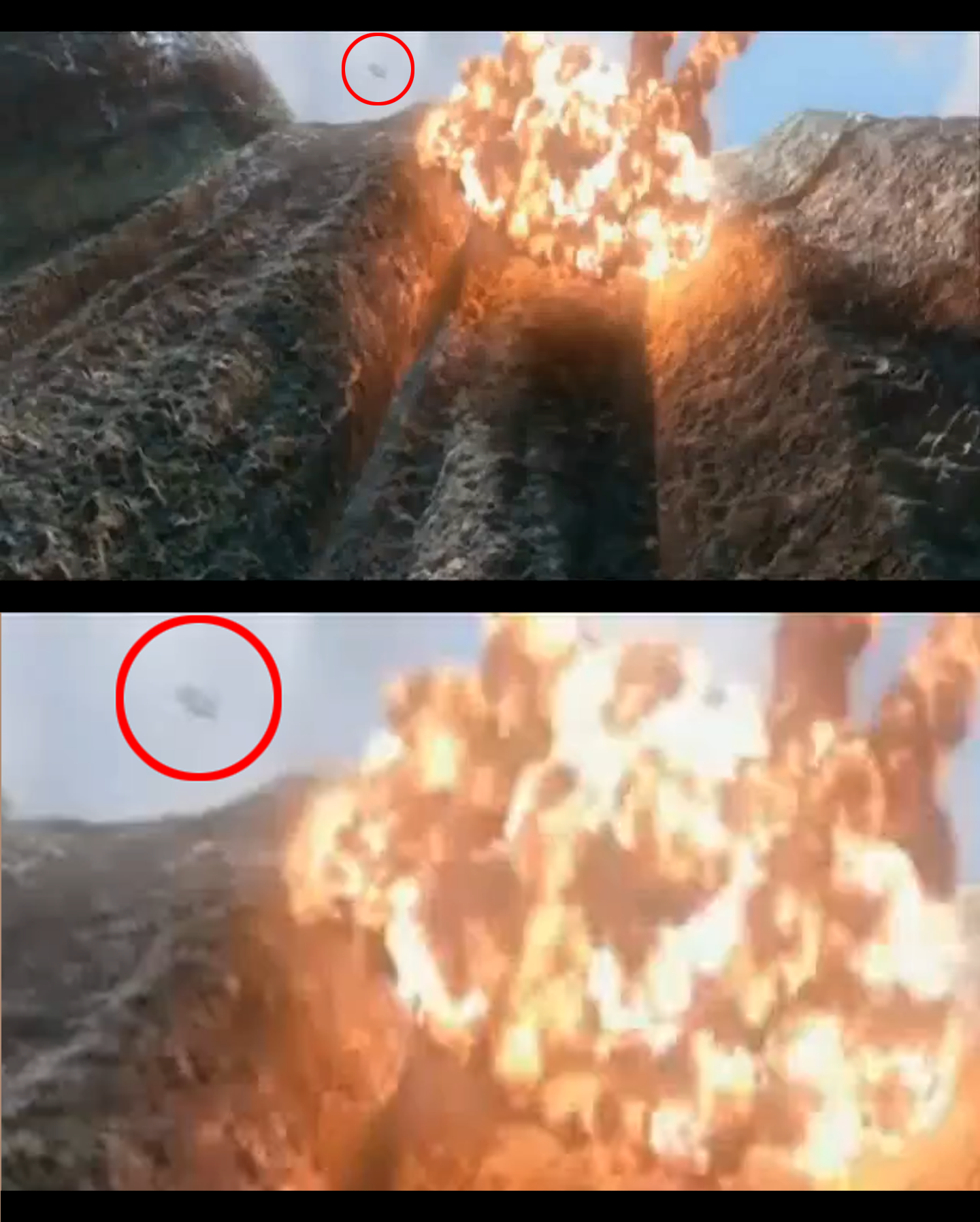
Similarly, in Pixar’s “The Incredibles” it is very strongly implied [though never outright seen/stated] that people, specifically Syndrome’s henchmen, die. There is a scene where Dash fights one of these goons and causes him to crash his vehicle into a cliffside. The result is a fiery explosion. From what I could tell the first few times I saw the movie, the man had definitely perished in the blast. Out of curiosity, however, I watched it again yesterday at half the speed.

As you can see, there is a brief second where a piece of debris can be glimpsed that could maybe be interpreted as some sort of escape pod. I sincerely doubt it, though. And this causes me to wonder how Pixar managed to get away with it, and how exactly the rules can be bent. In the scene pictured above a ten-year-old boy is the cause of a man’s death. Is that something worth considering, would children even notice or be bothered by it?

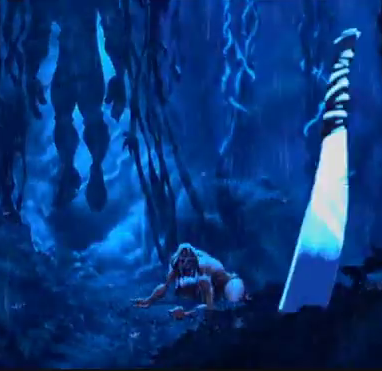
Death in cartoons has always been a very important event. Primary antagonists are normally relegated to some sort of dramatic end, and Disney movies are a fine example of this. Gaston [Beauty and the Beast] plummets to his death in a gorge, Clayton [Tarzan] ends up hanging himself from vines, and Commander Rourke [Atlantis: The Lost Empire] is turned into crystal and ends up shattering after hitting the fan of a hot air balloon. Their henchmen are, by and large, simply knocked out, oftentimes in a comical manner.

The question I’m trying to ask is whether or not we should continue to uphold the concept of death as this sacred thing in cartoons. Does a henchman’s demise deserve any kind of gravitas, or should he die in the first place? How much credit do we give children to understand what is happening when a character dies on screen? I can’t say that I have the answers, but becoming a parent will probably force me to find out.