Category Archives: film

Free State of Mind: Andrew Govender Discusses Acting, Tradition, and Religion

Free-State-Updated-PosterThis is the third and final installment of “Free State of Mind”, a series of Q&As with the cast and crew of a South African film currently making the rounds at film festivals. You can read my review here, find out more about its creation from producer Terwadkar Rajiv here, and get some insight on how co-lead Nicola Breytenbach’s prepared for her role here.

Today’s interview is with Andrew Govender, who plays Ravi, the other half of the couple at Free State‘s core. Another former model like his co-star, he began his career at just sixteen-years-old. Being crowned Mr. South Africa in 2012 is only one of his many achievements, which include creating the Andrew Govender Book Club with the Nelson Mandela Foundation and being involved in various awareness campaigns.

Given that their characters share a few interesting parallels Govender answers a number of the same questions that Breytenbach did, with a few that are unique to Ravi himself.


An arranged marriage is the biggest barrier that Ravi faces in his relationship with Jeanette. How would you say he views that tradition and what it means for his future?

I think he respects it and accepts it. He was brought up in a traditional Indian family and those are Indian traditions. However, when he gets to meet his arranged wife he realises that he doesn’t have much in common with her. That’s when he meets Jeanette and falls madly in love. He knows that he shouldn’t be pursuing a relationship with her because it’s illegal during that time for inter-racial relationships. However, he can’t help himself and that results in detrimental consequences.
ravisister

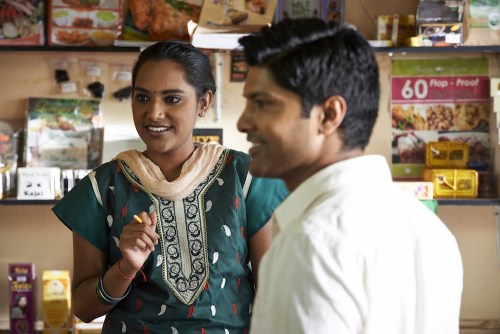
Ravi makes it clear that he’s concerned about his sister’s safety, but what does he ultimately think about what his family does under cover of darkness?

He understands that they are doing it for a greater cause and he respects that. However, he does care deeply for them and doesn’t want anything to happen to them when they go on these missions. He’s close to his family and wants to protect them.

From what I can tell this is your first role in a feature film. How was that experience, especially with it being a South African production instead of a big Hollywood movie?

It was an incredible experience. I got the opportunity to work with some really talented South African actors. I learnt a lot by being on set and having these actors mentor me throughout the filming process.

Our director Sallas de Jager was also really supportive and helped me to give the best performance I could. Even though this was a South African film, the production standards on the movie were really high. That can be attested to with all the international awards that the movie has won. I really hope that I will have the opportunity to work on more films both in South Africa and Hollywood. Acting is really something that I enjoy immensely.

How much did you know about South Africa’s Immorality Acts before signing on to this film?

Not a lot. I grew up post Apartheid, so most of what I knew was from what I heard, not what I could have experienced. It was quite eyeopening to learn more about that time in South Africa’s history and how Indian people were treated. I gathered as much information as I could from my parents about their experiences during that time. I also was really fortunate that my acting teacher had been in an inter-racial relationship and she was able to help me understand my character better.
meditation

Religion plays a large part in Free State for both Ravi and Jeanette’s families. Did you come from a religious background, and did this have any affect on how you played the role?

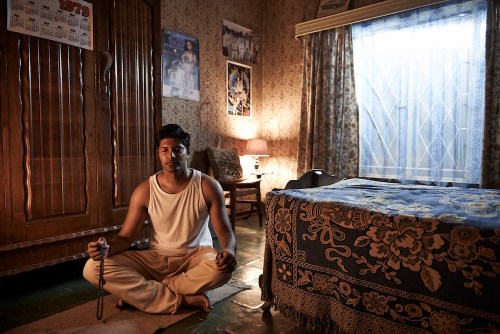
Yes, I did. I grew up in a conservative traditional Indian family so religion was important to us. My character was also brought up with the same core values and so religion would have been important to him too. There’s a scene in the movie where my character meditates and also seeks relationship advice from a guru. So we are aware that he relies on religion to guide him in the choices that he makes.
A Rather Fortuitous Event

Readers, I want you to picture me.

It’s 10:30 on a Monday, a metric ****-ton past my deadline for this post. I’m weary from a hard day of work (plus overtime). I’m mentally wiped after my past three attempts at creating a post have resulted in thousand word essays, full of sound and fury, signifying nothing. And in these times, I turn to the near-infinite bounty of the internet for inspiration, and lo and behold readers the internet hath provided:

49gptpo

Image retrieved from Imgur, fair use

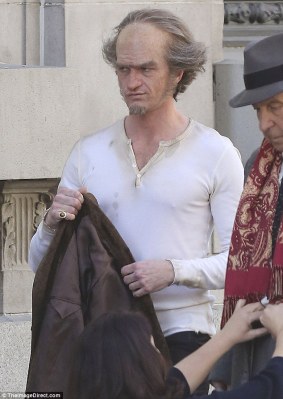
That’s right- it’s a picture of Neil Patrick Harris as Count Olaf, from the upcoming Netflix show A Series of Unfortunate Events.

Because they’re doing that.


Yeah, I’m going nuts here too.

Now I enjoyed the hell out of the books, which were impeccably written (“impeccably written” being a Danish term meaning “the best thing ever”). I thought the 2004 movie adaptation was fascinating, funny, and as faithful a take as could be done in the space of two hours.

tumblr_nu06wm1sti1uofrjio6_1280

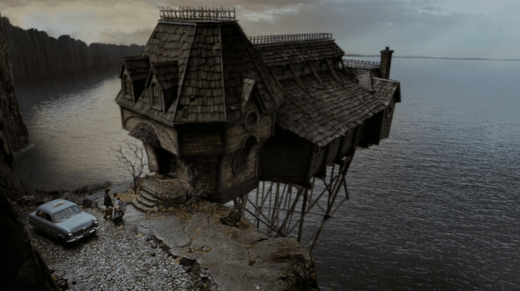
There are two kinds of people in the world. People who will say that they want this house, and liars.

That said, I am pumped for the series, and absolutely loving the idea of finally seeing NHP as a villain (yeah, I saw Gone Girl, but I’m not counting that one). And did I mention that the voice of Lemony Snickett will be conveyed to us in the dulcet tones of Patrick Warburton?

Well that’s happening too.

awsm Continue reading

Can Casting Choices Promote Global Cultural Dominance? A Possible Explanation for Whitewashing in Cinema

This is a weird, random, and controversial thought, but….

I wonder if this consistent pattern of replacing Asian characters with White actors (even with more and more Asian actors getting more screen time [at least on TV] and all these articles highlighting whitewashing) is a subtle and unconscious battle of cultural and racial dominance? If it stems from a fear-based place of “if you put more Asians as leads in mainstream, worldwide entertainment, then it removes some of the cultural dominance of the status quo”.

I’m really not trying to bash White people, but you really can’t argue that White people overall have more privileges than any other race. And White men are the heads and execs at basically every major company in Europe and North America. And in entertainment, which has major worldwide influence, White people and predominately men are the execs, directors, writers, producers, and agents. Ironically, they welcome foreign money with open arms from Chinese to Middle Eastern investors.

Asians, population-wise, are more than 50% of the world; China and India have enormous populations with a lot of spending power. Asian countries have created very popular forms of entertainment with anime, manga, and video games. They frequently feature characters of Asian descent. Japan has always been a powerhouse country, but their status as an Axis power in World War II has set them up historically as a bad guy. Then their strength in electronics and cars in the 90’s set them up as the “competition” (i.e. not American and not us). And Chinese is ALWAYS the bad guy in the news. “We can’t have factories in China. The Chinese are gonna take over.” There’s a history of US vs THEM. Besides the military, the only industry of world dominance that White America has complete control over is the entertainment industry. American movies make so much internationally. Ironically, the US entertainment industry depends on the income from the foreign markets, but cater very little to their populations by representing them on screen. They know that the foreign populations will come see their movies no matter what, because they aren’t doing huge budget CGI movies where they are. Continue reading

My Problem With Ghost in the Shell (In A Nutshell)

I don’t think there’s anyone here who’s unfamiliar with the term “whitewashing” at this point.

It’s been a frequent topic of conversation here on Culture War Reporters, and while certainly not a new issue, it has been gaining wider and wider attention in recent years…


Most recently, the problem reared its ugly head in the form of Scarlett Johannson being cast in the live-action remake of anime classic Ghost In A Shell. Once again we’re seeing a traditionally non-white (in this specific case, Japanese) role being given to a white actor out of fear that audiences won’t watch movies with non-white leads. And if that were the only issue, I might have stuck with my usually political tirades and left this topic alone. But in the past few days, a shocking development has emerged in the story. Allegations have surfaced that the remake’s producers (and I quote) “Tested Visual Effects That Would Make White Actors Appear Asian“.

Or, as my best friend and this blog’s editor recently put it on Facebook:

“We think so little of you that we’d consider changing a White person’s appearance before entertaining the thought of casting an actual Asian.”

So yeah, I’m feeling compelled to write about this…

tthpnha

And let me tell you what really convinced me to submit the following rant. Continue reading

Free State of Mind: Actress Nicola Breytenbach on Getting in Character

Free-State-Updated-PosterThis is the second installment of “Free State of Mind”, a series of Q&As with the cast and crew of a South African film currently making the rounds at film festivals. You can read my review here, and find out more about its creation from producer Terwadkar Rajiv here.

Today’s interview is with Nicola Breytenbach, who plays Jeanette, one of the two romantic leads. While she has spent the past several years as a successful model, with her career taking her to runways across the world, Free State marks the beginning of her acting career. Just last month The Blue Mauritius began filming in Montreal, with the US and German co-production being her second ever silver screen role.


Jeanette is first introduced returning home to her father after finishing law school. While it isn’t heavily covered in the film, what kind of impact do you think that education had on how she views life, especially after she meets with Ravi [co-lead and love interest]? 

As Jeanette went to Wits University, which was a more liberal university than many others, it would have changed the way she viewed and felt about apartheid and the immorality act. She pursued higher education as it was instilled upon her by Maria and her father, but her true desire was to be a wife and mother.

Jeanette was raised in the very small remote town of Memel and even though it was a Christian white community it was very sheltered, and as she says in the beginning of the film that’s why she was a real ‘political innocent’. She wasn’t exposed to the reality of it much, except for a few remote incidents which completely shocked her. As her mother also passed away at such a young age and her father had a difficult time reaching out to her because of his grief, she was raised almost solely by Maria who is black South African Zulu.

Hence when she met Ravi, she didn’t think about his race and it didn’t deter her from seeing a friendly man who went out of his way to help her in this traumatic incident of a near accident. She only saw his compassion and how selflessly he had helped her. As time goes on, they both come to the realize the severity of the situation they are in, as well as the fact that they are engaged to others, but at this point it is too late, they have already fallen in love. Continue reading

Free State of Mind: Behind the Scenes with Producer Terwadkar Rajiv

Free-State-Updated-PosterLast month I was offered the amazing opportunity to watch a screener of Free State, and published my review at the beginning of this one. Set in mid-70s South Africa the film revolves around an interracial relationship that would have been illegal due to anti-miscegenation laws of that time.

In addition to that I was also able to interview members of the cast and crew via email, with consequent installments of “Free State of Mind” being released in the following days. Up first is a Q&A with Terwadkar Rajiv, who produced the film alongside Piet De Jager and Sallas De Jager.


When many people think of South Africa and racism their minds immediately go to Nelson Mandela and apartheid. What do you think their reaction will be to Free State, which focuses on relations between White people and South Asians, instead of Black people?

Apartheid was one of the dark patches of South Africa, no doubt about that! When South Africa got independence and Nelson Mandela became the President most of the people were thinking – what will be the future of South Africa? Will whites be kicked out of the country? The way things happened clearly shows that all ethnic groups started living towards one nation, South Africa!

Although there are stories during Apartheid where Indians and blacks were tortured, beaten up or even killed by the Police or Army; some whites used to treat Indians & Blacks respectfully! There are so many stories from Apartheid which prove that inter-racial relationships and friendships existed before 1994.

­Free State is a film which focuses on the relationship between Jeanette (Afrikaans White Girl) and Ravi (Handsome Indian man). This also beautifully shows the motherly relationship between Zulu maid Maria and Jeanette, who she raised as her own daughter, ­­making it truly cross cultural and crossing ethnic boundaries. Continue reading